


Oasis one year later: The Britpop renaissance might have died already

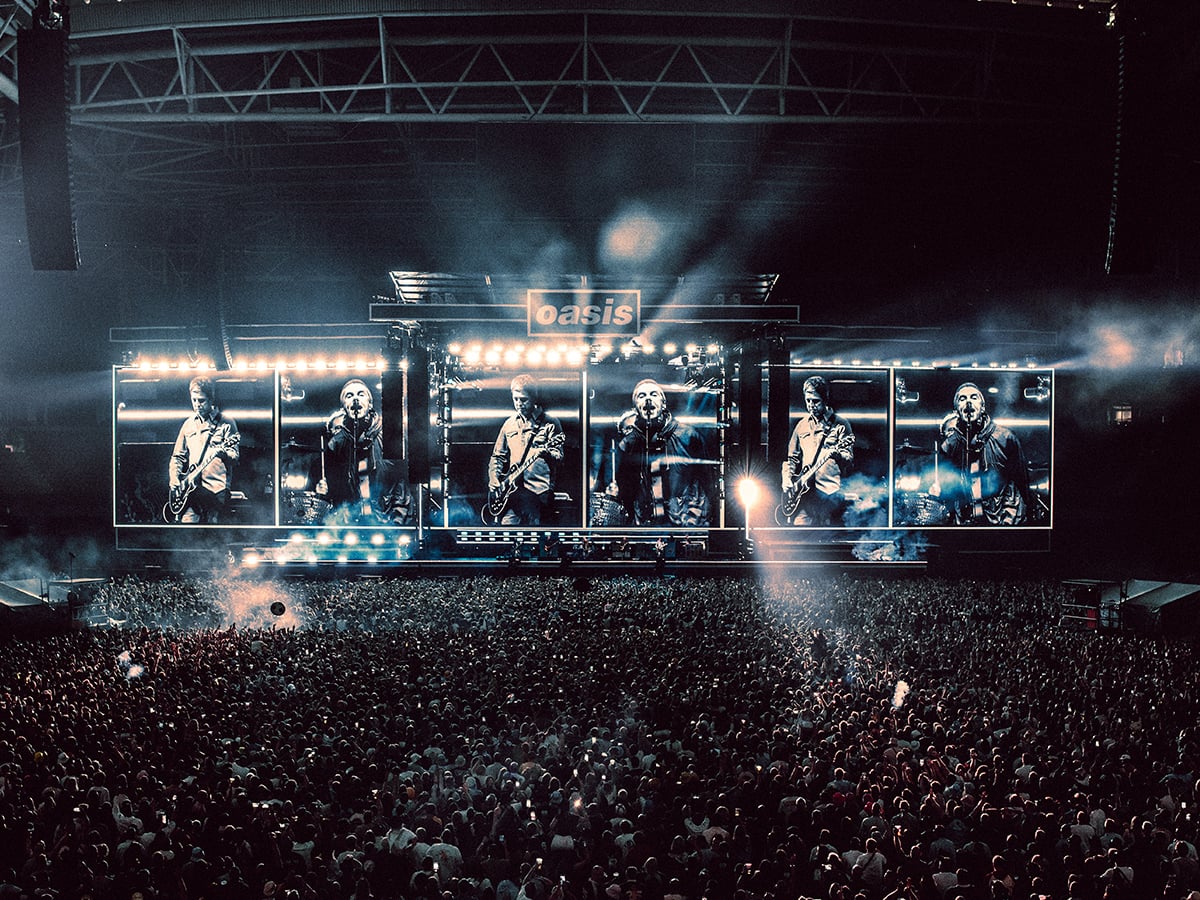
On July 4th, 2025, Cardiff was frantic with energy, as almost 80,000 people were hemmed into the Principality Stadium that hot summer evening, guzzling pints to calm the nerves, awaiting the important arrival of Oasis.
The reunion of the Gallagher brothers, after 16 years of their much-maligned ways, very quickly and undeniably became a cultural cornerstone by which the hype of the 2020s will come to live and die by. By the sheer fact that there wasn’t a single bust-up on stage, and they sounded really fucking good, every night went down as a fever dream.
Over the course of last summer, it was easy to get taken in by the intoxicated notion that the 1990s were back in Britain, and here to stay. Serendipitously, that trend had begun in earnest a year to the day before Oasis rocked back on to stage in Cardiff, when Keir Starmer stood on a plinth of a very different kind and declared an emphatic Labour landslide.
That nostalgic air charged much of the year that then ensued, largely thanks to the expectation that had built around the Oasis Live ‘25 Tour and what it would entail. Once the waiting was over and the shows burst into life, the first song, ‘Hello’ on the opening night was barely over before the calls of the Britpop renaissance had already begun.
Those shouts weren’t necessarily misguided, to be fair. 2025 was charged with a flurry of activity from the majority of the Britpop ‘Big Four’, with Suede releasing their latest album Antidepressants in September and Pulp having taken the world back by storm in June with the highly anticipated release of More.
Arguably, this could have been conveniently timed for a cash-in, given that the Gallagher brothers were the first to announce they were heading back to the scene, with the loudest bang of the lot. And although, especially now, they are all bands with their own very distinct trajectories, you couldn’t help but see the indulgence in heading back to their blazing glory days.
As such, last summer proceeded, against the backdrop of ‘Live Forever’, with a constant, excitable chatter that Britpop was back for a new era. But are we all so short-sighted now that an era or generation can last less than a year? Look around: do you see the impact of that Britpop boom anywhere near you now? I don’t think so.
Don’t get me wrong, I’m not trying to diminish what was a euphoric time of life for many people, just because I personally didn’t manage to win the Ticketmaster battle. All I’m trying to say is that the so-called Britpop renaissance was actually just an Oasis renaissance, which disappeared again as soon as they did.
I can almost predict with my crystal ball, in this sense, that the same hype will spring up again as soon as the Mancunian mob announce their much-expected second touring leg, whenever that may be. At the end of the day, Britpop was never resurrected; it died for good at the end of the ‘90s. What we’re dining out on now, by comparison, are the dregs and crumbs of what was once the ultimate feast.
But do you know what really solidifies the finality of the death for me? The Labour landslide we all naively celebrated as a signal of changing and inherently optimistic times two summers ago has all but disappeared into oblivion. Instead, what we have now is a politics of hatred and polarity, which is increasingly taking us closer to the point of no return.
Because at the end of the day, Britpop was never just about the music and the bands, but about bringing people together, showing solidarity, sticking up for the little guys, and championing the underdog. With the way things are now, we’ve not got a hope in hell of any of that. Prove me wrong, by all means, but the ‘90s were a better time that we’ll never get back.
