


Gun violence and trauma: ‘Hokum’ and ‘The Drama’ are tackling the same crisis

Damian McCarthy’s new movie, Hokum, bears all the hallmarks of classic folk horror.
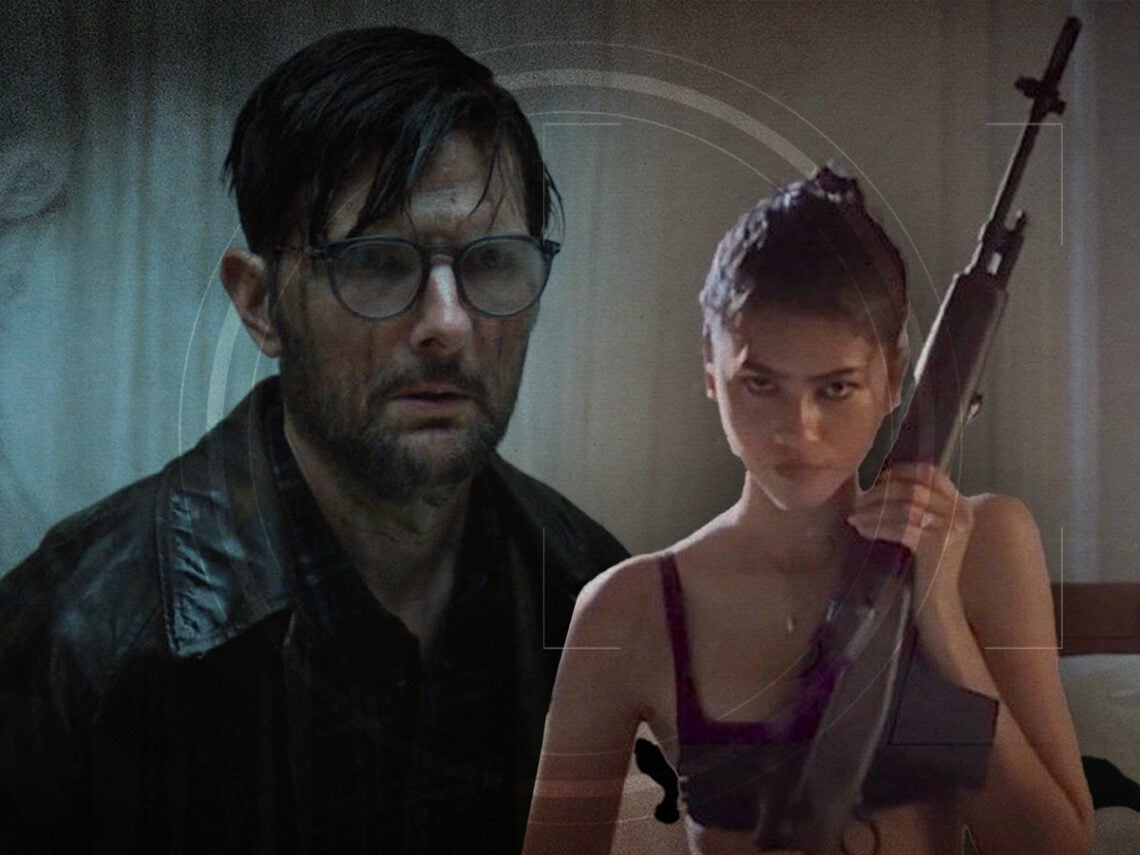
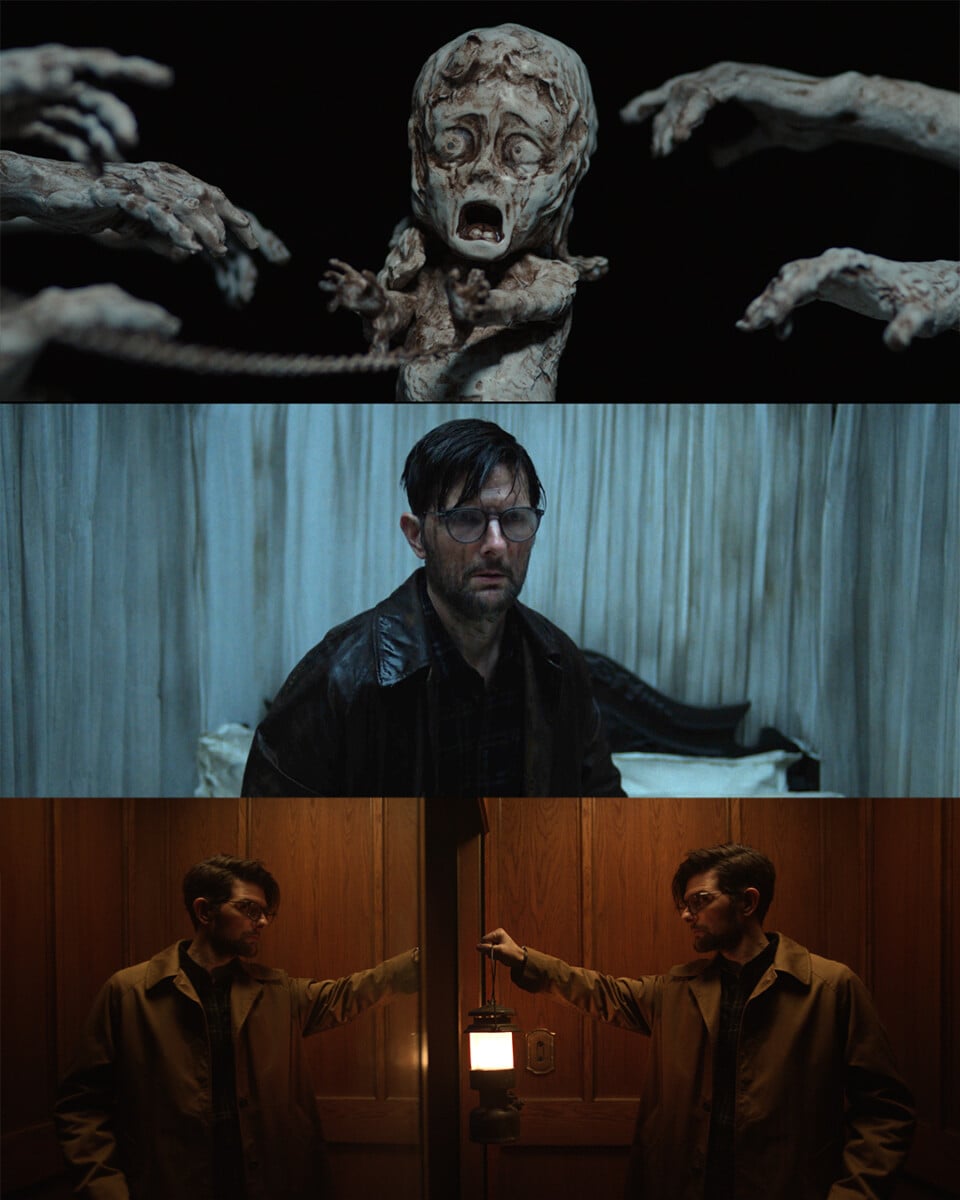
Adam Scott plays an acerbic writer who visits a hotel in rural Ireland to spread his parents’ ashes and finish his book. While there, he is told that the honeymoon suite is haunted by a witch and that no one is allowed to enter under any circumstances. There is more than a hint of The Shining in the haunted hotel theme, and any time there is a clash between folklore and a sceptical outsider, a debt is owed to The Wicker Man. But Hokum also has an unlikely parallel to another new movie, Kristoffer Borgli’s The Drama.
On the face of it, these two films could hardly be more different. Hokum is a spooky horror film with a flair for cleverly constructed jump scares, an emphasis on literal darkness, and a distinct lack of romance. The Drama is a warped romantic comedy about a blissful young couple whose wedding becomes the stage on which Robert Pattinson has a colossal breakdown over Zendaya’s disturbing past. What these films have in common, however, is the very essence of their dramatic tension – gun violence.
At the beginning of Hokum, Scott’s Ohm Bauman reveals that his mother died when she was shot in the face while coming home from work decades before. The perpetrator was too young to go to prison, and his father “became a monster and drank himself into an early grave”. In the middle of the movie, when Ohm is trapped in the honeymoon suite with a dead body and a basement of terrors, we learn via the most panic-inducing jump-scare that he was the one who killed his mother. He was a child and was playing with his dad’s gun. This is, clearly, the source of his bitterness and cruelty towards everyone he meets, and it is also the source of his self-loathing, the magnitude of which becomes clear early on.

In The Drama, a fairytale romance becomes a nightmare when Pattinson’s Charlie discovers that his fiancée, Emma, nearly committed a mass shooting at her high school when she was a teenager. It was her father’s gun that she planned to use, and the only reason she didn’t go through with it was that there was another shooting nearby that same day. Ultimately, she gave up on the idea when she found a sense of community with an anti-gun advocacy group at school, but the revelation shakes the foundation of their relationship.
The essence of the characters in both movies – in their motivations, weaknesses, and breakdowns – lies in the profoundly avoidable trauma of gun violence in their past. In Bauman’s case, it was an accident. He was playing with his father’s loaded gun, and it went off at just the wrong moment. In Emma’s case, the availability of her father’s gun gave her an all-too-easy outlet for her teenage rage and anguish. Neither of these movies would hold together if it weren’t for these facts. Bauman would not be the haunted, bitter artist with ashes to spread if he hadn’t killed his mother, and Charlie and Emma would not be facing the blow-up of their union if she hadn’t gone to school with an automatic weapon.
Hokum is not about America’s most avoidable epidemic, the way The Drama is, but it is the key to the central character. Without Bauman’s past, the events at the hotel would not have taken place. He probably wouldn’t even be in Ireland. It is also the backbone of the unique type of horror McCarthy creates, taking the tropes of folk horror and blending them with the all-too-common horror of Bauman’s childhood. He is haunted, just like the hotel. Together, these elements are combustible.


You could argue that there is nothing to see here. Gun violence is so prevalent in America that perhaps it has simply become an easy plot device, even a lazy one. After all, there were 44,447 gun deaths in the US in 2024. It’s the leading cause of death for children between the ages of one and 17, and in many of those cases, according to the Centres for Disease Control, the shootings took place at home when a child was playing with a loaded gun.
When it comes to school shootings, there were at least 163 incidents of gunfire in American schools in 2025, resulting in 54 deaths and 149 injuries. We’re not even halfway through 2026, and already, 19 people have died in school shootings. The fact that child-perpetrated gun violence isn’t one of the most common plot devices in Hollywood is perhaps the true surprise.
It’s difficult to tackle this topic in movies without inadvertently glorifying violence, though. Imagine what Quentin Tarantino would do with it. Creating stories that focus on the trauma and fallout of gun violence, especially gun violence perpetrated by children, provides a much more horrifying and realistic perspective, but it is also about as unpalatable as cinema gets.
Who wants to sit through two hours of harrowing grief that we know is currently taking place across the entire country? 2025’s All the Empty Rooms won an Oscar for ‘Best Documentary Short’, but it was never going to be a box office hit. Even Gus Van Sant’s low-key Palme d’Or-winning drama Elephant is a tough sell, even though it only chronicles the lead-up to Columbine.
Hokum and The Drama find a third way, dropping the fact of child-perpetrated gun violence within crowd-pleasing genres, neither showing the gore nor shying away from its implications. It’s telling that neither director is American. There has been a startling lack of reaction from American politicians to gun violence, specifically those who would prefer to let an open-ended number of children get shot to death in their homes and schools than force convicted domestic abusers to give up a single AK-47.
As it becomes an increasingly personal reality to millions of Americans, though, you’d think that Hollywood would find a way to creatively lay it bare. For now, it seems, it’s the outsiders who are willing to go there.
