


Haight in your heart: The causes and lasting effects of the ‘Summer of Love’, 1967

“I went to Haight-Ashbury, expecting it to be this brilliant place,” George Harrison says at one point in The Beatles Anthology documentary, referring to his 1967 pilgrimage into the epicentre of the so-called Summer of Love in San Francisco.
“I thought it was gonna be all these groovy, kinda Gypsy kind of people with little shops making works of art and paintings and carvings,” he added. “But instead it turned out to be just a lot of bums, many of them who were just very young kids who’d come from all over America and dropped acid and gone to this Mecca of LSD. We’d walk down the street, and I was being treated like the Messiah or something. I was really afraid because I could see all these spotty youths, and they were still in the undercurrent of Beatlemania, but from kind of this twisted angle… In the end, we just said, ‘Let’s get out of here’.”
It was the single most famous occurrence of a meteorological season since the “winter of our discontent”, but 60 years on from the ‘Summer of Love’, it remains exceedingly difficult to look back on this often oversimplified cultural touchstone without picking a side, so to speak.
For several decades, once the Baby Boomers became the primary curators of American history, the summer of 1967 was routinely romanticised as a fleeting moment of almost unprecedented hope, optimism, and idealism, a genuine movement for worldwide change based around the idea of listening to our better angels.
Sex would be destigmatised, equality would be celebrated, nature would be respected, and food and housing would be human rights. To showcase that cause, thousands of young people gathered in a major American city in the same numbers as a large army or a riot mob, but with no grand plan beyond peaceful, communal solidarity. And also, yeah, to do copious amounts of drugs.
Suffice it to say, from the very beginning, there was also a rather vocal counter perspective on all this. Conservative America looked at the scene around San Francisco’s Haight-Ashbury district as a human blight; the “dirty hippies” who would further corrupt the country’s already wayward children. Many people saw the ‘dropout’ population as godless and shameless heathens, and thus presumably in league with witches or devils.
But it wasn’t just older, close-minded Bible Belt folks who felt threatened and anxious; the country’s business and political leaders and defenders of the established capitalist norms were plenty aggravated, as well. Their response was often to key in on the hypocrisy of the hippies’ mostly white, middle-class demographic, privileged youth who’d selfishly turned against a system that had given them the ‘American Dream’.
“The deepest truth about the hippie style of life,” claimed a 1967 issue of the conservative magazine The National Review, “Seems to be that the hippies are compulsive ‘enjoyers’. They totally reject, in word and in fact, the idea of work, production, achievement; for them, the right kind of life is the life of enjoyment, bliss, even ecstasy. They wallow in life, so to speak: wallow in nature, wallow in ‘love’, wallow in wallowing. Their ideal, quite literally, is a pure and unadulterated self-indulgence, a self-indulgence on a strange primitivistic level.”
It’s amusing that a socialism-hating scribe at The National Review would be essentially arguing that the hippies were abandoning their posts as contributors to Lyndon Johnson’s ‘Great Society’, but a lot of things looked upside down at this turbulent point in American history.
The children of the WWII generation had indeed grown up in the most fruitful economic period the country had ever known, but they’d also lived their whole lives in fear of nuclear annihilation from Russia. In the ‘60s, they’d seen a popular president assassinated, riots in the streets over racial injustices, and the deaths of thousands of their friends and family members serving in a confusing, ongoing war in Vietnam. Rock and roll had lit a rebellious fuse, drugs had changed perceptions, and the opportunity to legitimately grab the reins and rewrite the rules now seemed to be right there in front of them.
“What we’re thinking about is a peaceful planet,” Grateful Dead frontman Jerry Garcia explained at the time, “We’re not thinking about power. We’re not thinking about revolution or war or any of that. We would all like to live an uncluttered life; a simple life, a good life. And to think about moving the whole human race ahead a step.”
For the hippies, many of whom preferred to be called ‘freebees’, the supposed self-indulgence of their movement was actually a rejection of the self-focused capitalist structure. As one Haight-Ashbury visitor put it, “The freebies are just people trying to groove to their humanness instead of identifying their humanness with things that they have”.
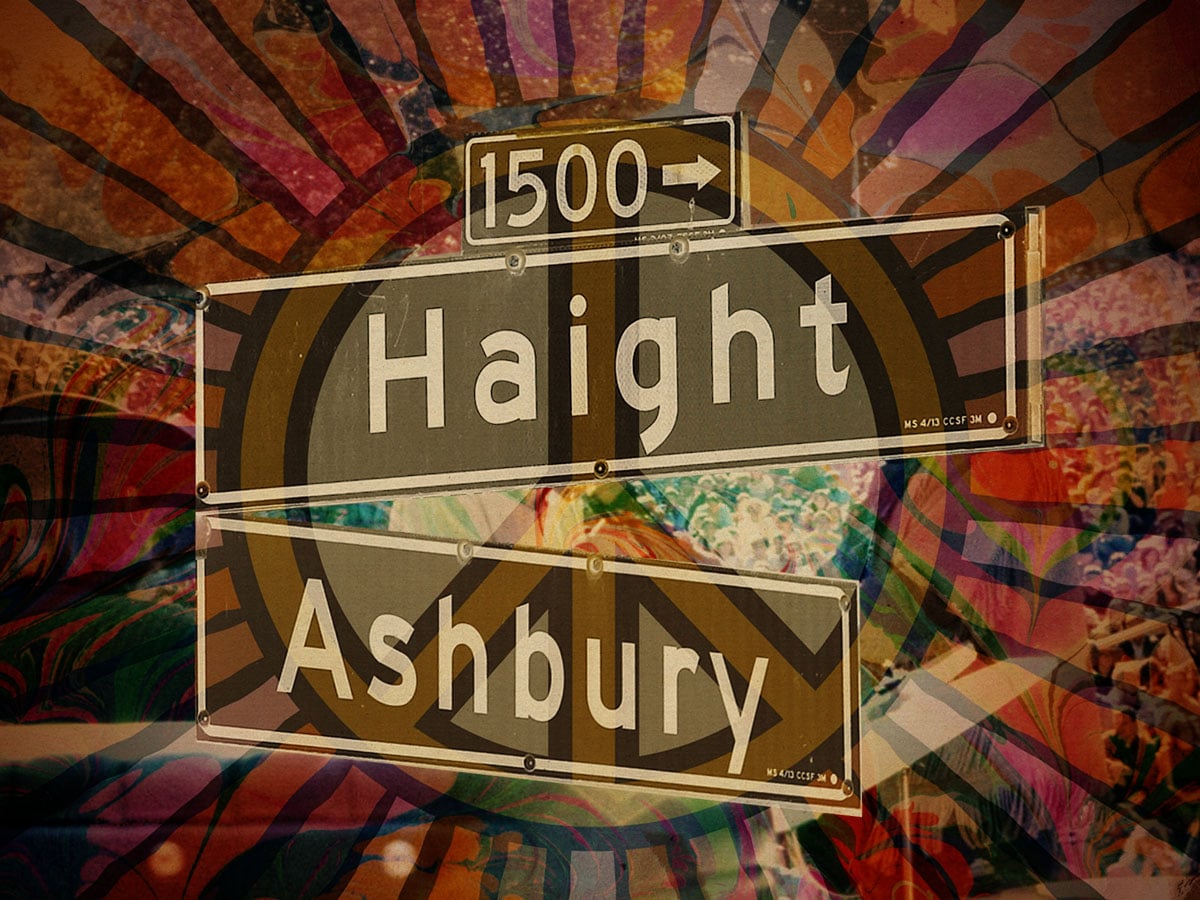
Because its central ideas spread to many of the major cities of the world and became culturally connected to the psychedelic pop music of 1967, including The Beatles’ Sgt Pepper’s Lonely Hearts Club Band and the debut albums from The Doors, Jimi Hendrix, and Pink Floyd, many people think the term “Summer of Love” organically developed or was retro-actively tacked on to explain an on-going phenomenon. In reality, though, the name was absolutely conceived and promoted well before the summer months of ‘67, right there in San Francisco’s Haight-Ashbury neighbourhood.
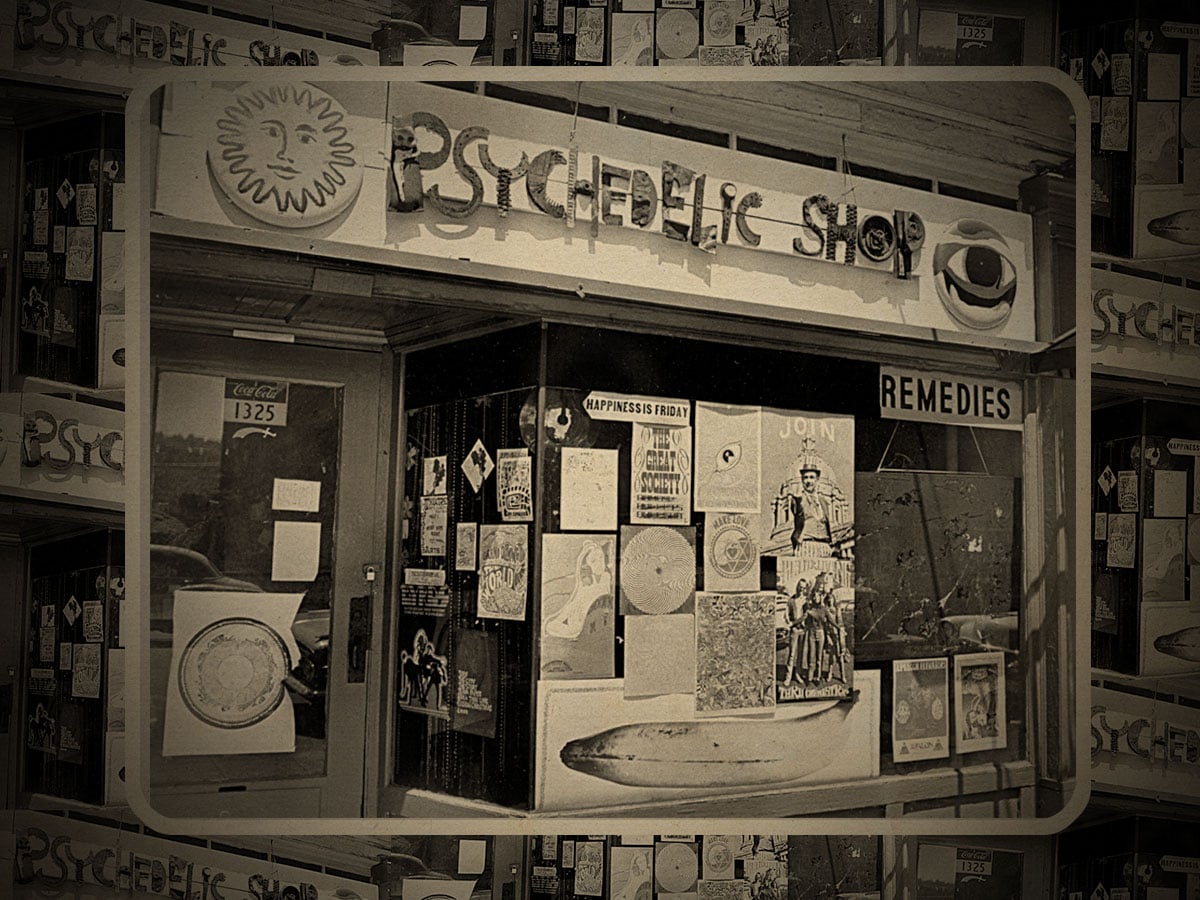
In January of that year, in fact, a proof of concept had already been carried out with the ‘Human Be-In’, a mass gathering of more than 20,000 people in the city’s Golden Gate Park. While the rally was unusual for not including any of the usual enticements of a big festival or protest march, it was nonetheless motivated in part by the decision of new California governor Ronald Reagan to make LSD illegal in the state. At the event, famed LSD proponent Dr Timothy Leary spoke to the crowd, delivering one of the most famous, or infamous, pieces of advice of the era: “Turn on, tune in, drop out”.
Turning on meant expanding one’s mind, with drugs being one terrific method of doing so. Tuning in meant connecting with the world around you, and dropping out, quite literally, meant walking away from the commitments pushed upon you by society. “Drop out of college, drop out of high school,” Leary told thousands of people in Golden Gate Park, most of whom were in their teens or 20s.
The Human Be-In took place a year before The Beatles went to India, but was already heavily tied in with the hippies’ budding embrace of Eastern philosophy, as new counterculture gurus such as Ram Dass and Alan Watts rubbed shoulders with Beat poets like Ginsberg and Ferlinghetti and various local rock bands, including the Grateful Dead, Jefferson Airplane, and Blue Cheer.
Carrying on the momentum of the Human Be-In, some of the same organisers announced the formation of the ‘Council for a Summer of Love’ in April of 1967. Led by Stan McDaniel and Tsvi Strauch, the Council was basically a coming together of some of the like-minded groups that had already formed in San Francisco, including a hippie commune and concert promoter called the Family Dog, a venue known as the Straight Theatre, The Oracle newspaper, and the Diggers, who focused on providing free food and lodging for members of the community. An official poster was even commissioned for the Summer of Love happening, designed by psychedelic poster artist Bob Schnepf.
Well aware that a massive pilgrimage to the Haight was already well underway before the summer months, the Council tried its best to create a framework to ease tensions they knew were likely to build as the crowds grew and resources diminished. In many ways, their preparation was immaculate. The only thing they’d failed to calculate was the changing motivations of the Haight-Ashbury pilgrims.
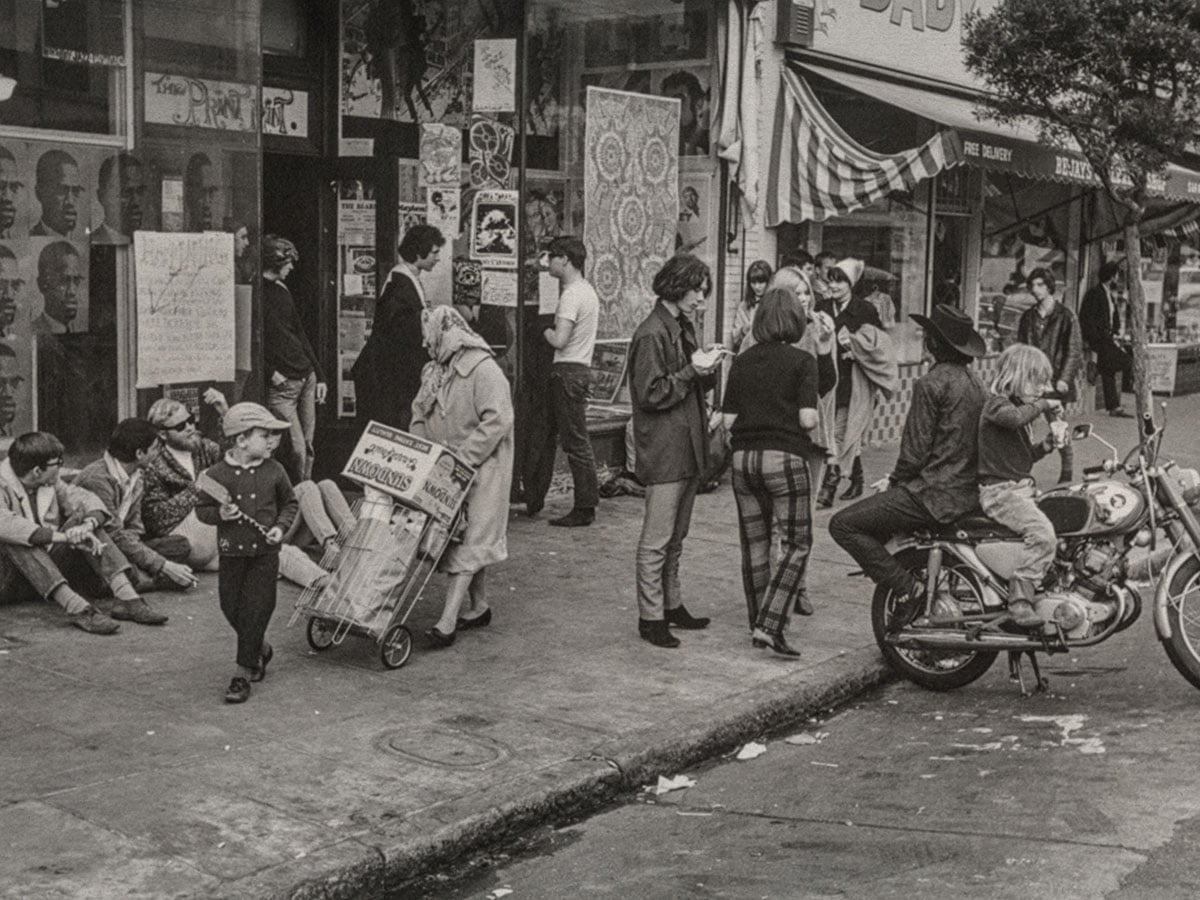
While plenty of the young people arriving in town during the Summer of Love were certainly seeking a spiritual awakening and the promise of a new kind of lifestyle, the media frenzy over the scene had also enticed plenty of bad actors; those who were there for the dope, or the sex, or just to cynically take it all in or take up space. In an unfortunate twist, not unlike what had already happened a few years earlier to the folk music scene in New York, an anti-materialist movement had stumbled into becoming a hot commodity, and the resulting rot began to show pretty quickly, as George Harrison witnessed during his aforementioned visit to the Haight.
One teenage girl who travelled to San Francisco during the Summer of Love, identifying herself only as M, returned to her home in Connecticut later that year and described the experience to her local newspaper, the Connecticut Post. While M still believed that the “Aquarian Age has started” and that “every person, by the mere fact of being alive, is part of the Love Flow of the Universe”, she acknowledged that her fellow Aquarians in San Francisco were a bit of a mixed bag, with a few too many stereotypical “dirty hippies: mostly 16 year-olds who have run away from home and who live by panhandling and who are generally sent to Huckleberry [a homeless youth shelter] and reunited with their families.”
William Schnabel, who was 17 and living near the Haight in the summer of 1967, later became a historian and wrote a book about the scene. Speaking to the LA Times in 2017, the SoL’s 50th anniversary, Schnabel theorised that the media had ultimately killed the Haight-Ashbury by turning it into a cliché.
“If you repeat something often enough,” he said, “It tends to become automatic and people tend to forget what the meaning is. After the Be-In, there tended to be kind of a decline. People started getting more selfish. There were people who were drawn to the Haight-Ashbury because of all the publicity, and because they wanted to take something out rather than give something.”
In the end, that overcrowding and dilution of the ideals of the hippie movement created a much uglier scene than anyone had envisioned, and it also gave conservative critics all the ammo they needed to deride the whole concept of trying to manifest a better world into existence. The hippie movement, by the dawn of the ’70s, would be reduced to a laughing stock by the same media that had sensationalised it, presented as a silly novelty that could never threaten the status quo again.
“It is not innocent to pretend to an innocence impossible for man,” The National Review coldly assessed, “Unacknowledged sinfulness is a deadly poison, ruinous to the individual and to society both”.
