


Five movie masterpieces with one unforgivable element

Every now and then, we come away from the cinema feeling simultaneously inspired and disappointed by what we’ve seen. It could be a spectacular film, but somehow, it leaves you obsessing over one small detail that slightly ruins its overall effect.
It could be a strange editing choice, colour grade or song choice in a pivotal moment that lingers in your mind and slightly haunts you as you wonder why the director was struck by that choice. Why the colour blue? Or the decision to end with that scene? Or the choice of actor in the lead role?
This doesn’t always prevent the film from being a masterpiece, but it’s a tiny nugget of information that persists nonetheless, tainting the impact of something that would otherwise be close to perfect. There are some widely agreed choices that are heavily debated among film lovers and critics, but there are some others that are often glossed over.
So, without further ado, here are five films that have committed creative crimes that cause us to view them through a less-than-perfect lens.
Five great movies with one unforgivable element:
5. Challengers (Luca Guadagnino, 2024)
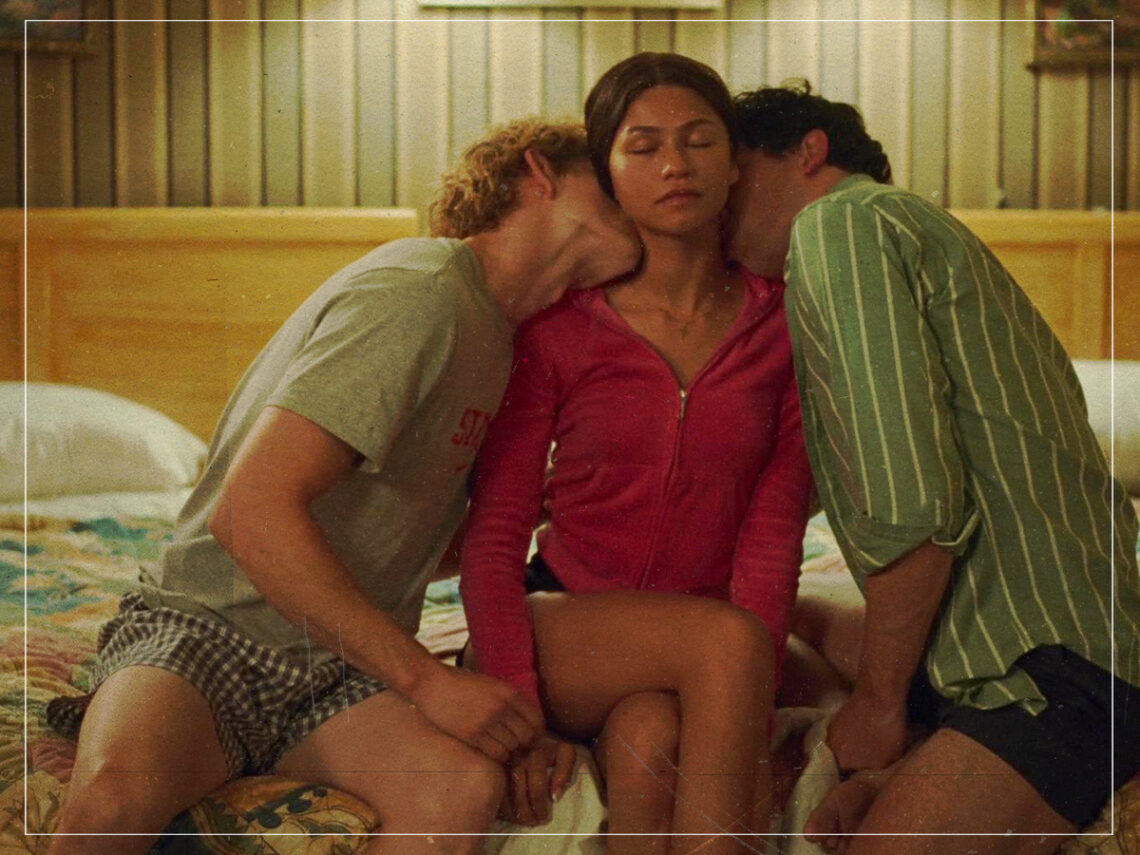
Challengers was one of the most beloved films released this year. With a thrilling love triangle and electric chemistry between the lead cast members, the relentlessly energetic score became the soundtrack to the summer after it burst onto the scene and was endlessly discussed and picked apart online. However, there was one crucial element in the movie that annoyed me beyond belief and still irritated me when I revisited it a few weeks ago.
During the pivotal scene in the hotel room, Tashi tells Art that she will leave him if he loses the match, and she is seen moisturising her legs at the beginning of the conversation. She picks up a tub of lotion and begins to rub it into her skin, with the audience seeing a close-up shot of the lotion as she picks it up and then another close-up of just the lotion as she puts it on the bedside table. After seeing this, I wondered whether this would become relevant later on and that perhaps one of them would throw the lotion at the other person. Why else would we see not one but TWO close-ups of a meaningless tub of lotion?
But no, there was no reason for this to be included. The lotion remained firmly on the table, and nary a tub was thrown at any of the characters involved. I was flabbergasted and flummoxed; why was such a pointless cutaway shot included in such a high-stakes moment? Alas, there was no motivation behind this double shot, and to me, that is absolutely unforgivable.
4. The Devil Wears Prada (David Frankel, 2006)
The Devil Wears Prada is one of those perfect movies that you can rewatch a million times and never grow sick of it. From the flawless outfits, delicious script and stellar performances from Meryl Streep and Anne Hathaway, it’s an undeniable classic that never feels old. But, there is one aspect of the film that I struggle with, and that is the depiction of Andy’s boyfriend, Nate, as being a victim when he is, in fact, the antagonist of the film.
Nate is always painted as the perfect partner who is always supportive of Andy and her ambitions. However, once she starts her new job and has a demanding career in which she can’t give all her time to him, he becomes grumpy and dismissive. He mocks her job when she talks about how stressed she is, and when Miranda is calling her on the phone, he picks up the phone and throws it around, despite knowing that her not answering it would jeopardise her career.
Nate is clearly the antagonistic force of the film, and Andy’s idea that she is a bad partner because she was late to his birthday party while he constantly belittles her career and makes misogynistic comments about the other women in her office is a sick joke.
3. La La Land (Damien Chazelle, 2016)
I love La La Land; sue me. I love the golden era of Hollywood, original musicals and a coordinated colour palette, and all of these elements worked together beautifully in Damien Chazelles‘ story of two struggling artists in modern Los Angeles. Ryan Gosling plays a jazz pianist with dreams of opening his own club, who is painted as the one to lift the genre from the trenches and popularise a dying art form.
This is a questionable element at best, with many people criticising this narrative and the idea that a white man will be the one to save jazz, a style of music created by Black musicians. Sebastien talks about jazz as though he will resurrect the entire genre, something that plays into the white Saviour complex that has plagued Hollywood narratives for many years now, with the likes of The Green Book being a prime example of this.
2. Mother! (Darren Aronofsky, 2017)
Mother! is controversial for many reasons, with some audiences enjoying the anxiety-fuelled allegory and some finding the thematic layers very on-the-nose and explicit. After a little while, you understand exactly where it’s going, and it becomes a bit tedious in the way it keeps escalating a message that you understand after 30 minutes.
After the release of the film, Jennifer Lawrence spoke about the psychological impact of starring in the movie after a particularly damaging scene towards the end, with her character’s baby being snatched from her arms by a group of strangers that have invaded her home and watching as it is torn apart. It is a horrific moment that is grotesque and extremely disturbing, with Lawrence describing how the filming of this scene was very traumatic, with the actor needing a long recovery period after production had wrapped.
The message of the film was clear by this point, and escalating this moment in such an extreme way is unforgivable, with no real need to see something like that depicted on screen.
1. Rosemary’s Baby (Roman Polanski, 1968)
Many view Rosemary’s Baby as one of the most terrifying horror movies of all time. It follows a young woman who moves into a new apartment building with her partner to start a family and becomes haunted by a mysterious presence. It is a chilling portrait that articulates the horror of gender roles through supernatural elements, with Rosemary being gaslit and abused by her husband and slowly discovering this after a number of disturbing occurrences.
However, the fact that Roman Polanski directed this film is what makes it unforgivable, as it is extremely ironic that, once again, a movie about sexual violence and demonic forces was made by the devil himself, who is a perpetrator of these very crimes.
It is only acceptable to enjoy this film if you imagine that it was directed entirely by someone else, but unfortunately, my imagination only extends so far, and I find myself feeling repulsed whenever I think of the man behind it.
