


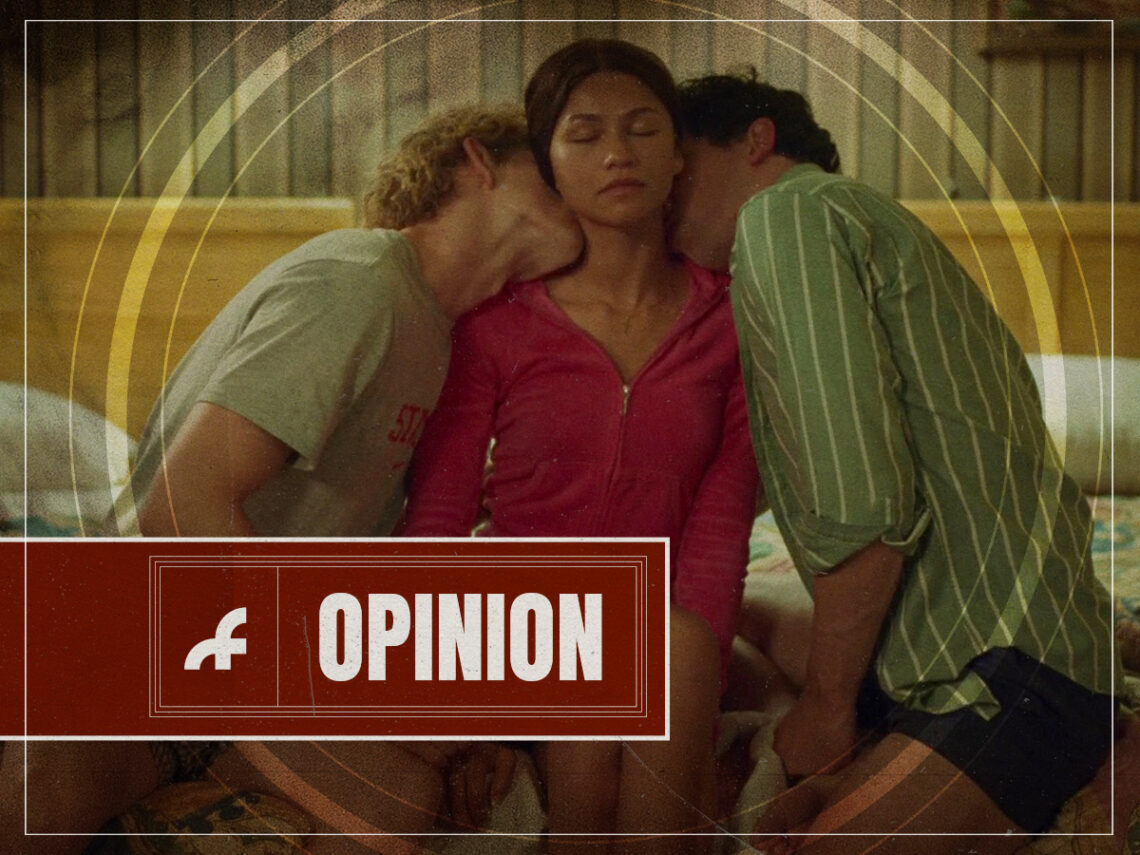
Hear Me Out: ‘Challengers’ should be removed from Luca Guadagnino’s filmography

Luca Guadagnino is a filmmaker who defies easy categorisation, a creative chameleon who seamlessly shifts between styles and genres, making him nearly impossible to pin down. Whether he’s directing a coming-of-age film about cannibals, a love story set in northern Italy, or a tale about a cultish ballet school, each project is vastly different from the last. However, one constant in his work is the thoughtfulness and meticulous attention to detail in his visual storytelling. His films feel like heightened set pieces, perfectly crafted to explore the richness and complexity of his characters.
After the announcement of Challengers, I was beyond excited to see how Luca Guadagnino would handle a steamy love triangle between world-class tennis players. However, as I watched the film, my initial excitement shifted, leading me to reevaluate the impact of his filmography—and even the future of filmmaking itself.
Challengers couldn’t have been more commercially successful—it sparked an endless flood of Instagram reels and videos of people reacting to the music, cinematography, outfits, chemistry, and, of course, the tennis. Oh, the tennis! Suddenly, more people were passionate about Wimbledon, and tennis itself was rebranded as a sexy sport. Yet, despite the impeccable execution of these elements, I found myself feeling underwhelmed and disappointed by the story at its core.
Yes, they all looked good at playing tennis, and the music was very exciting. Besides that, I didn’t feel a thing. The music would chime in every few seconds to remind us that something was “happening” and we should feel excited, but I was so aware of the fact that the music was there to remind us to feel something, and without it, would I have felt anything at all? Besides the back-and-forth whiplash of the quick-paced editing, the innovative cinematography and the anxiety-inducing score, what else was there to Challengers?
This is where I began to feel very conflicted because, in a film as emotionally driven as Call Me by Your Name and even A Bigger Splash, Challengers doesn’t hold a flame next to the impact of a crestfallen Timothée Chalamet crying in front of a fire, or of Ralph Fiennes dancing boyishly to the Rolling Stones. For a film defined by its electricity and sexual tension, it fell short of its humanity and vulnerability, which is ultimately at the heart of sexual relationships, retreating to manipulative tricks and traps to lure the audience into thinking that something is happening when, in reality, not much is happening at all.
It cuts between the past and present without any real drive or intensity, simply teetering between almost kisses and lingering eye contact, without ever committing to or diving into this unspoken well within the story that, to me, was demanding to be felt. Concepts were being explored in a surface-level way because throwing in some phallic-shaped foods doesn’t mean that anything substantial is being said about sex, desire or lust. These ideas were being hinted at, but without really saying anything about these ideas or the people at the heart of the story.
And it left me with one question: who are these people on the tennis court? Does anyone truly know? Or have we all been hoodwinked by the glamorous visual construction and soundscape of the film? It’s hard to say whether the preference towards style over substance will be a commonality in more films moving forward, but with the increasing popularity of films like Saltburn, which to me is no different to Challengers in what it attempts to do, it seems as though mainstream cinema is heading in this direction.
However, with Queer, Guadagnino’s new film starring Daniel Craig, premiering at TIFF, I’m eager to see if he will return to his roots and offer the beautifully human, nuanced storytelling he’s known for or if he will stick to the Challengers formula of prioritising style and aesthetics. Although I could go without another addition to the “Guadagnino universe”, he undeniably holds my attention with whatever he chooses to create. Regardless of the story he’s telling, he remains one of the most stylish and talked-about directors today.
