


Five albums that predicted the modern world

As music poses as an art form that reflects the outside world, musicians and songwriters alike, intentionally or not, become their own versions of fortunetellers.
No human can ‘predict’ the future, but a musician can use their art as a precursor to a phenomenon, consciously or otherwise, and albums that fall into this category foresee something that is timeless, whether negative or positive, and amplify it in a way that provokes joy, discomfort and every emotion in between. In their lyricism, they expose the preoccupations that society remains plagued by today, the obsessions and fascinations that define the ways we dress, speak and conduct ourselves in our day-to-day lives.
There is something telling about the ways that an album can reflect our reality, yielding the sensation of a given songwriter observing us from afar, producing a song that feels personal beyond comprehension. This is also more obvious when musicians veer into overtly political, socially-conscious songwriting, using their talents to sing of current events as a marker of history, to be listened to with a keen ear.
Below are five albums that capture that very sense of transcending time, whether that be crafting a sound that inspired a generation of musicians to follow, prompted a trend that situated itself within the technology of the modern age, or remarked on the world around them that has changed very little, in the years since.
Five albums that predicted our modern world:
Gorillaz – ‘Gorillaz’ (2001)
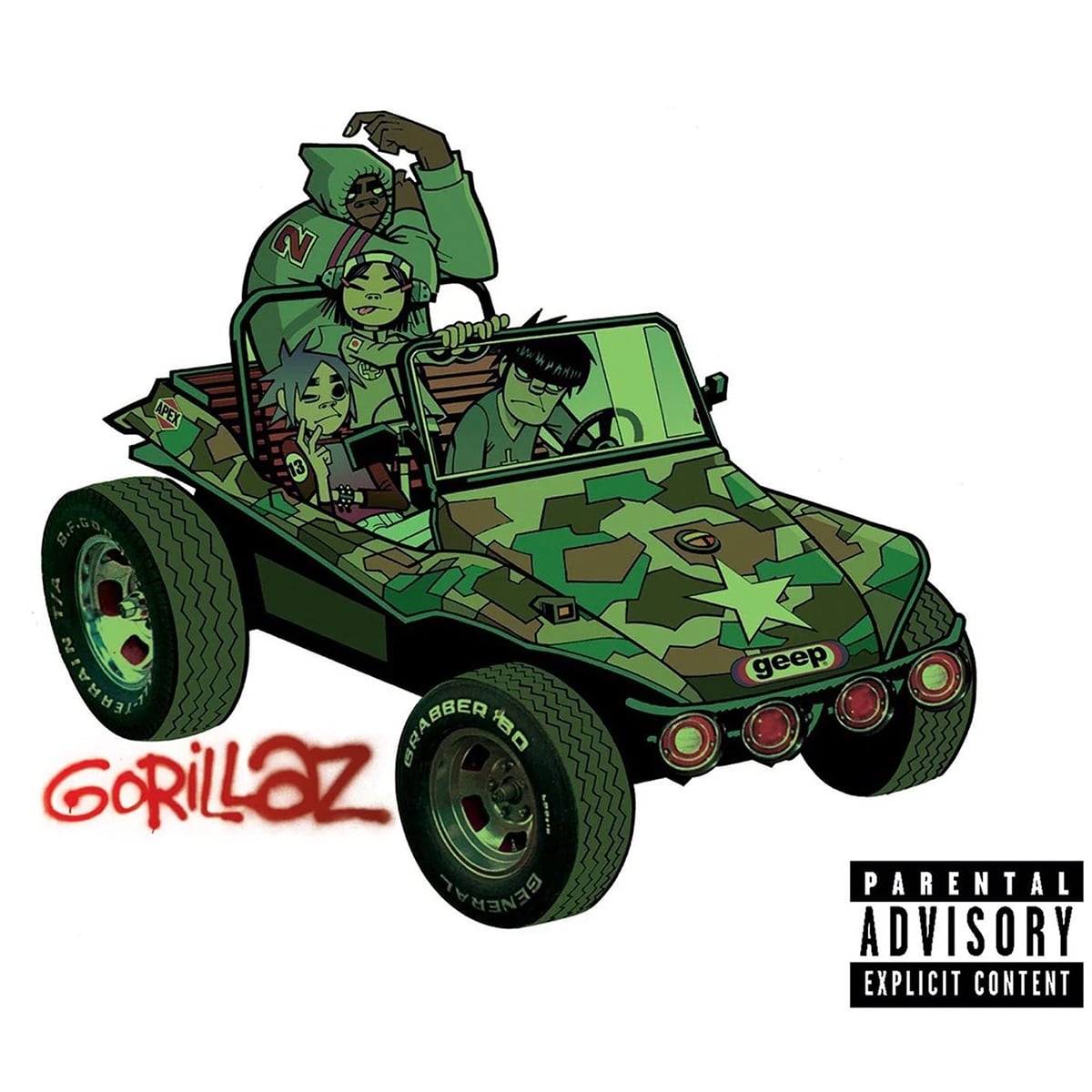
While not the first virtual band to emerge in music, Gorillaz were certainly the ones to introduce a new kind of fiction, one that debuted just before the internet stretched from the comfort of our homes to our fingertips.
Blur’s Damon Albarn and comic artist Jamie Hewlett (co-creator of Tank Girl) began conceptualising a cartoon band after watching MTV, as a commentary on the lack of substance in music television. In contrast to the boy band era, their first album, Gorillaz, broke through with the introduction of four cartoon musicians, 2-D, Murdoc Niccals, Noodle and Russel Hobbs, standing in place of Albarn and his band, as he departed from the spotlight, in a way, to allow a virtual form to take centre stage.
Today, with virtual pop acts like K-Pop Demon Hunters and melodic death metal band Dethklok, formidable in their respective genres, it is curious how Gorillaz set a precedent for virtual musicians to come to life in real-time, acting as a sort of ‘mask’ for the people behind the music, where fantasy can dominate reality.
Lana Del Rey – ‘Born to Die’ (2012)
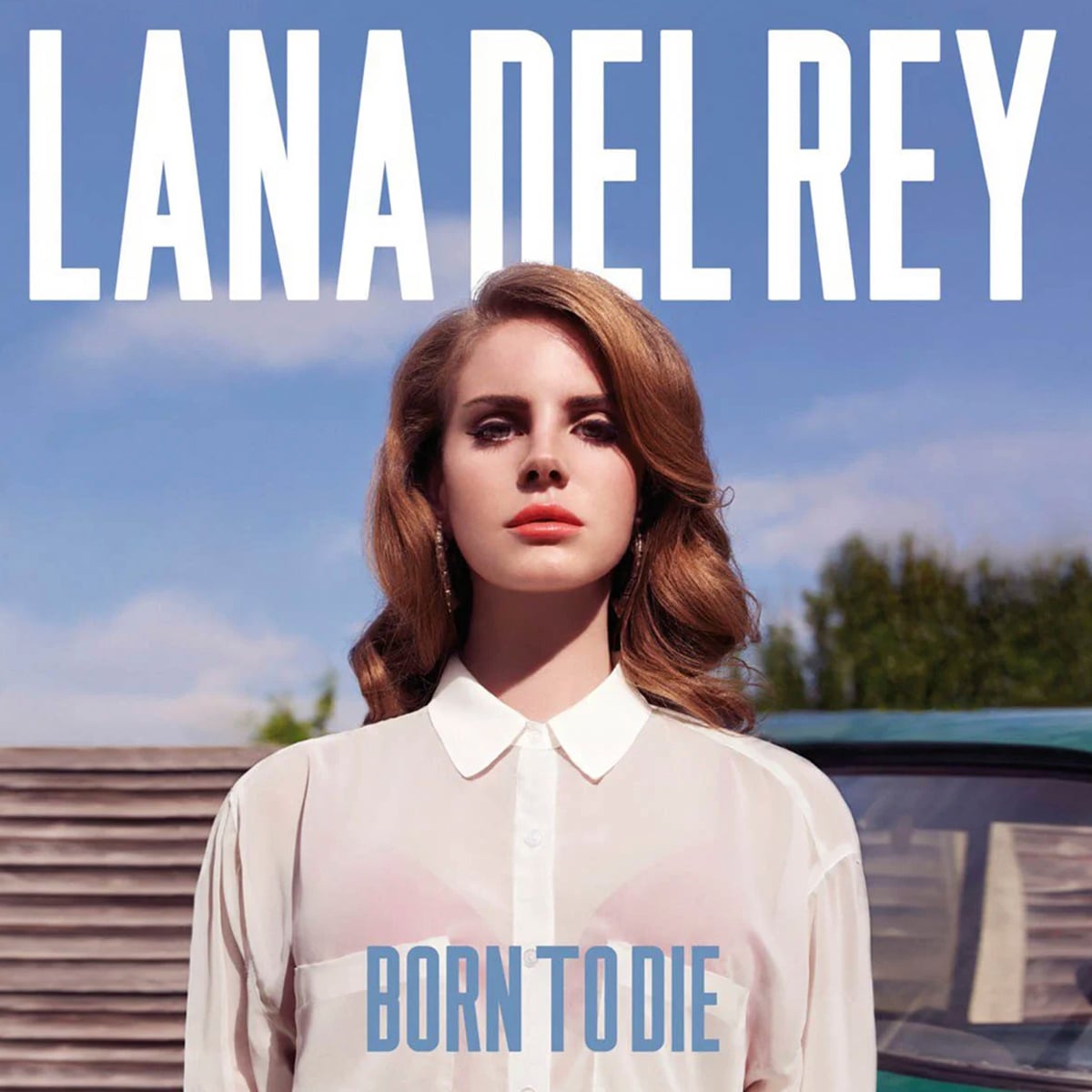
Less of an obvious prediction in its contents, Born to Die is the baby blue-hued marker of a shift in pop music; without exaggeration, pop after its release has never sounded quite the same. Thus, Born to Die ranks among the predictors of a modern world in its innovation. It is the longest-charting album by a female artist on the Billboard 200 because of its unshakeable influence, which now spans generations; how can it not be seen as a sort of predictor for the future of music?
Part of the album’s continual allure is its coexistence between, and infatuation with, the past and the present, where it can be said that Del Rey, in her unique way, foresaw the obsession with aestheticising the idea of ‘the past’, for better or for worse, and she leans into this juxtaposition with unbridled honesty. This fixation, whether it translates into parsing aesthetic inspirations, reviving popular music of previous decades, or revisiting cultural turning points, is more rampant than ever, idolised and immortalised on social media as a generational sentiment gone by, constantly copied but never truly duplicated.
As Del Rey crafted this persona for herself, she too understood the power in imagining how elements of the old can exist with modernity and the new, both aesthetically and sonically, and in her efforts came a timelessness unlike any other artist before her, or who has emerged since.
Jefferson Airplane – ‘Surrealistic Pillow’ (1967)
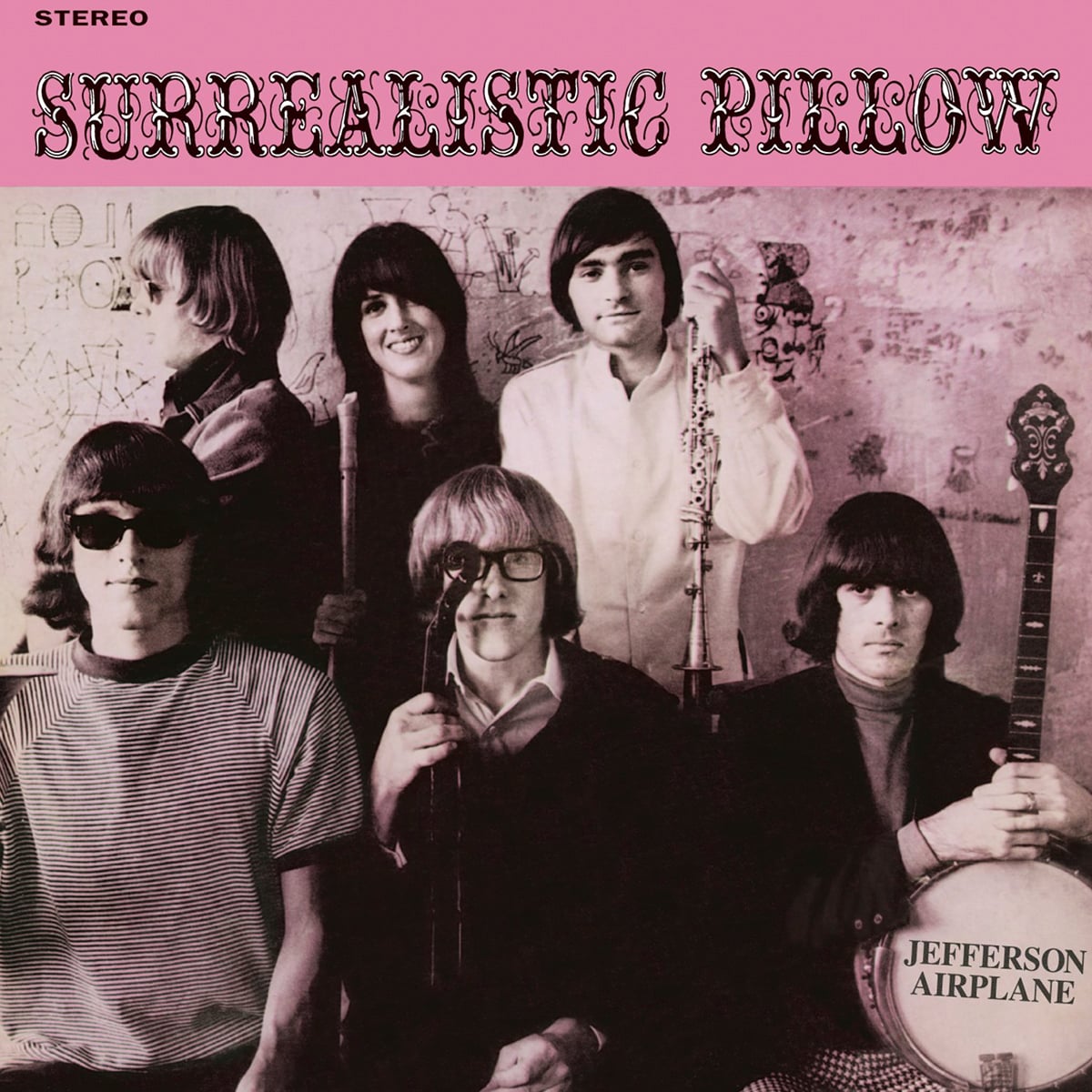
Jefferson Airplane’s second album was the indicator that something in music was brewing over in San Francisco, and they were the first to put the merging of folk rock and psychedelia on the map. Arguably, Surrealistic Pillow was not just the original but also the greatest depiction of the then-modern culture, predicting, in a way, how psychedelia would be seeped into pop music, forever.
For instance, ‘White Rabbit’, outside of the obvious drug references, shows escapism through fiction, its clear homage to Alice’s Adventures in Wonderland being an early example of bringing a literary world into song, blurring the line between fiction and reality, entirely. Jefferson Airplane foresaw the value in showcasing the strange and unusual, turning ordinary love songs and reflections of bohemia into trips of their own.
Consider how our nostalgia-driven culture cannot seem to forget the idealism of the 1960s, the optimism of the counterculture, the free-love and experimental drug-use (however dangerous this became, in hindsight), and the overarching sense of change still holds a bit of hope. Modernity is as obsessed with evoking images of the past now than it has ever been, and Surrealistic Pillow stands at a landmark with endless inspirations.
Green Day – ‘American Idiot’ (2004)

The title of American Idiot speaks for itself. Released in 2004, in the aftermath of post-9/11 American turmoil and in the midst of the Iraq War, Green Day, like all Americans, could not help but be struck by the ascendancy of right-wing politics and ideologies and, in tandem, a more general dissatisfaction and apathy, on a social level. In turn, the band crafted what they referred to as a “punk rock opera”, a concept album telling the story of Jesus of Suburbia, an adolescent, suburban lower-middle-class anti-hero who represented the social discontent in America.
As the story ensues, there is the evident objective of tackling American culture head-on, critiquing mass media and subsequent paranoia, conformity versus individuality, the fragility of relationships, and, clearly, the government. Green Day does so with an operatic flair, choosing to forego typical song structures to merge multiple songs in one, imagining a new way of storytelling through song that the band had not utilised before.
While clearly brilliant in its conception, American Idiot continues to stun listeners because, unfortunately, it is just as resonant as it was nearly 22 years ago. Green Day, therefore, may not have predicted anything; rather, they simply held up a mirror, and not much of the reflection has changed.
Radiohead – ‘OK Computer’ (1997)
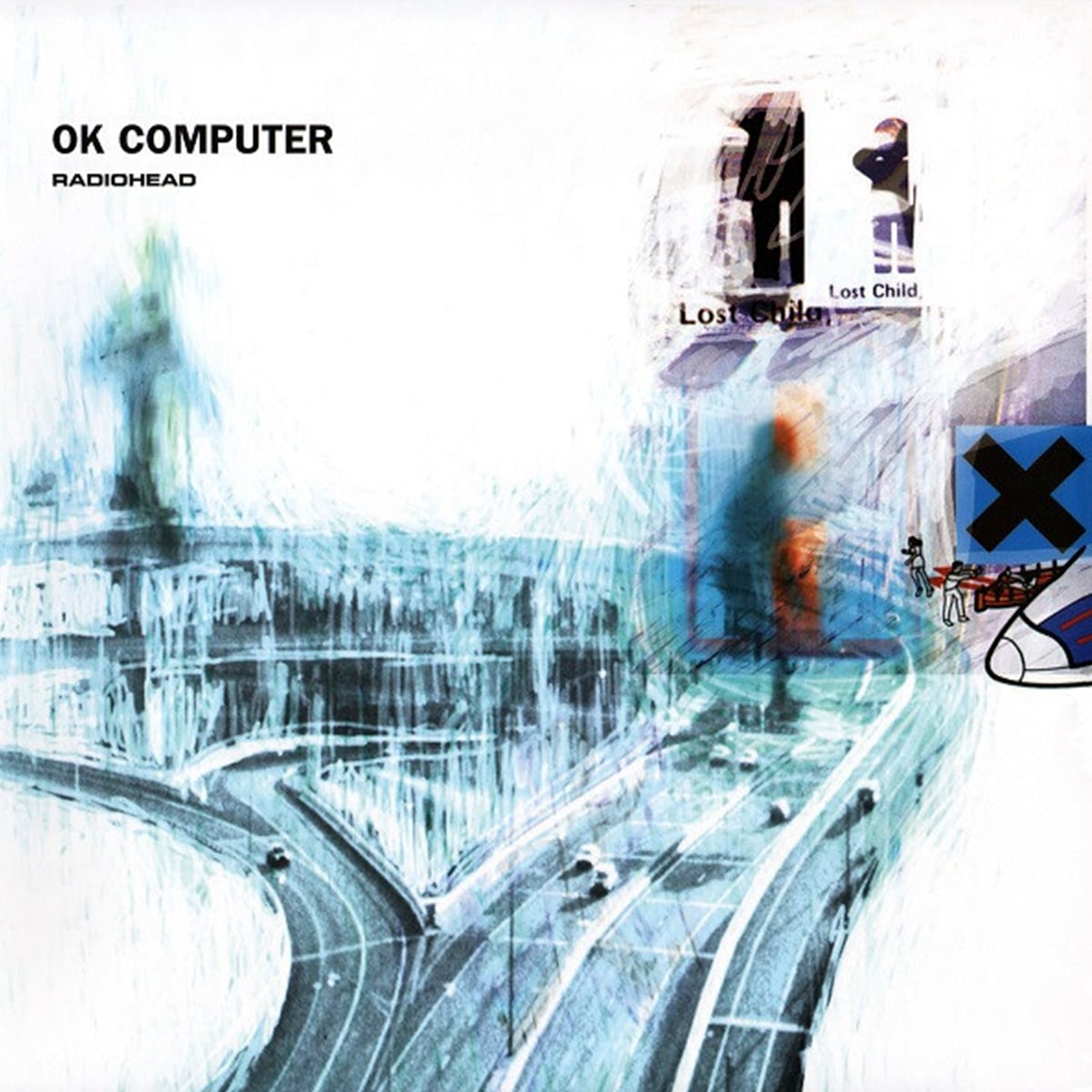
No list that attempts to surmise the act of prophecy in music history would be complete without the genius of OK Computer. The album was Radiohead’s unprecedented triumph (their label saw the collection as uncommercial and nearly impossible to market), as the band conceptualised a dystopian world immersed in an anxious, overwrought, paranoid frame of mind, dominated by rampant consumerism, technological advancement, political turmoil and social isolation, too close to the darkness that pervades culture today.
“I’m just taking Polaroids of things around me moving too fast,” Yorke offered as an explanation to Melody Maker. The resulting 12 songs are jarring and strange, evidently enraptured by electronica as much as their familiar guitars and drums. Even the quietest songs, however, have an underlying fear, and where the album lacks a linear narrative, it makes up by evoking the jolt of anxiety, jumping from one disorderly frame of mind to the next.
The Polaroids in Radiohead’s collective mind coalesce to form a common sense of disarray, immersive and inescapable. Such is a rumination on the state of the world that has only been exacerbated with the speed of innovation we’re tasked with today, with AI seemingly taking over every corner of the internet and technology itself becoming more and more ingrained into our every day.

Never Miss A Tale
The Far Out Classic Rock Newsletter
All the latest Classic Rock content from the independent voice of culture.
Straight to your inbox.