


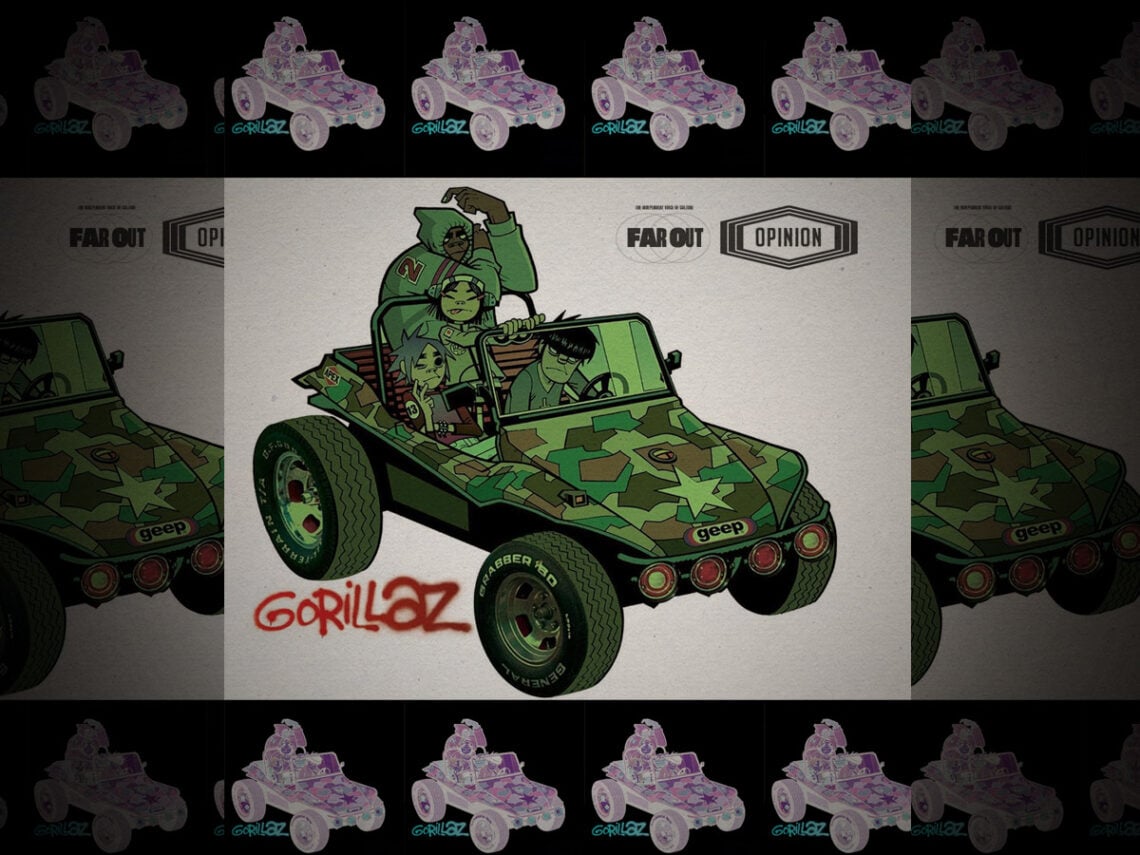
The Gorillaz debut is still a generational album over two decades later

A lot’s happened for Gorillaz in 25 years since their debut.
The little virtual side-project of Blur’s Damon Albarn and cartoonist Jamie Hewlett has exploded into one of the 21st century’s biggest-selling UK pop exports, with over 38 million album sales and pulling a glittering cameo roll-call of music’s lauded heavyweights and underground up-and-comers to join the Gorillaz jamboree. There’s no slowing down, the Gorillaz gang are currently in their ‘Phase Eight’ chapter of lore as they seek Mumbai mysticism away from the trappings of stardom around the concept of their latest album, The Mountain – or पर्वत to give its official Devanagari title.
Such lofty ambitions across animated shorts and high-brow musical palettes have pulled Gorillaz into a wholly different beast than when they first landed on the charts back in 2001. Albarn and Hewlett are still driven by their founding ethos, which was chiefly to offer intrepid kids the chance to sink their teeth into a little slice of cultural esoterica and music’s off-beaten corners not on offer among the mainstream, a mission agenda only more pertinent in the age of doom-scrolling and TikTok inanity.
“So they’re learning about Vlad the Impaler, or Ronald Searle, or The Specials,” Hewlett revealed in a 2006 fan interview. “So it’s like an education. They really get into it. And they discover it, the music we grew up on.”
Noble efforts to provide the young and curious with a pop gateway to further hinterlands of discovery still hold true all these years later. One glance at The Mountain’s lead single, ‘The Happy Dictator’, sees Spotify streams in excess of 25million, not a number you can reach without today’s teens hitting play repeatedly. Most will be swept up in its sprightly euphoria, yet a handful’s interest will be piqued by the strange falsetto vocals that weave in and out, prompting an investigation into guest stars Sparks’ eccentric body of work. Another job well done in the Gorillaz school of alternative education.
It was way back in 2001 when Gorillaz best served Hewlett’s pop tutelage. Before the cartoon group’s arrival, the only successes in the virtual band category, outside East Asia at least, were the long-running Alvin and the Chipmunks franchise and The Archies’ bona fide bubblegum hit ‘Sugar Sugar’. Jump to 1998, and both Hewlett and Albarn were sharing a flat in London’s Westbourne Grove and grew strangely inspired by the dross beaming out of the day’s MTV. “This was the beginning of the boy band sort of explosion,” Albarn reflected to Hot 97 in 2017. “And it just felt so manufactured. And we were like, ‘Well, let’s make a manufactured band, but make it kind of interesting.’”
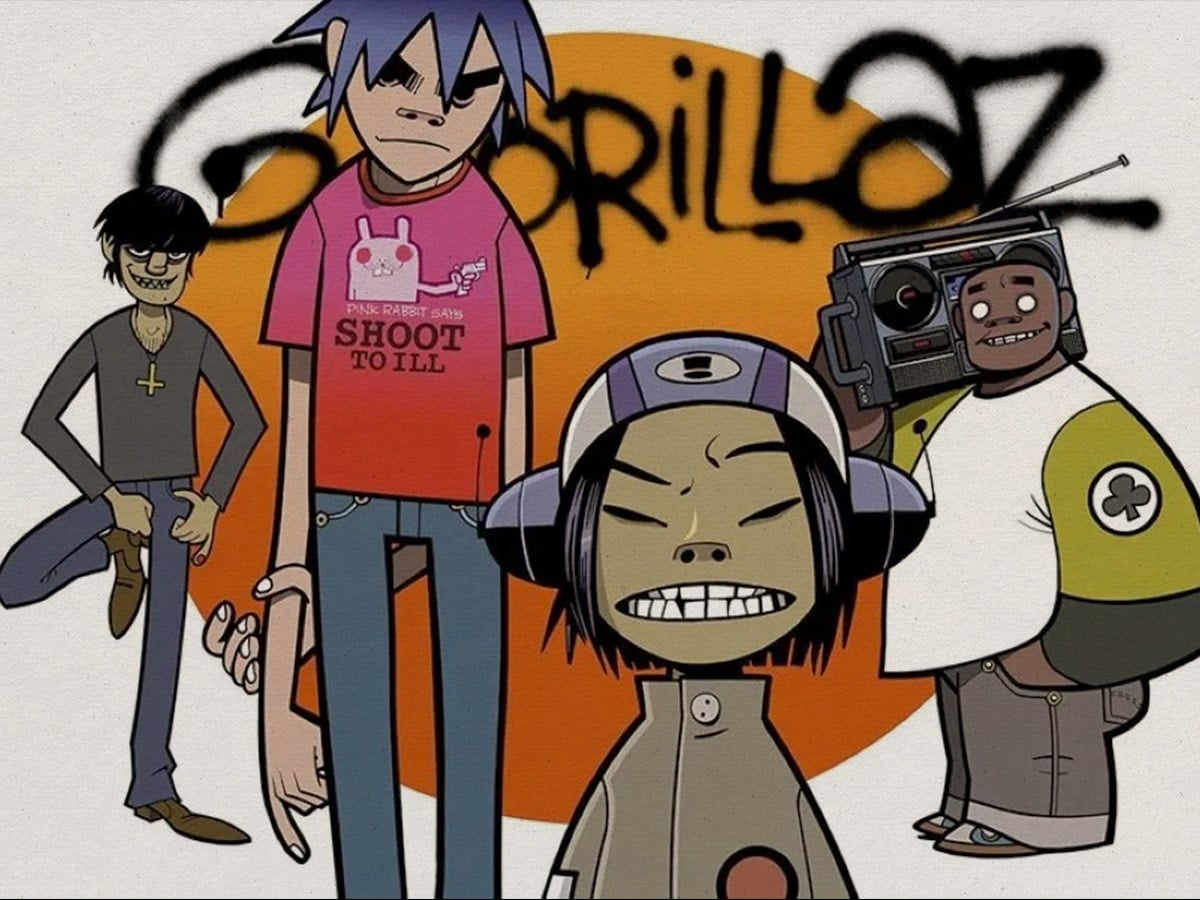
With Albarn’s pop pedigree in Blur and Hewlett’s stature in the comics world after Tank Girl’s success, the two sketched out the Gorillaz project. Free to explore new styles beyond Blur’s peripheries, Albarn poured his fervent interest in hip-hop, dub and electronic music into 2000’s Tomorrow Comes Today EP, a low-key release in the UK Singles Charts that nevertheless introduced the world to 2-D, Murdoc, Noodle, and Russel with the title-track’s debut video.
It would take the mammoth success of ‘Clint Eastwood’ to herald Gorillaz’s true arrival four months later. An infectious and insanely hooky slice of languid pop charged with the all-important Omnichord ‘rock 1’ setting for its riddim beat and Del the Funky Homosapien’s spectral rap, the project’s first official single perfectly presaged the heady brew of styles and sounds that scored Gorillaz as it landed on album charts March 26th, 2001.
Pop was in a crisis during the early years of the 21st century. Britpop had lapsed into beige dirge like Travis or Starsailor, rap had begun to trundle into the dregs of Ja Rule, and the world of heavy rock was dominated by nu-metal’s frosted-tipped silliness. Nobody asked for an album like Gorillaz, but when the kids eagerly grabbed the cartoon group’s LP debut and sent it to number three in the charts, plenty of wildly differing flavours were unwittingly gobbled up amid the otherwise drab offerings in the pop sphere, or at least for pre-teens keen on something outside Destiny’s Child or Eminem.
Hewlett’s educational role kicked off with flying colours. Among Gorillaz’s team was Dr Octagon producer Dan the Automator sharing studio duties, Buena Vista Social Club singer Ibrahim Ferrer, one-half of Cibo Matto Miho Hatori, and Talking Heads bassist plus Tom Tom Club member Tina Weymouth.
Between them all was Gorillaz’s juicy sonic canvas, from ‘Latin Simone (¿Qué Pasa Contigo?)’s chopped and screwed Latino, ‘Starshine’s synthesiser gunked folk, ‘M1 A1’s Day of the Dead sampled zombie lurch, ‘Double Bass’ cavernous grooves, and the earlier glimpsed ‘Tomorrow Comes Today’s forlorn trip-hop wander. For the average young teen, such pop flair was potently new in impressionable ears.
Then there was the band itself. Anyone lucky enough to have been around ten-12 years old when Gorillaz came out would have remembered the sheer intrigue of 2-D, Murdoc, Noodle, and Russel’s cartoon cool on the subsequent ‘19-2000’ and ‘Rock the House’ videos, as well as that brief moment when it was genuinely unclear who the group actually was.
The world Albarn and Hewlett had created was a more befitting universe to the debut album’s lo-fi, scrappy charm. Before later albums’ grander explorations of politics and philosophical ponderings, the Gorillaz gang dwelt in a more acerbic realm of celebrity potshotting, existing in the Kong Studios and granted access to Murdoc’s secret Winnebago on the official website if using the album disc’s CD-ROM enhancements.
Gorillaz have grown to be a colourful and vital asset to the world of pop, still able to command teen attention nine albums later. While the entire Gorillaz oeuvre offers plenty to immerse any music fan, no matter how old or young, it’s their debut 25 years ago that best realises Albarn and Hewlett’s efforts to offer kids the ultimate manufactured pop group and lead toward greater musical excavations, an inquisitive radiation bottled in 2001’s Gorillaz that, while debate can be had about their best album, stands as without a doubt the finest LP example of just what a virtual band can be capable of.
