


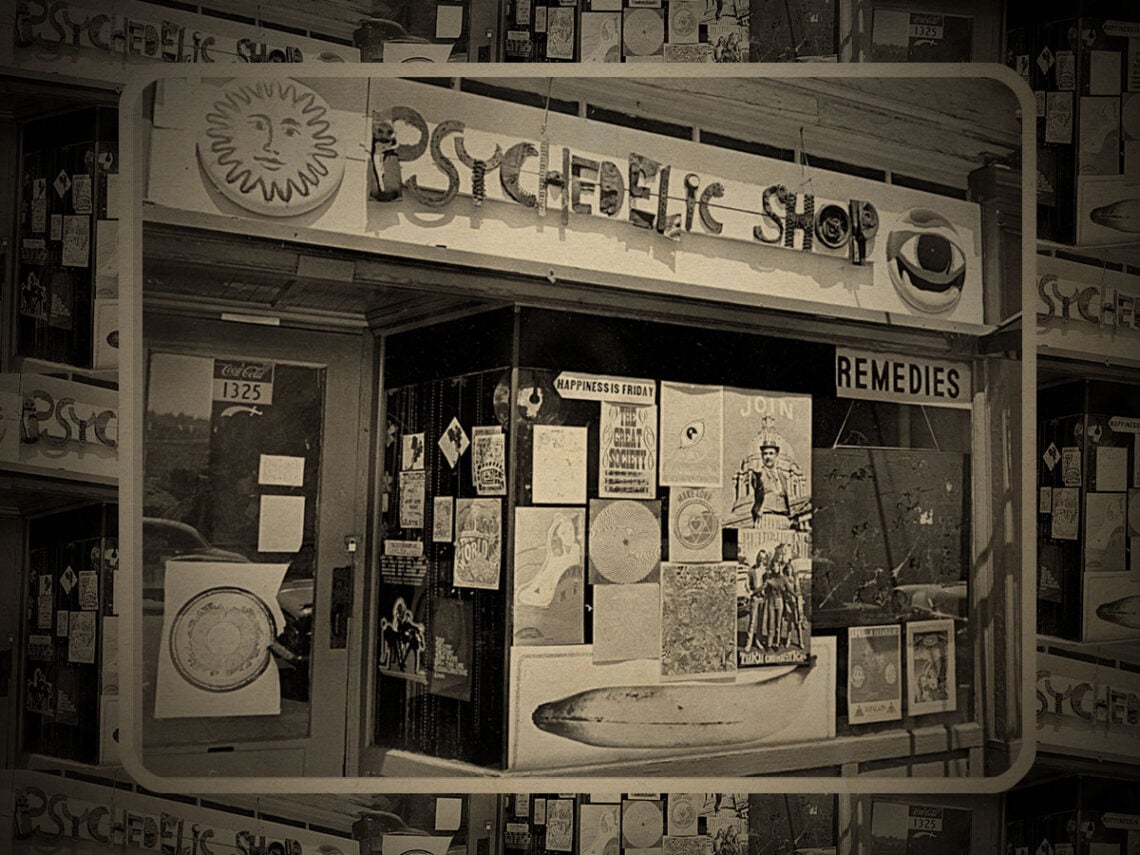
The Psychedelic Shop: the first Haight-Ashbury store to commercialise the counterculture

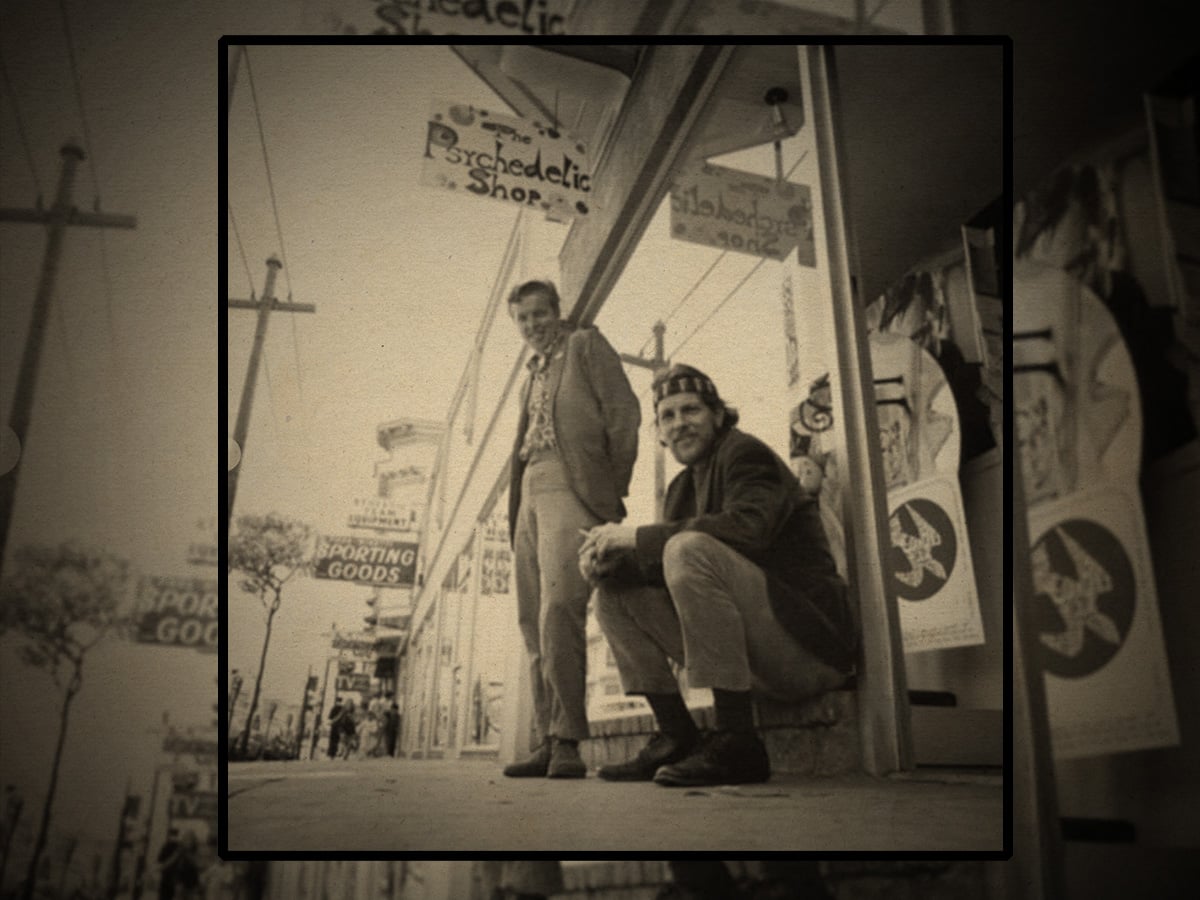
A cultural centre of Haight-Ashbury, and the ensuing Summer of Love that was soon to come, was The Psychedelic Shop, founded by brothers Ron and Jay Thelin on January 3rd, 1966.
Following in the footsteps of the Beatniks before them, the Haight-Ashbury neighbourhood had been christened as the enclave for the incoming hippies to San Francisco, attractive for its Victorian architecture, affordability and its insular feel while being surrounded by the best of the city. At 1535 Haight Street, The Psychedelic Shop became the hub of the culture.
“I think San Francisco is the holy city,” Ron Thelin expressed in an interview with the KRON4-TV San Francisco news channel in 1967. “I think it’s going to be the mecca of the West.”
The Thelin brothers – whose father once owned a Woolworth’s location, just across the street from 1535 Haight – conceptualised a space that would cater to the every need of a new-age student of psychedelia and spirituality, “everything an acidhead might be interested in,” as author Charles Perry described.
Initially, in the range of books on the metaphysical, the occult and Eastern religion, their store’s items expanded to include imported bells, beads, mandalas, music records, posters and a wide range of incense; they also sold tickets to the dance concerts held in the neighbourhood. Further into the space, the meditation room offered tranquil sessions for visitors passing through.
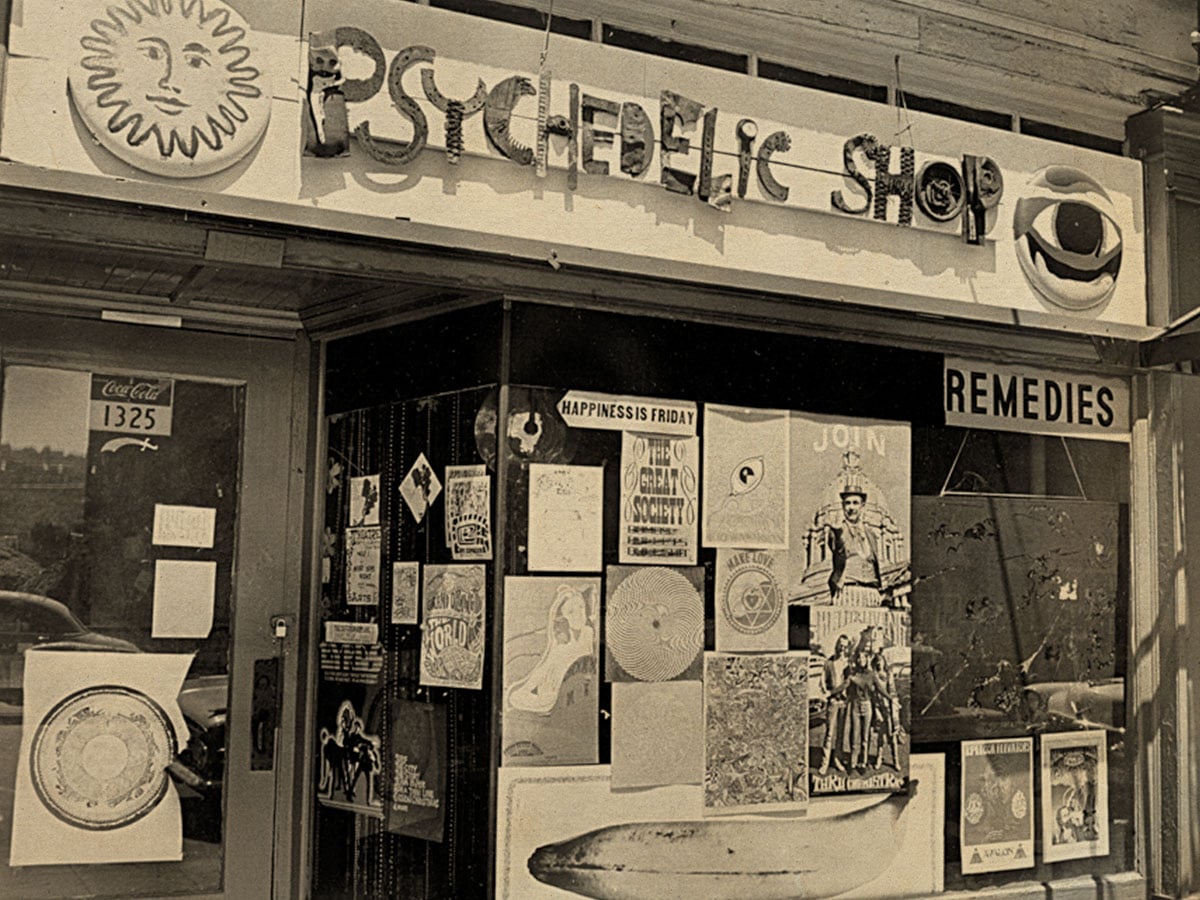
Then, in their mid-20s, the brothers’ intention for their shop was a personal search for convenience: the books that intrigued them could only be found across occult and technical bookstores, or newsstands, while the Indian music records they enjoyed were sold elsewhere, as were the incense and marijuana paraphernalia. At The Psychedelic Shop, all could be found in one common space, a store that was not necessarily conceived as a gathering place, but was welcome to those looking for somewhere to meet like-minded people, nonetheless.
“There’s no tradition, or no history, in our country of a real, spiritual kind of life,” Ron explained of the community he and Jay helped forge in San Francisco. “We’re confused right now. We’re trying to find out what it means to have a spiritual, wholesome life, and still be able to function daily [and] still be able to live.”



The Thelin brothers were joint at the hip from birth: born just 11 months apart, Ron and his younger brother Jay walked through life together, so much so that when it came time for Ron to enrol in school, his upset reached a point where he was held back a year, just so he and Jay could enrol as twins. Together, they joined the Eagle Scouts as children, enlisted in the Army together (Ron would be stationed in Taiwan; Jay would be in Fort Sill, Oklahoma), enrolling at San Francisco State and running a “flophouse” (a cheap hotel/rooming house) in the Haight neighbourhood, which they poured their savings (including a down payment of $300 each) into.
At that time, the hippie counterculture was barely nascent; the bands who would record their major soundtracks, including Jefferson Airplane and the Grateful Dead, were just beginning. Dennis McNally, author of 2025’s The Last Great Dream: The Origins of the 1960s Counterculture, described The Psychedelic Shop to the San Francisco Chronicle as the first institution pivotal in having “established the street as this phenomenon”.
“The Psychedelic Shop was the linchpin to the world’s first psychedelic neighbourhood,” he expressed.
From McNally’s account, Jay Thelin was radicalised by reading the New Yorker’s excerpt of James Baldwin’s The Fire Next Time, and soon, he dabbled in hallucinogenics, informed by a lecture given by the psychedelic psychologist Richard Alpert, also known as Ram Dass. Struck with the idea that informed what would become The Psychedelic Shop while painting a house in Truckee, California, Jay saw the vision for the space as providing the materials necessary to have a positive trip while on hallucinogens. Four blocks away from their house, The Psychedelic Shop would open its doors.
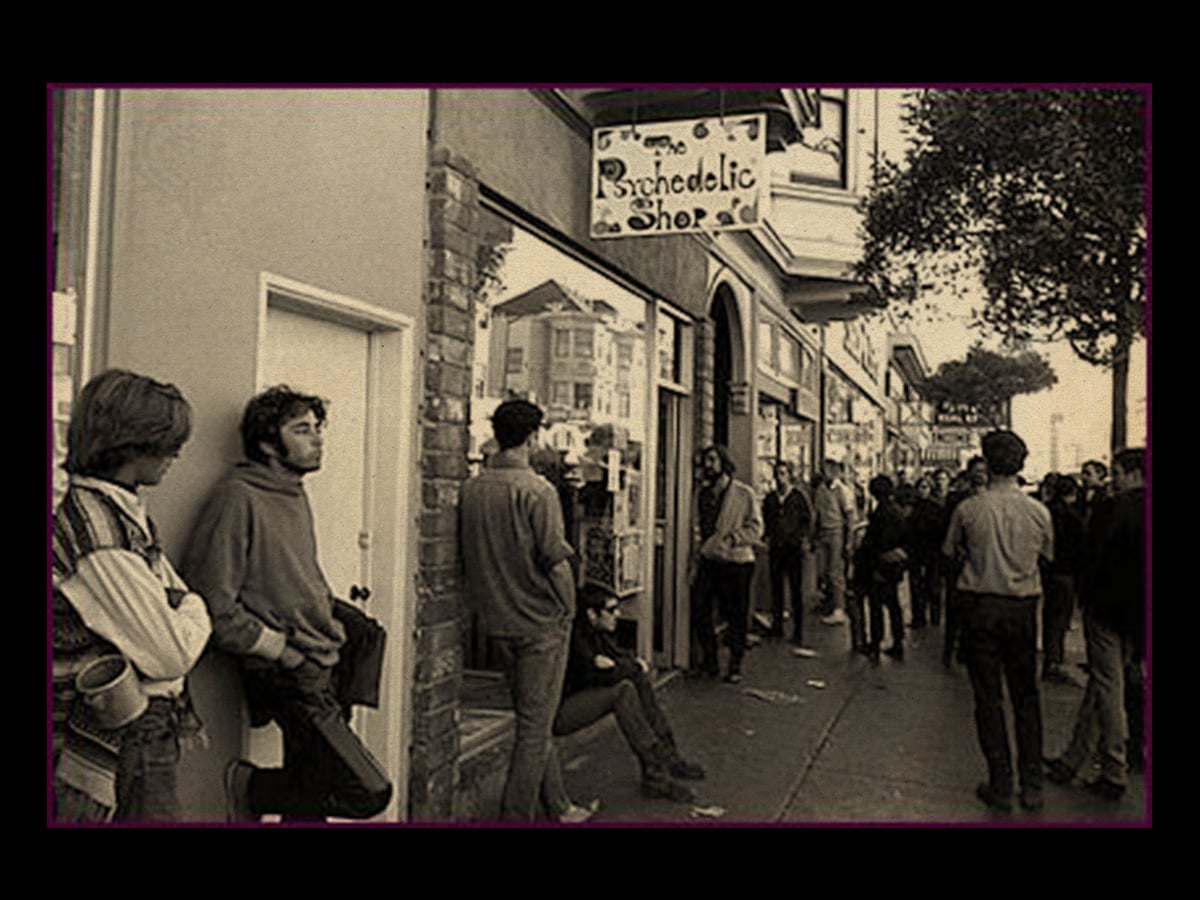
According to Perry, on opening day, an anonymous note was slid under the door of The Psychedelic Shop, condemning the Thelin brothers for “selling out the psychedelic revolution”. This began the ongoing tensions between the shop and the city for the next year of its life. That November, the shop was raided by police for selling “obscene” material – the material in question, being a collection of poems by Lenore Kandel called The Love Book, was seen as a “threat to society” to be banned, and thought by neighbours to be prompting lewd thoughts amongst customers. The Thelins were not in town at the time, but in their place was the writer Allen Cohen, founder of the San Francisco Oracle. The ordeal was followed by the longest trial in San Francisco history, a five-week trial where the jury decided that The Love Book was too obscene for public consumption.
Still, in the midst of controversy, The Psychedelic Shop remained a staple, both for locals looking to connect with the community and for curious visitors in the Haight-Ashbury neighbourhood. It also became, as Danny Goldberg describes in his 2017 book, In Search of the Lost Chord: 1967 and the Hippie Idea, “the prototype for hundreds of ‘head shops’ that would open up across America in the coming years,” that is, a store that carries drug-related paraphernalia – the brothers’ focus, however, was not on selling any controversial items; rather, they wanted to promote the idealism behind the counterculture that was taking shape, which included such experimental drug-taking and the expansive consciousness that could be tapped into.
“The reason we can no longer identify with the kinds of activities that the older generation are engaged in is because those activities are, for us, meaningless,” Jay expressed to KRON4. “They have led to a monstrous war in Vietnam, for example, and that’s why it’s all related – the psychedelics and the war, the protesting, the gap in the generations.”
He continued, with a slight laugh, “I would suggest that any parent who is seriously concerned about his relationship with his son or daughter, that you try turning on with them. I think this would be very useful.”
As the summer of 1966 came to a close, several thousand burgeoning hippies came to live in the Haight-Ashbury neighbourhood, the beginning of an influx of people – primarily young, sometimes underage runaways and postgrads seeking a community – into the city. That fall, Ron offered the initial investment of $500 into Allen Cohen’s San Francisco Oracle, an essential publication of the counterculture with essays by and about some of its largest figures, from Allen Ginsberg to the aforementioned Richard Alpert/Ram Dass and Timothy Leary. The publication eventually reached worldwide, but it simultaneously received the scorn of the Diggers, a local theatre troupe and radical community-action activist group who denounced the Oracle for “[catering] to the new, hip, moneyed class by refusing to reveal the overall grime of Haight-Ashbury reality”.
The Diggers did some great work in their efforts, offering mutual aid through free food, medical care, housing, clothing and more while organising community events of their own. They also humbled the idealism of the era by reminding those of the dangers of commercialising the counterculture. There was, then, a correlation to the founding of The Psychedelic Shop, which, however well-intentioned, profited from such idealism. The Diggers grew suspect that stores like The Psychedelic Shop – who gathered under the Haight Independent Proprietors (HIP) – were hoping to profit from the publicity of gatherings such as the “Be-In” in San Francisco, in attracting more tourists to Haight-Ashbury. For Ron, a profit was not at the forefront of any of his motivations; instead, there was a need to return to a semblance of humanity in its purest form.
“The direction I see it taking is getting back to the land and finding out how to take care of ourselves,” he explained to the Oracle, soon after the Be-In, “how to survive, how to life off the land, how to make our own clothes, grow our own food, how to live in a tribal unit.”
The Thelin brothers’ intentions behind their Psychedelic Shop, however, would not last for long. On October 6th, 1967, three months shy of their two-year anniversary, Ron would host a funeral procession for ‘The Death of the Hippie‘, officiating the end of the hippie era amongst unwarranted media attention, sensationalising and mounting pressures of overpopulation, disillusionment and addictions beginning to take their toll on the culture’s onetime idealism.
At the funeral, the sign that once hung over The Psychedelic Shop was placed in the coffin, among the remnants of other various hippie memorabilia. The day also marked the closure of the shop; faced with mounting debt, Ron gave away the store’s remaining merchandise: concert posters, pipes, books, beads, trinkets, incense and rolling papers.
Ron would eventually move to Marin County, California, where he worked as a cab driver, a mason and a carpenter until his death from cancer in 1996 at the age of 57 – his brother, Ron, lived in Nevada City, California, with a career building wood-burning stoves, until his death from heart failure in 2023 at the age of 84.
Today, 1535 Haight Street is a Slice House pizza location, and while it was to be short-lived, The Psychedelic Shop was a defining epicentre of the counterculture that seeped into Haight-Ashbury’s legacy.
