


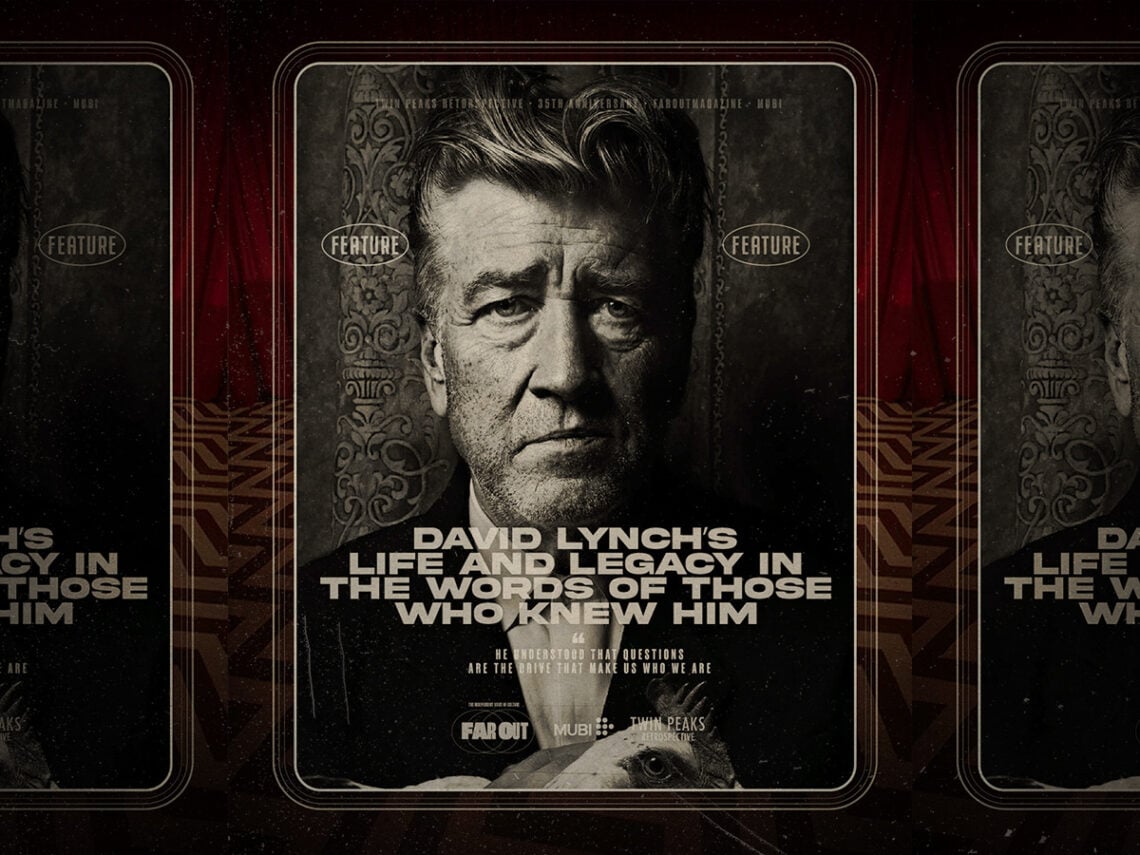
David Lynch’s life and legacy in the words of those who knew him: “He understood that questions are the drive that make us who we are”

David Lynch didn’t know what the box and the key were all about, either. Fans of Mulholland Drive have been debating the significance of those cryptic objects for decades, and that’s exactly how the director wanted it. “There is a circle that goes from the audience to the film and back,” he said. “Each person is looking and thinking and feeling and coming up with his or her own sense of things.”
No two people see a David Lynch film the same way. Despite being one of the only true auteurs of the medium, an artist whose work is unmistakable in all its confounding darkness and disarming warmth, Lynch viewed his audience as collaborators, of a kind. Throughout his career, he avoided explaining his work, not out of some arrogant sense of artistic untouchability but out of respect for what each person brought to the table. “I like the saying, ‘The world is as you are,’” he wrote. “And I think films are as you are … Every screening is different.”
Perhaps it is this generosity of spirit, his Midwest cosmic cool, that made the man behind Eraserhead and Blue Velvet such an enigma. If he had been a monosyllabic grouch who waved away questions about his work like a king waves away a plea for clemency, he would not be the cult figure he is today. His work stands on its own, as he intended, but his easygoing public persona, modulated as it was by his decades-long adherence to transcendental meditation, helped refocus the conversations surrounding his filmography on expansiveness and possibility rather than on gatekeeping interpretations.
There’s a reason generations of viewers have shown up year after year to discover Twin Peaks, a series seeped in soap opera conventions, otherworldly horrors, and small-town charm. It feels personal. What is the Red Room? Who (or what) is Bob? And who was Laura Palmer, deep down? The mystery of these elements, along with the specificity of the sprawling cast of characters, invites a powerful emotional and creative connection. As you sink into reverie, pondering the unanswered questions, you are also creating.
“David was in tune with the universe and his own imagination on a level that seemed to be the best version of human,” Kyle MacLachlan wrote shortly after the director’s death at 78 in January. “He was not interested in answers because he understood that questions are the drive that make us who we are.”
The actor, who first met Lynch when he was cast in the lead role in the ill-fated 1984 studio epic Dune, became the face of the director’s work, a kind of alter-ego, according to Lynch, who went on to star in Blue Velvet and Twin Peaks. “What I saw in him was an enigmatic and intuitive man with a creative ocean bursting forth inside of him,” MacLachlan said. “He was in touch with something the rest of us wish we could get to.”
Having an overflowing imagination is one thing, but being able to communicate it with others in order to make it concrete is even rarer. It is here that Lynch is often underappreciated. His skill as a director was rooted in his ability to communicate with his collaborators, almost subliminally in some cases. Once, while shooting a scene for Twin Peaks, he knelt down next to his two actors, stared them in the eyes, and slowly opened and closed the palm of his hand. Nodding silently, he returned to his position behind the camera and called action.

It wasn’t all wordless direction, either. While composing that indelible theme music for the series, Angelo Badalamenti worked closely with Lynch to find the precise tone he was looking for. In fact, the director sat right next to him on his piano stool. “I’d say, ‘Well, what do you see, David? Just talk to me,” Badalamenti recalled. “And David would say, ‘Okay, Angelo, we’re in a dark wood now, and there’s a soft wind blowing through some sycamore trees, and there’s a moon out, and there’s some animal sounds in the background, and you can hear the hoot of an owl … Just get me into that beautiful darkness with the soft wind.’”
As Badalementi began to play, Lynch continued to narrate his imagination, occasionally interjecting that he wanted the tempo faster or slower. As the vision in his mind came to a close, the moment in which the murdered teenager, Laura Palmer, emerges from the darkness, Lynch said, “Angelo, that’s Twin Peaks … I see Twin Peaks.”
Series co-creator Mark Frost told Far Out that he remembered a similar kind of symbiotic creative process. “You don’t just talk about what you’re writing, you’re talking about the world and things that you’ve known or seen or experienced,” he said. “So it’s a full kind of relationship that’s going on. That’s what I remember. That’s what I miss. You know? That was my friend.”
Often, Lynch’s strength as a director was most striking when he was working through uncertainty. Dean Hurley, who served as the composer, re-recording mixer, and sound designer on the 2017 reboot Twin Peaks: The Return, remembered Lynch’s fearlessness. “I’ve worked with a lot of people since, and sometimes you can smell it—there’s this degree of fear,” he told Far Out. “But I felt that David was able to eradicate that from his creation. He would just be very patient.”
Ultimately, that was his biggest takeaway from working with the director. “That patient tilling the garden, understanding the patience, not having fear, not judging, not killing things too quickly,” he said, “But really going along on the journey and the path of helping something evolve.”
Dana Ashbrook, who played Bobby Briggs in Twin Peaks, the prequel film Fire Walk with Me, and the revival series The Return, remembered how Lynch encouraged him to find his way into the character. “David gives that comfort to let people be their authentic selves and let their freak flag fly,” he explained to Far Out. “It gives people permission to not have to do anything the normal way.”
In 1984, Lynch sat down with journalist Chris Auty at the National Film Theatre in London to talk about his growing filmography. “I think that I love this idea that we are sort of twisted beings going about in darkness, doing strange things. Bumping around in confusion,” he said. “But it seems to me there’s got to be some light somewhere in the darkness, but until you find it, it’s a very absurd, strange world.”
Lynch’s knack for embracing the unedited mysteries of his own mind and communicating them to his fellow artists was the crux of his power as a director. But as a public figure, his genius was leaving the door wide open. He was the creator behind the work, but he wasn’t there to dictate its meaning. His creative process was mysterious to him, so it followed that the interpretive process should be, too.
Ultimately, he provided us with the twisted beings, the darkness, and the confusion, but he also offered enough glimmers of light that we might stumble towards it, uncovering the secrets of our own imaginations along the way.
All episodes of Twin Peaks launch on MUBI on 13 June in the US, UK, Latin America, Germany, Turkey, Italy, Netherlands and India.
