


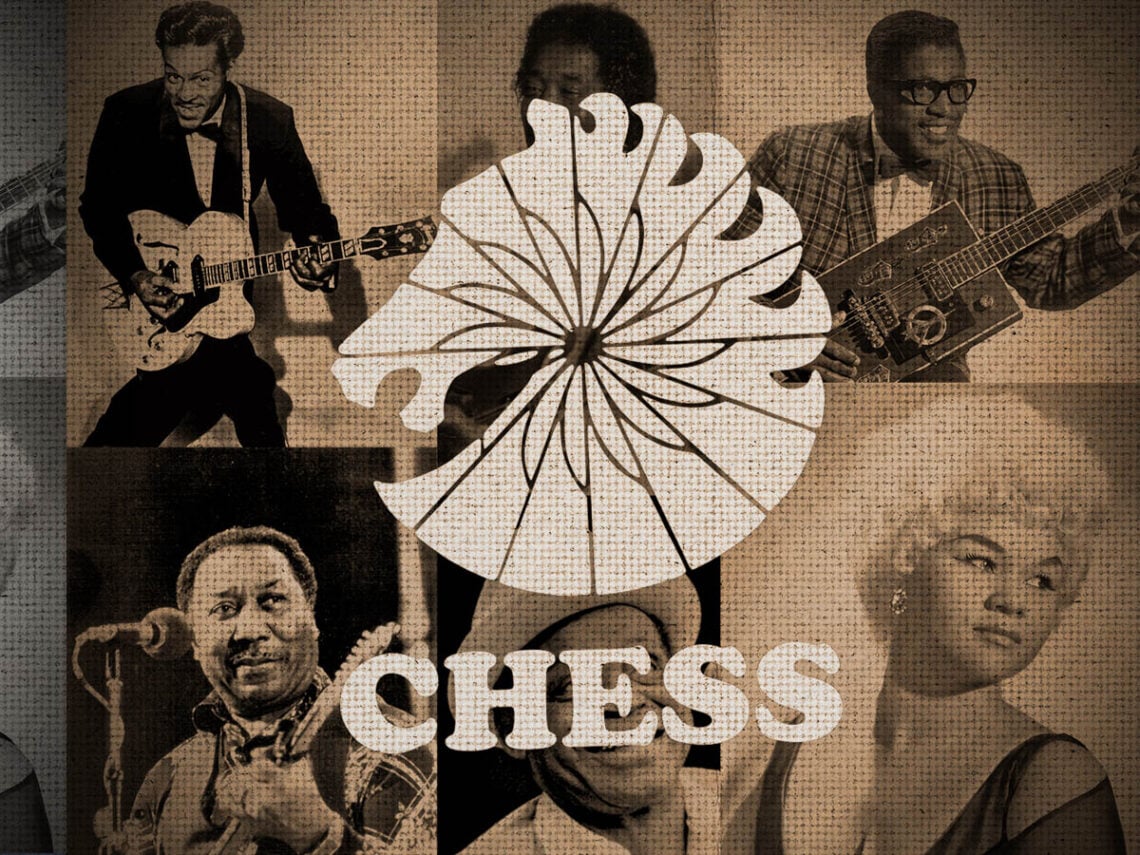
Chess Records: A brief history of Chicago’s legendary blues label

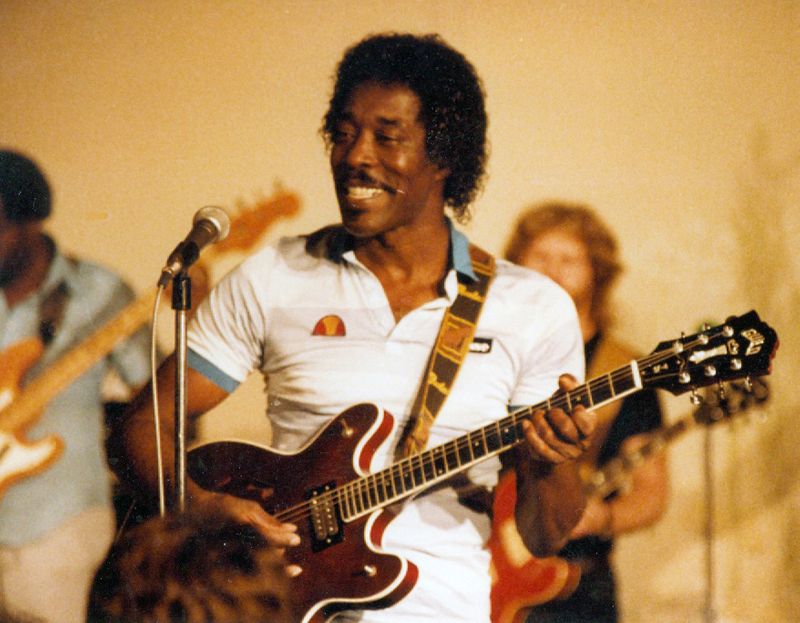
“Phil and Leonard Chess were cuttin’ the type of music nobody else was paying attention to,” blues great Buddy Guy declared in 2016, “Muddy [Waters], Howlin’ Wolf, Little Walter, Sonny Boy [Williamson], Jimmy Rogers, I could go on and on. And now you can take a walk down State Street [in Chicago] today and see a portrait of Muddy that’s ten stories tall. The Chess brothers had a lot to do with that.”
On the surface, it shouldn’t be surprising that Buddy Guy, one of the longtime ambassadors of Chicago blues, would give credit to the label he started his career with, Chess Records, for “making Chicago what it is today, the blues capital of the world”. In reality, though, Guy is setting aside his personal bias with that opinion, rather than leaning into it.
During his time on the Chess roster in the 1960s, Buddy’s ferocious electric guitar playing style got him relegated mostly to low-profile session duties, as label boss Leonard Chess found the distortion-heavy sound too noisy and unmarketable. That guitar tone, of course, would later define much of the sound of late 1960s blues rock, once Eric Clapton and his pals started copping it, but Guy wasn’t bitter about having his genius overlooked.
While a lot of his fellow Chicago bluesmen had bad blood about their time on the Chess label, specifically the sense that they hadn’t been paid a fair due for their contributions, Guy, who’s now 89, would usually encourage them to leave it in the past. “They were still so mad at Leonard Chess,” Guy recalled in 2001, noting that Chess had died in 1969, “I said, ‘What you goin’ to do, go to the graveyard and kick the grave? Pull him out and ask why?’ Life goes on. You know, I learned something from these guys. Yeah, we all suffered, and someone else profited, but life goes on.”
Since the original Chess Producing Corporation collapsed in the early 1970s, the legacy of the company has, for the most part, been centred on the artists who came to define the label’s high-standing and influence across its 25-year existence: not just the electric blues pioneers like Muddy, Wolf, and Willie Dixon, but a wide range of incredible performers from the expanded worlds of jazz, rock, and R&B, including Chuck Berry, Etta James, Bo Diddley, and Koko Taylor.
As Buddy Guy has long appreciated, though, the stories of those great performers might not be known today if it weren’t for the efforts of two brothers, flawed businessmen though they were, who decided to champion a new style of music in the years just after World War II. Leonard Chess and his younger brother Phil were Jewish immigrants who settled in Chicago as adolescents. “We came from Poland in 1928,” Leonard later told Vanity Fair, “That was blues all the time”.
After World War II, the brothers owned and operated a music club called the Macomba Lounge in the largely African American neighbourhood of Bronzeville, and while it was known as a bit of a rough-and-tumble establishment, it attracted some of the great stars of the day, including Billy Eckstine and Ella Fitzgerald. One night, a record industry scout from Los Angeles came into the club, on the lookout for new talent, and a singer from the Macomba house band, Andrew Tibbs, caught his eye.
“Tibbs told me they wanted him to cut a record,” Leonard Chess later recalled to the Chicago Tribune, “And so I thought, ‘If he is good enough for Hollywood, I’ll put him on record myself’”.
Chess started out his operation by building a recording studio and distribution office in his garage, but after the nightclub nearly burned down in 1950, the Chess bros decided to pivot more aggressively into the record business, believing that a lot of the local blues and jazz acts coming into their club had the chance to appeal to a much wider audience. They bought out a small Chicago record company called Aristocrat Records and slowly began putting together a roster of artists.
One of their first recruits was a 37-year-old delivery truck driver named McKinley Morganfield, who’d moved to Chicago from Mississippi in the early 1940s. At night, Morganfield transformed into the blues singer Muddy Waters, arguably the single most important figure in the evolution of the Chicago sound. The Chess brothers appreciated his singular talent and recorded his song ‘Rollin’ Stone’ in 1950 as one of the very first singles released by the label they’d renamed Chess Records. Not long after, Jimmy Rogers and his Rocking Four joined the fold, followed by the likes of Ike Turner and his Kings of Rhythm, John Lee Hooker, and Howlin’ Wolf.
Running the label soon became the Chess brothers’ full-time jobs, as Phil was in charge of the Chicago HQ while Leonard travelled the country with his son Marshall, hawking new records to shops and radio stations, and seeking out undiscovered artists hiding in plain sight in the American countryside.
“We’d stop at some farm and record some guy out in a cotton field,” Marshall Chess later told the Chicago Tribune, recalling those journeys with his dad in the 1950s, “He’d set up a couple of bales, and my father would record him on the wire recorder; not even a tape in those days!”
While Chess is best remembered as America’s most prominent blues label of the 1950s and 1960s, it was equally influential in the birth of rock ‘n’ roll. In 1955 alone, the company released Chuck Berry’s genre-defining rock single ‘Maybellene’ and the self-titled debut single from Bo Diddley, which introduced the distinctive beat that rock bands would be using as a building block for the next 70 years. The company also had several offshoots for other genres, including the Checker label, which released doo-wop and R&B records, and Argo, which focused on jazz.
In the late 1950s, having finally relocated to its famous downtown Chicago location at 2120 S Michigan Avenue, the Chess name started going fully international, as the popularity of its records in Europe inspired the first-ever overseas tours for bluesmen like Waters, who headed to England and Spain in 1958, introducing stunned crowds to the new electric blues.
“We opened in Leeds,” Waters told the Chicago Tribune in 1987, “I was definitely too loud for them. The next morning, we were in the headlines of the paper: ‘Screaming guitar and howling piano!’”
In a development even the business-savvy Chess brothers couldn’t have anticipated, a lot of the records they were releasing in the late 1950s and early 1960s were particularly resonating with teenagers in the UK, who started giving up their skiffle obsessions to try and learn this visceral, passionate, and delightfully loud music from the ‘Windy City’.
In 1962, a kid named Keith Richards was among those British disciples of Chess. “I moved into a flat with [Mick Jagger],” he once recalled, “and the smart thing to do from that point on was to buy records from Chicago, Chuck Berry, Muddy Waters, and soak them up, because we wanted to learn.”
The argument could certainly be made that the British invasion bands ultimately cashed in on the Chess sound in a way that the Chess artists themselves never quite did. In most cases, though, the Chicago bluesmen who influenced bands like The Rolling Stones, The Yardbirds, and Led Zeppelin didn’t mind the homage or the late-career attention it brought to their own music.
“It don’t bother me at all when bands like The Rolling Stones make it big,” Muddy Waters said in 1981, “The boys were real nice. [They] didn’t leave me standing out in the rain. They passed a quarter to me; gave me credit, you know?”
The feelings were decidedly less diplomatic when it came to Leonard and Phil Chess, however, who were regularly accused of exploiting their artists, signing them to unfavourable deals and withholding royalty payments on their hit records. Waters, Wolf, and Willie Dixon were among those who later sued the Chess estate and won settlements in the 1970s.

Leonard and Phil built quite an empire from the mainstreaming of blues rock in the 1960s, buying several radio stations and eventually moving Chess’s studio and offices into a much larger high-rise building at 320 E 21st Street in 1966. Unfortunately, the company’s attempt to compete with the bigger labels of New York and LA led them away from their wiser instincts, and the whole operation started going in the wrong direction in the late ‘60s.
In 1969, the Chess family was forced to sell their majority ownership in the business to the California-based reel-to-reel manufacturer, General Recorded Tape, Inc, or GRT. As part of the $6.5million agreement, Chess Records would carry on with its Chicago production, and Leonard Chess’ 27-year-old son, Marshall Chess, would serve as the label’s new president. It seemed like a game-saving plan, but it imploded in a hurry. Leonard Chess died from a heart attack in October 1969, at just 52, leaving his son to deal exclusively with the company’s new West Coast overlords at GRT.
“[They] seemed only interested in budgets and forecasts,” Marshall later said, “whereas [our] company had always been focused on creativity. I was very depressed, so I quit”.
With the Chess family now fully removed from the Chess company, management at GRT assured its Chicago employees and longtime fans of the label that the business would still carry on in the only city it had ever called home. But, predictably, it was consolidated into GRT’s Janus label in 1972 and eventually dissolved. Ironically, one of the very last records released by the original Chicago Chess label was Chuck Berry’s cover of ‘My Ding-a-Ling’, which also became the first number one single on the Billboard Hot 100 for both Berry and Chess.
Fortunately, you can still visit the iconic former Chess studio at 2120 S Michigan Avenue in Chicago, which is now a museum owned by the family of the great Willie Dixon.

Never Miss A Beat
The Far Out Led Zeppelin Newsletter
All the latest stories about Led Zeppelin from the independent voice of culture.
Straight to your inbox.