


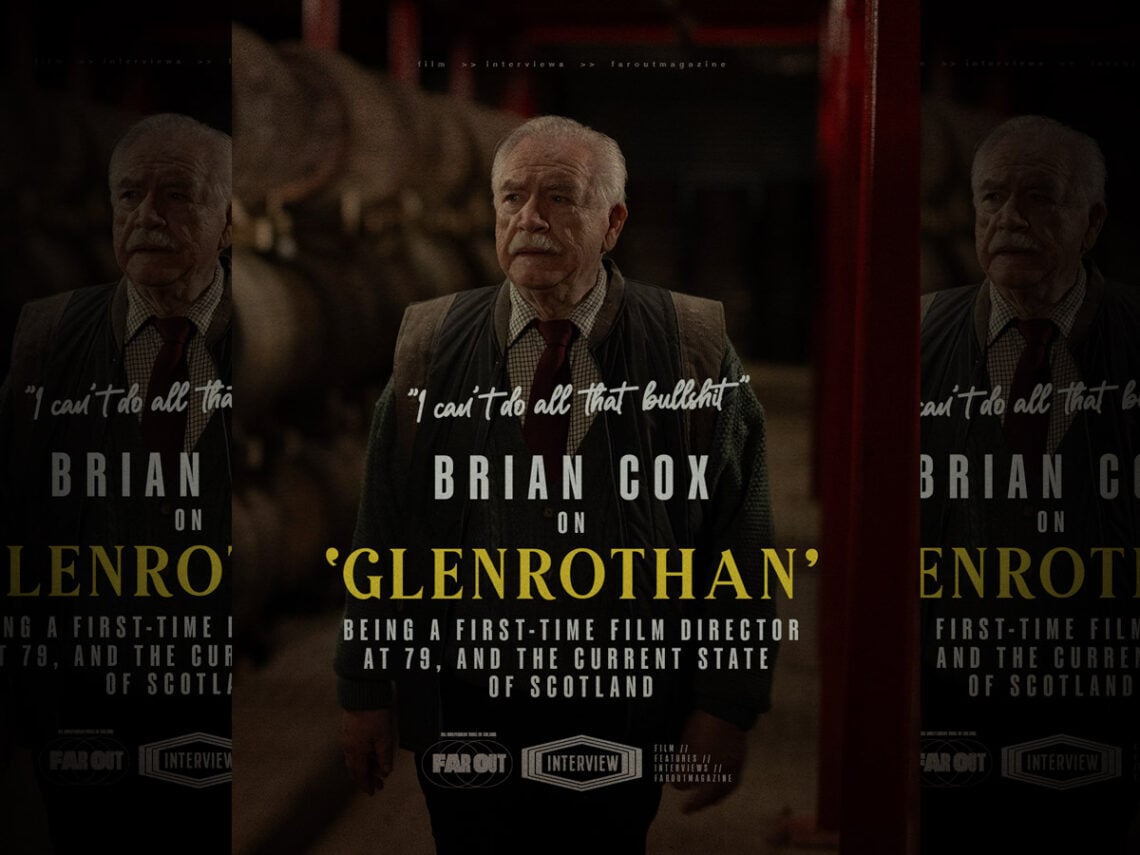
“I can’t do all that bullshit”: Brian Cox on ‘Glenrothan’, being a first-time film director at 79, and the current state of Scotland

When you think of a first-time feature director, a 79-year-old probably isn’t the first thing that comes to mind, but it doesn’t sound like Brian Cox had much of a say in the matter.
The veteran actor has over 250 credits to his name across film, television, theatre, and even video games from a career that dates back to the late 1960s, but directing a movie wasn’t one of them until Glenrothan came along. In fact, it’s only the second time he’s ever helmed anything, with an episode of HBO’s Oz way back in 2000 his only other behind-the-camera endeavour.
Of course, the Bafta, Golden Globe, and two-time Primetime Emmy winner is more synonymous with his work in front of it, becoming one of his generation’s most esteemed character actors as everyone from Manhunter‘s Hannibal Lecktor to Succession‘s Logan Roy, even if filmmaking wasn’t an itch he felt desperate to scratch.
It’s been a long road to get here, too. Glenrothan, which stars Cox and Alan Cumming as estranged brothers who reunite after 40 years, was first announced in September 2021, shot in the summer of 2024, and will finally be released in cinemas on April 17th, 2026, and he’s happy the finish line is in sight.
“Well, I’m quite relieved, to say the least; it’s been a long process,” Cox admitted to Far Out. Producer Neil Zeiger and screenwriter David Ashton have been friends of the actor’s for a long time, with the latter creating the BBC Radio 4 drama McLevy in which he voices the title character, but swapping performing for wielding the megaphone wasn’t a pivot he was expecting to make at this stage.
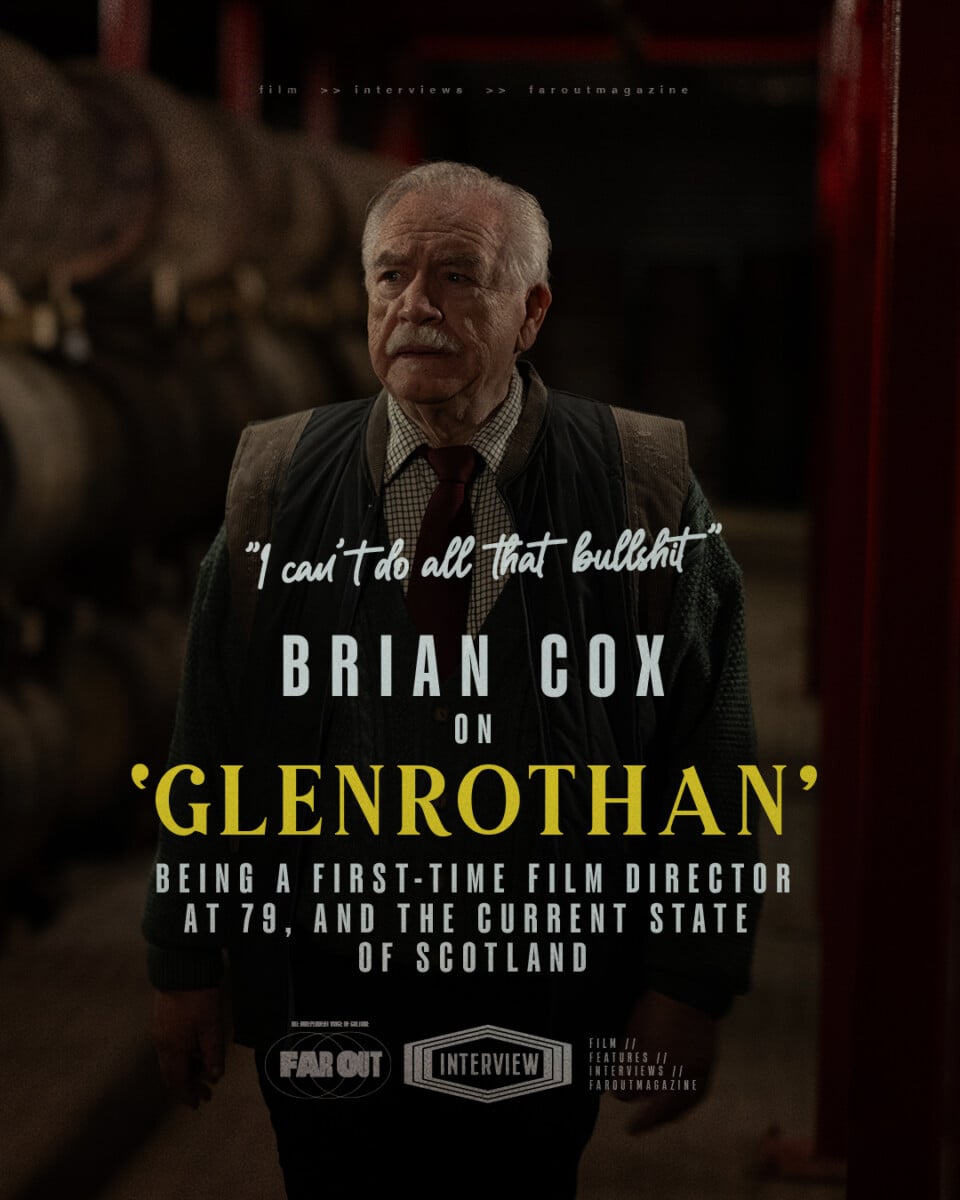
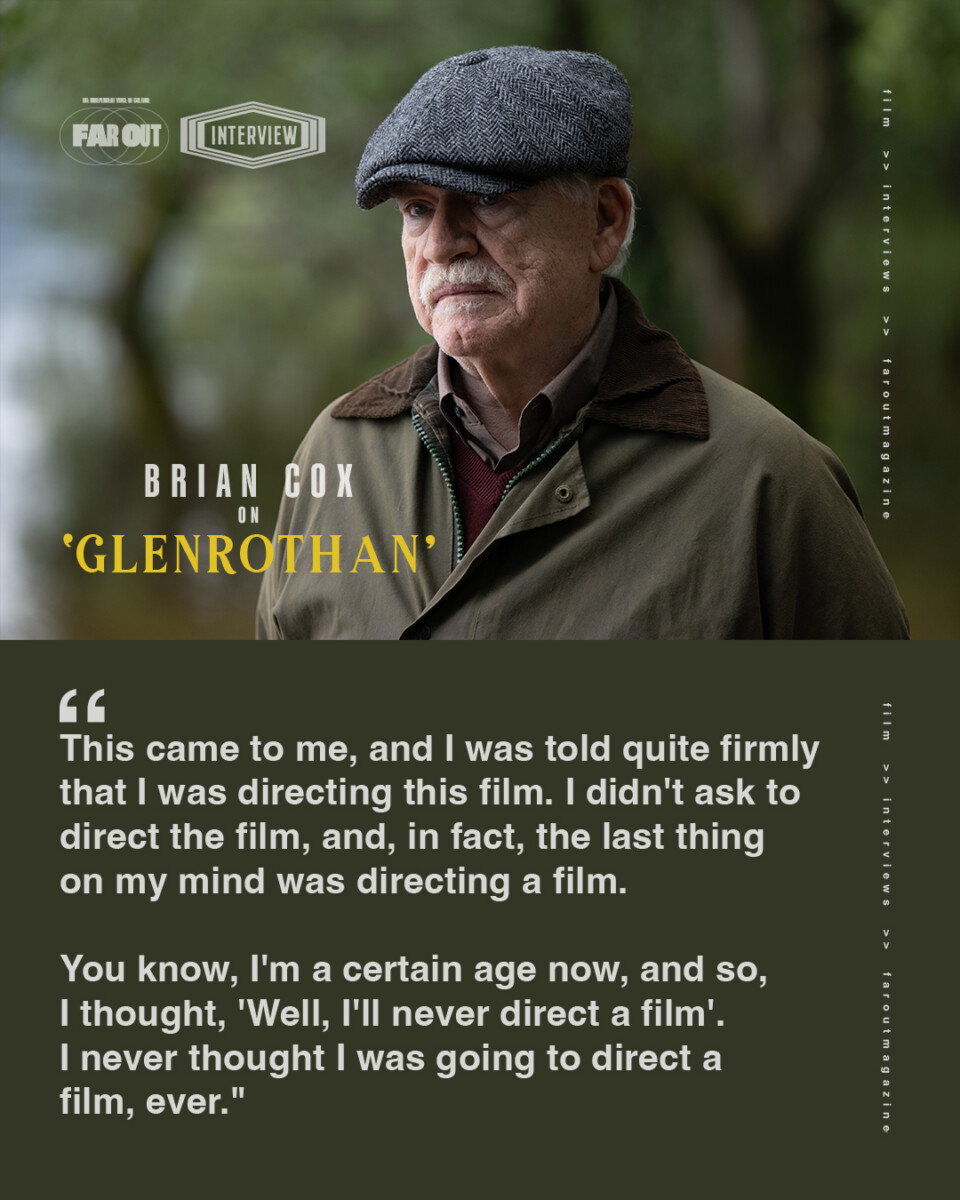
“This came to me, and I was told quite firmly that I was directing this film,” he explained. “I didn’t ask to direct the film, and, in fact, the last thing on my mind was directing a film. You know, I’m a certain age now, and so, I thought, ‘Well, I’ll never direct a film’. I never thought I was going to direct a film, ever.”
As mentioned, though, it wasn’t up for debate. “Neil said, ‘You’re directing this.’ And he said, ‘Also, you’re in it as well,'” and that was pretty much the end of it. “I said, ‘Oh, fine.’ And then we started casting and doing it, and we went through all kinds of variations, because for a while, looking at various elements, we thought, ‘Should Alan’s character be an American that went away?'”

However, that wouldn’t fit the film. Glenrothan is predicated on the fractured bond between Cox’s Sandy Nairn and Cumming’s younger sibling, Donal. Having left his hometown behind, the latter has distanced himself as far away from his past and family as possible, until a fire that burns down his Chicago jazz club forces him to return home, face the ghosts of his past, and make amends with his estranged brother.
As a Scottish-set story with two Scottish actors in the lead, which was filmed on location in Scotland, unsurprisingly, Cox was determined to “keep the Scottish thing.” This isn’t the first time he and Cumming have starred in the same film, but the superhero sequel X-Men 2 was an entirely different beast, and they didn’t share any scenes. Still, the first-time director had been watching him from afar.
“Alan is an actor I’ve long admired,” Cox explained. “He’s a really fine, internally, very fine actor. I first saw him at the Lyceum in Edinburgh in the ’80s when he started. I think Alan’s marvellous in the film, because he’s playing somebody that he doesn’t play normally.” Of course, Cumming is more associated with onscreen exuberance and flamboyance, not that there’s anything wrong with that.
“He’s playing a proper human being, you know,” although Cox quickly clarified that wasn’t intended as a slight. “I mean, I’m not decrying what Alan does. I couldn’t do what Alan does. He’s brilliant at it, the whole thing, the ‘Alan Cumming Show’ is a great show, but there is more to him.”
Glenrothan also stars Shirley Henderson as Jess, Donal’s childhood best friend, who he also abandoned when he upped sticks and moved to America without a second thought, with Cox clearly a big fan of her work, describing her as both “one of the finest actresses we have” and “the bees knees as an actress”.

Alexandra Shipp plays Donal’s daughter Amy, with her daughter, Alexandra Wilkie’s Sasha, rounding out the central family. Unlike him, they’ve remained in contact with Sandy and have made frequent visits across the pond, where he oversees the Glen Nairn distillery, which has been in their family for generations and was seen by everyone as Donal’s birthright before he exited stage left for four decades.
Even though America is central to the story as the place where Donal fled to escape the upbringing he grew to despise, Cox has called Glenrothan his love letter to Scotland. That feeling of homecoming extended beyond the cast, too, with the film’s second-generation cinematographer being the son of a legendary DP, who had ties to one of the United Kingdom’s greatest filmmakers.
“I had this young DP, called Jamie Ackroyd, whose father I worked with, who’s Barry Ackroyd,” he elaborated. “Ironically, Jamie was excited to be going because as a wee boy, he grew up in Glasgow, because there was a time when Ken Loach shot a lot of his films in Scotland, so Barry’s spent a lot of time up in Scotland, and Jamie loved the idea of coming back to Scotland, which was a big thing for him.”
As for the production, Cox let his egalitarian side take over, because, as he put it, “If you’re a dandelion, you’ve got to put up with the people suffering somewhere, and share it, and feel it.” What does that have to do with a quaint family dramedy set in rural Scotland? Quite a lot, from the way he tells it.
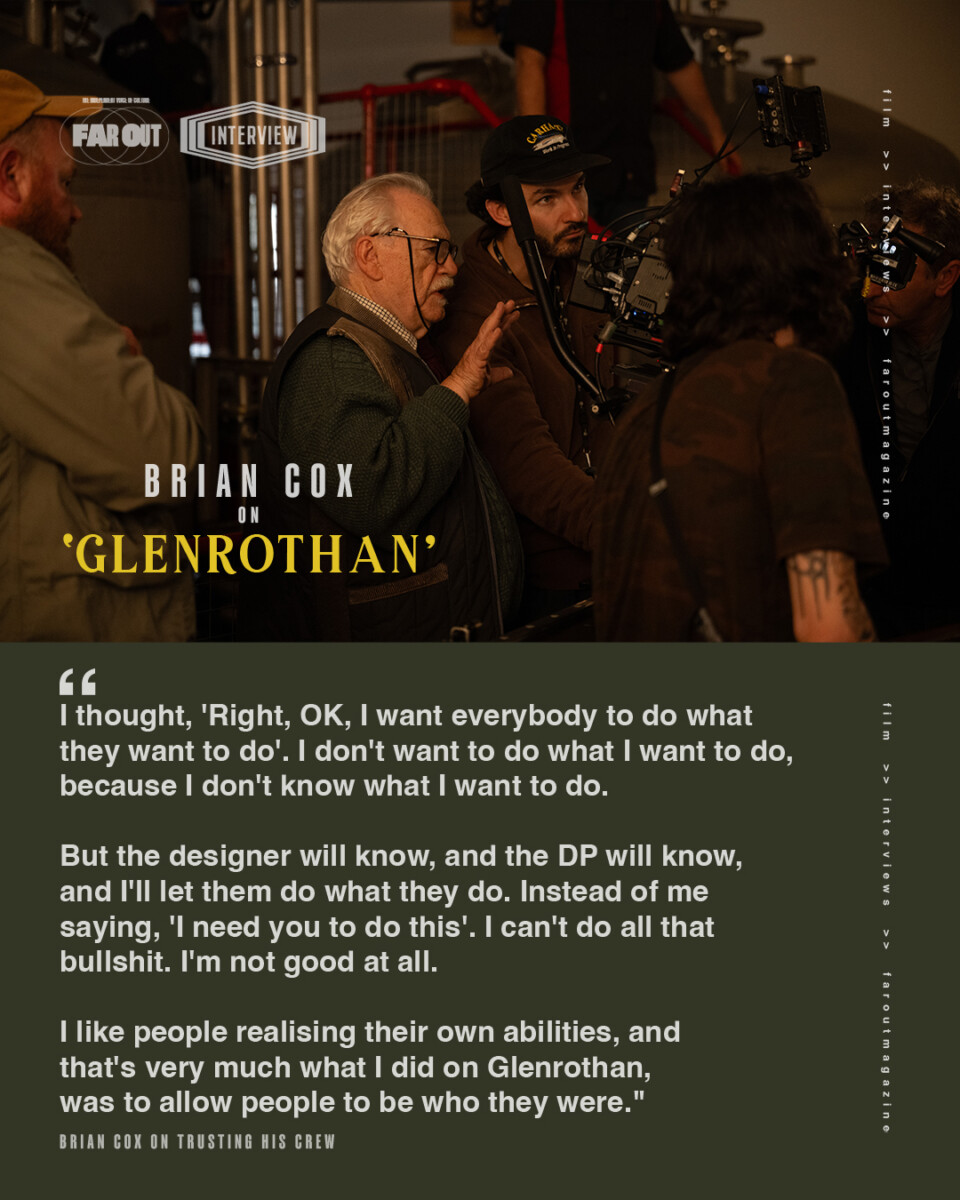
“I thought, ‘Right, OK, I want everybody to do what they want to do,'” he offered. “I don’t want to do what I want to do, because I don’t know what I want to do. But the designer will know, and the DP will know, and I’ll let them do what they do. Instead of me saying, ‘I need you to do this.’ I can’t do all that bullshit. I’m not good at all. I like people realising their own abilities, and that’s very much what I did on Glenrothan, was to allow people to be who they were.”
In the past, the famously outspoken Cox has branded directors as “nuisances” and “pests,” which could have come back to haunt him when the shoe was placed on the other foot. Instead, he avoided everything he didn’t want to be and instead drew inspiration from two of his formative influences.
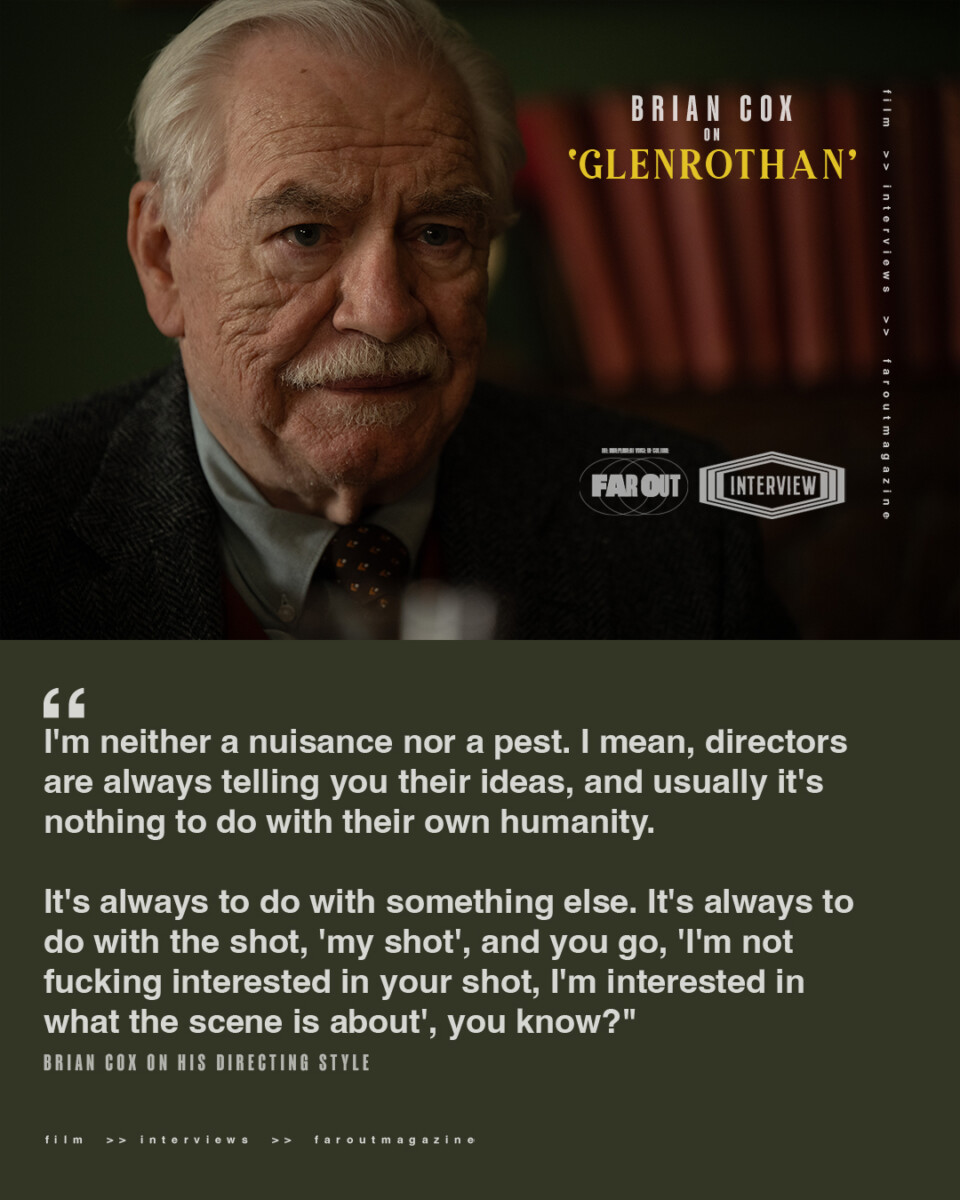
“I’m neither a nuisance nor a pest,” he proudly declared. “I mean, directors are always telling you their ideas, and usually it’s nothing to do with their own humanity. It’s always to do with something else. It’s always to do with the shot, ‘my shot’, and you go, ‘I’m not fucking interested in your shot, I’m interested in what the scene is about,’ you know?”
That was a lesson he learned on the set of Lindsay Anderson’s 1975 drama, In Celebration: “He would rehearse, and he would find the shot,” Cox pointed out. “He would not impose the shot.” He put the performances first and the visuals second, which was something Cox relied on when he made his directorial debut half a century later.
“It was a great film to work on, and Lindsay was just one of those directors who understood the whole essence of the internal mechanism of what the acting was about,” he added. “He was brilliant, absolutely brilliant, so he was a good influence on me.” The second shadow looming over Cox’s shoulder was Michael Elliott, “Who was a very generous, wonderful theatre director” he worked with on the stage, and who continued to inspire him more than 40 years after his death in 1984.
From one of Scotland’s finest exports to another, and the can of worms that comes with it. Recently, fellow first-time filmmaker James McAvoy expressed dismay with how the industry views his, Cox, and this writer’s home country, saying the external perception is that, “This is what Scottish things are like, and it’s unemployment, drug abuse, alcohol abuse, domestic abuse, all the fucking abuse.”
Obviously, Glenrothan is the antithesis of that in many ways, and while that external perception wasn’t playing on his mind when he crafted a cinematic love letter to his homeland, he nonetheless offered his take on them and whether or not McAvoy’s comments held any water in the current climate.
“What I loved about David’s script was its simplicity, and it was dealing with genuinely family dynamics,” Cox iterated. “It wasn’t about alcohol, it wasn’t about drunkenness, it wasn’t about brutality,” before harking back to McAvoy. “I also think that’s a wee bit of an exaggeration”.
What I found difficult was that it’s very hard to get your film on in America, because they want it to all be American.”
Brian Cox
That said, there was one crossover hit, but his memory needed jogging. “There was a time when, what was the film? What was the film that was made in Sheffield, but the strippers, the man who was a stripper?” That would be ‘Best Picture’ nominee The Full Monty, which led to Cox making a wider point.
“It was a huge success in the US because it was just a very, very entertaining film,” he pointed out, with the focus shifting back to Scotland. “I find that the perception of us is such a misconception of who we are. We’re not that kind of people at all. We’re actually much more. We’re not as expressive as everybody thinks we are: we have problems in that way, and we can express drunkenness, because that’s why we have to get drunk, in order to express ourselves!”
“But when we’re not drunk, we’re not very good at expressing ourselves a lot of the time!” he pointed out. “And we have a sort of tightness, in a way, which is touching and approachable and mysterious, too, about the Scots; they’re not what everybody thinks they are. They always say….”
This is the point where Cox launches into a deliberately unintelligible caricature of a Scottish accent, so thickly ladled on that not even the natives would be able to decipher what he was trying to say. That was exactly the point, though, since he added an exclamation point to the perception of national stereotypes with a bellowing cry of, “Bollocks!”

“We’re not at all like that,” he stated, his voice having returned to normal. “We’re much more internal than that, in many ways, and I think that’s what appealed to me about the film, too.” Along similar lines, another point was made, and it was another one that Cox agreed with, continuing the theme of Scottish identity, as you’d expect from bringing superheroes into the conversation, naturally.
The question Far Out put to Cox was simple, even if the answer was anything but: with small, character-driven pictures like Glenrothan representing one end of filmmaking in Scotland, and the mega-budget blockbusters like Spider-Man: Brand New Day, Indiana Jones and the Dial of Destiny, The Batman, and Hobbs & Shaw taking over city centres for weeks at a time at the other, does the local industry find itself in a bit of a feast of famine situation?
“I mean, in a way, it’s good for the industry, because it brings money to the industry,” he reasoned. “So in a way, one can’t knock it from that point of view, but I want to see more Scottish product. We tend to undersell ourselves as well. We’re not very good at selling ourselves. If we do, we always do it slightly embarrassed. We’re slightly embarrassed about doing it because it doesn’t seem right. It seems we get a bit puritanical about that kind of thing.”
Cox feels that, as a country, “We should loosen up a bit, we need to really just let it go,” before confronting Scotland’s never-ending problem with sectarianism, of all things. “I think it’s the difference between this Protestant mentality and this Catholic mentality: a Catholic Scotland, a Protestant Scotland, two entirely different animals. You know, most Catholic Scots usually have Irish roots, like I do.”
Through the magic of genealogy, he discovered that his ancestry 88% Irish, compared to only 12% Scottish, with his ties to the latter coming from his family, who hailed from Burntisland, “And they were all weavers.” As for the Irish? “My family all came from the time of the famine, or the genocide, as some people prefer to call it. So there’s a different attitude, in a way, between the Protestant Scot and the Catholic Scot, and that’s great, because that’s the stuff of drama as well.”
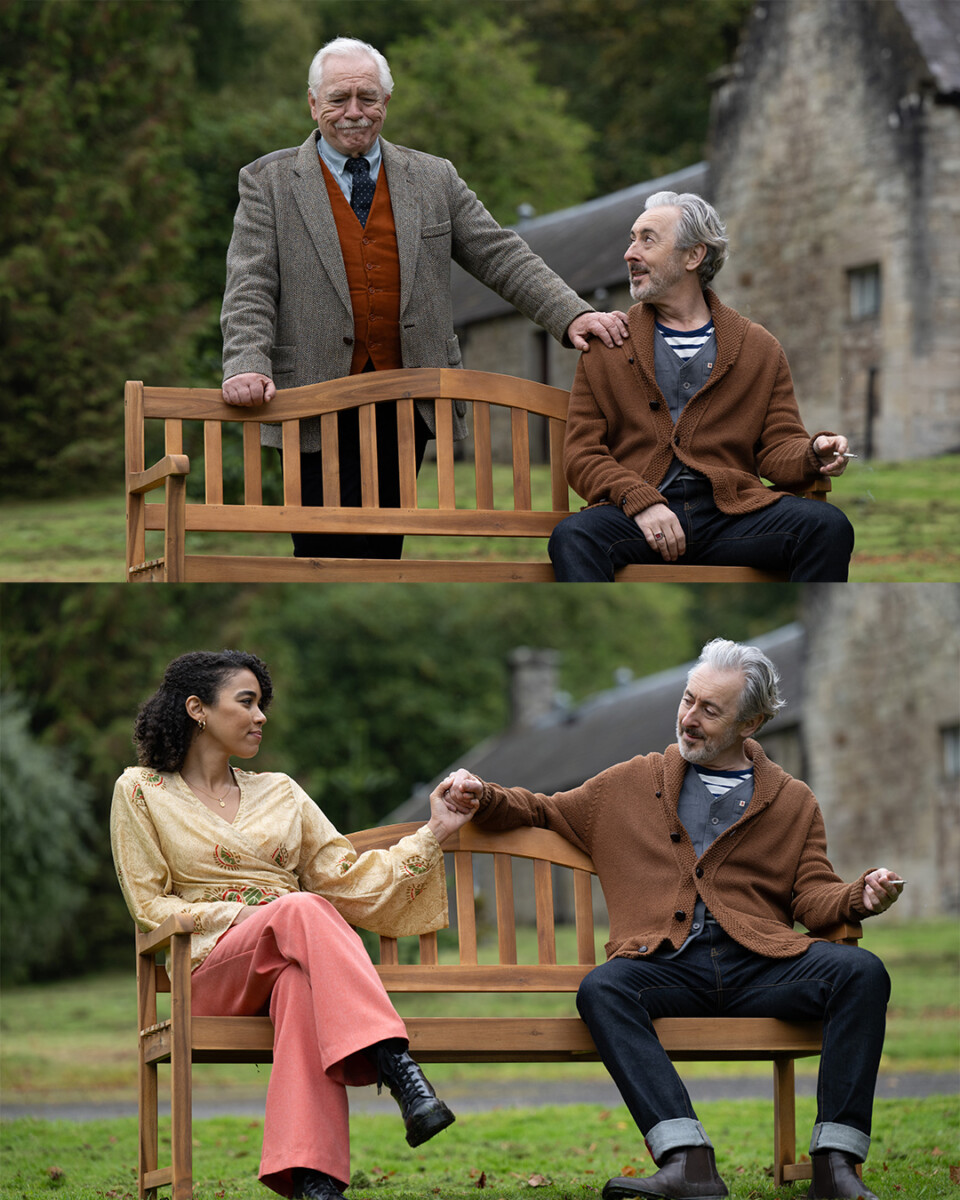
“Great drama, but that’s who we are,” he concluded, tying it back to Glenrothan. “We’re not as sort of cut and dried as we seem to be; we’re a bit more complicated than that, especially with our own emotions. And I touch a little bit on that in the film, with Alan’s inability to reconcile himself to something that he should have reconciled himself to years ago. And the thing of running away from something and not wanting to go back because it means so much to you, that’s an understandable reality.”
As much as Cox would like to see more “Scottish product,” it’s an uphill battle. When he was growing up, Dundee was the cinema capital of the UK, but that’s no longer the case, which he believes is reflective of a wider cultural shift that’s seen multiplexes and blockbusters take over to the extent that something like Glenrothan is difficult to get made in the first place, never mind put on the big screen in a wide release.
“Absolutely,” he concurred. “I remember, in the ’50s, there was a film called Geordie. It’s about a guy who ends up going to the Olympics in Sydney. It wasn’t a great film. It was just a rather sweet film, but it was done, they made it. It actually did very well at the box office, both in England and here in Scotland, so there were films around at that time that were possible, and then it’s just got harder.”
At this point, Cox tries his hardest not to wade into the current socio-economic climate, stating that “I don’t want to get started on the problems of Scotland,” before immediately disregarding his own advice by wading into the current socio-economic climate and getting started on the problems of Scotland.
“One of the problems that does exist in Scotland is our inability to recognise the difference between wild banter and criminality,” he began. “We have a problem with that, for instance, in Glasgow, a lot of it became very sort of bandit-ridden, and not necessarily true, a little bit of fearfulness from people. And you go, ‘Well, that’s part of it, but it’s not the whole question’, we’re more varied than that.”
“We’re not just head-bangers,” he noted, accurately. “Everybody thinks we could be, or drug addicts like the Irvine Welsh films. We’re not that; we’re actually a bit more complicated than that. We have our attacks of fearfulness, and then we have these attacks of crazy courage at the same time, which go hand in hand, so we’re a much more interesting people as a result.”
That said, he doesn’t think that’s always necessarily captured. “We tend to go to the other extreme,” Cox mused. “We either tend to go to the alcohol extreme, or the drug extreme; we’re all a bunch of bandits,” which led him to reflect on that time he was a focal point of an episode of Who Do You Think You Are?
“My great-grandfather ended up in a madhouse in Glasgow,” he informed Far Out, before casting his eyes over the “incredible amount of social engineering that went on” in the 1950s. Where is he going with this, you might ask? To illustrate how trickle-down economics and rehousing affected great swathes of his generation, using the ever-changing area of the Gorbals as ground zero.
“In the Gorbals, if a family had lived together happily for 20/30 years, and they cleared out the Gorbals, really, because of criminality,” he opined. “And it wasn’t criminality. There was just a lot of wildness, craziness, and there was an element of criminality, but there were also elements of celebrating. That’s the way Scots can celebrate, and that got reduced.”
Continuing, Cox suggested that as part of these social engineering experiments, “Two neighbours lived opposite one another for 20-odd years, they would make sure in the social that that neighbour and that neighbour would be in a different town, they wouldn’t even see each other: and that was done deliberately, the same way they did away with housing schemes.”
“You take people at the centre of a city, you take them from the heart of the city, and you put them in the housing schemes, give them minimal kind of stuff, some shops, maybe a fish and chip shop, and that’s it. There’s nothing else,” he went on. “And there’s just a greyness there. And, of course, that breeds criminality because of the depressive nature of that, and we never take that into account.”
We asked him about cinema, but Cox has put an entire country in the firing line, saving his birthplace for last. “We make the same mistake again and again and again,” he raged. “And what’s happened now is, in Dundee, we have the highest level of heroin addiction in Europe as a result, because of the people who are falling through the cracks when they shouldn’t be falling through the cracks.”
To that end, the actor recalled a conversation he had with the city’s Lord Provost, who told him, “Oh, it would be great to get the people back into the town,” but he wasn’t having it. “And I said, ‘You should never have put them out of the fucking town in the first place! That’s the fucking first fucking mistake you made!’ You sent everybody out, and they weren’t prepared for it, and they were living in such abject poverty, and that poverty continued, and has continued for a number of years.”
As a result, the cycle “grows to disaffection, not feeling you’re part of something, not feeling you’re wanted, and there’s a lot of that goes on in Scotland, the way we organise the lives of our fellow citizens.” Again, though, the actor and director’s tangent did eventually circle back around to his film.
“That, to me, is interesting material,” he said. “It’s understanding who the people are, and to a certain extent, in a minor way, we do that in Glenrothan, and we say these were two brothers, clearly very close. One brother was very interested in being here, and it’s ironic that the brother who left was the one who wanted to stay, and the one who wanted to leave was one who had to stay.”
From both a filmmaker and an actor’s perspective, “It’s a good dynamic because it creates the right kind of tension,” with Cox using Sandy and Donal to reflect his views on all of Scotland: “That is part of who we are, our inability, sometimes, to relate to one another, which is not violent, it’s just something we’re a little bit inept at.”
Unfortunately, this is where Cox turned the tables. Having spent so long passing judgment on Scotland, he asks where I’m from. In bad news for me, the answer is Glasgow. “Well, we all have our unfortunate things to deal with,” he cracked. However, and saving face in the process, I mention where I grew up. “I love Oban!” he replied, allowing me to breathe a little easier. “One of my favourite places. I love Oban!”
As alluded to at the very beginning of this interview, you don’t see a lot of 79-year-old debut directors. Despite that, Cox is the same age as Steven Spielberg and several years younger than Martin Scorsese, so he’s not ruling out the prospect of heading back behind the camera to give it another whirl.
“Well, I’ll see if people appreciate it,” he acknowledged. “It was very nerve-wracking to make because it’s about the actors, for me. It’s just about getting the scenes right, and also getting a vision of Scotland, because we needed to see the breadth of the physicality, so I was able to do that.”
In more bad news for this writer, a certain city came up again. “It’s always hard, one of the big problems is that most of the crews are based in Glasgow,” Cox bristled. “You can’t do many overnights because you can’t afford it. So you can only shoot an hour outside of Glasgow. Well, it takes a fucking hour to get out of Glasgow! So by the time you’re in Kippen, that’s as far as you can go!”
“I originally wanted to shoot in the Perth islands. I discovered a wonderful distillery there, which I wanted to use, but I couldn’t use it because I couldn’t afford it because of the Glasgow crew,” he added, not that he regretted settling on Stirlingshire instead. “It was great nevertheless.”
As for the reception, Glenrothan premiered at the Toronto International Film Festival in 2025, but Cox admitted that “it took me three festivals to realise, we got standing ovations, but it was three festivals before I realised, ‘Oh, this is quite a good film!'” In what might be the most nerve-racking moment of all, he asks Far Out if we enjoyed his directorial debut.
Knowing Cox’s reputation, answering with, “Not bad for a first-timer,” could have gone one of two ways. Mercifully, he took the light-hearted rib in good jest. “Not bad,” he laughed. “Not bad.”

