


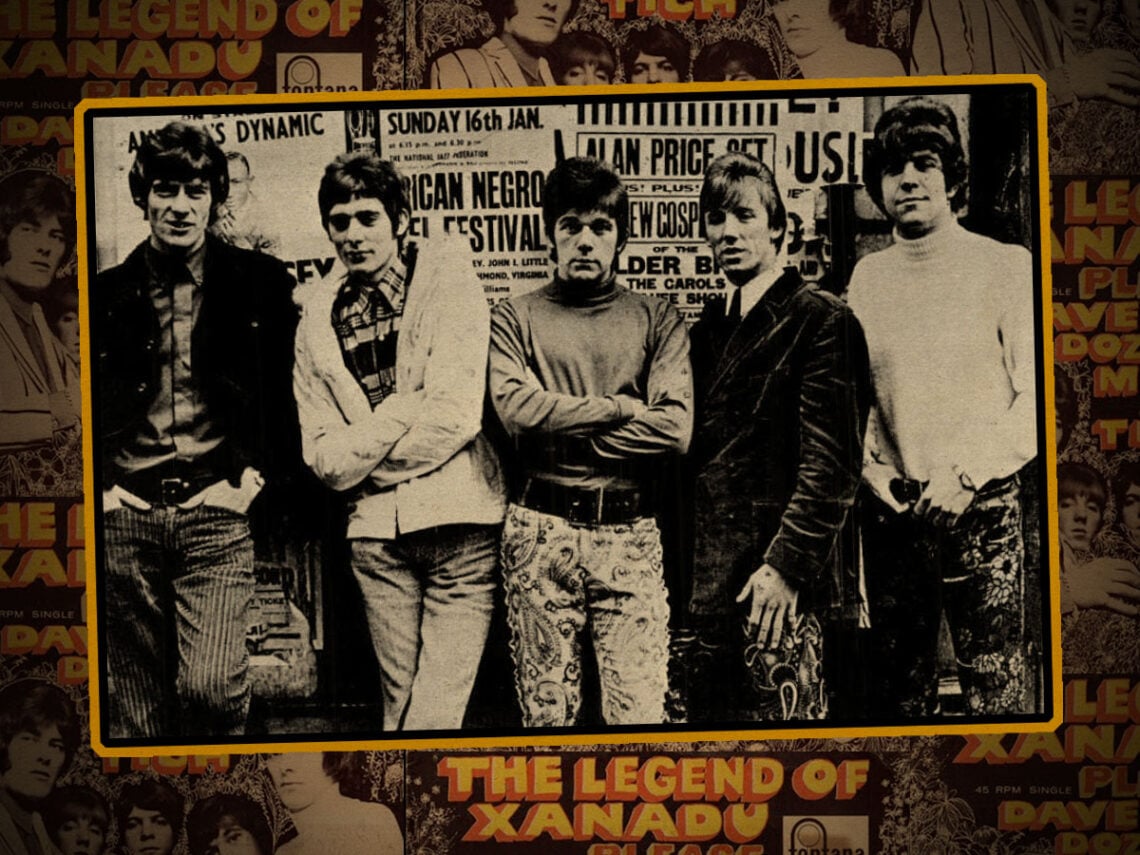
‘The Legend of Xanadu’: A teen cop, a dead rock star, and a 1960s novelty hit

You can learn a lot about somebody by asking them what the word ‘Xanadu’ means to them. Will they talk about its actual historical significance as the capital of the Yuan dynasty in the 13th century, or about its famed reference in the 18th-century poem ‘Kubla Khan’ by Samuel Taylor Coleridge, or Orson Welles’ clever use of its name for the fortress-like estate of the title character in Citizen Kane?
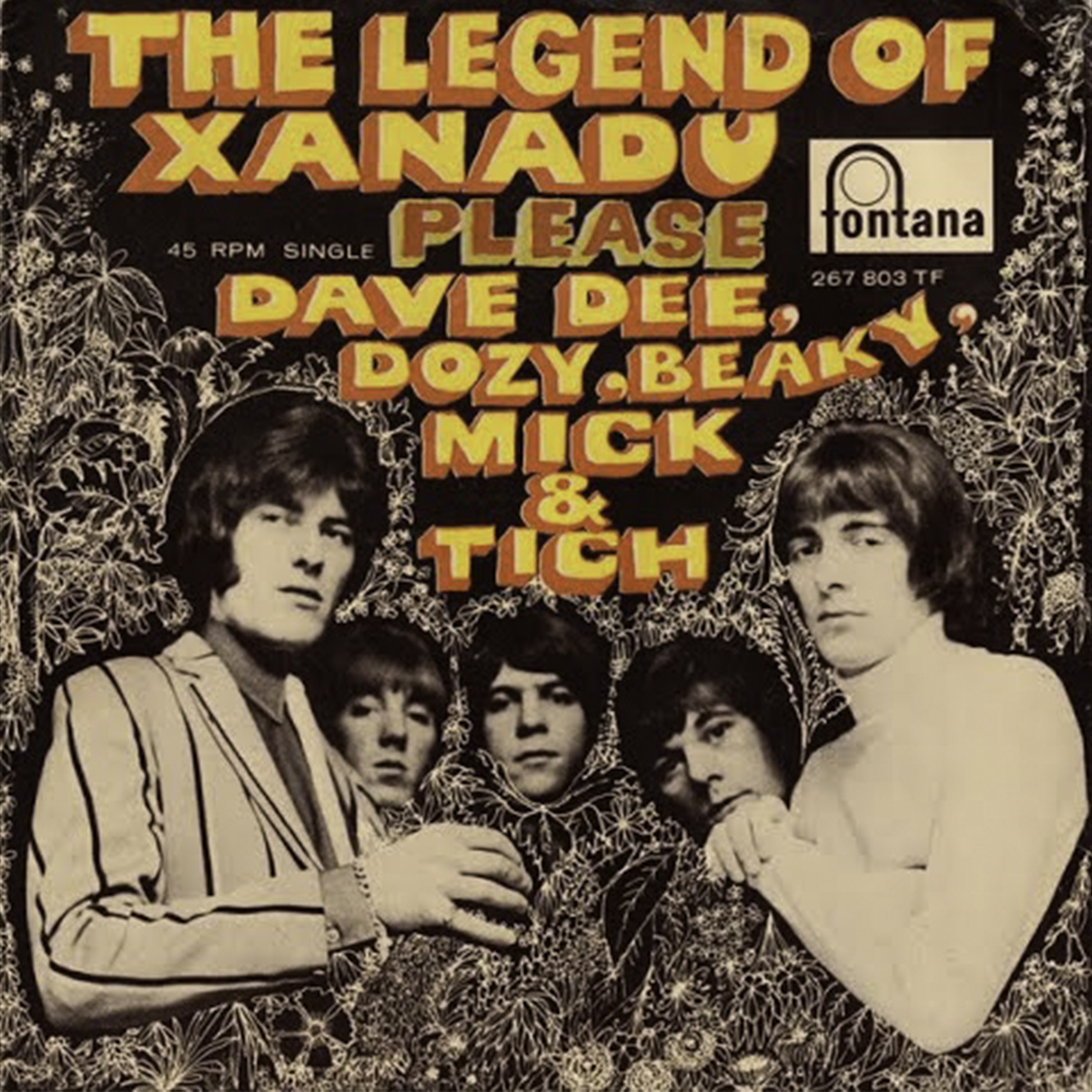
It could be any of those or all three, but there’s probably a better chance that your average Joe on the street will know Xanadu as the subject of a song: either Rush’s 1977 epic track of the same name, Olivia Newton-John’s 1980 hit from the bizarro roller disco fantasy film of the same name, or the 1968 novelty single ‘The Legend of Xanadu’ by the terribly named British outfit known as Dave Dee, Dozy, Beaky, Mick & Tich.
That latter track, while unsuccessful and still largely unknown in America, reached the top of the charts in the UK, Ireland, Sweden, and New Zealand in the spring of ‘68, only to be bumped from the number one spot in Britain by The Beatles’ ‘Lady Madonna.’ Like a lot of hit songs from its era, ‘The Legend of Xanadu’ is a first-class campy lounge anthem; a slightly psychedelic, melodramatic romp into a romantic, vaguely Spanish landscape in the distant past.
The songwriting team of Alan Blaikley and Ken Howard, neither of whom were members of the band, were loosely inspired by Coleridge’s famous poem, but the Xanadu in this song, much like the one in the roller disco movie, is not the real place in modern day Mongolia (Shangdu), but an equally exotic Mediterranean locale; a perfect setting for the tale of a duel between two caballeros and the loser’s dying message to his lost love.
“You’ll hear my voice / On the wind, ‘cross the sand / If you should return / To that black, barren land / That bears the name of Xanadu”.
If a song like this went to number one today, it would be sized up as some sort of random, batshit TikTok phenomenon à la Angine de Poitrine, but in its own time, it actually made perfect sense as the next single from Dave Dee, Dozy, Beaky, Mick & Tich, a follow-up to their 1967 novelty hit ‘Zabadak!’, also penned by Blaikley and Howard. That African drum-inflected track, which hit number three in the UK, was preceded by the Latin-style ‘Save Me’ and the Greek-inspired ‘Bend It’, both of which also reached the top three. In short order, Dave Dee & Co had established a firm reputation as successful pop experimentalists, playing a sort of Magic Kingdom version of ‘world music’. It wasn’t taken seriously by critics alongside what The Beatles or The Kinks were doing with pop at that same moment, but it was consistently well-composed and produced music with obvious mass appeal.
“We tried to make every record different from the one before,” frontman Dave Dee, born Dave Harman, told the Independent in 2001. A lot of that creative direction was determined by Blaikley and Howard, however, who managed the group and handled the majority of the songwriting after the band signed with Fontana Records in 1964.
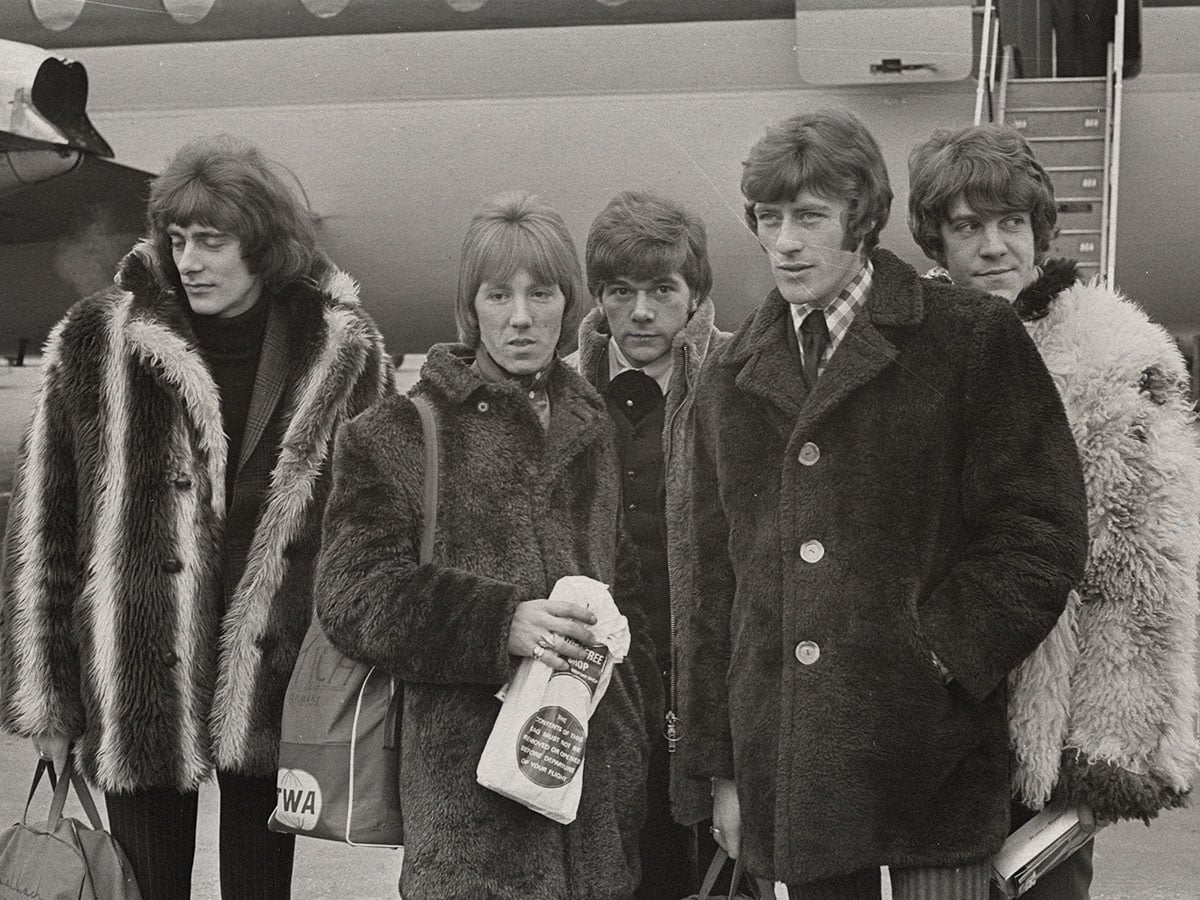
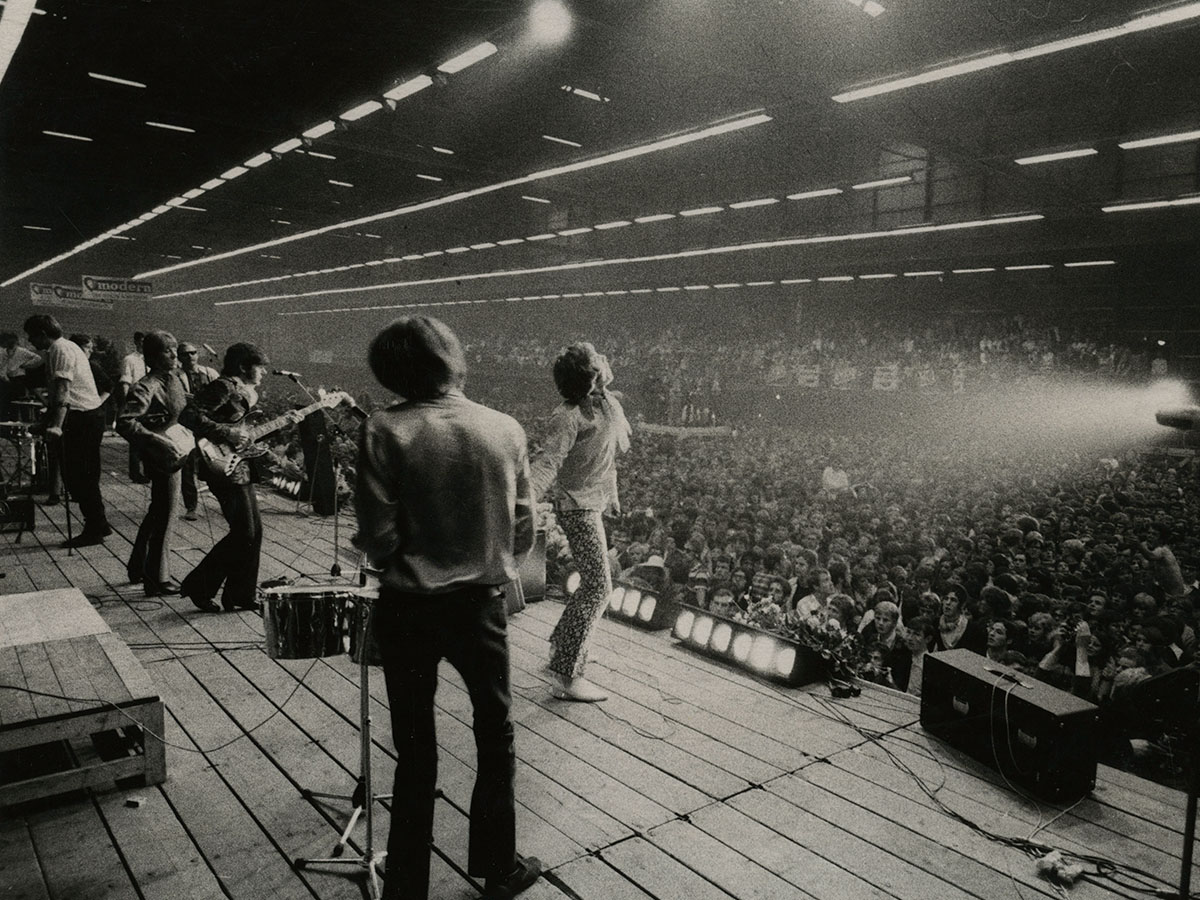
“We were like the Westlife of the 1960s,” Dee continued, suggesting there was a boy-band sort of choreography to their presentation and the colourful theatricality of their stage shows, including Dee’s use of a real bullwhip during performances of the over-the-top ‘Legend of Xanadu’. “We could have done so much more. People don’t associate us with psychedelia, but ‘The Sun Goes Down’ [1967] is as good as anyone,” he added.
Dave Dee, back when he was still Dave Harman, didn’t start playing music to become a novelty act. Growing up in Wiltshire in the 1950s, he’d become a fan of the same American rock ‘n’ roll music that was inspiring all the other soon-to-be-famous musicians in the UK. Eventually, he put together a band at the age of 21 called Dave Dee and the Bostons, and managed to get good enough by covering American rock tunes that he earned a slot performing in rock clubs in Hamburg, West Germany, at roughly the same time The Beatles were cutting their teeth there.
“We would play an hour on and an hour off,” Dee said, “14 hours a day for seven days a week. We were absolutely knackered after the second week, and this waiter arrived on stage with five rum and Cokes and some Preludin tablets. We took them at two in the morning, and we never went to bed until the next night.”
The Bostons eventually morphed into Dave Dee, Dozy, Beaky, Mick & Tich; the result of a questionable decision to use each band member’s nickname rather than stick with their original idea of becoming ‘The Slugs’ (Dozy was Trevor Davies, Beaky was John Dymond, Mick was Michael Wilson, and Tich was Ian Amey). Chart success and genuine flirtations with fame and fortune would follow, but it’s unlikely any of it would have happened if not for one fateful night in the spring of 1960, when Dave Harman was still an 18-year-old kid trying to figure out the next chapter of his life.
At the time, he was a big rock ‘n’ roll fan, but hadn’t yet started his own group. Instead, he was working as a police cadet in Wiltshire, answering ho-hum calls about pub fisticuffs and fender benders. Then, on the evening of April 16th, 1960, he found himself called to the scene of a more serious road accident.
“I remember it as if it was yesterday,” Harman/Dee told the Gazette and Herald of Chippenham in 1991.
The crash hadn’t involved a local, but a party of touring musicians from America, specifically rock ‘n’ rollers Gene Vincent, who was badly injured, and 21-year-old Eddie Cochran, who was killed after being ejected from the back of the vehicle. He’d been trying to shield his girlfriend Sharon Sheeley from harm as the car, driven by a man named George Martin (not that one) veered off and hit a lamppost. Cochran was the only passenger who didn’t survive.
“We arrived, and no one knew it was him until some time afterwards,” recalled Harman, who’d been devastated a year earlier by the death of one of his own musical heroes, Buddy Holly. Now, suddenly, inexplicably, another one of the great young stars of American rock ‘n’ roll was lying beside a road in Chippenham. “I was very upset by it,” Harman said, “I am still an Eddie Cochran fan. He was the first real greaser as a guitarist, more so than Presley. He was rough and ready. A lot of people copied his style”.
Cochran, who ironically had a hit on the radio at the time called ‘Three Steps to Heaven’, grew up in a small town in Minnesota, and was unsurprisingly one of the stars a young Bob Dylan also looked up to during his teenage years. In a 2007 interview with Rolling Stone, Dylan mentioned Cochran and Vincent alongside Holly, Jerry Lee Lewis, Carl Perkins, and Elvis as “atom-bomb fueled” performers; a new generation of completely fresh voices entering the modern world after the devastation of World War II. “They were fast and furious,” Dylan said, “their songs were all on the edge. Music was never like that before.”
Along with a string of hit songs, Cochran also had Marlon Brando looks, and was only just beginning to establish himself as a superstar on both the big screen and on stage. Instead, he became another of the frozen-in-time icons of his generation, a lesser-known mix of Holly and James Dean. In a surreal moment, the teenage cop who witnessed Cochran’s demise now found himself having to deal with the practical logistics of the wreckage.
“We picked up Cochran’s guitar off the road and had it at the police station for quite a while,” Harman said, “Being a guitarist, I used to get it out and play it”.
Cochran’s red Gretsch guitar eventually found its way back to his mother in America, but Dave Harman’s time with it, and his newfound cosmic connection to a fallen rock star, gave him a sense of purpose and inspired him to pursue his own music more seriously, leading to the creation of Dave Dee and the Bostons.
Eddie Cochran didn’t directly inspire ‘The Legend of Xanadu’, narratively or stylistically, but knowing the odd connection between Dave Dee and Cochran does allow for a slightly more moving interpretation of the song’s lyrics, all about a young man who gave his life for the woman he loved, as Cochran essentially had for Sharon Sheeley, his fiancée and co-songwriter.
“Now, no footprints leave their traces / Only shadows move in places / Where we used to go / And the buildings open to the sky / All echo and the vultures cry / As if to show, our love was for a day / Then doomed to pass away”.
As for Dave Dee, Dozy, Beaky, Mick & Tich, the well of novelty hits did eventually dry up by the end of the 1960s. Dave Dee went on to a very successful career as a record executive, however, signing future stars AC/DC, Boney M, and Gary Numan, among others. He also remained something of an ambassador for the music of his youth, playing reunion shows with members of his band, presenting radio and TV programmes on ‘60s pop music, and even hosting a Radio 2 special in 1996 called Eddie Cochran’s Last Tour, all about the legacy of the man who’d had such a profound impact on his own career.
Dave Harman, AKA Dave Dee, passed away from cancer in 2009.
