

Rebel Without a Cause: Was James Dean the first pop culture punk?
Read More


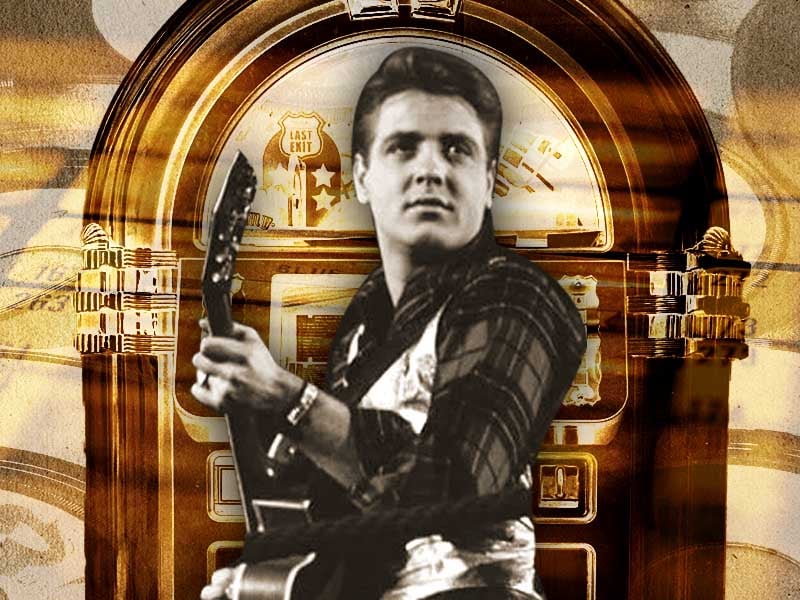
Eddie Cochran is one of the most important figures in the cultural history of the world. It’s a bold statement but his life bores out the truth of it. He was the real-life rebel without a cause, plain and simple. James Dean might have placed the idea in pop culture eponymously, but it was Eddie Cochran who brought the image to reality.
In his songs, he elucidated the desire and frustration of a generation of youths striving for something different. He did this not just with his sartorial style or salacious ways, but he was a true pioneer in every sense. Beyond the rebellious rocker iconography and the sweet face that made it palatable enough for the mainstream, he was a trailblazer in the true sense.
In his music, you will hear technology collide with art and echo the future with first of their kind multitrack techniques, groundbreaking distortion experimentation, and revolutionary overdubbing. This made him a postmodernist musician in the truest sense, and this inspired the likes of George Martin and The Beatles, and The Beach Boys who would soon follow in his footsteps years later with albums like Pet Sounds and Sgt. Pepper’s.
Sadly, his life was fated to be short. He died at the age of 21 in 1960 in a traffic accident alongside Gene Vincent and Sharon Sheeley, both of which survived but were severely injured. However, even in death, he would have a monumental impact on culture. This would also be far from limited to the usual posthumous aggrandising that occurs when an icon passes away, in fact, without being glib, the legacy of his death is also a mystic one.
Two things happened in the wake of his passing—one defined the future in a spiritual sense, and the other had more of a literal bearing on things moving forward. Firstly, the literal effect began to unfurl in the immediate aftermath.
One of the attending police officers at the scene was named David Harman. Following the tragic accident, Harman took hold of Cochran’s impounded Gretsch 6120 guitar. Compelled by the legendary status of the instrument, Harman felt dutybound to learn to play it and continue its musical legacy.
Two years later, Harman was a professional musician working under the name Dave Dee. He would be chief songwriter for the various bands he was in throughout the nineties and the risqué style of his song-and-joke stage performance was influential on the club scene as he worked in humour with rock ‘n’ roll helping to spawn the tongue in cheek brand of the British invasion.
However, his acts were never fated to be part of it and by 1971 he retired from performing focusing on finding talent instead. And what a talent scout he would turn out to be—over the years of his A&R work, he is said to have been responsible for the discovery of the likes of AC/DC, Boney M, and Gary Numan among others. Thus, you could poetically say that Cochran’s guitar still had a few songs in it!
However, this immediate unravelling of tenuous circumstances was only one way in which he impacted the future from six feet under. You see, a few months on from his death, in June, Cochran scored a number one with the eerily titled posthumous single ‘Three Steps to Heaven’. Once more, the legacy of this song would split off into a literal impact on the future and a spiritual one. In a literal sense, David Bowie was such a fan of the hit that he went on to reprise the riff for his tracks ‘Queen Bitch’ and ‘It’s No Game’.
However, in a spiritual sense, something else seemed to happen beyond the crystalising of an icon. Not only did the song bring new attention to his back catalogue and all the pioneering techniques contained therein that influenced the generation to follow, but something about the profundity of his posthumous hit made people approach music with a certain sense of empathy.
There was already real depth and emotion to the song ‘Three Steps to Heaven’, but now the reality of the poignancy was blurred given the dower circumstances surrounding it. The art and the artist were one. Without being overly gratuitous it seems from the rhetoric at the time, that it made Cochran out to be a rebel with a cause, as though his artistic heroism was somehow realised. Now, trailblazing artists of the future took note of this changing cultural notion that a pop culture star could actually transcend art with empathy and go beyond the music they produce. He wasn’t an icon sadly lost, he was now ingrained in culture.
As Bob Dylan would later say, “I’ve seen Buddy Holly play, I’ve seen Eddie Cochran play, I’ve seen Sam Cooke. I’ve seen all these people that are dead. Not a day goes by when I don’t think about all these people.” In fact, there’s probably not a day that goes by when Paul McCartney doesn’t think about Cochran either, he played his track ‘Twenty Flight Rock’ the first day he met John Lennon, and apparently, he was so impressed, it helped to bring them together. The rest, as they say, is ancient history.
