


The Unknown Masterpiece: How the most influential album of all time ruined the world

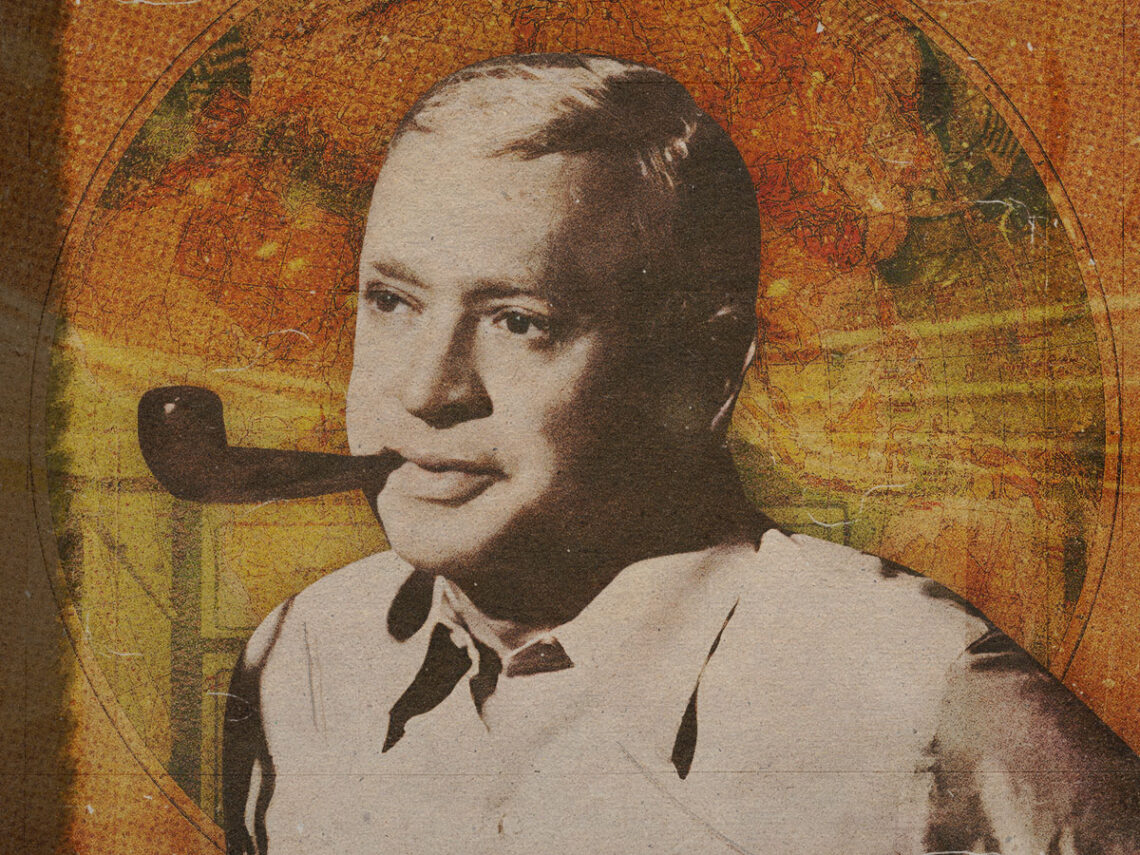
Seeing as though you’ve probably never heard of Enoch Light and his masterpiece, Stereo 35/MM, it seems pertinent to give you some context before I wade into the malignant upheaval his magnificence has unleashed upon the world. In this case, that context pretty much has to hark back to the beginning of modern society…
During the industrial revolution, masses of the rural poor began to migrate from the countryside to booming cities. Meanwhile, the emerging middle-classes slipped out the back door to some new realm called ‘the suburbs’. For aeons, this new space between the upper-class grandeur of the countryside and the highs and lows of city life remained a scarcely populated dominion, hamstrung by the fact that it offered safety, a relative modicum of peace, but not a lot more.
However, as financial fortunes began to gradually change and the population billowed, the great swathe of land outside of the city was fertile ground to forage for the huge incumbent housing explosion. As a result, the emerging band of people straddling the line between the working class and lower-middle steadily grew thanks to industry-induced social mobility. Capitalism was in a thriving strong spot due to a wealth of opportunities.
Slowly but surely, skilled traders, middle managers, plucky coupon winners and the likes all began to forgo the bustle of the city for a quieter life in the leafy, fresh-aired middle-ground. New builds and greenery promised a utopia in reach of work but sheltered from the gaudy smokescreen of civility’s freshly soot-covered centre. However, the downside was that all the culture they had previously relished nightly was suddenly out of reach. Thus, this newly housed army opened up a market for somehow bringing Carnegie Hall to Cranford, NJ or The Royal Albert Hall to Royston.
After all, culture was cheap in the 1950s, and if you’d just been watching Enoch Light’s jazz band blow your mind in Harlem, the stillness of the suburbs might have proved a bit too quiet at first. Fortunately, the technological age was upon us, and help would imminently be at hand. This was pre-postmodernism, and science suddenly had an answer for most things. It was all running smoothly. In time, the lucky lot scrambling from the city to cushy homes having cashed in on a windfall sought to spend their disposable income on new-fangled record players. Suddenly, you could hear Harlem greats in your living room while plays were beamed in through your TV.
Alas, something wasn’t quite right with the albums. All recorded in mono, they sounded like the real thing but lacked all of the emersion. And that wasn’t just the emersion of a fizzing atmosphere, but rather the sound itself was queerly opaque. It took someone like Light – a jazz bandleader who had been around live sound his whole life – to figure out the problem.
Light quickly realised that there was only one source for the sound. While multi-speakers would be a mind-bending stretch too modern to comprehend, picking up sounds from various microphones was a rather more manageable thought. You see, when Light was on stage, he heard all the sources of sound flooding towards him in a joyous unspooling cacophony. With mono, all that melody was a little too linear to be anything like the real thing, it was like running a roast through a blender and blurring the delicious constituent parts into a samey soup of sound. Light separated these out.
While stereo sound might be so ever-present these days that it’s almost subconscious, back then, it was as inconceivable as the moment the uber driver first told you, ‘No, you’ve already paid’. As the liner notes for the 1961 album boast: “The first time you hear this record will be one of the most startling experiences of your entire life. For the very first time, you will hear sound that is completely liberated, sound that is totally free—pure, full, honest sound with no mechanical restrictions whatsoever.”

Although it took a lot of time to reach the point of Light’s record, when he created what could be considered the first stereo album that sounded something like music, a seismic shift was underway. By no means is the music itself worth a retrospective review, the reverberations that followed, on the other hand, changed the world ineffably and forevermore…
This influence wasn’t just in terms the Pet Sounds wizardry of science and artistry colliding that followed from The Beach Boys or the impact it had on George Martin and The Beatles. But in the way we live our day-to-day lives. With his trailblazing stereo sound, Light helped to bring forth one of the greatest art explosions in history, but he also ruined the world. As the man once said, sometimes you eat the bear and sometimes the bear eats you. So it goes.
Light managed to plant the seed of something that brought the immersive sound of a concert home. In the process, he figurately penned what could be classed as the tagline for the suburbs themselves: ‘From the comfort of your own home’. Suddenly, all sorts of sofa-propped notions sprung up: What if TV could be more like the real thing? What if restaurant food could be delivered to my door?
With that, the suburbs were awash with culture, but sadly, it was all imported, a facsimile of the real thing, a big, giant box office cannon condensed into four walls with no need to experience the full-fat original recipe. This was all fine, of course, in fact, it was brilliant. It was so good that ‘just like the real thing’ happened to be good enough to satiate the masses. What proceeded in the suburbs is something David Bowie would lament throughout his artistic existence, explaining: “In suburbia, you are given the impression that nothing culturally belongs to you. That you are in this sort of wasteland.”
Thus, when Bowie got the chance, he fled from Bromley to London and never looked back. He had been inspired by Bob Dylan, who had trodden the same city-faring path, and Dylan, in turn, had been inspired by Jack Kerouac, who spends the entirety of his seminal novel On The Road hightailing it through America, trying to escape the massive concrete sprawl of the suburbs and the comfortable trappings of commercialism in exchange for the up-and-down wonders of the banality busting real thing, whatever that is, in jazz bars and juke joints, halfway houses and terrace-perched tents.
In fact, On The Road is the perfect prescient encapsulation of what Light would soon beget with his record. When Kerouac released his novel, literature’s prominence as the pinnacle of culture was beginning to wane. Prior to its publication in 1957, it was Proust who you pored over in libraries and lecture halls, not some young punk who knows four chords. But the technologically pumped-up medium of pop culture was soon becoming the people’s art, and he set out to catch that on the wing. In essence, he assimilated a reality TV travel show searching for the zeitgeist with the timeless high-class art of profound prose. Light said that you, the people, don’t have to go out and fetch it like Kerouac, you can have it all at home.
Trapped between the highfalutin ideals of the upper-class countryside and the great poetic dirge of culture in the city, the suburbs simply imported the best of both. This, of course, was all well and good for a time. After all, Bowie himself is one of the most significant cultural forces of all time, and he came from Bromley. Likewise, Dylan heralded from the sleepy comfort of Hibbing, and near enough everyone else who has written a song since has been stirred up by his wayfaring wind, so you can get a solid artistic education from the middle-ground. In fact, the people setting up new lives in the suburbs could cram in more culture than they could ever afford in the city. However, as Bowie said, it was never a culture to call their own.
The hubs of recreation that were set up in these new greenbelt areas were Social Clubs in Britain, Bowlos in Australia and whatever the equivalent is from where you are. In each of these, the entertainment on offer is usually a parody in some way, like a daft-laugh send-up to the great acts that reside in record collections back home. Progressive art has never besieged these flat-roofed establishments, it has to flee to the city and be piped back in a decade or two’s time.
C’est la vie, you might say, and I might be tempted to join you. Novelty acts are brilliant, flat-roof pubs are often better than stadiums when it comes to watching sports, and a lot of modern art is pompous shit that perhaps might be rightfully ripped off the walls. But there is an argument, and it is admittedly a bit of a leap, that the ‘from the comfort of your own home’ box office that has ensued in suburban life since the sprawl began has sort of insulated us from the vital subversive force of visceral culture at the cutting edge. It’s one thing to have Dylan extolling virtues to better society at a click, but it’s another thing entirely to hear him rattle the message home firsthand surrounded by a galvanised community.
For the most part, the suburbs now belong to the working classes, but it would seem that we have lost the cohesive ideals we had in the cities when unions called for equality, and the exciting flux of people saw the benefits of immigration and progress as we all banded together collectively. It seems the armchair is a less empathetic viewpoint to sit in judgement of the world than the bowels of the beast at some shoulder-rubbing cultural event where it’s joyously apparent we are all fellow passengers to the grave longing for a bit of exultation and not a race of separate creatures bound on other individualistic journeys. We grow more vitriolic in our isolation, a case in point is how the same argument that spirals uncontrollably to an angry bipartisan end online would be settled with a handshake in the pub.
In short, the genius Enoch Light had no idea the mass indifference he had begotten when he magnificently dotted microphones around the room and blew our tiny minds. Culture inherently calls for collectivism that Light’s armchair revolution of individualism curtailed. Now the live music scene is suffering an existential crisis, while home entertainment is booming like never before. But the paradox is that as a near-lifelong denizen of the working-class suburbs myself, and having found it to be mostly a pleasurable lark, you simply have to pat the bastard on the back for the boon of the brilliant music that soon followed his Promethean feat.
In fact, I’m listening to Pet Sounds now— an album that took five short years to figure out a way to not only use Light’s groundbreaking methods to facilitate rich sound but to incorporate it into the art itself resulting in a layered whirlwind of Baroque pop that may well constitute one of the greatest works of art in human history. But I’m also listening to it alone, unionised, with no plans for the night when the other half gets back, and I’m exorbitantly worrying about the cost-of-living crisis that I am yet to do anything about, and too sheltered to even attempt to chat to my neighbour if I bump into them when I take the bins out. So, it seems Light giveth, and he taketh away.

Never Miss A Tale
The Far Out Bob Dylan Newsletter
All the latest stories about Bob Dylan from the independent voice of culture.
Straight to your inbox.