


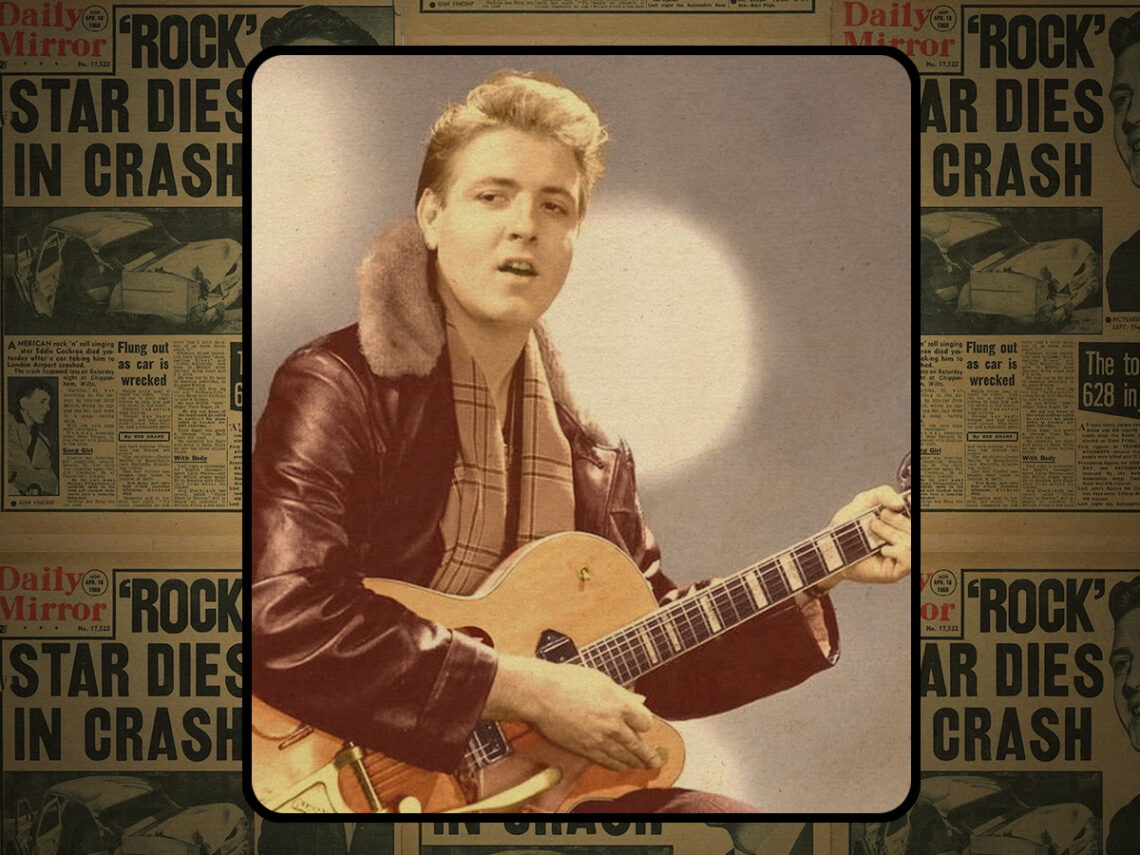
How the second ‘Day the Music Died’ happened in Chippenham, England

In a strange and tragic twist, the small Wiltshire town of Chippenham was the site of the untimely death of one of America’s most worshipped rock ‘n’ roll icons.
The world of rock ‘n’ roll had suffered its first big shock in February 1959. Touring the US Midwest for the Winter Dance Party series of shows, ‘That’ll Be The Day’ singer Buddy Holly chartered a plane to Minnesota’s Moorhead following a set at Iowa’s Clear Lake, along with Ritchie Valens and ‘The Big Bopper’ JP Richardson. Losing control in the wintry conditions, the Beechcraft Bonanza aircraft crashed shortly after take-off, killing all onboard, including the pilot.
‘The Day the Music Died’ – retrospectively dubbed by singer-songwriter Don McLean in 1971’s ‘American Pie’ – was an event that spooked Eddie Cochran. By 1959, the young rock ‘n’ roll star had already carved a significant stature in the pop charts, boasting classics of the era with ‘Twenty Flight Rock’, ‘Summertime Blues’, and ‘C’mon Everybody’, while cutting a more rebellious image than Elvis Presley that would ensure his future deification in the rockabilly scene.
But Cochran was spooked. Personal friends with the artists who lost their lives in Iowa, those close to the ‘Blonde Elvis’ reported anxieties about any further touring, eager to hone his studio chops, making music and developing his production skills to avoid a similar demise on the road. Yet, apart from a 1957 visit to Australia with Little Richard, Cochran signed up to bring rock and roll across the Atlantic for what’s considered his first real international tour. It would also be his last.
Scheduled across January to April 1960, Cochran and ‘Be-Bop-a-Lula’ star Gene Vincent co-headlined an extensive number of shows up and down the UK, including matinee sets, weekly residencies and appearances on TV and Radio, with support from Billy Fury and Tony Sheridan among others. Performing their last official date of the tour at the Bristol Hippodrome in southwest England, April 16th, a taxi from the city’s Park Street intended for the flight home would end in disaster.
Travelling along Bath Road, now known as the A4, in a Ford Consul Mark II toward Heathrow Airport late in the evening, the 19-year-old driver lost control and crashed the vehicle into a concrete lamppost in Chippenham’s Rowden Hill area shortly before midnight. Also in the taxi was songwriter Sharon Sheeley and the tour manager Patrick Tompkins, who sustained serious enough injuries to warrant a transfer from Chippenham Community Hospital to Bath’s St Martin’s Hospital, but for Cochran, the crash proved fatal.
Sitting in the middle of the back seat, Cochran’s efforts to shield Sheeley from the impact’s full force may well have saved her from further injury, but placed him in mortal danger. Sustaining a traumatic brain injury due to his powerful ejection from the vehicle, Cochran never regained consciousness, passing away the next day at 4.10pm on Easter Sunday at 21 years old.
For many devotees of rockabilly, Cochran’s young death served as the second ‘Day the Music Died’, a tragic mishap that triggered mourning all over the rock ‘n’ roll world while also freezing the young star as an eternal flame to youth and rock’s rebellious spirit.
Cochran’s body was flown home and buried in California, while the site of the crash is marked by a memorial ‘Three Steps to Heaven’ stone on Rowden Hill, a source of many a rock and roll pilgrimage for fans all over the world to pay their respects to the ‘Summertime Blues’ crooner.
