


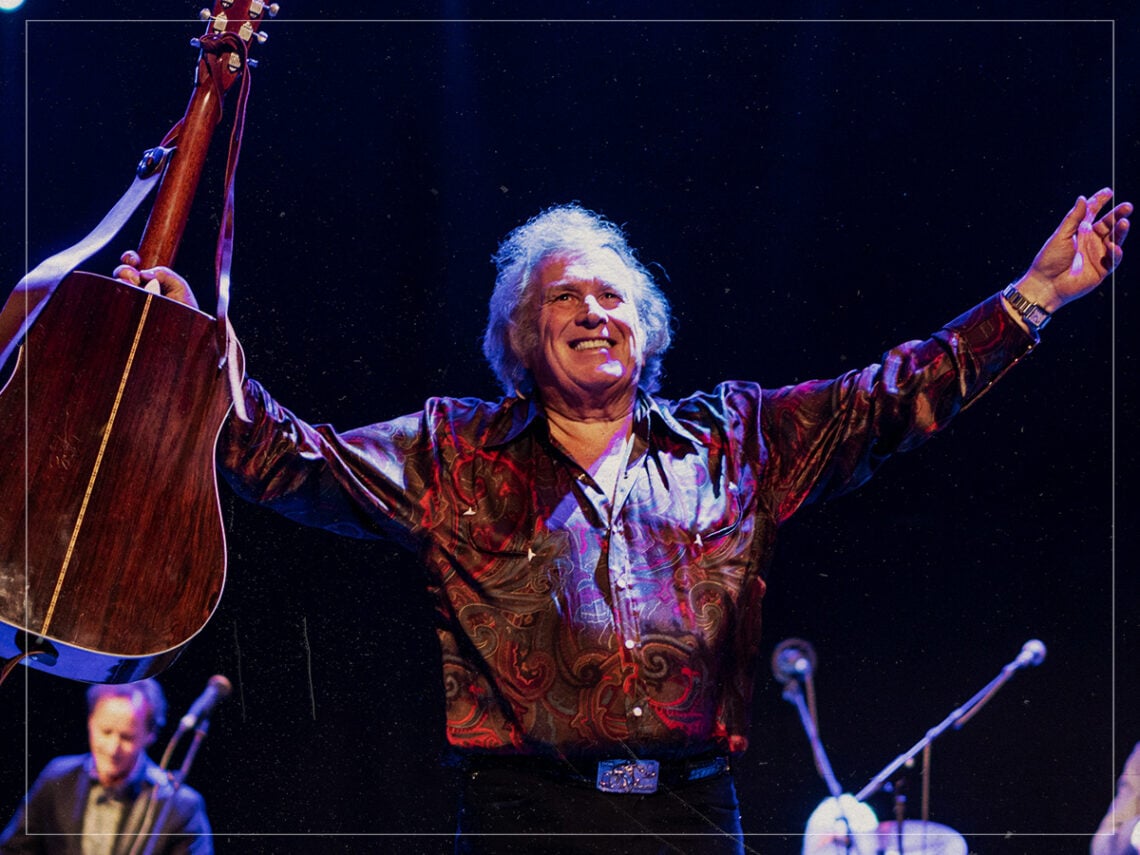
Don McLean thought Pete Seeger and his brilliance “would become a statue”

Receiving the nickname ‘The American Troubadour’ is high praise indeed, and for Don McLean, having this be the unofficial title, you’re recognised as having ultimately helped his music find and maintain its audience for several decades.
Of course, throughout the history of American contemporary folk music, there have been several other artists who ought to be considered for this same nomenclature. The likes of Bob Dylan, Hank Williams and Bruce Springsteen, despite all having emerged at different points in time, are all celebrated for this same ability to tell incredible stories about American life, and while not always painting the nation in the most positive light, their songwriting was able to touch the hearts of their listeners.
When it comes to being able to navigate their way through tales of the bleakest moments in American history and telling the stories of individuals who ought to be better known for having overcome adversity, these songwriters have all been able to deliver the goods and write them in a captivating and engaging way. McLean is, of course, just as worthy of praise for his contributions to this style of writing, but there are some figures who have all of these influential acts looked up to.
The emergence of acts in the 1950s, when folk music was merging with blues and rock and roll and becoming something that was far more commercially successful, thanks to the rise in availability of record sales, is something that ought to be studied as far as identifying the most important songwriters in this field.
One of the names who is constantly brought up in this context is Pete Seeger, who is noted for having been an influence on most of the prominent folk singers and songwriters that emerged in the 1960s and beyond. While his work is brought up less in the modern day due to the continued prominence of figures like Dylan, it’s still easy to trace where Seeger’s importance came from and how it continues to have an impact on songwriters in this field in the modern age.
Seeger was a hugely influential figure to McLean, and he wrote a tribute to the legendary songwriter when he died in 2014 that outlined exactly why he deserves to be so revered in the world of folk and beyond. Having had the opportunity to work alongside Seeger, he was deeply touched by his passing, and despite their occasional confrontations, he was a constant source of inspiration and guidance throughout his career.
“He taught me how to perform and make a living with a guitar when I had no money and only dreams,” McLean recalled of his idol. “He taught me how to survive success, the most important thing he taught me of all. Because I learned from him that you have to love your music and audience and everything you do, big or small, moves you forward. Everything does not have to be important and major. All the little things add up.”
McLean continued by stating that Seeger also taught him to never be afraid of being critical of the ills of the world and society, and that his fearlessness in this regard was something that all songwriters should aspire to have when approaching their own craft. “Pete will become a statue now,” he said, attempting to immortalise his brilliance, “But I remember the living man who, with all his faults, had a character that was finer than anyone I ever knew.”
It’s a shame that Seeger’s power as a brave songwriter who was never shy of sharing his true feelings is not spoken about in the same way as those he influenced, but for anyone who is aware of how crucial his songwriting was, it’s clear that his impact on those from the generation after him was incomparable.
