


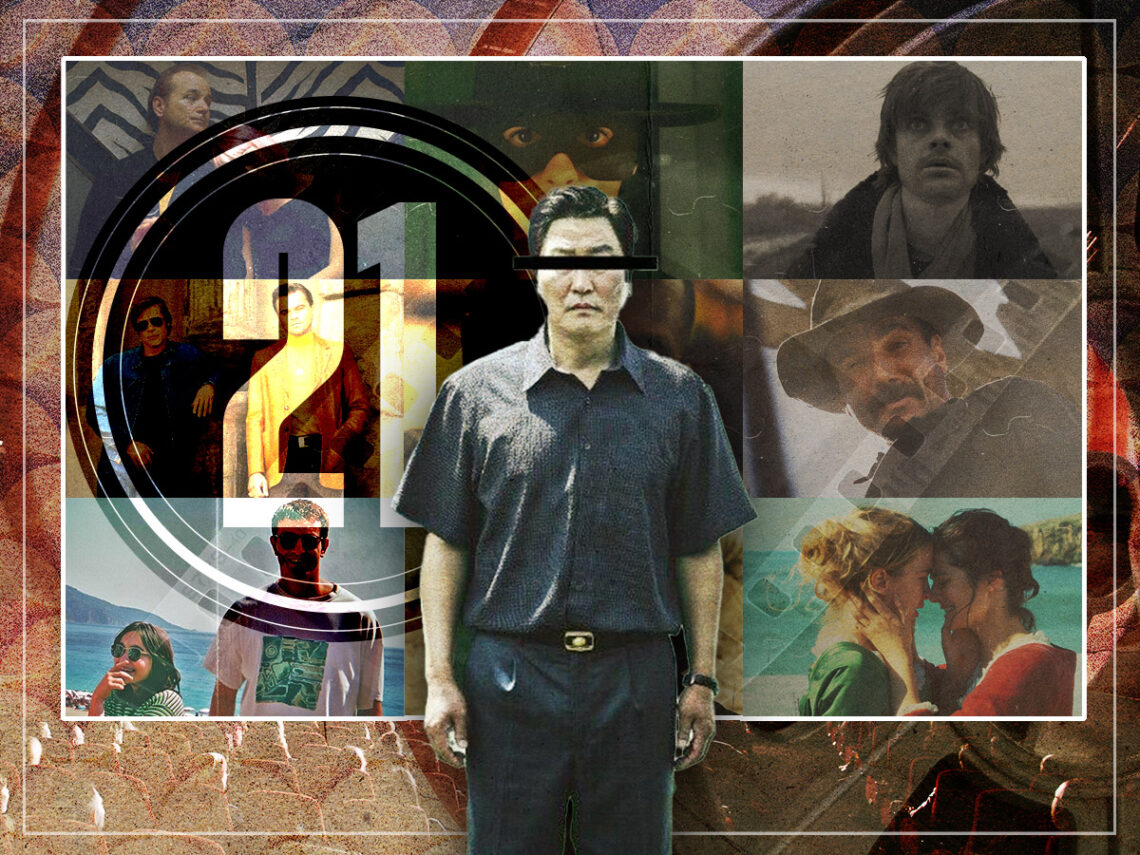
The 21 greatest movies of the 21st century

How do you even begin to summarise just how far cinema has come since the start of the new millennium? Well, you start by going back to 2000, to a world where the Ridley Scott epic Gladiator dominated at the Academy Awards, Jim Carrey snatched box office supremacy with movies like How the Grinch Stole Christmas, and the superhero obsession of the following decades silently began with the release of Bryan Singer’s X-Men.
Yet, cinema has changed considerably since then, with the contemporary industry having been dominated by a diverse range of talents from across the world, offering new insight into modern issues as well as unique perspectives on some of the film’s most established genres. Where American creatives like Steven Spielberg, Quentin Tarantino and Martin Scorsese continue to thrive, more diverse and distinctive voices from across the globe such as Yorgos Lanthimos, Ruben Östlund and Céline Sciamma stand shoulder-to-shoulder.
Along with the rise in popularity of superhero cinema, audiences have also craved more science fiction tales, likely due to the ever-more fantastical technological advances that are being made in real life. Whilst grand epics like Inception and Dune have been crafted by Christopher Nolan and Denis Villeneuve, other quieter and more existential sci-fi flicks have also been delicately conjured in the form of Jonathan Glazer’s Under the Skin and Claire Denis’ High Life.
So, after much deliberation, we’ve drawn up our list of the 21 greatest movies of the 21st century, collating a collection of films that have defined the modern industry and innovated the art form of cinema.
The best movies of the 21st century:
21. Inside Llewyn Davis (Coen brothers, 2013)
As two of the greatest filmmakers of modern Hollywood, it should come as no surprise that the Coen brothers take up multiple places on this list of the 21 greatest films of the current century. First to be discussed is the poetic 2013 Oscar-nominee Inside Llewyn Davis, a tender film that well encapsulates the filmmaking duo’s passion for personal storytelling and oddball musical performances.
Helped by Oscar Isaac, who gives his best performance to date in the title role, Inside Llewyn Davis is a magnificent ode to the struggle for creative expression. Telling the story of a folk singer seeking popularity in Greenwich Village during the 1960s, the Coens’ film subverts the usual Hollywood narrative, telling a fictional biopic about a musician who fails to make it big.
What follows is one of the most heartbreaking yet life-affirming tales about the pursuit of personal achievement, which the Coen’s have stuffed with charm and organic comedy. Alongside Isaac, John Goodman and Carey Mulligan also thrive, crafting a film that pulses with passion and speaks to far too many people about the acceptance of one’s own talent in the world.
20. Uncut Gems (Josh Safdie and Benny Safdie, 2019)
Every now and again, Adam Sandler comes along to remind everyone there’s always been a phenomenal actor lurking under the surface of his tired schtick, and he’s never been any better than in the Safdie brothers’ searing crime thriller that packs a punch well beyond its riveting storyline.
Sandler’s gambling-addicted jeweller Howard Ratner places the bet of a lifetime, one that’s either going to net him the biggest windfall of his life or bring about his demise. He’s an unscrupulous guy, but the Safdies display such mastery of tone and pacing – aided immeasurably by Sandler’s towering performance – that it’s hard not to root for Howard as he tries desperately to extricate himself from a mess of his own making.
Blending the stylings of a dark psychological thriller with a jet-black comedy and throwing in lashings of nerve-shredding terror for good measure, what elevates Uncut Gems into a realm of its own are the ominous mythological undertones, creating the very real belief that the opal at the centre of the story really does have otherworldly properties. With the cast and crew firing on all cylinders, it’s a tightly wound ball of energy from start to finish that demands nothing but the utmost attention.
19. The Social Network (David Fincher, 2010)
The genius aspect of The Social Network is that despite being dismissed in certain quarters as ‘the Facebook movie’, neither director David Fincher nor writer Aaron Sorkin considered the upstart tech giant as one of the anchors of the story they wanted to tell.
Instead, the duo took their cues from some of humanity’s basest emotions, with friendship, loyalty, jealousy, class, wealth, and power all playing a significant part in turning Mark Zuckerberg’s dreams into a reality. A reality that may have revolutionised the internet era but has come with its fair share of danger and hubris along the way.
Some of the major players may have disputed its factual and historical accuracy, but that was beside the point. With Fincher’s masterful direction acting as the perfect accompaniment to Sorkin’s razor-sharp screenplay, The Social Network is almost Shakespearean in its gravitas and narrative heft, creating an unbearably intense and self-aggrandising snapshot of a brief period in history that ended up changing the world.
18. Once Upon a Time in Anatolia (Nuri Bilge Ceylan, 2011)
Where the Oscars often get it wrong, at least we can rely on Cannes, and while the film festival didn’t give Nuri Bilge Ceylan’s 2011 masterpiece Once Upon a Time in Anatolia, it did walk away with the illustrious Grand Jury Prize. A classic of contemporary slow cinema, this Turkish murder mystery tells the story of a group of men who set out on the grasslands of Anatolia in search of a dead body.
A mystery that focuses not only on the murder at the film’s centre but also on the curious nihilism of life itself, Ceylan’s film is a meditative classic that manages to find grace in the mundane. Here, murder is treated like an everyday occurrence, treated with dignity but also habitual tedium by the lead characters, including policemen and doctors, who each have a hand in seeing the case closed before the cycle inevitably starts again once more.
A genuine cinematic odyssey of discovery, Ceylan manages to cram so much into a film that is, admittedly long, but ‘oh, so simple’. Where it can be taken as a meditative and existential analysis of the banality of death, it can also be enjoyed and appreciated as a genuinely gripping crime story.
17. Once Upon a Time in Hollywood (Quentin Tarantino, 2019)
In many ways, the films of Quentin Tarantino define contemporary filmmaking, telling frenetic, violent tales that combine the innovation of independent storytelling with the glitzy sheen of Hollywood. The culmination of decades of filmmaking proficiency would come in 2019 for Tarantino when he released Once Upon a Time in Hollywood, his magnum opus that perfectly illustrates what makes him such a beloved creative.
Set in the late 1960s, when the sun was setting on the classic Hollywood studio system, and America was in a time of significant tumultuous change, Tarantino’s film tells the story of a faded television star who strives to achieve fame in the bright lights of LA. At the very same time, the tale tackles the life of Sharon Tate, the real-life industry icon who tragically died at the hands of the Manson family cult in 1969.
But, just as Tarantino had upended the realities of history in such films as 2009’s Inglourious Basterds and 2012’s Django Unchained, in Once Upon a Time in Hollywood, he created a world where Tate lives, ending the film as if it were an optimistic cinematic fairytale. Gorgeously shot, Tarantino’s 2019 effort is one of his very best, presenting characters who feel authentic in a world that painstakingly recreates the dazzle and class of the turning 1960s.
16. Aftersun (Charlotte Wells, 2022)
It’s commonly known in the movie industry that a filmmaker’s debut is something of a ‘pass’, where their proficiency for the craft is still in its infancy. Yet, British filmmaker Charlotte Wells subverted this idea wholeheartedly with the release of Aftersun in 2022, a film so bold and pulsing with identity that it seemed to halt the industry entirely, announcing actors Paul Mescal and Frankie Corio with a thunderous dramatic crack.
Making viewers nostalgic for lives they’ve never lived or known, Wells’ self-written film follows a woman looking back on a family holiday she shared with her father, revisiting old home movies in an attempt to understand the man behind the father. Set in the early 2000s, the film feels like it was sent from an innocent otherworld, where the stuttering grain of VHS provides the only porthole into a time long gone.
Exploring concepts of memory and identity, the film flows and sways with the pace of Wells’ direction, nervously picking apart the mind of the fragile father with the same curiosity as the daughter. A poetic tale told with a marvellous understanding of cinematography, Aftersun is a film that seems to define the contradictory contemporary world, where loneliness and detachment fester in a society that is technically more connected than ever.
15. The Act of Killing (Joshua Oppenheimer, 2012)
Films are so challenging to make that the idea of making a movie and then inventing an entirely new cinematic language at the very same time is a feat reserved only for the so-called ‘masterpiece’. Documentary filmmaker Joshua Oppenheimer achieved this, however, back in 2012, when he made his extraordinary study of the mass executions of communists that occurred in 1960s Indonesia, The Act of Killing.
An incredibly disturbing piece of cinema, Oppenheimer’s film challenges the former leader of one of these Indonesian death squads to bring the killings to life in the form of a Hollywood performance fit with surreal musical numbers. What results is an utterly compelling study of the banality of evil and the insidious potential of the human mind, with the perpetrators of horrific crimes playing the victims in their own reenactments, making for astoundingly existential consequences.
Rethinking what documentary cinema can be, Oppenheimer’s film is one of the modern filmmaking form’s most ingenious products, being praised by fellow filmmakers worldwide. Speaking about the movie upon its release, master documentarian Werner Herzog commented: “You won’t see a film of that power and of that surrealism in the next one or two or three decades”.
14. Still Walking (Hirokazu Koreeda, 2008)
From the cinema of the great Yasujirō Ozu to the work of the Studio Ghibli master Hayao Miyazaki, Japanese cinema has long practised the tradition of slow, emotional and poetic storytelling. No filmmaker of the modern age better illustrates this than Hirokazu Koreeda, the extraordinary dramatist who extracts wonder and beauty from life’s quietest and most seemingly banal situations.
Whilst it was 2018’s Shoplifters that won him the Palme d’Or at the Cannes Film Festival, our pick for his greatest of the modern century has to be 2008’s Still Walking. Edited, written and directed by Koreeda, the story follows a family who gather on the anniversary of the death of the eldest son to commemorate his memory and collectively grieve his loss from the world.
Told as if a tender fable, Still Walking is an incredible, noble piece of storytelling that crafts a collection of authentic characters who each move and interact with effortless naturalism. As the collective pain of the family unfolds, Koreeda places us in a position of sympathy where we, too, grieve the loss of a familial icon and pray for the restoration of the household dynamic.
13. Portrait of a Lady on Fire (Céline Sciamma, 2019)
Since French director Céline Sciamma released her debut feature, Water Lillies, she has consistently explored themes of gender and sexuality in her work, no more potently than in Portrait of a Lady on Fire. The film is set in the late 18th century and charts the romance between Marianne, a painter, and Héloïse, an aristocratic woman whom Marianne is hired to paint a portrait of. However, refusing to pose due to her reluctance to get married, Marianne must paint Héloïse in secret, memorising her features as they walk along the beach together.
Soon, the pair begin an affair while Héloïse’s mother is away, with Sciamma exploring the mechanism of desire as well as their actual relationship, carefully studying love when it is forbidden, immersed in tension, subject to a finite period of time. As their relationship grows, Sciamma also centres on the importance of art and storytelling as a method of connection and consolation.
Portrait of a Lady on Fire is a carefully constructed study of romance, aided by gorgeous cinematography and brilliantly acted performances by Noémie Merlant and Adèle Haenel. The movie won the Queer Palm and ‘Best Screenplay’ at Cannes Film Festival, cementing Sciamma as one of the most important cinematic voices of the 21st century.
12. Lost In Translation (Sofia Coppola, 2003)
Four years after her debut feature, Sofia Coppola gave us Lost In Translation and dispelled any lingering notions that her status as a director was simply the result of being the daughter of Francis Ford Coppola. With The Virgin Suicides, audiences around the world pricked up their ears and raised their eyebrows, wondering what to make of her. With Lost In Translation, there was no shadow of a doubt; Coppola was a bonafide, genuinely fantastic filmmaker.
Following Bob Harris, a faded movie star played by Bill Murray, and Charlotte, a college graduate played by Scarlett Johansson, we witness the blossoming of a strange and melancholic relationship that straddles the line between platonic and romantic. Adrift in a foreign city, Tokyo’s neon lights and cultural differences provide a stunning backdrop to the profound sense of isolation both characters are wallowing in. With heart-achingly powerful performances from Murray and Johnasson, we’re shown how two strangers can make a connection in the least likely of places and the most moving of ways.
Since Lost In Translation, Coppola has continued to make exceptional movies, but her sophomore feature resonates with us the most and lingers in our minds to this day. Aided by understated yet exquisite cinematography from Lance Acord, this movie stands as a testament to a specific kind of thoughtful, slow-paced, and texturally rich cinema that Coppola has consistently proved herself to be a master of.
11. Pan’s Labyrinth (Guillermo del Toro, 2006)
Following the release of the American superhero movie Hellboy, Mexican filmmaker Guillermo del Toro made his next movie, Pan’s Labyrinth, in Spanish, blending the real world with a rich fantasy one. The movie is set in Francoist Spain during the 1940s, where a young girl, Ofelia, witnesses her stepfather commit violent atrocities. To cope with the destruction of war and her mother’s declining health, Ofelia immerses herself in a fantasy world known as ‘Pan’s Labyrinth’ after a stick insect transforms itself into a fairy, revealing a land of mythical beings.
Influenced by fairytales and mythology, the movie sees Ofelia encounter a mixture of creatures throughout her journey, with some leaving an indelible mark on the viewer, like the child-eating Pale Man with eyes in his hands. The film is defined by its incredible special effects and makeup, which allow del Toro’s distinctive visions to come to life.
Thus, unsurprisingly, the movie took home the awards for ‘Best Makeup’ and ‘Best Art Direction’ at the Oscars, as well as ‘Best Cinematography’ for Guillermo Navarro. Pan’s Labyrinth is visually striking, and del Toro pays attention to the smallest of details to make the fantasy world as rich as possible. With influences ranging from The Spirit of the Beehive to Arthur Rackham’s illustrations, Pan’s Labyrinth is del Toro at his most personal and accomplished.
10. Yi Yi (Edward Yang, 2000)
The Taiwanese filmmaker Edward Yang was a staple of world cinema in the late 20th century, pioneering the Taiwanese New Wave of the 1980s alongside The Boys from Fengkuei’s Hou Hsiao-Hsien and Rebels of the Neon God’s Tsai Ming-liang. Whilst both of his peers created masterworks, Yang’s films felt wise and definitive, as if statements were made by a higher power.
Whilst his magnum opus is arguably 1991’s A Brighter Summer Day, his best of the modern era happens to be his only release of the new century before tragically passing away in 2007. Yi Yi is a symphony of cinema, telling the story of a middle-class Taipei family whose relationships with their relatives, past and present, force them to reconsider their lives and change the course of their existence.
Exquisitely shot, Yang’s film is a delicate observation of the beauty, torment and melancholy of growing older, featuring magnificent performances from Nien-Jen Wu, Elaine Jin and Issei Ogata, among many others. As a piece of drama, nothing feels quite as tender and fragile yet as epic and significant as Yang’s Yi Yi, a genuinely revitalising piece of cinema that might just change the way you look at life around you.
9. Parasite (Bong Joon-ho, 2019)
From Bong Joon-ho, the man who gave us the exquisitely sordid Memories of Murder in 2003, the delightfully playful monster movie The Host in 2006, and the fantastical worlds of Snowpiercer and Okja, came Parasite – perhaps the most searing indictment of the privileged elite and sharply satirical take on class dynamics in cinema history. Parasite made history in 2020 by winning ‘Best Picture’ at the Academy Awards, making it the first ever non-English language movie to do so. And for good reason.
Following the struggling Kim family, living in a flooded semi-basement flat, Parasite presents us with the absolutely earth-shattering consequences of a deep-rooted deception. When an opportunity arises for one of the Kims to pose as a student to get a tutoring job at the wealthy Park estate, things start to accelerate out of control as the Kim family gradually ingratiates themselves further and further into the Park family.
When the hint of a second interloper nestled deep in the bowels of the house emerges, a catastrophic yet exceptionally directed climax is reached. Visually stunning, wonderfully acted, and always striking an elegant balance between social commentary and exhilarating thriller, Joon-ho’s movie is not just one of the most remarkable pieces of Korean cinema, nor just one of the best movies to win the Oscar, but absolutely and undeniably one of the best films to have ever been made in the 21st century.
8. Under the Skin (Jonathan Glazer, 2013)
It’s always perplexing, and sometimes downright frustrating, when such a gifted filmmaker is able to deliver consistent masterpieces – but at a rate of basically one film per decade. For director Jonathan Glazer’s second-ever feature, released a full 13 years after his debut Sexy Beast, he demonstrates a mastery of the medium that some directors never achieve in their entire filmmaking careers, telling a wonderous sci-fi tale that boggles the mind.
Very loosely adapted from the novel of the same name by Michel Faber, Under The Skin follows an alien in disguise, stalking the streets of Glasgow and luring unsuspecting men back into her flat for an abstract yet clearly horrific fate. In a dazzling display of ultra-meta movie making, Scarlett Johansson plays the alien, and in a perfect mirror of the themes of the movie, is actually undercover in Scotland, dolled up in such an unusual get-up that people don’t recognise her. And the people are real. Utilising hidden cameras, Glazer blends a trippy sci-fi fable with a faux documentary.
Heralded by some critics as ‘an heir to Stanley Kubrick’, the movie alternates between beautifully gritty vistas of rural and urban Scotland with mind-boggling, inter-dimensional imagery reminiscent of the ending of 2001: A Space Odyssey. Are we seeing a wormhole? A spaceship? The very creation of the alien’s new human skin? You’re never explicitly told, but you’ll come to a different conclusion on every hypnotic viewing.
7. Moonlight (Barry Jenkins, 2016)
Coming-of-age films about queer black men are rare to come by, and Barry Jenkins’ Moonlight illuminated the need for such stories to be told. Divided into three parts, Moonlight follows protagonist Chiron through childhood, adolescence and early adulthood. Jenkins uses distinctive colour motifs within each section, using this technique to convey Chiron’s changing struggles and emotions, such as fear, confusion and anger, as he reckons with his sexuality and masculinity.
In the first section of the movie, Jenkins explores Chiron’s troubled upbringing, finding a father figure in crack dealer Juan. The relationship between the two sets the tone for the movie, with Jenkins finding tenderness in the midst of chaos, violence and pain. Jenkins depicts the effects of poverty, homophobia and fragile masculinity impeccably, weaving each section together to create a complex portrait of Chiron.
The film’s emotional final section depicts Chiron as an adult, finally accepting himself, before ending with a memory of himself as a child, uniting the narrative. Moonlight is a beautiful character study that rightly earned itself ‘Best Picture’ at the Academy Awards, alongside ‘Best Adapted Screenplay’ and ‘Best Supporting Actor’ for Mahershala Ali.
6. No Country For Old Men (The Coen brothers, 2007)
Bringing a high-quality novel to life on the big screen is no easy feat, but the Coen brothers nailed the task with 2007’s No Country For Old Men, adapted from Cormac McCarthy’s 2005 novel of the same name. Starring Tommy Lee Jones, Javier Bardem and Josh Brolin in perhaps their most outstanding performances of their respective careers, No Country is a narrative feast for the soul.
The Coens have always been exemplary in portraying the American South and West, as is McCarthy himself, and they do an incredible job of depicting West Texas in the early 1980s. The film tells of Llewelyn Moss, a Vietnam War veteran and welder who comes across a large sum of money whilst hunting in the desert. He is pursued by Anton Chigurh, a strange, violent and philosophical man sent to retrieve the cash, while Sheriff Ed Tom Bell is faced with investigating the criminal mess the two leave in their wake.
There’s a wonderfully tragic examination of fate and circumstance in No Country for Old Men that is elevated by the heroic performances of its three main stars: Brolin, the everyman, Bardem the affectless villain, and Jones, the tragic figure longing for “the old days”. The Coens deliver yet another masterpiece to their ever-lengthening filmography of excellence.
5. Spirited Away (Hayao Miyazaki, 2001)
The cinematic art form of animation was forever changed at the turn of the new millennium, as Pixar continued to revolutionise the digital practise with such classics as Monsters Inc and The Incredibles, whilst the world of anime pervaded into the mainstream. There’s no doubt that the most popular anime company was, and still is, Studio Ghibli, which brought imaginative folkloric fantasy tales to Western audiences.
With many masterpieces to their name, it was Spirited Away in 2001 that proved to be the most innovative of their filmography, winning the Academy Award for ‘Best Animated Feature’ and becoming the first anime film to receive an Oscar. A creative and dark moral tale, Miyazaki’s movie tells the story of a young girl who mistakenly wanders into a world ruled by Gods.
Just like all of Ghibli’s classics, Spirited Away fizzles with childlike wonder, displaying gorgeous animation that soothes and excites the retinas all at once. Yet, the film is also something inherently darker and more complex, exploring mortality itself in a finale that will go down as one of the most profound in animation history. Taking the audience to an unfathomable world whilst asking existential questions about life’s complexity, Spirited Away is an exemplary film that showcases the power of animation.
4. Werckmeister Harmonies (Béla Tarr, 2000)
It’s impossible to discuss the greatest and most innovative pieces of cinema from the 21st century without also mentioning the idiosyncratic work of Hungarian filmmaker Béla Tarr. Known for his love of slow, steady cinematic excellence, Tarr has blessed the current century with such classics as The Turin Horse and Missing People, yet neither compares to the grace and mystery of Werckmeister Harmonies, released at the turn of the new millennium.
Deeply moving and utterly gravity-defying, Werckmeister Harmonies opens with an extraordinary sequence that explores the ethereal nature of the cosmos, using drunk pub-goers as stand-ins for revolving planets and stars. From here, the film proceeds to explore concepts both grand and granular, tapping into the dark reality of what it is to be human in an ever-more complex world of political and social control.
Predictably uncanny, in line with the rest of Tarr’s filmography, Werckmeister Harmonies is named after the baroque musical theorist Andreas Werckmeister and tells the story of a young man who witnesses his small hometown community falling apart upon the arrival of a strange circus and their main attraction; a giant dead whale. Tarr’s film is a transformative experience, reimagining what cinema can do and can be.
3. There Will Be Blood (Paul Thomas Anderson, 2007)
Paul Thomas Anderson is another filmmaker who has many works that might have appeared on this list (Punch-Drunk Love, The Master, Phantom Thread). Still, it’s just too hard to look beyond his 2007 masterpiece There Will Be Blood, which is worthy of further consideration as one of the greatest movies ever made.
Based loosely on the 1927 novel Oil! by Upton Sinclair, Anderson’s film tells of a silver miner-turned-oilman who embarks on a merciless journey to amass great wealth in the oil boom of southern California in the late 19th and early 20th centuries. Daniel Day-Lewis’ performance as his namesake, Daniel Plainview, has gone down in cinema history as one of the most exact and intense acting efforts ever committed to film.
Day-Lewis embodies the ruthless pursuit for prosperity, and even aside from his intoxicating on-screen actions – matched in quality by Paul Dano, who plays a rival preacher to Plainview (and remarkably his twin brother) – There Will Be Blood is simply a feast for the eyes, with the hot arid desert practically burning through the screen throughout its enchanting two-and-a-half hour runtime. There aren’t enough words to describe Anderson’s 2007 masterpiece; it’s simply a one-of-a-kind movie that does not come around often enough.
2. Mulholland Drive (David Lynch, 2001)
Several decades as one of cinema’s most respected surrealist filmmakers allowed David Lynch to hone his craft and deliver his magnum opus, Mulholland Drive, in 2001. The movie is a mesmerising exploration of Hollywood’s darkest depths, with actors Naomi Watts and Laura Harring playing dual roles, dividing the story into two halves – a dream space and the bleak real world.
Watts plays the naive, happy-go-lucky Betty, who comes to Hollywood hoping to become a successful actor, meeting the femme fatale-esque Rita, played by Harring. The pair work together to figure out Rita’s true identity after suffering a car crash-induced bout of amnesia, yet the movie quickly unravels into a bizarre spiral of events.
Mulholland Drive is defined by ambiguity, with the themes of Lynch’s tale only becoming clearer on repeated viewings. However, at its core, the movie is a potent exploration of the cruel nature of the American dream, where people are quickly chewed up and spat out. Through its stylish lens, Lynch presents an unforgettable meditation on the power of the imagination, which has the ability to both soothe us and cause ultimate destruction.
1. In the Mood for Love (Wong Kar-wai, 2000)
Far from his first feature, In the Mood for Love was Hong Kong auteur Wong Kar-wai’s seventh film – yet it was the one that catapulted him to international, mainstream fame and earned a reputation as one of the greatest examples of Asian cinema. Sometimes, it’s just the result of time and word-of-mouth that helps a foreign filmmaker cross the global barrier, but for Kar-wai, it was undoubtedly due to how profoundly moving his romantic drama really is.
Grappling with twin themes of loss and desire, it tells the story of a man and woman, Chow and Su, who rent rooms in opposite apartments. With their respective partners often away working, the two are left to their own devices and company until a pensive, cautionary flicker of romance blossoms between the two. Running parallel to this emerging passion is the heavy implication that their spouses are actually sleeping together, which leaves Chow and Su in a tumultuous state of ‘acting out’ the affairs their partners are having.
No other film has quite been able to speak in such a universal language and evoke such intense and overwhelming emotions with such little dialogue. Christopher Doyle, the cinematographer, must be mentioned – his sumptuously coloured and lusciously textured film photography whisks up both the characters and the audience, transporting us all on a wave of grief, lust and melancholia.

Never Miss A Take
The Far Out Quentin Tarantino Newsletter
All the latest Quentin Tarantino content from the independent voice of culture.
Straight to your inbox.