


The 1975 song that “changed everything” for The Edge

There has never been as singular a guitar player as The Edge.
Though every guitarist is looking to leave their sonic footprint on the albums they make, David Evans’s trademark use of delay on U2’s greatest work has etched itself into the minds of fans looking for something more out of their rock music than traditional sounds of rebellion. Everyone gets their first itch from somewhere, and The Edge could remember the first chords that drew him to the guitar.
When asked about his influences, Evans mentioned being awestruck when he heard the song ‘Gloria’ for the first time. Written by a pre-Moondance Van Morrison, this is a traditional tale of rock and roll lust banged out with dead-simple open chords. It might have been Morrison’s brainchild, but the one that struck Edge back in the day was the cover by Patti Smith.
Opening up with the subtle sounds of guitar chords, Smith talks about Jesus not dying for her sins before blasting the opening notes of the tune. In between the original lyrics, Smith adds in her own, as if she needs to exorcise these thoughts from her brain, should she fall apart if they stay locked in there. Even though there is still a sexual undercurrent to it, the name of the game was about reversing the traditional gender roles, down to the cover of the album Horses featuring a stark black and white photo of Smith against a plain backdrop.
The song ‘Gloria’ with its opening line: “Jesus died for somebody’s sins but not mine” has always stuck as one of the greatest opening lines of any song or album. Smith’s combination of the poem ‘Oath’ with the Van Morrison classic ‘Gloria’ illustrates that no artist is alone and no artist is quite like Patti Smith. Her constant use of material from other musicians who inspire her is a reminder that inspiration comes from those we admire, working in tandem with our own creativity.
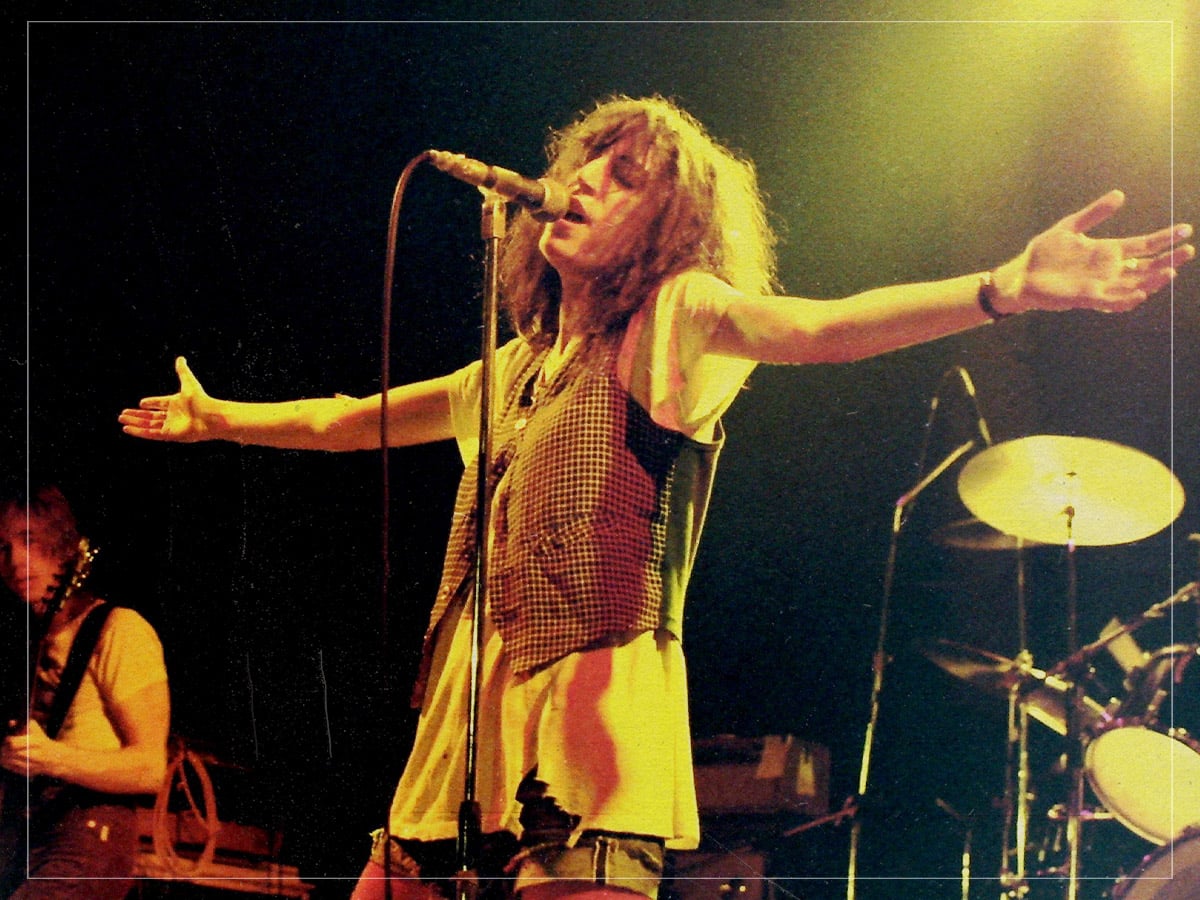
When asked about the song, Smith once said it represents the “right to create from a stance beyond gender and or social definition, but not without a responsibility to create something of worth.
Upon hearing it for the first time, Edge recalled being moved by it, telling ABC, “That changed everything for me at the time because we were starting to play as a band. The ideas… we’re a band who loves to mix it up with the sexual, the spiritual, whatever, the political, and there in that song she did that so incredibly”.

From there, Edge was also drawn to even more political music like The Clash, looking to find ways to subvert people’s perceptions of rock and roll by calling attention to the real problems afflicting the world. Though Edge would create the lush tapestries of sound in the background, Bono’s words carried the songs forward. Throughout some of the group’s monumental gigs on The Joshua Tree, the songs would spread out much more, including Bono getting fired up about his political frustration as Smith did on her debut.
While U2 were born and bred out of that traditional punk aesthetic, their songs quickly began to outgrow punk’s core ethos, creating hymns for the world. Some might have been political decrees like ‘Pride’ or ‘Sunday Bloody Sunday’, but songs like ‘Within You Without You’ spoke to something different. These songs went beyond world politics and moved into personal politics, where Bono lets the listener think of what being human means to them in the modern age.
As the years have gone by, U2 have always stuck by that same core beliefs, making various charity efforts like their performances at Live Aid and Bono involving himself in American politics to help those starving in Africa. U2 might not have been the most fashionable band in the world throughout their tenure, but the teachings of Patti Smith always taught them that the message was always far greater than fashion.
