


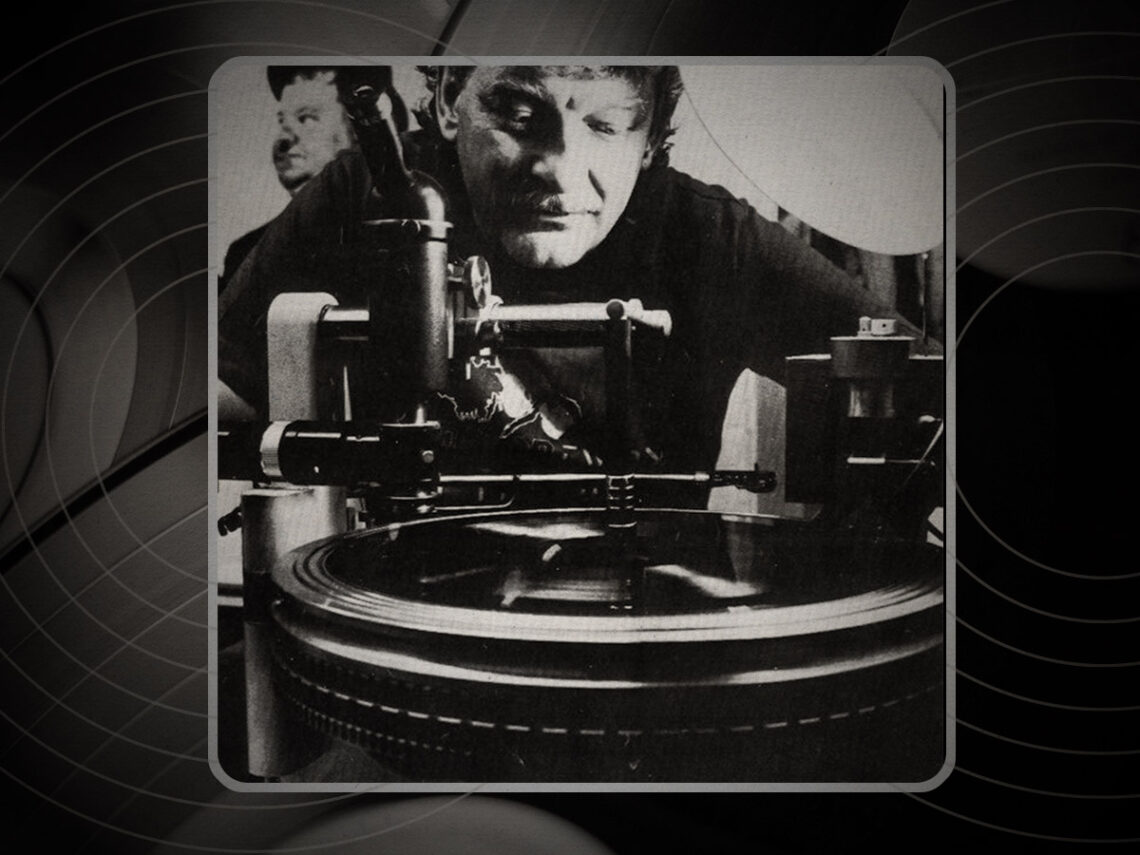
Porky: vinyl hero and dead wax specialist

Committed crate diggers and record riflers of a certain age will remember the puzzling intrigue of spotting one of Porky’s messages etched into the vinyl of some of their most loved albums.
Found in the record’s run-out groove between the label and the side’s last song would be the mysterious tagger’s typical “A Porky prime cut”, but could just as easily feature a cryptic passage, an irreverent in-joke, or even a critique of the album itself. Now, first issues containing the prized Porky caption have become a mark of many a rock and pop LP’s authenticity and are highly sought after by muso collectors around the world. But just who is the elusive Porky?
Originally, he wanted to be the one committed to vinyl. Raised in Liverpool and playing the same local club circuit as the up-and-coming Beatles, and opening for them while in The Renegades, George ‘Porky’ Peckham would jump between several local bands across the 1960s before his interest in audio electronics would surpass his rock and roll ambitions and pull him into the Fab Four’s orbit once again. Joining the Apple Studios team when The Beatles shifted operations to the 3 Savile Row headquarters, Porky would handle acetate disc cutting responsibilities in 1968 before stepping up to manager level the following year.
To the uninitiated, an acetate cutter or mastering engineer’s job is to transfer the audio from the submitted master tape of a completed album and carve the information into the master disc to be used as the reference for the record’s later mass-manufacturing. This was no easy task, involving a painstaking level of artisanal craft that Porky excelled at and even revolutionised.
To ensure maximum fidelity, Porky would ‘cut hot’ on the acetate and push the grooves to their deepest limit, yielding a voluminous and more bassy sound that won him a massive reputation in the industry, counting thousands of albums produced under his watch at Apple, then later at his own Master Room and Porky’s Mastering services.
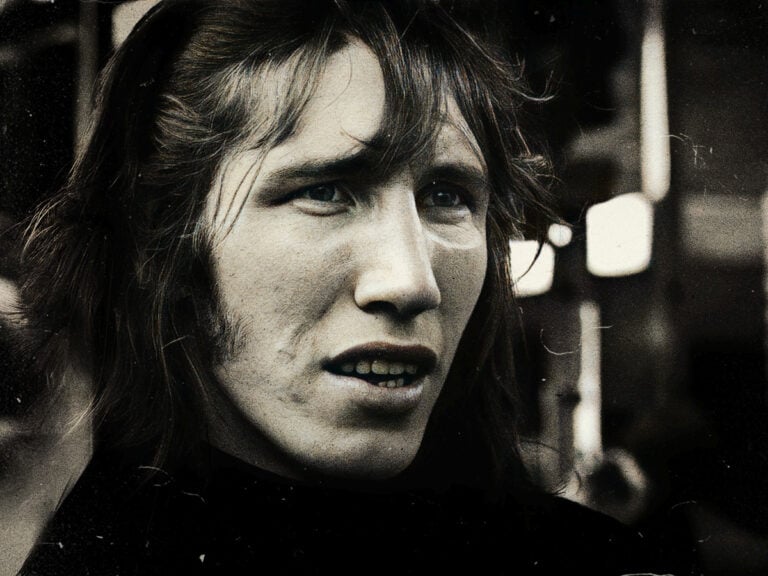
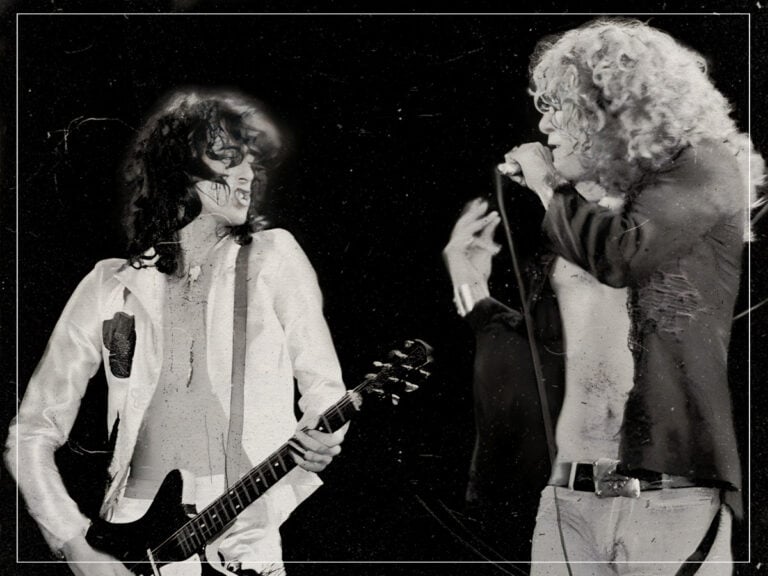
So, a Porky’s message wasn’t just a secret quirk, but a sign of utmost professionalism and the highest audio standard. From Let It Be to No U-Turn Records’ dance roster in the 1990s, some of rock and pop’s heavyweights all boasted their own little messages or Porky signature, from all four solo Beatles, The Who, AC/DC, Led Zeppelin, and Porky personally overseeing 1973’s The Monty Python Matching Tie and Handkerchief novel three-sided comedy LP, where side two’s concentric parallel grooves meant two different sets of audio depending on where you placed the stylus.
But it’s the messages that add the most colour to Porky’s legacy. Any owner of Joy Division’s original 12” of ‘Transmission’ will spot “I’ve seen the real atrocities, a Porky prime cut” on side A, This Is Hawkwind, Do Not Panic instructs “Don’t read this, play it,” and a supplied phone number to the Warner Bros office falsely claiming a prize to the label’s irritancy slipped onto Elvis Costello’s This Year’s Model.

Elsewhere, “Ooh George, you’re such a dark horse luv George” was stamped on the former Beatle’s 1974 LP effort, and DIY punks The Door and The Window received a frank “This is the worst record I’ve ever cut” on 1979’s Production Line EP. Reportedly, any Porky cut with “Blair’s” on the run-out was a humorous shift of responsibility from any perceived subpar acetate work on his engineering colleague Chris Blair.
Porky’s now long retired, but his sonic and physical mark on the rock landscape endures as a relic of everything special about the tangible era of the record before the streaming age, when any eager music fan would pore over an LP’s artwork, bask in its gatefold, indulge in the ritual of stylus dropping, and scan that disc for one of Porky’s many wry slips of signature vinyl graffiti.
