


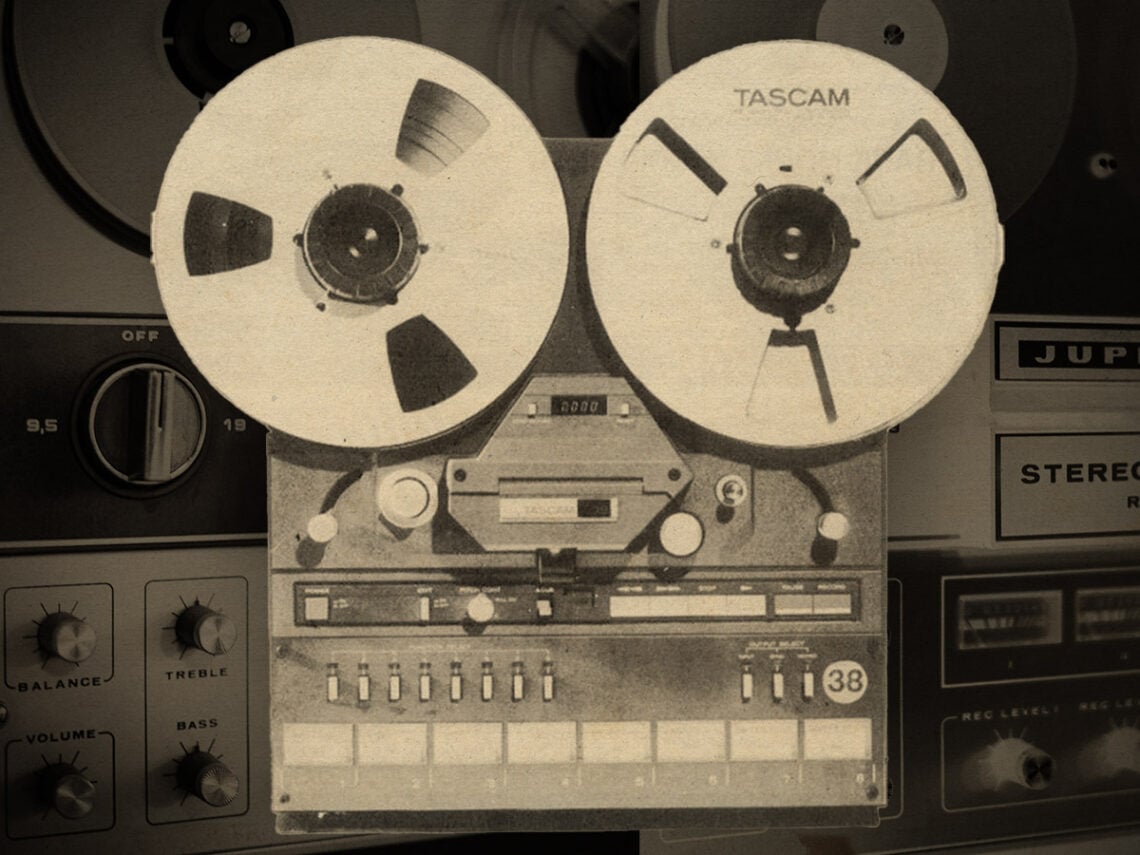
What is an 8-track?

It’s likely you’ve stumbled upon the curious 8-track when reading up on your favourite classic rock records.
For most, the music format’s evolution is largely charted by record, cassette tape, CD, and streaming, which isn’t wrong in terms of the tech that reigned supreme across the last century or so. Ever since music’s been printed on wax cylinders at the end of the 1800s, a whole range of fleeting formats have risen and fallen amid the ever-changing habits of the music consumer, from the PlayTape to the MiniDisc.
Much like its LaserDisc movie equivalent, the 8-track stands as a much-loved entrant to the obsolete Hall of Fame. A relic of the pre-digital era, elder musos of a certain age will look back with affection at the humble 8-track’s quirks and pleasing mechanics, the satisfying clunk as the chunky device is inserted into the loading slot, its warm, high-fidelity sound for the day, and uniquely jumbled tracklisting to accommodate its technical foibles.
The 8-track certainly has its critics, and arguably has lapsed into the rose-tinted goggles of nostalgia’s pining for the tangible cultural landscape of yore, but for the vintage music fan who maintains that rock and pop peaked 50 years ago, the 8-track will always stand as an affectionate time capsule to the 1970s’ essential soundtrack to their youth.
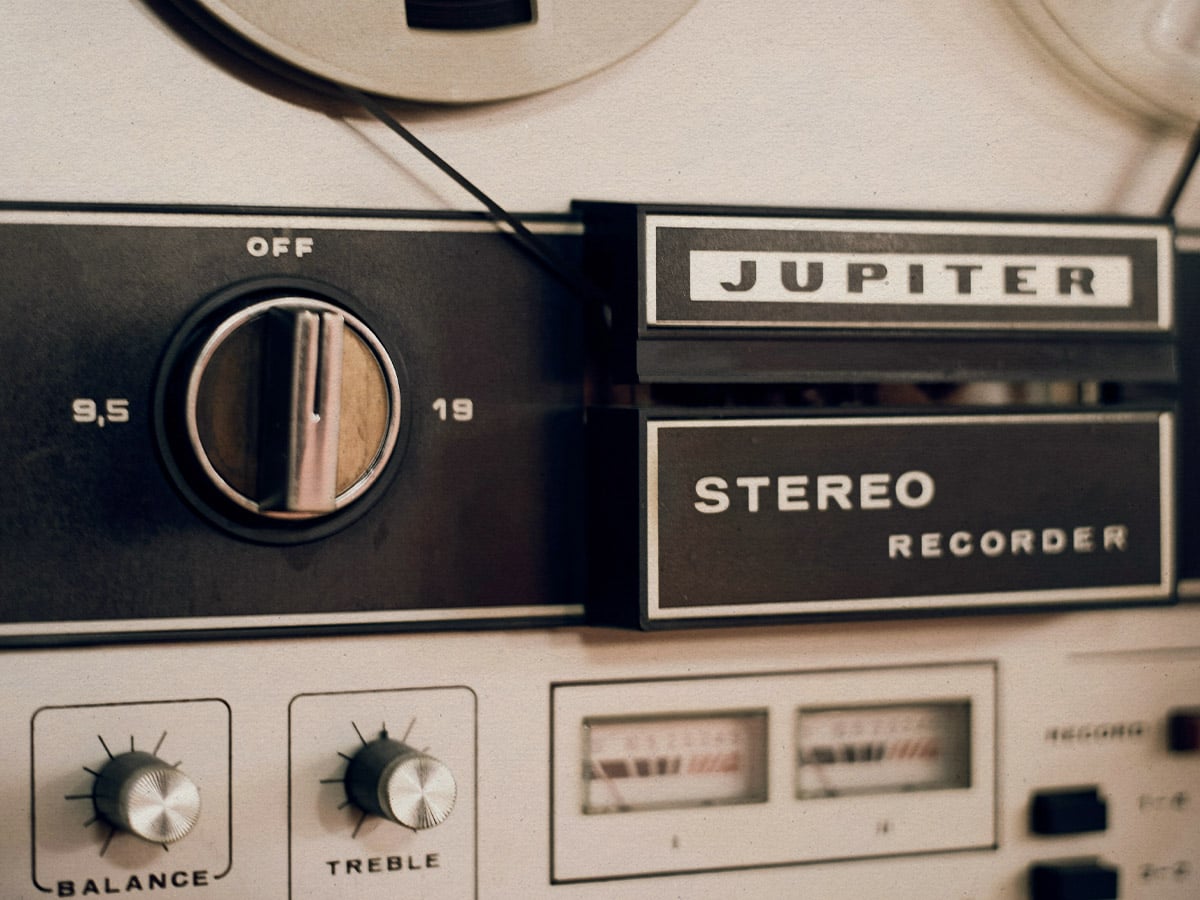
So, what is an 8-track?
It was officially called the Stereo 8. Created by the business inventor Bill Lear, among a consortium of eager companies including Ford Motor Company and RCA, the Stereo 8 Cartridge found initial life as a music medium for the bespoke 8-track players manufactured with the cars produced in late 1965. Essentially a large tape, each cartridge would contain eight parallel audio tracks arranged into four pairs, each pair playing a stereo output and labelled as a programme.
Such a design meant any 8-track could be played on an endless loop without needing to flip sides, but rendering rewinding impossible and offering only play, fast forward, record, and program skip. With an album’s even division into quarters, many releases would have to uniquely amend their tracklist to meet the individual programme lengths.
Songs would often fade in/out during their playthrough, and sometimes exclusive material was implemented to pad out the space, notably both versions of Pink Floyd’s ‘Pigs on the Wing’ were linked together with a bespoke guitar solo on the 8-track Animals, and Lou Reed’s Berlin featured a unique 30-second instrumental coda after its title track.



The 8-track exploded in North America mainly for its use in cars, and sparked some commercial success in the UK and Japan, but soon enough, the tape found its way into the home by the late 1970s and enjoyed peak sales before plummeting in the wake of the cassette tape, having been on the market since 1963 but swiftly dominated as the leading music medium at the arrival of the 1980s, in large part due to the success of the Sony Walkman.
Before long, the once-loved 8-track was phased out by 1983, existing as only a recording medium for a few more years before finally dying a death. While firmly in the obsolete category, the affection for the 8-track’s legacy has seen occasional novel releases on the archaic cartridge, Cheap Trick’s The Latest and Dolly Parton’s A Holly Dolly Christmas, all issued on limited edition versions of music’s halcyon relic decades after its heyday.
