


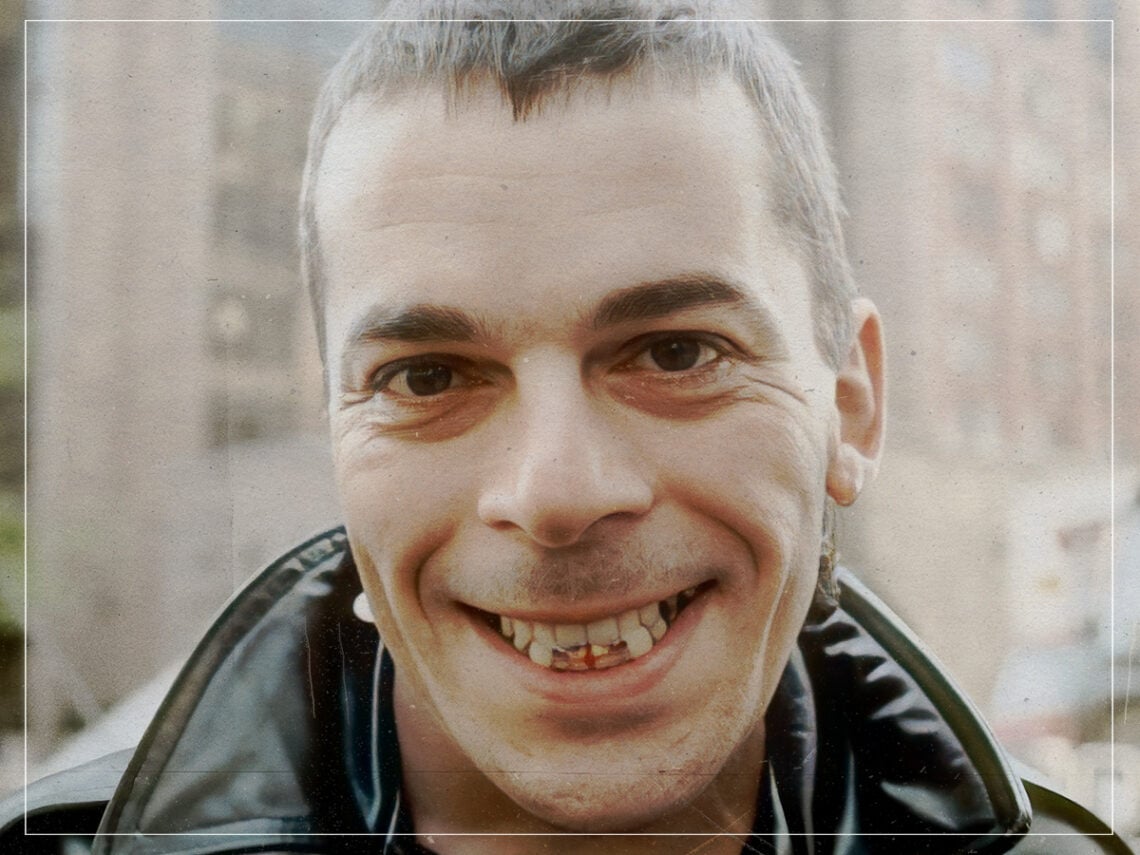
Hospital, school, prison: The Sussex establishment that shaped the radical Ian Dury

Ian Dury lived a fascinating life, and so made fascinating music. Not held in by any one genre, and certainly not by any kind of behavioural expectations or ways of doing things, he was the epitome of a Great British rebel.
When it comes to a biography of Dury’s life, there is so much wildness to be included, and so many random facts that somehow feel relevant. It oddly feels essential to mention that he was born into a working-class family, but was the son of a chauffeur who spent his days driving the rich and the famous around in a Rolls-Royce. As a kid, there was even a brief period where Dury’s family moved to Switzerland, to the epicentre of riches and tax evasion, because his father had a job driving a millionaire. So from a young age, he was facing up to the stark difference in class.
That alone feels like an experience that gave way to exactly his type of music. It made him aware of the world and its inequalities as the life his family were living was so vastly different from their employers. He saw that despite the excess, his dad’s bosses didn’t give much away. But also, the idea of the humble Durys transplanted somewhere lavish is the kind of scenario perfectly set up to give way to the humour in his work.
However, when the family landed back in the UK, and young Ian swiftly caught a serious case of polio, it was a harsh return to earth. Dury was only seven when he contracted the illness during the 1949 epidemic, which resulted in him spending six weeks isolating in hospital and another 18 months in a different hospital, trying to recover and rebuild, but by the end of it all, it was clear that the young boy’s left side would always be paralysed, resulting in a lifelong disability.
Everything changed then. After that experience, he didn’t return to normal school, but instead was enrolled in Chailey Heritage Craft School, a fascinating institution which was, admittedly, a little evil back then. We have to remember, this was a long time ago. By now, support for disabled students is far improved, thanks to a better understanding of support and rehabilitation. But in the 1950s, the aim of the school wasn’t to nurture these kids, but to toughen them up.
“Thinkin’ about it now, I realise it was fuckin’ heavy. It was like a hospital in one way, like a school in another way, and like a prison in another way,” he later said of the experience as he reflected on the methods used. Dury was always smart and capable, surprisingly academic, but Chailey Heritage was a lawless land. “There was a lot of behaviour that just don’t happen in the outside world,” he said.
With the school’s strange punishments, the promotion of isolated thinking and their alternative curriculum that basically left the students to their own devices to feel their own way through teaching, Dury reflected, “Being in that place is one of the reasons I talk the way I talk. Before that, I talked not quite BBC. A third of the kids there were funny in the head as well as being disabled… The situation was that from within you got very strong, but also you got coarsened.”

When it comes to crafting an artist, it was a surprising path. “Later, you pretend to be arty about it, but when I was there, I was just there, it was real,” he said, as for a long time, his experience at the school was a cool story, or a badge of his outsider status.
He’d later return to a standard grammar school, getting his qualifications, then head off to art school, but Dury always felt like there was a trace of these years in his work, whether it be through the kookiness of his lyricism or delivery, or the true originality of his work, born from being removed from the standard system for so long.
