


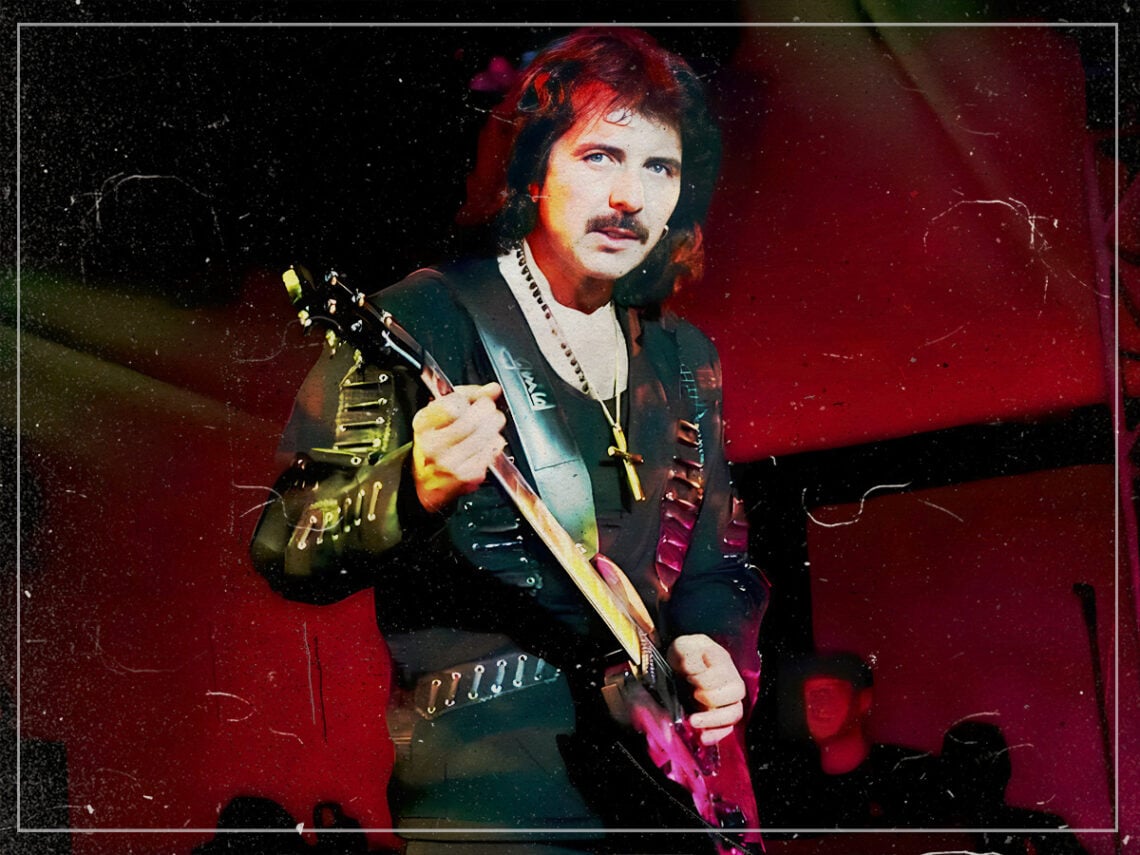
The Black Sabbath album Tony Iommi couldn’t stand: “It was an idea from the record company”

For a band that’s been going for years at a time, it’s hard to have a soft spot for every song that comes out.
There might be some that are a bit more special based on where you were in your life, but there are others that are bound to be a work job when looking at the circumstances behind why they were recorded. Although Tony Iommi has probably lost track of the iconic tunes that he wrote for Black Sabbath, he knew that this album was far from what he heard as authentic Sabbath.
Then again, it’s hard to really think of any tune Sabbath put out that had a bad guitar riff behind it. Despite some songs that are a bit underwhelming, Iommi always had a track record of being prolific with the riffs, even managing to throw in a handful of classic riffs into one song, like the different moments of ‘Iron Man’ or the different pieces that were Frankenstein-ed together for ‘Sabbra Cadabra’.
As soon as Ozzy Osbourne left the picture, the heavy metal pioneers began having a revolving cast of characters behind the microphone. While things seemed to be going fine with Ronnie James Dio in the band, his departure after Mob Rules felt like the rug had pulled out from under them, leading to a wilderness period where everyone from Ian Gillan to Glenn Hughes got behind the microphone for various albums.
Iommi may have been the one constant throughout Sabbath’s development, though, and even the neglected era with singer Tony Martin still had some gems in it, like the power metal-sounding Headless Cross or working alongside Brian May for the song ‘When Death Calls’. There was a moment where things were bound to fall, and it wasn’t until Forbidden that things took a turn.

While Ice-T was a worthy choice for bringing in some hip-hop to Sabbath’s sound, hearing them work together on songs like ‘Illusion of Power’ came together with a pretty audible thud. And while Ernie C can light up a guitar riff when he wants, putting him next to Iommi’s dark riffs never quite sat well in the mix half the time.
Although Iommi thought highly of many of Sabbath’s outings, he admitted that his label’s insistence on bringing in Ernie C never sat well for him, saying, “There’s a couple I don’t like, Forbidden being the main one. The way Ernie C was brought in to do it was another idea from the record company at the time.”

Still, it’s incredibly hard to make an Iommi guitar tone sound bad, and even if the songs weren’t there that time, the metal legend burrowed through, sounding like one of the heaviest guitarists in the world. Then again, it was no big surprise when the old guard of Sabbath gave it a go later, like when the Dio lineup rebranded as Heaven and Hell for a run of shows and a new album, The Devil You Know.
So, while Iommi can make anything sound evil, Forbidden should be a lesson for anyone who blindly follows the record company. Just because someone respected in the industry gives you a suggestion doesn’t mean that it’s going to work out, and it only took a few years for Forbidden to bite Sabbath in the ass.
Part of the disappointment surrounding Forbidden also came from the fact that Black Sabbath had already proven they could survive dramatic lineup changes before. Albums with Dio and even some of the Tony Martin-era releases showed that Iommi could reshape the band’s sound without completely abandoning the darkness and weight that made Sabbath unique. By comparison, Forbidden felt less like an evolution and more like a band being pushed into trends that never naturally suited them.
Even so, the album’s shortcomings did little to damage Iommi’s legacy as one of heavy metal’s defining architects. His riffs still carried that unmistakable sense of menace, no matter who stood behind the microphone or sat in the producer’s chair.
If anything, Forbidden highlighted just how important authenticity was to Sabbath’s identity, because when the band trusted their instincts rather than outside pressures, they were almost impossible to rival.
