


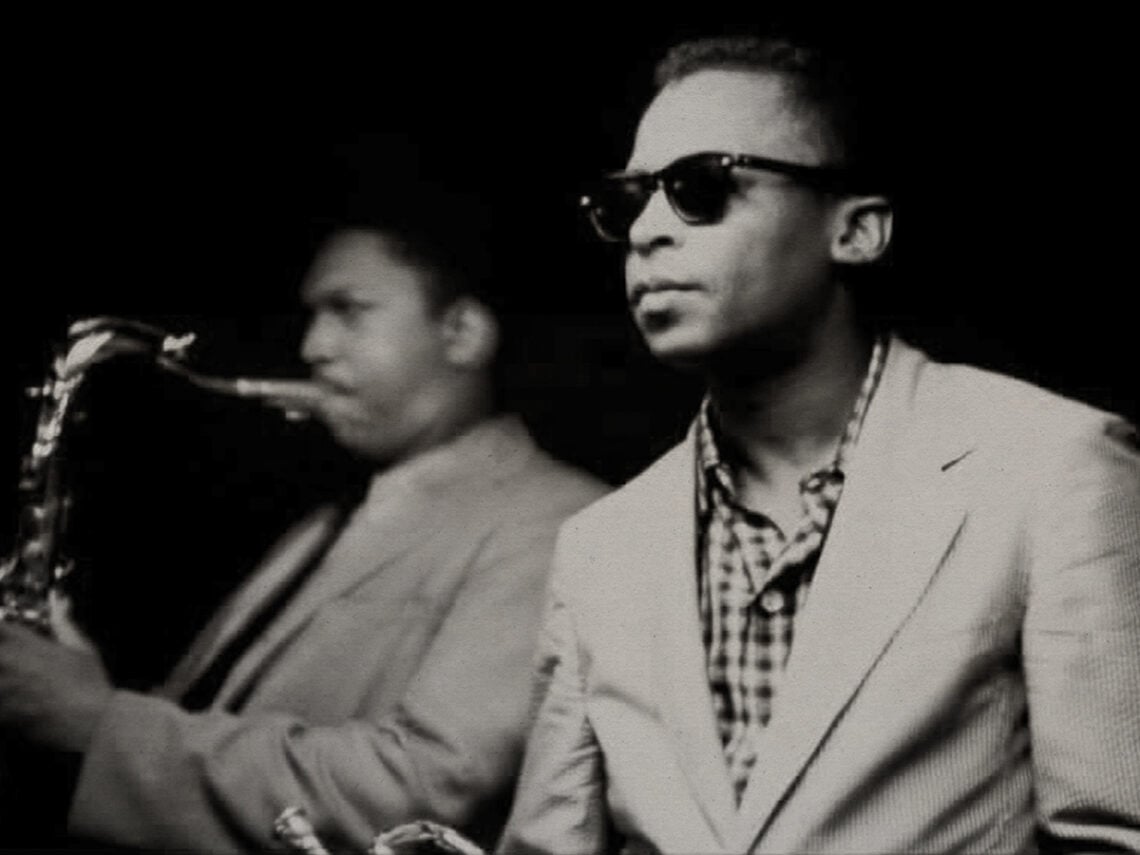
In just two days in 1959, Miles Davis recorded his masterpiece

Picking a single masterpiece out of Miles Davis’ extensive catalogue of albums is a near-impossible feat to have to come to terms with, and the sheer consistency lined up against the vastness of his body of work is something that can feel quite daunting to even approach from the outside.
Even if you were to rule out his live albums from contention, and were to simply go for his studio releases, even then, you’re left with a bounty to select from. Of course, you absolutely shouldn’t be taking out Davis’ live repertoire, as some of his finest work was delivered on stage, and some of the material you can hear on said records is unavailable on other releases of his, or is so far removed from the original form that it ought to be considered a work in its own right.
To further narrow things down, you could maybe take out the albums he made with his First and Second Great Quintet, then you’d shed a little more. Again, perhaps wrongly so, given how some of his earliest masterworks were delivered alongside these ensembles, but we’re trying to thin things out here.
Considering he also went through many different creative eras where he constantly changed his style and reinvented the genre from the ground up, there’s also the fact that you’re then having to compare the many moods of Miles Davis to one another, and the post-bop and modal works of the late 1950s and early ‘60s feel virtually like the work of a completely different individual to what he was making barely a decade later in his psychedelic fusion era.
Besides, once all of this has been whittled down, you still can’t even choose the best album from each period of his career – how pathetic. Picking the greatest Miles Davis album really is a futile task.
You might wonder how someone accrues a catalogue like this, and that’s possibly because it came as a result of little to no effort for him. While I am personally pained to pick favourites, the one album that most outsiders will frequently see hailed as his true magnum opus, Kind of Blue, is masterful for its own special reason.
On March 2nd, 1959, Davis entered the studio alongside five other musicians: John Coltrane, Cannonball Adderley, Bill Evans, Paul Chambers and Jimmy Cobb with little to no prepared music, and having not rehearsed anything alongside the group he had assembled. One day’s work was fruitful, but a second would have been perfect, and so the same was repeated on April 22nd, and then the album was done. Smooth, huh?


Rather than transcribing any sheet music for his band, he instead chose to hand out sketches for them to decipher, asking them to trust their instincts and rely on improvisational skills rather than resting on the comfort of a piece of sheet music. Songs like ‘So What’ and ‘Blue in Green’ somehow sound so complete and painstakingly pieced together, and yet the reality of the sessions was the complete opposite – a true gut feeling.
Hard to match someone as inventive and creatively inspired as Davis, and for him to knock out something of such superlative quality without really needing to enter the studio with any preconceived ideas is staggering. The fact that something of Kind of Blue’s magnitude was made in just two days with this approach is nothing short of miraculous.
