


The Pink Floyd guitar solo David Gilmour thought went too far: “It’s grown on me a bit”

The David Gilmour-led era of Pink Floyd was inevitably going to diverge from the sound and style that defined them during Dark Side of the Moon.
While Roger Waters’ assertion that he was solely responsible for their success and thus deserving of the band’s name might be extreme, there’s no denying that A Momentary Lapse of Reason lacks some of the lyrical depth and cohesion that Waters brought to the table.
Gilmour found his groove more effectively on The Division Bell, but even then, tracks like ‘Wearing the Inside Out’ didn’t quite capture the magic of earlier Pink Floyd records, leaving some fans and even Gilmour himself feeling that something was missing.
Whereas Waters could generally tell a story with his lyrics, Gilmour’s solos had as many spellbinding moments as any vocal line. Compared to how most guitarists used their solos as vehicles to showcase their best licks, the guitar break in ‘Comfortably Numb’ is one of the most emotionally gripping pieces to come out of the electric guitar, especially towards the end where it sounds like it’s crying out in pain.
If anything, The Division Bell should have been an extension of that kind of guitar extravaganza, but that’s not how Gilmour thought about his tunes. Since The Wall had been about crafting storylines and A Momentary Lapse of a Reason was a proof of concept, this marked the moment he decided to reverse his usual process. Instead, songs would morph out of jam sessions, leading to tracks like ‘Marooned’ capturing moments of magic in the studio.

While this was Gilmour’s band, the guitarist isn’t even the one who strikes the killing blow on ‘Wearing The Inside Out’. No, that would be the return of Richard Wright on keyboards, and hearing him croon these lyrics is a welcome return after having him pushed into the background and then being fired from the group in the early 1980s.
The chord progression is a stroke of genius, but Gilmour believed that his guitar solo for the outro was a case of him being a bit too over-the-top, saying, “I never really liked the guitar solo on the out. Everyone else said they did like it, but I wanted to dump it and do something else on there ‘cos I thought, ‘God, I’ve got too many damn guitar solos again. They’re all over the bloody record.’ I didn’t think that one was so good, but lots of people like it, I guess. It’s grown on me a bit.”

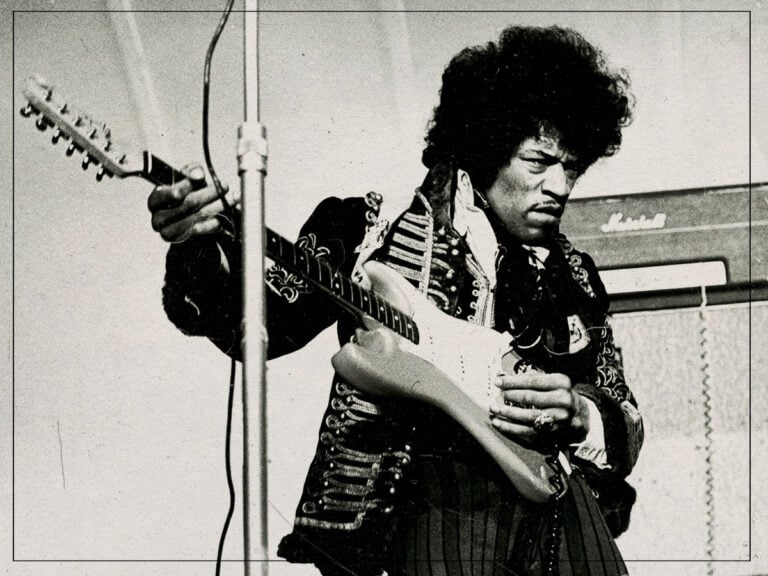

Still, that tension between restraint and indulgence is part of what makes Gilmour such a distinctive guitarist in the first place. Even when he worried about overplaying, his instinct was never to shred for the sake of showing off. Every solo on The Division Bell feels rooted in atmosphere and emotion rather than technical exhibitionism, which is why tracks like ‘Wearing the Inside Out’ continue to resonate with Floyd fans decades later. The solo may have struck Gilmour as excessive at the time, but in the broader context of the album, it acts more like another voice in the conversation than an unnecessary flourish.
More importantly, the song symbolised something deeper for Pink Floyd at that stage in their history: reconciliation. Richard Wright’s re-emergence as a meaningful creative force gave the album a warmth and humanity that had often been absent during the band’s more fractured years under Waters. Even if The Division Bell never reached the conceptual heights of Dark Side of the Moon or The Wall, moments like ‘Wearing the Inside Out’ proved that the remaining members of Floyd still had emotional territory left to explore together, even after so much turmoil and reinvention.
Then again, Gilmour is one of the few people who could manage to get away with having multiple guitar solos across one project and still make it sound seamless. And if this is considered bottom of the barrel for him, it’s still among some of the greatest licks anyone has ever played.
Arguably, the solo takes away from what the tune is trying to say, but it never seems to get in the way of the melody or anything. Gilmour had been through enough classics to know not to overstep his bounds, and his performance is subdued when it needs to be and absolutely ferocious in a few areas as well.
This was Wright’s moment to shine on the album, but Gilmour’s presence on the song is practically a warm hug for Floyd fans. The days of Waters were long gone by this point, but that didn’t mean that there wasn’t some untapped potential the rest of them hadn’t explored yet.
