


10 Quentin Tarantino scenes that should be deleted from history

There hasn’t been another in the last 30 years who has been more analysed, debated, and valorised than Quentin Tarantino, a brilliant filmmaker and someone who should also hold his tongue more often.
While he was celebrated as the director who proved independent cinema could become successful in the mainstream with Reservoir Dogs, he faced backlash from the beginning of his career for the graphic violence and language within his work. That Tarantino is so outspoken when discussing what he does and doesn’t like has certainly made him more relevant than any other living director, even if it has won him a few enemies.
Although it is easy to make him a punching bag, especially in the wake of his insistence that he will only direct one more film, his track record as a director is pretty much flawless. The ten films that he has directed (nine if Kill Bill is counted as one, which Tarantino does) are all successful to varying degrees; if his worst film is something as breathlessly entertaining as Death Proof, then he must be doing something right. However, his blunders tend to occur when he inserts himself into other projects and situations where he isn’t needed, as his personality can be quite abrasive.
As many Tarantino fans have had to learn the hard way over the years, it is possible to love the man’s work, but desperately want him to shut up and hold back whenever he’s given the opportunity to act out of line. While it’s often charming, there are some Tarantino moments that deserve to be completely forgotten.
10 Quentin Tarantino scenes that should be erased from history:
Tarantino holds an audition – ‘Girl 6’ (Spike Lee, 1996)
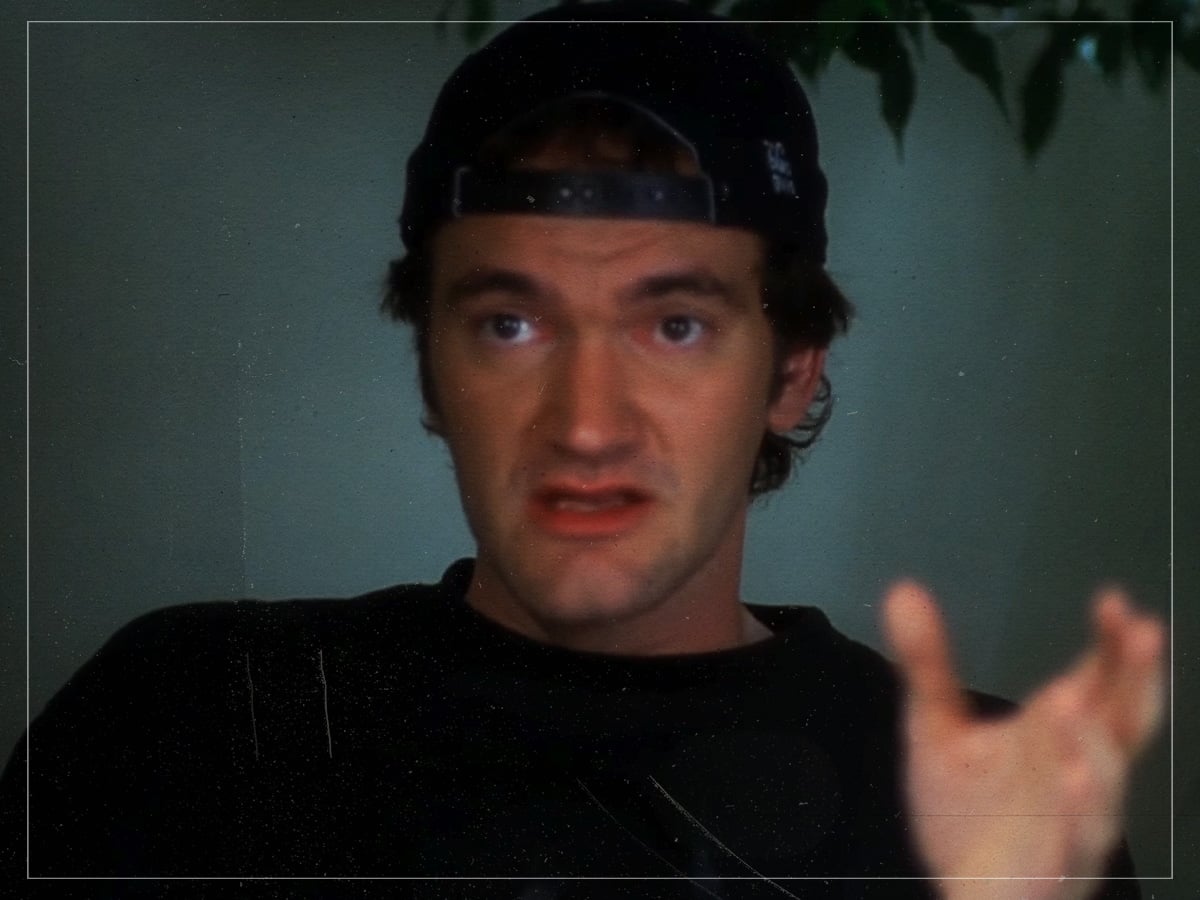
Spike Lee and Tarantino notoriously don’t get along with each other, and have been at one another’s throats multiple times, with the feud devolving so badly that at one point Samuel L Jackson had to defend being in Django Unchained when Lee refused to watch it. However, the two directors were on better terms in 1996 during the making of Girl 6, which opens with a scene where Tarantino plays a fictionalised version of himself who harasses a Black female actor during an audition.
It’s a scene that feels iterative of a pre #MeToo era that neither Tarantino nor Lee were equipped to handle, as they have both courted controversy for speaking positively about Woody Allen. It’s an uncomfortable scene to watch that makes them both look bad, where Lee comes off a petty jerk trying to scandalise a rival, and Tarantino’s performance is too inauthentic to feel legitimately self-aware.
Tarantino pitches Kermit the Frog – ‘The Muppets’ Wizard of Oz’ (Kirk Thatcher, 2005)
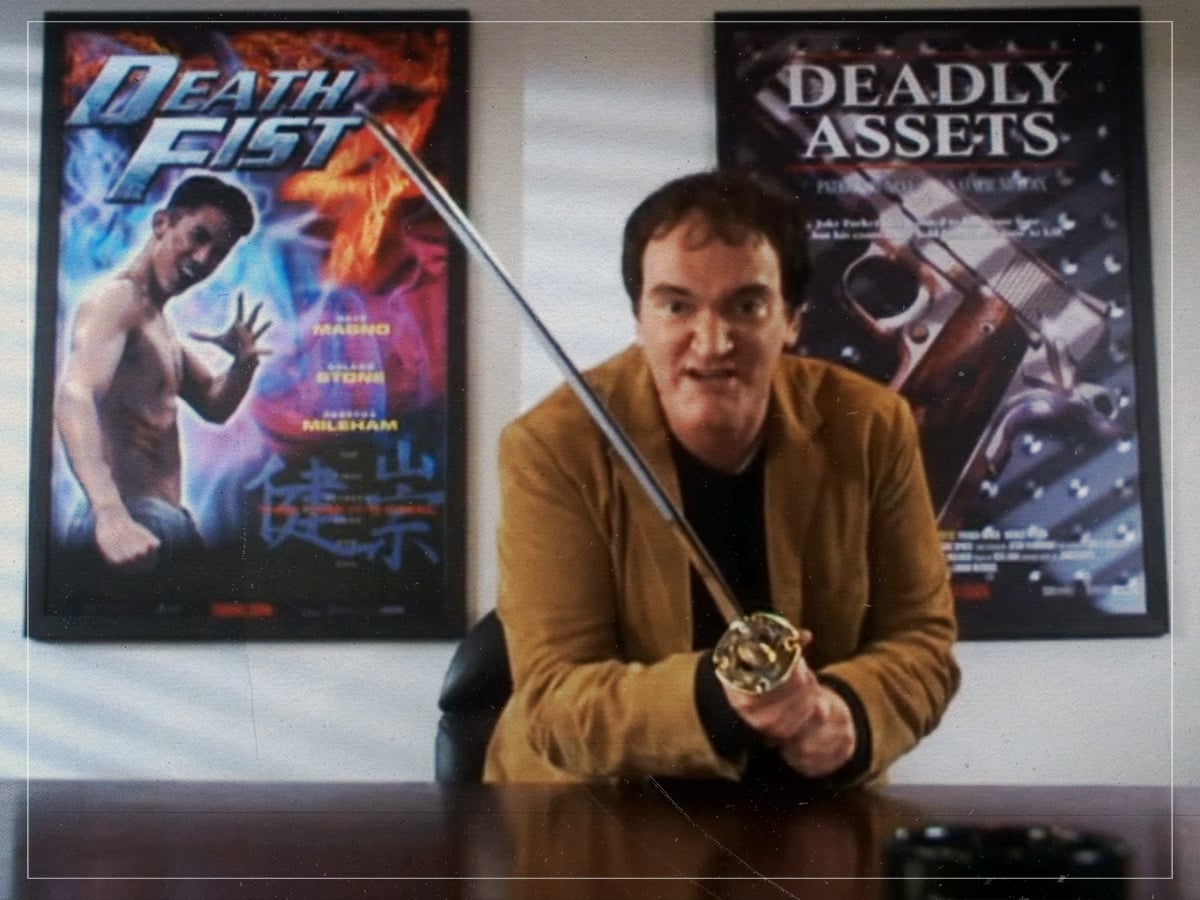
The Muppets faced a long and arduous road before their revival on Disney+, as the franchise faced some uncertain moments after 1999’s Muppets in Space underperformed, so in the early 21st century, several made-for-television films were produced, including The Muppets’ Wizard of Oz. The film features a fourth wall-breaking moment where a major fight scene is cut off so that the real Kermit the Frog can discuss how to save the film with Tarantino during a boardroom meeting.
This type of cheeky humour isn’t unusual for The Muppets, but it makes no sense for Tarantino to appear in a film aimed at children. Although some of the productions have jokes for all ages, The Muppets’ Wizard of Oz was clearly aimed at children who would have no idea who Tarantino is or why he would be talking to Kermit about violence.
Tarantino dates a call girl – ‘She’s Funny That Way’ (Peter Bogdanovich, 2014)
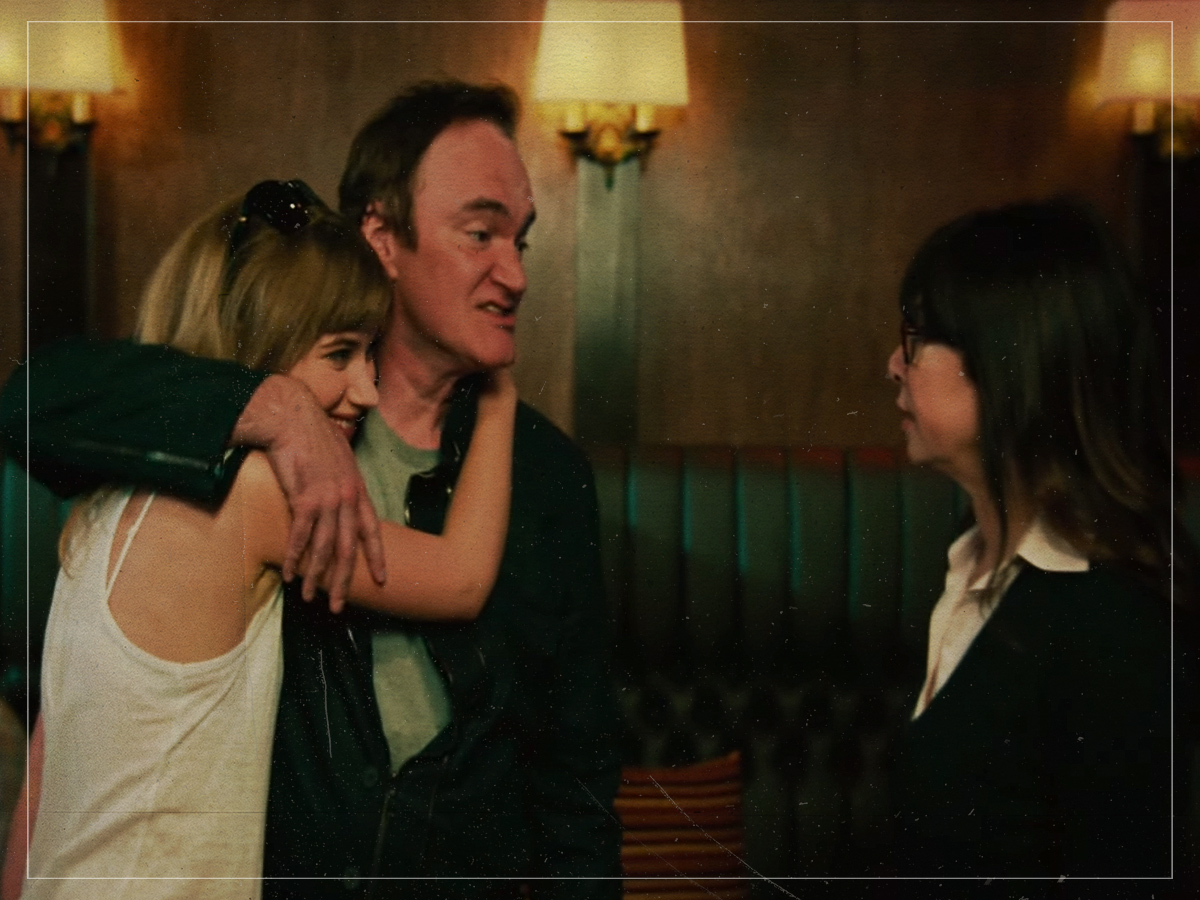
Peter Bogdonavich is a filmmaker about whom Tarantino has spoken fondly many times, so it wasn’t necessarily a surprise that he decided to make an appearance in the director’s final theatrically-released film. However, Bogdanovich is also a fairly inconsistent director who has made some mistakes, and She’s Funny That Way is certainly no The Last Picture Show. Tarantino has a very unusual cameo as himself during a scene at the end, in which it is revealed that he is dating the call girl Izzy Patterson, played by Imogen Poots.
While this may have been Tarantino’s way of getting ahead of speculation about his personal life, it’s an unwanted appearance at the end of a not-so-subtle Hollywood satire that thinks that it is way more clever than it actually is. It’s also just a pointless sight gag that doesn’t try to make an actual joke out of the situation.
‘The Lost Chapter: Yuki’s Revenge’ – ‘Kill Bill: The Whole Bloody Affair’ (Quentin Tarantino, 2025)<br>
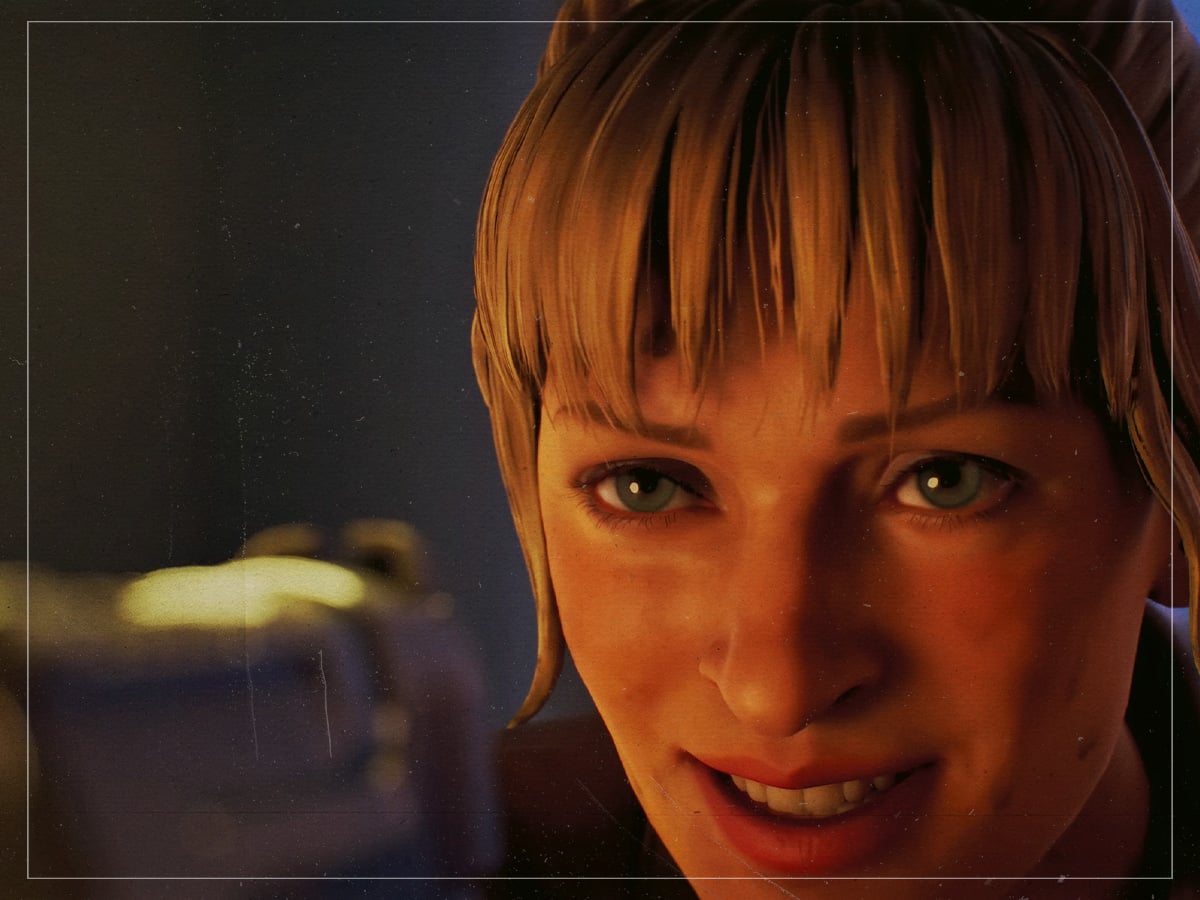
Kill Bill was released in two chapters during its initial rollout, but Tarantino finally unveiled the version that edited them together last year with Kill Bill: The Whole Bloody Affair. He wanted to add a new short film called Yuki’s Revenge, but for some reason decided to use Fortnite animation to do so. It goes without saying that the childlike animation has no place in the Kill Bill universe, as the rest of the film draws from Japanese influences, and not Western video games.
That Tarantino would want to add something like this in a film that most of his fans already adore sparks dangerous comparisons to George Lucas, who infamously sparked backlash from the community of Star Wars obsessives when he decided to needlessly add new scenes to the original trilogy when they were re-released in 1997.
Josh is tortured – ‘Hostel’ (Eli Roth, 2005)
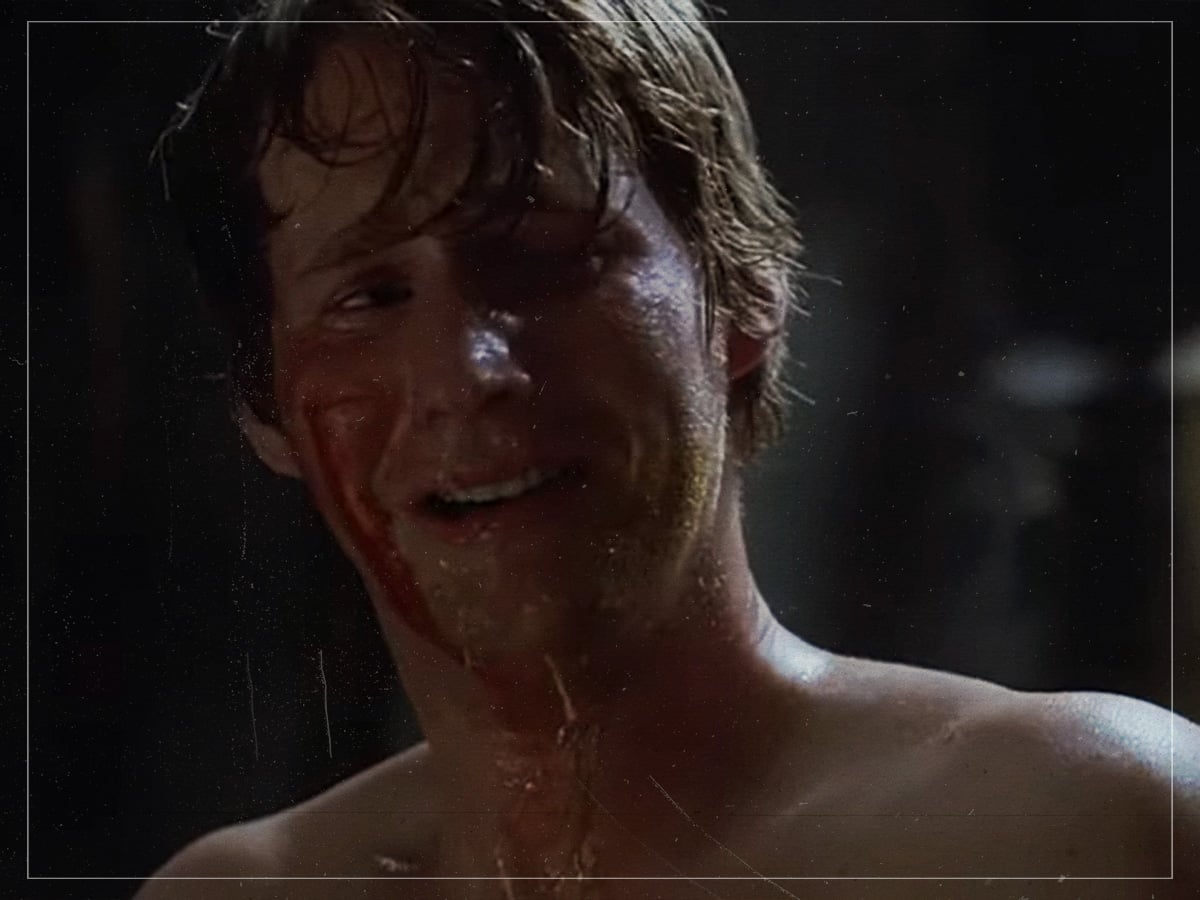
Tarantino has chosen to support some strange acolytes and took an active role in producing the films of Eli Roth. While the latter would end up turning in a solid performance in Inglourious Basterds, he’s a terrible director who is responsible for the worst of what the torture porn genre has become.
Roth has made many films that are disgusting, but at least Thanksgiving and Death Wish had a dark sense of humour. Hostel is simply provocative for the sake of making him feel edgy, and contains none of the artistry found in the work of other members of the ‘Splat Pack’ movement, such as James Wan and Ti West. While Hostel is bad by any definition, the fact that Tarantino’s name was listed in the credits gives it an aura of artistic credibility that it definitely should not have been saddled with.
The news report – ‘Diary of the Dead’ (George Romero, 2007)
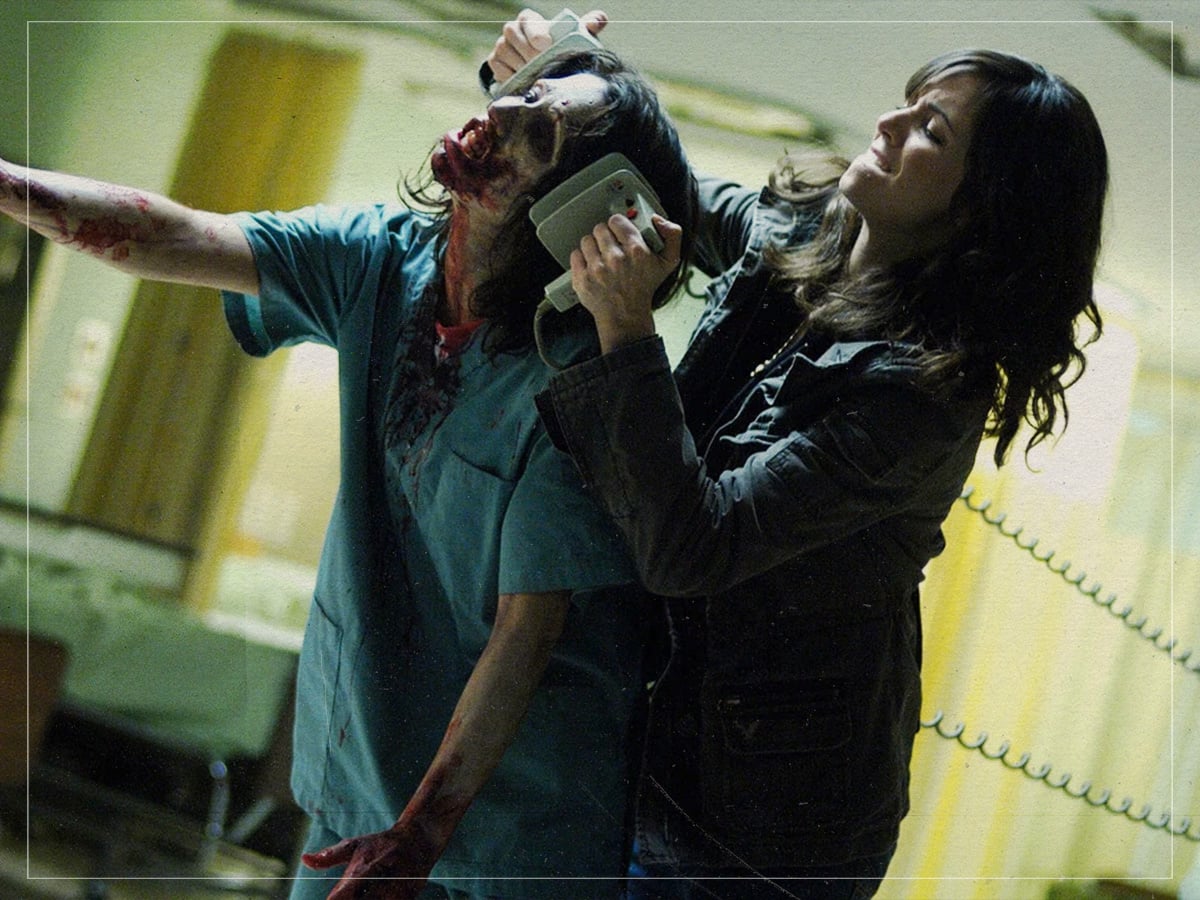
George Romero created three of the greatest zombie films of all time with the initial instalments in the Living Dead franchise, but it’s easy to forget that the franchise didn’t stop there. The fifth entry in the series, Diary of the Dead, received a minimal theatrical release and was made for only $2million.
While it was sad to see a genius like him working on a film that felt like such a far cry from his original masterpieces, Diary of the Dead was also cluttered with vocal cameos from various other directors, including Tarantino, Edgar Wright, and Guillermo del Toro. While it was a nice sentiment in theory, as these filmmakers obviously wanted to provide assistance to someone that they all clearly admired, their presence in a cheaply made found-footage zombie film only ended up making the botched sequel feel more insincere.
Tarantino hypes up Sylvester Stallone – ‘Sly’ (Thom Zimny, 2023)
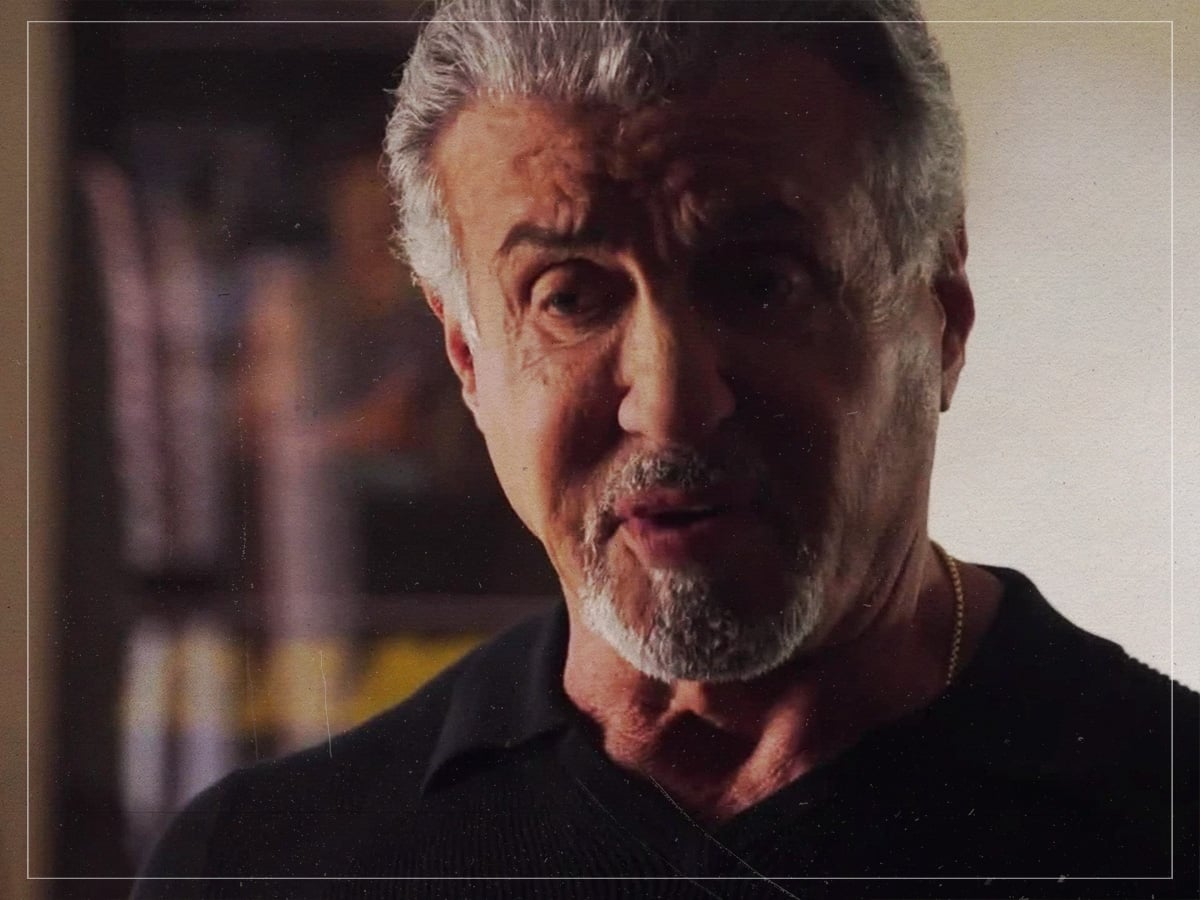
Sylvester Stallone is one of the most notoriously ‘difficult’ actors in Hollywood and is well-known for having burned bridges with many of his former collaborators, but nonetheless, nonfiction filmmaker Thom Zimmy decided to direct the Netflix documentary, which provided a rough outline of Stallone’s career without getting into any of the controversies.
It’s fairly telling that many of the actor’s collaborators weren’t willing to give interviews, so Tarantino was instead asked to speak about the influence that he had on action cinema. It was a cheap move to lend legitimacy to a documentary that was only made to satisfy Stallone’s ego, as he was also responsible for producing it. The only good thing to come out of the project is that the two may be working together soon on an upcoming television show shot in black-and-white that dives into the criminal underworld, which might be an interesting new turn for them both.
Singing ‘I’ll Blow You a Kiss in the Wind’- ‘Saturday Night Live’ (Lorne Michaels, 1995)
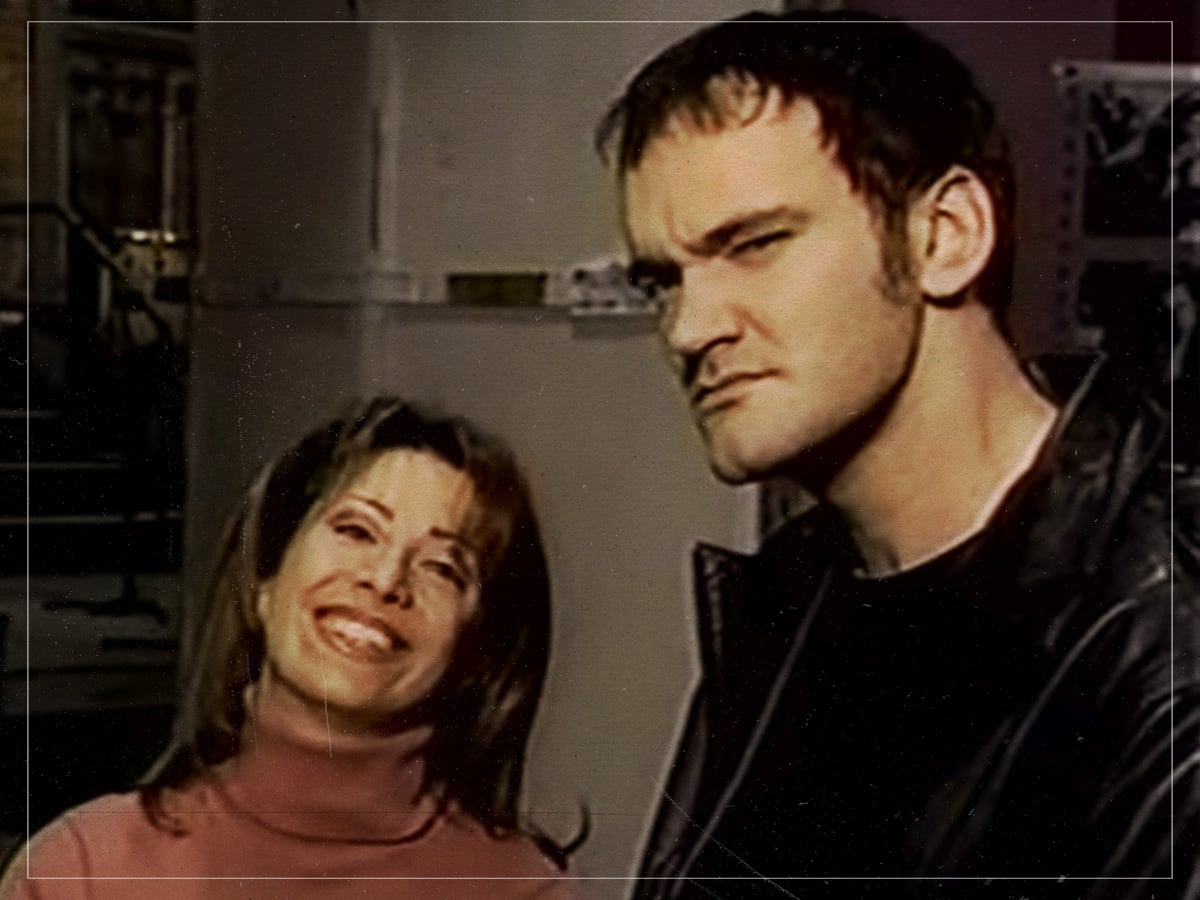
Saturday Night Live generally has actors and singers as its hosts, so it was pretty rare that a director was asked to step up to the plate, and while Tarantino was actually a pretty decent host when he fronted the show in 1995, his monologue took a nosedive when he attempted to sing ‘I’ll Blow You a Kiss in the Wind.’
Tarantino has already proven on more than one occasion that he is not much of an actor, but he is even worse as a singer, made all the more apparent by how poorly-suited he was when the musical guest for the episode was The Smashing Pumpkins, who were just reaching their peak in popularity. Unsurprisingly, he has yet to host Saturday Night Live again, even though the show has featured several sketches that directly parody some of his films.
The introduction – ‘Super Pumped’ (Allen Coulter, 2022)
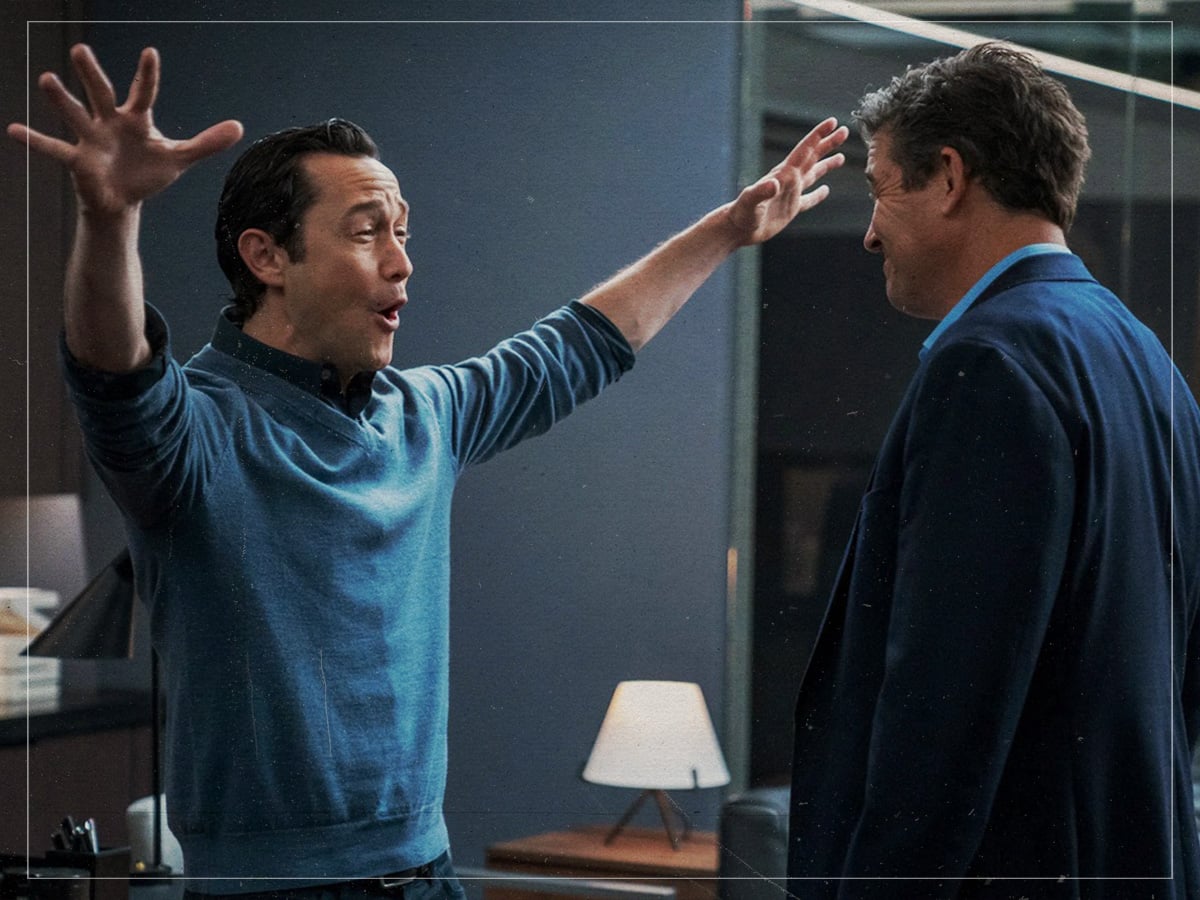
Joseph Gordon-Levitt was seemingly going to be the biggest star in the world after he starred in The Dark Knight Rises, Looper, Premium Rush, and Lincoln in the same year, but he followed up those successes with a series of misfires, so he made the logical choice of trying to make a comeback through a prestige television show, as many of his peers have done, but Super Pumped was a misguided Showtime original that nobody bothered to watch.
The series follows a familiar formula about the rise and fall of a company, but for some reason, Tarantino was asked to serve as the narrator for the series, and it’s the moment that his voice can be heard in the first episode that it’s clear Super Pumped doesn’t know if it wants to be a scathing satire or a legitimate drama, and subsequently fails to be both.
The ‘Django Unchained’ argument – Channel 4 (2012)

Controversy is never far away when Tarantino is around, and the director has often found himself in the midst of spats with the media. While his use of violence has always attracted some sort of backlash, it was intensified during the release of Django Unchained, which hit theatres only two weeks after the tragic Sandy Hook shooting.
The director was attacked by the Channel 4 reporter Krishnan Guru-Murthy, who kept trying to insinuate that there was a connection between violence onscreen and in real life. It’s an instance where he was completely in the right, but that doesn’t make the interview any easier to watch. It wouldn’t be the last controversy that Guru-Murthy was involved in, as he later provoked Robert Downey Jr to walk out of an interview after asking questions about his addiction during the promotion of Avengers: Age of Ultron.

Never Miss A Take
The Far Out Quentin Tarantino Newsletter
All the latest Quentin Tarantino content from the independent voice of culture.
Straight to your inbox.