


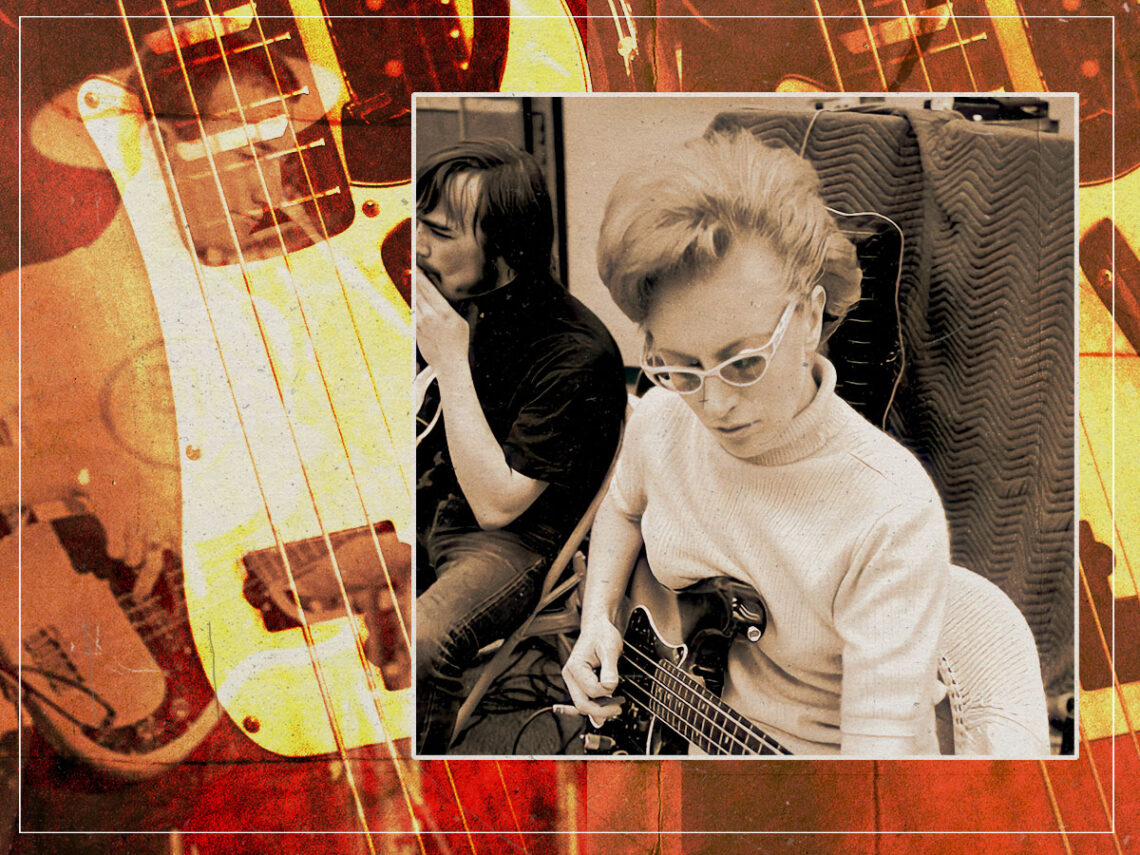
The 10 most underrated rock bassists

Given that the world of bass playing is so multifaceted, like with its six-stringed counterpart, many players go under the radar and deserve much more praise than they currently receive outside their immediate fanbase and genres. In rock music, a catch-all term encompassing an array of forms and subgenres, this is particularly true with there a slew of outstanding four-string maestros who are often eclipsed by their most prominent peers.
This perhaps has to do with the nature of the bass as an instrument. In most music, it takes a backseat role, linking up with the drums to facilitate the treble-heavy melodies layered on top. Unless a bassist has a notably complex or even wacky style like that of Primus leader Les Claypool, it has traditionally been hard for a bassist to take all the plaudits, as in tandem, consumers have preferred the naturally more eye-catching work of guitarists and frontmen.
Although Paul McCartney, James Jamerson and Bootsy Collins are those most revered for their pioneering work on the bass, with their achievements ranging from searing lead lines to complex melodies and rhythmical innovations, the typical story of the instrument that focuses on these figures leaves out those who have also been widely-influential but on a more nuanced scale. This is often due to the status of their outfits and genres, which do not appeal to the full berth of the masses, but it is not the only reason.
Today, we’re hoping to change this a little. From those who have enjoyed immense commercial success but are eclipsed by the cultural prominence of bandmates to those who have been missed out for no real reason, we’ve listed the ten most underrated rock bassists.
The 10 most underrated rock bassists:
10. Carlos Dengler (Interpol)
There is nowhere better to start than with Carlos Dengler, the former bassist of New York post-punks Interpol. Dengler was an instrumental part of the band’s success, taking inspiration from genre greats such as Peter Hook – who also likes to play his bass low down – with an effective de-tuned low E string, the warm sound of his Fender Jazz Bass provided a pulsating edge to their finest efforts.
Conjuring complex lead lines that dovetailed with the guitars of Paul Banks and Daniel Kessler while also linking up with the compelling locomotion of drummer Sam Fogarino, Dengler pushed the bass to new heights during his time in the band, conjuring many moments of brilliance, including ‘Obstacle 1’, ‘Obstacle 2’ and ‘The Heinrich Manoeuvre’.
9. John Deacon (Queen)
It might seem strange to see John Deacon here, but the unassuming Queen bassist is a mighty fine player. Due to the prominence of the band’s late frontman, Freddie Mercury, guitarist Brian May, and his naturally quiet character, Deacon has never earned the full plaudits he deserves. Capable of rock and roll fire and ice-cool soul rhythms, you don’t get many who are as technically proficient and characteristically unique.
In many ways, it was the infectious grooves he conjured that captured the hearts of many and turned them onto Queen, who they might have otherwise thought too theatrical and bombastic. Penning classic moments such as ‘You’re My Best Friend’, ‘Another One Bites the Dust’ – his most famous effort – ‘I Want to Break Free’ and co-writing ‘Under Pressure’, it’s safe to say that without Deacon Queen would not have been such an accomplished sonic leviathan.
8. Ben Shepherd (Soundgarden)
Ben Shepherd is one of the most underrated bassists to have emerged in the 1990s. While the story of grunge staples Soundgarden centres around the genius and tragedy of their late frontman, Chris Cornell, and the sludgy riffs of Kim Thayil, Shepherd’s thunderous bass tone augments all of the work he has played on.
From ‘Rusty Cage’ and ‘Jesus Christ Pose’ to cult classics such as ‘Room A Thousand Years Wide’, the muscular clank of his Fender Precision Bass and density of his Jazz Bass never fail to make listeners concentrate on the visceral grooves the quartet created. Furthermore, he comes alive in the live setting and grabs the attention with his frenzied efforts. That’s the sign of an excellent bassist.
7. Bruce Foxton (The Jam)
There aren’t many artists on this list who can seriously claim to be as distinctive as Bruce Foxton of British punks/mod revivalists The Jam. Taking the idea of bass going toe to toe with the lead guitar à la Paul McCartney to fresh apexes, even decades after the Woking trio rose to fame, his basslines are still the stuff of legend.
Known for the punchy sound of his Rickenbacker and the funky twists he would often imbue into his performances, there are so many iconic Bruce Foxton basslines. The direct assaults of ‘The Eton Rifles’, ‘Going Underground’ and ‘In the City’ have been incredibly influential, as have the swollen bends of ‘Thick as Thieves’ and, of course, that beautiful little walking line in the second verse of the acoustic anthem, ‘That’s Entertainment’.
6. Mark Sandman (Morphine)
From one unique player to another. The late Mark Sandman of alternative rock-jazz fusion outfit Morphine had a highly irregular approach. It proved to be the making of him as an artist and his band, and that’s not even going into detail about his smooth crooning. A man who made everyone stop and listen to his ominous sound, other bass greats such as Les Claypool and Mike Watt have celebrated his work, as has Queens of the Stone Age leader Josh Homme.
Morphine’s instrumentation was unusual for a rock act, and much of this came down to Sandman’s approach. His primary instrument was the Waterstone Premier bass, which only had two strings primarily tuned to a 5th or octave interval and played with a slide. His best efforts are ‘Buena’, ‘Honey’ and ‘Thursday’. Much of the slowcore movement is indebted to him.
5. Sergio Vega (Quicksand, Deftones)
Sergio Vega, former bassist of Deftones and current member of Quicksand, has left a lasting impact on many modern players across alternative rock, hardcore punk, and metal genres. His style, characterised by a fusion of heavy sound with an expressionist edge, often incorporates pronounced string bends, resulting in memorable basslines. Additionally, Vega’s onstage demeanour, marked by a consistent smile, adds a heartwarming element to his performances.
Utilising both a Fender Jazz Bass and, more recently, a Bass VI, the distinguishable tone he gets from his Sansamp Bass-Bass Driver DI has seen many try and fail to replicate it. Vega is a stellar bassist with so many highlights, conveying a swollen, constantly moving sound. ‘Fazer’, ‘Dine Alone’ and ‘Thorn in My Side’ are three from Quicksand’s early years, with the sliding off-beat genius of Deftones’ Swerve City’ a serious contender for his finest moment.
4. Chi Cheng (Deftones)
This list would not have been complete without the late Deftones hero Chi Cheng, one of his generation’s most consistently overlooked players. Stylistically related to Sergio Vega, it made sense that his Quicksand counterpart filled in for him after surgery and then after the accident that ultimately took his life. An absolute powerhouse of a bassist, his elemental efforts were the perfect middle ground between the unwavering riffs of Stephen Carpenter and the dynamism of drummer Abe Cunnigham.
There are just so many moments of note. From the dark swells smattered across Around the Fur to the blissful bends of ‘Minerva’, and then across to more punishing Deftones moments such as ‘When Boys Telephone Girls’, Cheng carved out an area for himself that has been extremely consequential in the world of rock bass playing. His work with the Sacramento group will forever hold up against the passage of time. Genius is timeless.
3. Colin Greenwood (Radiohead)
Do not be fooled by his quiet demeanour. Although he might find solace tucked close to his amp, the magic Colin Greenwood conjures with his fingers is astounding. A master of rhythm and space, he always serves the song in Radiohead but manages to shine, rivalling the well-lauded flourishes of his brother, guitarist Jonny Greenwood. Acutely understanding the power of sitting in a drummer’s pocket and the dynamic effect of the off-beat, Greenwood’s approach has provided many moments of sheer genius.
The automated rhythm of OK Computer opener ‘Airbag’ is one. It perfectly encapsulated the album’s futuristic themes by sonically illustrating an electrical signal. Arguably, though, his finest achievement is ‘How to Disappear Completely’. His style to a tee, the laid-back but focused walking groove underpins its profoundly dreamlike nature.
2. Carol Kaye (The Wrecking Crew)
Not only is Carol Kaye one of the greatest bassists the world has ever seen, but her significance as the rhythmic dynamite behind ‘The Wrecking Crew’ is tremendous. A technically fantastic player, who has played on everything from The Beach Boys‘ chef d’oeuvre Pet Sounds to Barbara Streisand’s hit ‘The Way We Were’, and is credited on records by The Supremes, Frank Zappa, Frank Sinatra, and many, many more, Carol Kaye and The Wrecking Crew had an instrumental hand in the cultural explosion of the 1960s and, subsequently, everything that followed.
Although she is revered in bass-playing circles, outside of them, she is criminally overlooked. This is a great injustice as her skill places her right at the top of the class next to her most prominent male peers. It must also be said that her significance as a woman in the saga of rock and broader popular music cements her as a pioneer in the closest sense of the word. Highly sought after and perenially producing magnificence in a male-dominated music industry and era where misogyny was rampant is nothing short of a miracle.
1. Billy Gould (Faith No More)
There are several players on the list who would have been nowhere without the unsung hero of Faith No More, Billy Gould. He is one of the most vibrant bass players we have ever known, fusing funk and metal into a technicolour mass with an array of tricks up his sleeve. Getting the clanky sound from his Zon bass by forcefully going at the strings hard with a pick while also mastering playing with his finger and slapping, he brings this broad skill set to life with imaginative and complex creations.
Whether it be the thumping slap of the early classic ‘We Care a Lot’, the melodic solo of the aptly named ‘Epic’ or the chugs of the later song ‘Superhero’, Billy Gould is the definitive alternative metal player, and his influence has had far-reaching consequences outside of his immediate sphere. Pouring tangible character into the instrument and pushing it to new heights, his achievements speak for themselves.
