


The 10 most pointless director’s cuts in cinema history

While the studios would certainly try to argue that every movie released in theatres is the director’s cut, anyone with a passing knowledge of the industry knows that isn’t always the case.
Every single feature has to jump through hoops before making it to the screen, an obstacle course that includes financial backers, production companies, studio executives, and overzealous producers. The biggest auteurs have the final say, but the Martin Scorseses, Christopher Nolans, and Steven Spielbergs of Hollywood are few and far between.
Sometimes, a filmmaker will trim down their film to make it more palatable to a mainstream audience, meaning the director’s cut is always part of the plan. Ridley Scott has built a lucrative sideline from doing it, even if extended versions aren’t always guaranteed to be superior.
In some cases, though, they’re nothing but pointless. Why turn a great movie into a good one, a good one into an OK one, an OK one into a disappointing one, and a bad one into a terrible one? It’s one of cinema’s great mysteries, with the following ten director’s cuts bringing nothing to the table.
10 director’s cuts that didn’t need to exist:
Troy (Wolfgang Petersen, 2004)

Wolfgang Petersen’s Troy already scored a major victory by coming within a whisker of half a billion dollars at the global box office, making it the only historical epic of the post-Gladiator boom to earn more money than Ridley Scott’s progenitor.
It’s perfectly fine for what it is, although Brad Pitt, Diane Kruger, and Peter O’Toole may disagree after their less-than-memorable experiences. Did it need to be re-released in 2007 with an extra 30 minutes of footage? It did not because it added nothing to the movie other than length.
Sure, it was bloodier, but that didn’t automatically make it better. Troy V2.0 was even more of a slog, and replacing James Horner’s score with Danny Elfman’s theme from Planet of the Apes during the film’s standout battle brought back haunting memories of Tim Burton’s ill-advised reimagining.
Miami Vice (Michael Mann, 2006)

Having revisited several of his films, Michael Mann is no stranger to a director’s cut, for better or worse. For the most pointless, though, look no further than Miami Vice.
In its theatrical form, the dark and gritty reboot of the pastel-coloured 1980s TV series was a dull and monotonous slog that not even star Colin Farrell enjoyed making. Apparently, Mann decided the best way to improve that cinematic stodge was with an extended version, even duller and more monotonous than ever before.
The majority of the additions are extensions of existing scenes, which means it’s pretty much the same movie except longer and not as interesting. Considering the original wasn’t all that interesting to begin with and flopped at the box office, what was the point?
Dumb and Dumber (Peter Farrelly, 1994)

As the sequel failed to realise, there was a very fine line between making Jim Carrey’s Lloyd Christmas and Jeff Daniels’ Harry Dunne loveable idiots and cantankerous arseholes in Dumb and Dumber.
The beloved comedy paints them as a pair of bumbling idiots who’ve got their hearts in something approaching the right place despite their antics, while the follow-up turns them into mean-spirited and vindictive pricks with very little in the way of redeeming features.
The extended and unrated cut of the Farrelly brothers’ breakthrough feature carries a significantly darker tone, making Harry and Lloyd unsettlingly creepy and borderline insidious, robbing them of their ambiguity to repaint harmless goofs into genuinely terrible people. It was fine as is, and nobody wanted to see Dumb and Dumber veer into Taxi Driver territory.
The Warriors (Walter Hill, 1979)

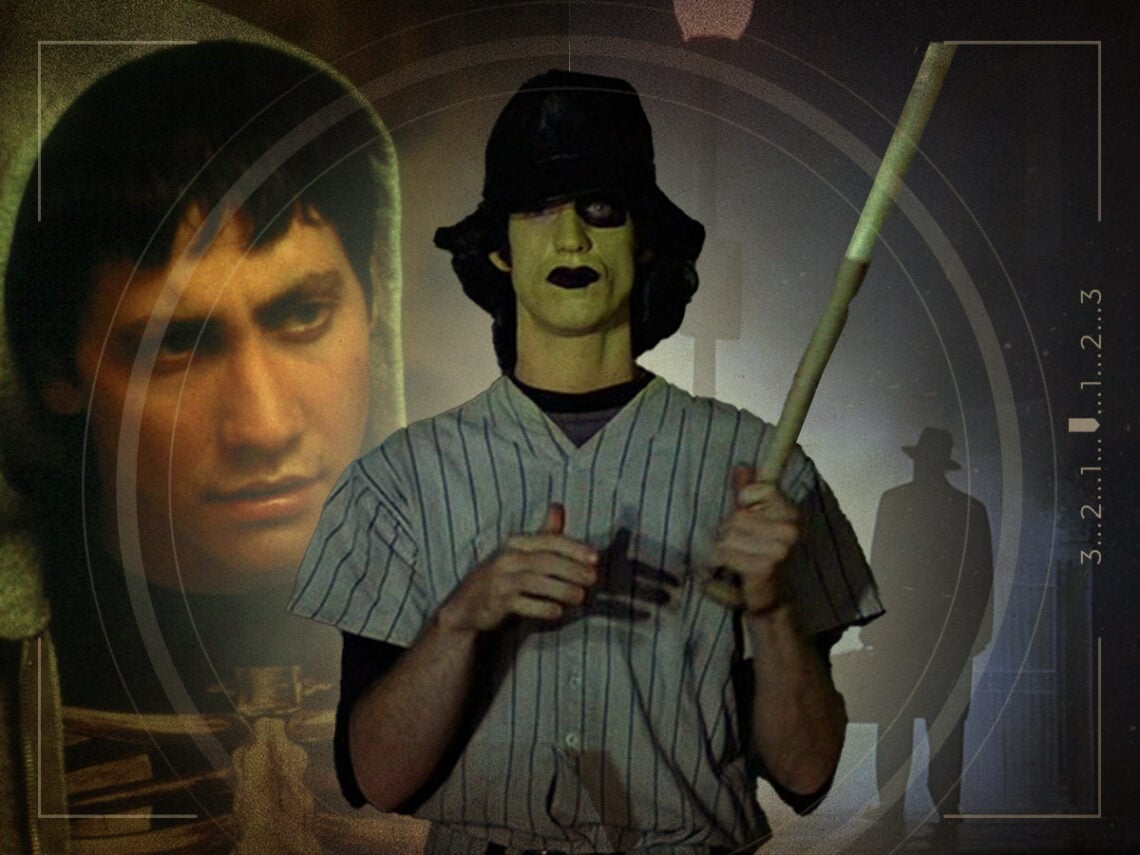
The Warriors is based on a novel, not a comic book. Yet, for some reason, the director’s cut of the cult classic opts to include some completely out-of-place scene transitions that can only be described as jarringly needless.
What makes it especially pointless is that the extended version is only around 75 seconds longer than the theatrical edition, which must mean that the only reason The Warriors was given a director’s cut was for Hill to indulge himself.
After all, the only changes are an introductory voiceover recorded by the director describing a Greek army’s attempts to fight its way home from battle and those comic book-style freeze-frames that bridge several scenes, and it’s hard to imagine anyone thinking those additions made for a better movie.
Sin City (Robert Rodriguez and Frank Miller, 2005)

The entire point of Sin City was that it was designed to look like it had been ripped right from the pages of the source material and transplanted to the screen, something Robert Rodriguez and Frank Miller – and guest director Quentin Tarantino – pulled off with aplomb.
The sequel, A Dame to Kill For, bombing at the box office a decade later indicated that the success of Sin City was a one-time thing, which anyone who’d seen the ‘Recut, Extended, Unrated’ version already knew after it made the bizarre choice to make a solid film substantially worse.
Not only does it kill the pacing stone-dead by reordering the movie’s events in sequential order, but it makes the even stranger decision to give each of them a credit sequence. Imagine if Pulp Fiction was re-released as three individual stories told chronologically, each with their own credits, except worse.
Legend (Ridley Scott, 1985)

No big-name director in Hollywood loves a director’s cut more than Ridley Scott, who seemingly can’t help himself. His incessant desire to tinker with his past work has to be the only reason he went back to Legend, a movie he doesn’t even like.
Scott swore off the fantasy genre forever after making the film, and so did Tom Cruise. When the star and director spent the rest of their careers actively avoiding a certain style of cinema because they enjoyed themselves so little the first time around, why would he want to give it a second look?
Admittedly, the theatrical edition was subject to the scissors of studio interference, but Legend still isn’t very good, even at a lengthier 114 minutes. Is there any point whatsoever in turning a forgettable feature into a slightly less forgettable but longer one with a different score? Absolutely not.
The Exorcist (William Friedkin, 1973)

The first out-and-out horror movie to be nominated for ‘Best Picture’ at the Oscars, the highest-grossing R-rated release in cinema history and a cultural sensation that infiltrated the collective consciousness and refused to leave, The Exorcist is perfectly fine the way it is.
One of the most influential, iconic, and endlessly aped horror films ever made, William Friedkin rode a wave of headlines, protests, and controversies to seminal status, even if the constant parade of inferior sequels tried their hardest to take some of the shine off the original.
The fact that the rejigged cut was branded as The Exorcist: The Version You’ve Never Seen makes it perfectly clear it only existed to capitalise on the movie’s reputation. By adding extra scenes that show more than tell, like the spider-walk sequence, and inserting more subliminal images to accompany a less satisfying ending, it adds a lot while adding nothing at all.
Alexander (Oliver Stone, 2004)

Poor Oliver Stone. The filmmaker spent decades developing Alexander as his ultimate passion project, only to watch the bloated historical epic go down in a ball of flames when it lost a fortune in cinemas, took a pasting from critics, and earned the worst kind of awards season recognition.
The second movie on this list that Colin Farrell came to regret, the actor thought he would be heading to the Oscars with Alexander, only for the sum of its accolades to be six Razzie nominations, including ‘Worst Picture’, ‘Worst Director’, and ‘Worst Actor’.
Some turds just can’t be polished no matter how hard anyone tries, but that didn’t dissuade Stone. Alexander got a director’s cut, and it also got Alexander Revisited: The Final Unrated Cut and Alexander: The Ultimate Cut, none of which could elevate it above mediocrity.
Rebel Moon (Zack Snyder, 2024)

Netflix handed Zack Snyder a blank cheque to make whatever he wanted, and the director responded in kind by using an abandoned idea for a Star Wars spinoff to create a two-part sci-fi epic that was basically Akira Kurosawa’s Seven Samurai in space, except shite.
Another filmmaker who enjoys a director’s cut, Part One: A Child of Fire and Part Two: The Scargiver were long enough on their own, combining for a butt-numbing 256 minutes in their original form, becoming the two worst-reviewed movies of his career in the process.
Taking two terrible films and re-releasing them as two even longer films is hardly the savviest of business strategies, with the rebranded Chapter One: Chalice of Blood and Chapter Two: Curse of Forgiveness clocking in at a preposterous 377 minutes, with Netflix’s data indicating that viewership plummeted by over 80% from the original cuts to the extended versions, insinuating that not even Snyder’s most ardent fans were interested.
Donnie Darko (Richard Kelly, 2001)

The longer Richard Kelly’s career wears on, the more weight the theory behind Donnie Darko gains. For those who don’t know, the myth posits that the debuting feature director made a great movie completely by accident, and the director’s cut was the first sign of proof.
Conspiracy theorists have suggested that editors Sam Bauer and Eric Strand deserve most of the credit for Donnie Darko earning its cult status by hammering the unwieldy footage into such intoxicating shape, and it’s hard not to give it at least some credence when Kelly’s realtered edition of the film is a step down in almost every way.
By adding 20 minutes and stripping away the ambiguity, Kelly robbed Donnie Darko of the very things that made it such a sleeper sensation the first time around. It didn’t need to exist; nobody asked for it to exist, and once it did exist, it was an utterly pointless and inferior feature.
