


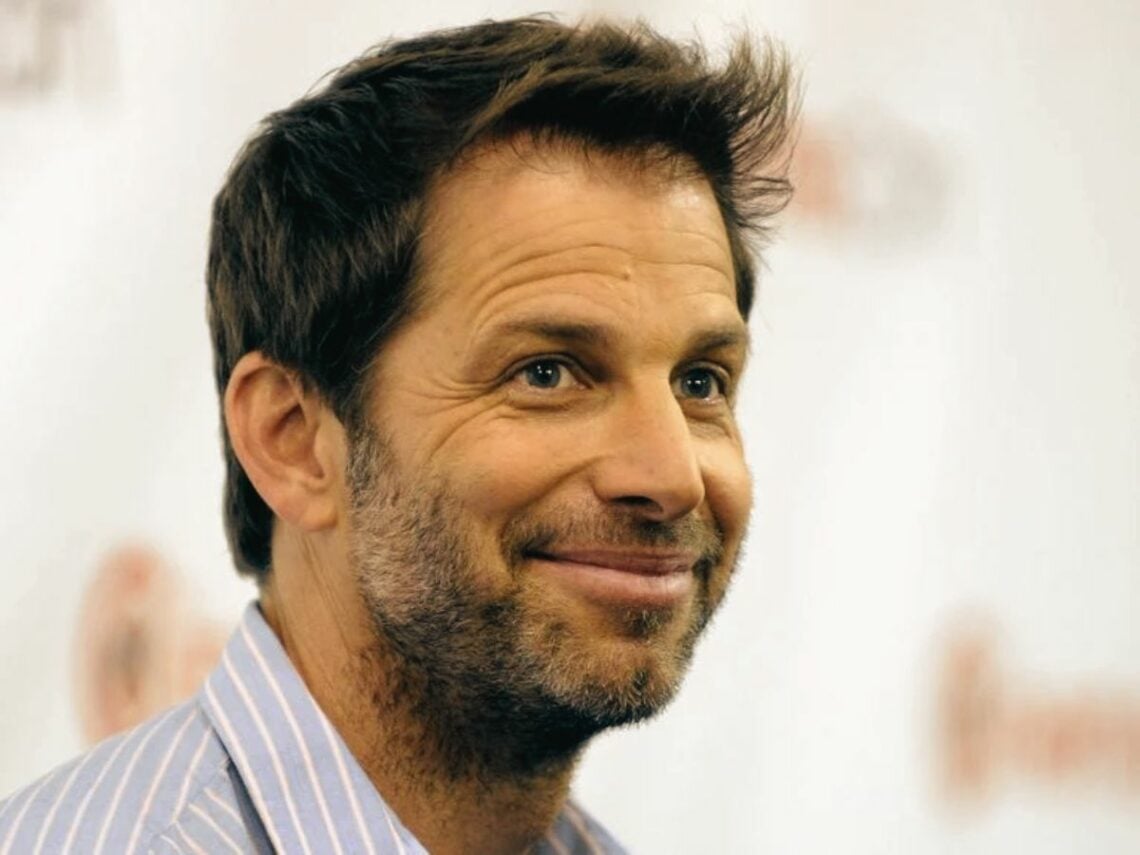
Why does Zack Snyder inspire such feverish devotion among his supporters?

In 99.9% of cases, being called one of the most influential filmmakers working today by no less of an authority than Christopher Nolan would find most people in agreement, but the fact such a statement is capable of having battle lines drawn is just one aspect of the enigma that is Zack Snyder.
While there’s no denying he’s a talented visualist who knows how to craft a beautiful image, even whispering his name into the ether of the internet is an argument waiting to happen. For some, he’s a hack who couldn’t make anything even halfway approaching a masterpiece if his life depended on it, while for others, he’s the greatest auteur Hollywood has to offer.
In terms of critical appraisal, Snyder has never won stronger notice than he did for his very first feature, which came 20 years ago after he debuted with the frenetic Dawn of the Dead remake. The horror flick was scripted by a certain James Gunn, somebody who’s now been positioned as Snyder’s mortal enemy in a rivalry that only exists in the head of his most fervent supporters.
Of course, Snyder was the original architect of the DC Extended Universe, which petered out in the wake of the Justice League debacle. Much of that blame can admittedly be laid at the feet of Joss Whedon, but Man of Steel and Batman v Superman: Dawn of Justice can hardly be unanimously labelled as two of the greatest comic book adaptations ever made.
Thanks to a grassroots campaign, though, Snyder eventually got around to finishing his four-hour version of Justice League, but things didn’t end there. Instead, his fans mobilised demanding that Warner Bros give him back the keys to the kingdom, and if that wasn’t an acceptable outcome, then they’d settle for the studio handing an abandoned superhero franchise that fizzled out in the face of critical and commercial disappointment over to Netflix so that he can finish it there.
Beyond making absolutely no business sense, Snyder is already busy at the streaming service, knocking out forgettable dreck like Army of the Dead and the risible two-part Rebel Moon saga. The latter is basically Seven Samurai meets Star Wars except not good, which makes sense considering he’d pitched a standalone story inspired by Akira Kurosawa’s classic to Lucasfilm over a decade ago.
Original work has hardly been Snyder’s stock-in-trade, and when it is, you get the lowest-earning film of his career in Sucker Punch or the Netflix-only Army of the Dead. Outside of that, everything is an adaptation, thinly veiled repurposing, or do-over of some description, but his staunchest devotees are willing to die on the hill that he’s constantly reinventing the very face of cinema.
While Nolan may have told The Atlantic how “there’s no superhero/science fiction film coming out these days where I don’t see some influence of Zack,” his supporters take things to new heights. Gunn is constantly under attack for daring to be appointed co-CEO of DC Studios, Netflix is bombarded with demands to make anything other than the films he’s developing under his exclusive deal, and searching ‘Zack Snyder is the blueprint’ online will find him credited with originating some of the most widely-accepted shot compositions, iconography, symbolism, and motifs in all of cinema.
It’s usually the most distinguished and distinguishable filmmakers who get elevated onto the pedestal of deification by their fans, but Snyder exists as his own unique case because he’s nowhere near it. He’s made decent films and some truly terrible ones, but nothing that offers compelling evidence he’s up there with the very best in the business in terms of marrying visual panache with narrative and thematic heft.
Even saying as much as opening the doors to social media vitriol and uninhibited bile, as if somebody’s closest family member has just been egregiously insulted. He’s got an eye for an image, sure, but it’s become one of cinema’s great 21st-century mysteries that of all the populist filmmakers who ended up igniting a fervent zealotism where a bad word against their work is taken as a personal slight, it formed around the guy who made a computer-generated owl movie and came up with the ‘Martha’ scene.
