


10 classic albums that fans had the wrong reaction to

Fans don’t always know what they want whenever their favourite band comes out with a new project. The fact of the matter is that artists have the final say in whatever they do, and even if the public isn’t ready for it, acts like Paul McCartney weren’t afraid to throw something crazy at the fans now and again.
Then again, acts can be playing with fire every time they try out a new creative direction. After all, the road to musical hell is also paved with good intentions, and regardless of how many times people like the idea of working in a different field, there are always going to be records like Metallica’s St Anger and Chris Cornell’s Scream that have a fun idea that didn’t quite manage to stick the landing like it should have.
But when a band swings for the fences and wins, that’s when people realise that they are dealing with a group that’s more than a flash in the pan. It’s just a shame that wasn’t taken to heart on these records. Despite being ridiculed back in the day, the albums on here represent the most forward-thinking ideas in rock that simply weren’t treated with enough respect back in the day or were put on the side as half-decent experiments.
No one realised that they were going to change the course of music within a matter of years, but all the artists can do now is gloat in the satisfaction of being right about the future of music. There’s an old adage that says that being right too early is the same as being wrong, but there’s no shame in being at the forefront of a new sound before the rest of the world comes on board.
10 classic albums fans had the wrong reaction to
Warning – Green Day

No one is aching to see their favourite band from their childhood grow up. The whole point behind a band like Green Day was to watch people living out the kind of punk-rock fantasies that wouldn’t have felt out of place in high school but Billie Joe Armstrong simply wasn’t that kind of songwriter anymore. He had bigger dreams, but it turned out that the world wasn’t ready to hear them yet when he began working on Warning.
Then again, the band’s first release of the new millennium might be the most important album they ever released. Dookie and American Idiot get showered with more praise, but the reason why they were able to mature was trying out new sounds on this record. There’s a lot more acoustics this time around, and aside from the standard pop-punk fare like ‘Castaway’, there are Kinks-style pastiches like ‘Fashion Victim’, tender ballads like ‘Macy’s Day Parade’, and even a token folk song on ‘Hold On’.
While there are songs that are too strange to even describe like ‘Misery’, ‘Minority’ is the first time they actually managed to sneak in some political commentary, which would only come in handy one album later. It wasn’t going to be the blockbuster everyone wanted from them ever since Dookie, but given where they would be headed, you can see the bones of their operatic years starting to develop.
Obscured by Clouds – Pink Floyd

Soundtrack albums are never meant to be anyone’s favourite record in a band’s catalogue. Tom Petty wasn’t planning on celebrating the soundtrack to She’s the One that often, and no matter how many times Queen’s music is praised to the high heavens, no one’s sitting around wondering when the next remastered version of the incidental music from Flash Gordon will be remastered. But for a band known to use the studio as an instrument, Pink Floyd actually made the best of both worlds with their second film soundtrack.
While More was their first attempt at making music for a film with often mixed results, Obscured By Clouds feels like it could stand side by side with their mainline output. They had already been pushing themselves to make new sounds in the studio, and after ‘Echoes’ cleared the path for them to move forward, ‘Burning Bridges’ and ‘Mudmen’ are full of great musical motifs that feel like a preparation for their long-winded epics that would happen later.
Since it’s a film soundtrack, no one was exactly clamouring for a copy around that time, but when stacked up against the rest of their body of work, there are many proper studio albums that aren’t as good as what they came up with for the film. It’s not going to give Dark Side of the Moon a run for its money or anything, but it does at least deserve a spot next to Meddle or Atom Heart Mother.
Pink Moon – Nick Drake

The entire story of Nick Drake reads like a dark tragedy half the time. Here was a songwriter that had a natural gift for making beautiful melodies, and yet his self-esteem always left him unable to express himself properly and led to him withdrawing from live performances and the entire music business during the final years of his life. While Pink Moon eventually emerged from that dark final chapter, it’s almost ironic that the sound of his internal darkness sounded so gorgeous.
Standing at less than a half hour, it’s not like it’s the most heavy listen by any stretch, but hearing Drake peel back the layers of his own mind would have felt harrowing under any other circumstance. For a later reference, this was his version of In Utero from a lyrical standpoint, but when the opening fingerpicking of the title track comes on, it makes the listener feel like all the bullshit of everyday life suddenly melts away and you’re at one with the music.
It’s as gentle as any great singer-songwriter, but even with the small number of people taking interest in his music towards the end of his life, it was too late for Drake, who would be found dead in his home after an overdose of pills. Those who heard him at the time knew they were looking at a genius in the making, but it’s just sad to think that the hardest person for him to please was himself.
Sweetheart of the Rodeo – The Byrds

For a brief moment in time, The Byrds were about to become a relic of the 1960s on the same level as The Monkees. Despite them breaking down the barriers for folk-rock, The Beatles had matched them by 1965, and with their brand of jangle-pop becoming the norm, there was nothing new that they offered to the rock scene anymore. They needed the right kind of musical push, and once David Crosby found out he could have more fun with his supergroup buddies, in walked Gram Parsons.
While Parsons was far from a rocker type, his knowledge of country music transformed Sweetheart of the Rodeo. It might not have sold well at the time, but when looking at its commonalities with traditional country greats like George Jones and Hank Williams, both Roger McGuinn and Parsons were helping to set the template for what country rock was going to become in the late 1970s.
Although Parsons would be out of The Byrds only a few albums later and die tragically young, everyone in Los Angeles was listening to what he was doing, from Don Henley calling him the godfather of his brand of rock and roll to Emmylou Harris and Linda Ronstadt pulling from country music as well. Everyone was only starting to figure out how to blend genres together, but Parsons and McGuinn made rock and roll with a twang seem like the most natural thing in the world.
Murmur – REM

The most forward-thinking albums of all time aren’t the kind of records that major labels manufacture. No one wants to take a chance on a band that they think might not sell, so it’s better to take the safe route and have an artist that fits into a neat box. But even if the 1980s were about to become the era of neon colours and starlets on MTV, REM seemed to have the right idea for alternative rock nearly one decade too early when they started cutting their teeth in Athens, Georgia.
It made no sense for an album full of songs with incomprehensible lyrics to see any chart success, but based on the strength of the melodies alone, Michael Stipe became one of the biggest stars in the world with tracks like ‘Radio Free Europe’. But even if they were now competing with pop stars, they were never expecting to sell the same kind of numbers that Michael Jackson was. They were still an indie band, but that planted the first seed in the minds of labels.
Suddenly it felt possible that a relatively unknown band could sell if they had the right idea, and so began the search for obscure acts before Nirvana tore the entire industry apart, all while Kurt Cobain sang his praises for REM’s music wherever he went. The 1980s didn’t seem to have any place for a bunch of mild-mannered kids playing pop rock tunes, but it turns out that anything can make it to the top if they have the right amount of passion behind their music.
Tusk – Fleetwood Mac

Fleetwood Mac virtually had an impossible task ahead of them once the late 1970s started. Rumours had been made under horrific conditions, and the band themselves were licking their wounds throughout the entire touring cycle, and yet they were being asked to make a record that not only matched one of the biggest albums of all time, but one that might actually surpass it. And while Tusk did have the kind of ambition to be one of the best records of their career, it definitely went down some strange roads getting there.
Throughout the entire project, each song feels like a tug of war between Lindsey Buckingham’s need to make art-rock experiments and Stevie Nicks and Christine McVie trying to make the logical successor to Rumours. The end results often fall somewhere in the middle, but in the same way that The Beatles’ White Album is a beautiful mess, so too is this album perfect in all of its strangeness. It’s not a record that can be analyzed on first listen, but when taken as a whole, a lot of its strangeness becomes endearing.
That didn’t stop the fans and even some of the band members from trashing the album upon release, thinking that they had made a huge mistake and blamed Buckingham for the reason why it all went wrong. But once everyone took a step back, this was the sound of a band progressing, and while it had to be put on pause for everyone to do solo projects, it left us with more than a few thrills to unpack in the meantime.
Standing on the Shoulder of Giants – Oasis

There’s no real roadmap of how to stop a band in free fall. The entire point behind a band falling from grace usually comes from when they release a colossal failure or say the wrong thing in public that gets them ridiculed by their fanbase. That’s not really happened with Oasis, though, but when they released their fourth album, it felt like the entire rock world had pretty much washed their hands of them.
Be Here Now may have justifiably been bloated in retrospect, but after the Manchester legends lost half of the band and started again from scratch, Standing on the Shoulder of Giants was a much better record than it was given credit for. Instead of the obvious sign of the band imploding, this is the only album in their catalogue that could be considered “dark”, with Noel unpacking a lot of his manic episodes in songs like ‘Gas Panic!’ and taking accountability for Britpop coming to a close on ‘Where Did It All Go Wrong’.
A lot of it does admittedly get caught in a psychedelic haze a lot of the time, but that’s hardly a reason to turn one’s back on the band entirely. They had toyed with strange musical detours before, and even if this wasn’t their version of Revolver by any stretch, there’s no shame in someone making their equivalent of Let It Be. It wasn’t going to be an easy road back to the big time, but the pieces were being put back together.
Load – Metallica

There has always been an outspoken rule about giving the Metallica fans what they wanted. As much as the thrash titans have switched things up over the years, it’s not hard to see that the most polarising albums are the ones where they take a bit of a risk. While fans are totally justified in hating everything from Lulu to St Anger, anyone who loved ‘Enter Sandman’ shouldn’t really have that much animosity towards the Load era of the group.
Regardless of what the purists were saying at the time, The Black Album was one of the best albums that Metallica had made up to that point, and when they reconvened in the studio, they needed to make sure that they didn’t repeat the same thing over again. And while getting haircuts is hardly a good enough reason for fans to hate on a project, it’s not exactly the alternative switch-up that everyone thought, either.
Throughout Load, the band are making decent hard rock albums with subtle touches of dark themes to them, and judging by James Hetfield’s lyrics, songs like ‘The House That Jack Built’ and ‘Bleeding Me’ are even more emotional and vulnerable than ‘Nothing Else Matters’. While the fanbase wanted them to get heavier again, that would prove to be an extremely mixed blessing. Because if you wanted heavy Metallica, you were either going to have to deal with Load or suffer through most of St Anger.
White Light/White Heat – The Velvet Underground
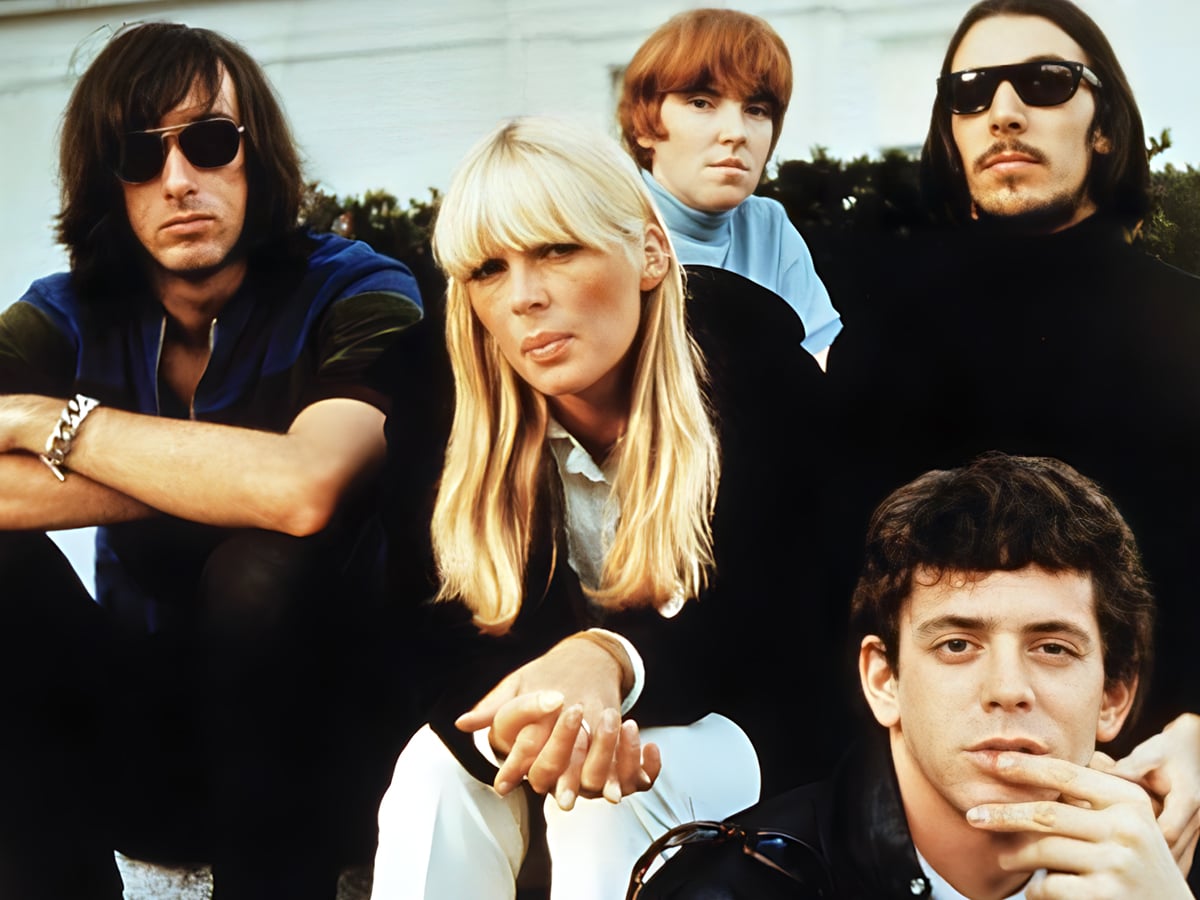
It’s hard to judge any Velvet Underground album on a list like this. Their entire existence was never going to sit well with the traditional pop rock fan, and even with their debut being heralded as a classic, there was no reason to think songs like ‘Heroin’ were going to find their way onto the charts. But if we’re going with albums that no one seemed to have the right opinion on, it’s best to go to the one that people criticised for being nothing but a bunch of meaningless noise all the way through.
Lou Reed already wanted to make a record that was much heavier than what they had done, but by putting everything into the red on White Light/White Heat, they stumbled upon the beginnings of punk rock. Is the title track or ‘Here She Comes Now’ supposed to sound pristine? Not in the slightest, but somewhere in between the chaotic noise is a band slowly figuring out the beauty behind the dissonance who is leaning into the ambience.
And no matter how many metal bands have come and gone in their wake, the band is owed a debt of gratitude for making ‘Sister Ray’, which takes everything heavy about rock music up until that point and brings it to its most dissonant conclusion. The world wasn’t ready to hear it just yet, but Reed always prided himself on being slightly ahead of the curve every time he made a record.
McCartney II – Paul McCartney

When talking about albums that fans got wrong, it’s not often that a Beatle gets thrown into the mix. History has smiled on every one of the Fab Four every single time they’ve released new music, and even if they have a few clunkers in their catalogue, it’s easy to see them as fan favourites if they don’t reach the biggest audience. But while Paul McCartney already was ridiculed for his forgettable moments in Wings, McCartney II was where he fully took advantage of the DIY mentality.
While his first proper debut album was the actual first attempt at this kind of record, it feels more like a demo album compared to McCartney II. ‘The Cute One’ had had enough of making records traditionally, and throughout each track, he experiments with every weird sound he can get his hands on, mutating his voice on ‘Coming Up’, making primitive synth sounds on ‘Waterfalls’ or coming up with a couple of tracks for his own fun like ‘Bogey Music’.
There’s nothing really commercial about the record, but the fun that’s radiating off of every song is still being felt in every one of the indie bands that have come out ever since the dawn of the 2000s. Because after years of trying to make the corporate-approved version of what makes a rock and roll song, Macca understood by this point that it was better to enjoy the music he was making rather than writing for a committee.
