


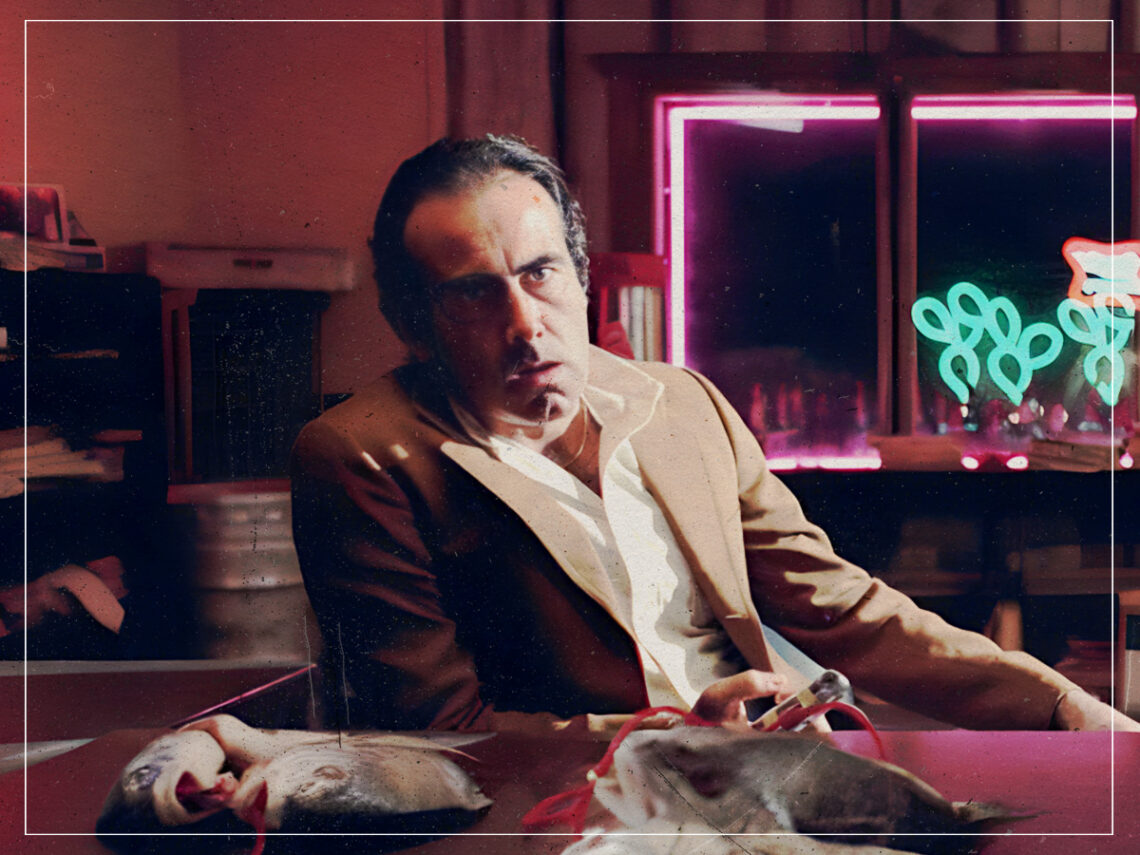
Why the Coen brothers made 15 movies with someone who doesn’t exist: “We thought it would be poor taste”

In 2008, the Coen brothers attended the Academy Awards when their searing neo-noir classic No Country For Old Men was nominated in eight categories. The visionary siblings won three Little Gold Men that evening – ‘Best Picture,’ ‘Best Director,’ and ‘Best Adapted Screenplay,’ while Javier Bardem also won ‘Best Supporting Actor’ for his terrifying performance as Anton Chigurh. One Coen cohort who was left disappointed, though, was editor Roderick Jayne, who lost out on ‘Best Film Editing.’ Or, at least, Jaynes would have been disappointed if he was a real person – instead of a fictional creation.
When the Coens made their first movie, Blood Simple, in 1984, they quickly found that the Director’s Guild of America didn’t allow them both to be listed as directors. So, they solved the problem by having Joel credited as director and Ethan as producer, while both were credited as co-writers. This system lasted through their first 10 films, only changing with 2004’s The Ladykillers when the brothers were finally credited as co-directors and co-producers.
The Coens had another problem to solve when they made Blood Simple, too – or, at least, a problem of their own creation. In addition to writing, directing, and producing the film, they were also its editors. However, because they’re eccentric souls who are one part mischievous and another part bashful, they didn’t like the idea of their names cluttering up the credits yet again in the role of editor. “We thought it would be poor taste to have our names in the credits that many times,” reasoned Joel. So, they came up with a novel solution – they’d make up a fake editor to take all the credit they were uncomfortable with receiving.
‘Roderick Jaynes’ was officially credited as the editor of Blood Simple, but by the time the brothers made their follow-up movie Raising Arizona, they hired an actual editor named Michael R Miller. He returned for Miller’s Crossing, but for Barton Fink, the brothers took on editing duties again, which meant the return of Jaynes. After another experiment with Thom Noble on The Hudsucker Proxy, though, the Coens decided once and for all that they liked editing their own films. Jaynes was subsequently credited on every movie from 1996’s Fargo to 2018’s The Ballad of Buster Scruggs.
In total, that’s 15 major motion pictures edited by a fictional person who notched not one but two Oscar nominations along the way. Jaynes was also nominated for Fargo, and over the years, the Coens began to delight in the mystique surrounding their elusive editor. It became an open secret in Hollywood that Jaynes didn’t exist. However, a biography had to be created for anyone who worked on a film for public relations purposes, so the brothers set about building this faceless creation into an actual character in the eyes of the world.
“We sort of invented a whole persona for this guy,” Joel told NPR in 2013. Ethan then regaled the outlet with the tale of Jaynes, their 100-year-old British editor who only comes out of seclusion to work with them. “He started out minding the tea cart and shepherding the studios,” Ethan explained. “He’s very old, in his 80s, actually, when we first started working with him, which would make him probably over 100 now.” Joel grinned, “He lives in Haywards Heath, Sussex” – naturally, a completely fictional village. The brothers sometimes told the press that Jaynes rarely attended awards ceremonies because he was watching cricket matches in his sleepy hometown.
Amazingly, the Coens were still playing into the charade at the 2008 Oscars, submitting an official photograph to the Academy and telling interviewers that they hadn’t heard from Jaynes when he lost. After all, he’s a curmudgeonly old guy who likes to keep himself to himself. By that point, though, they had officially owned up to the fact Jaynes didn’t exist seven years earlier in a hilarious article written for The Guardian from Jaynes’ perspective – but it appeared few people in Hollywood seemed to remember that piece.
Jaynes’ article featured floridly bizarre doozies like, “I am something in the nature of a film editor emeritus, and brothers Joel and Ethan Coen are self-styled cinéastes” and “At first I kept my head down as they argued, struggling to make simple match cuts in footage shot by people patently ignorant of the simplest mechanics of scene construction.” The pièce de résistance, though, was when it concluded, “Roderick Jaynes is a figment of the imaginations of Ethan and Joel Coen.” Well played, boys.
