


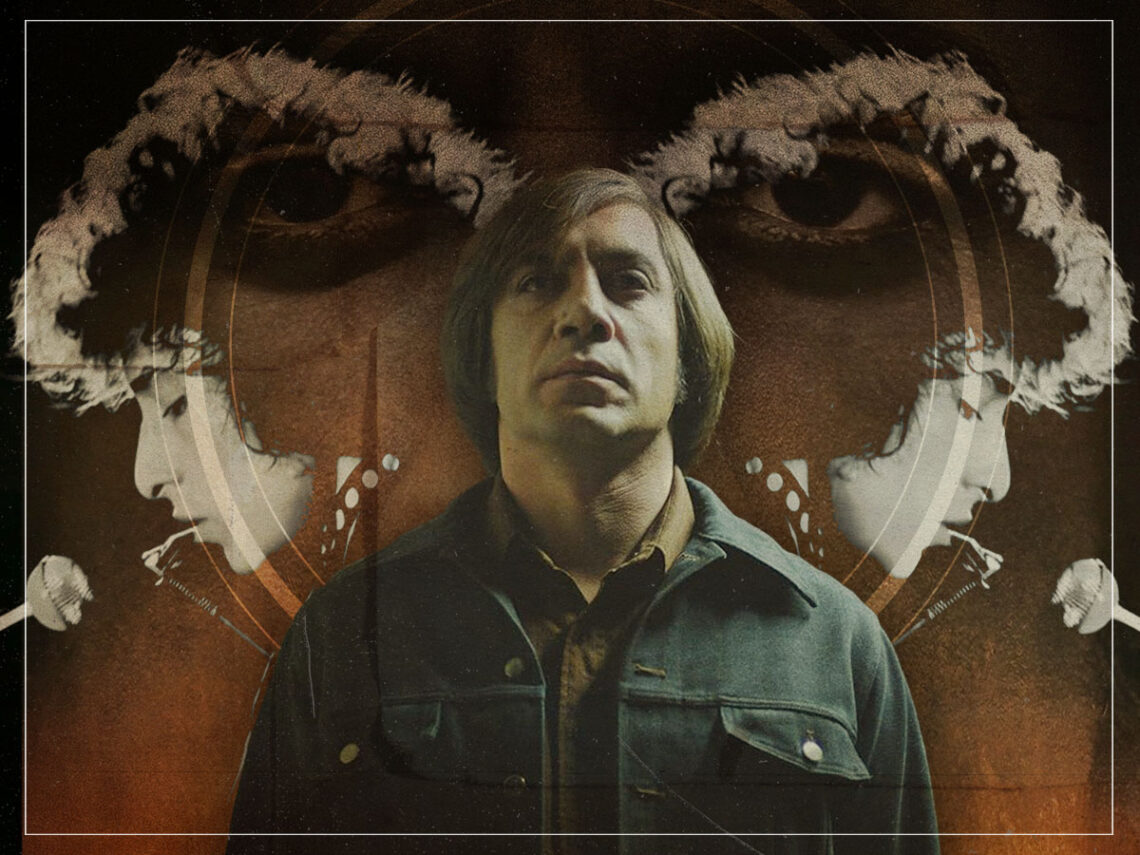
‘No Country for Old Men’: The cinematic reimagining of Bob Dylan’s ‘All Along the Watchtower’

The Bible is central to the works of two of today’s finest artists: Bob Dylan and the Coen brothers. Why wouldn’t it be? It might be all out of ‘cool cache’ in the 21st century, but its depth, moral codes and pervasiveness in society are still untouched in terms of cultural influence. However, the waning of this influence and the moral ambiguity that has arrived since that defines the discourse of two of their masterworks, No Country for Old Men and ‘All Along the Watchtower’.
In the closing stages of the movie and the Cormac McCarthy novel on which it is based, our weary old sheriff sits down and asks a pleading question about hope and faith, which he has found little of in the brutalism of his ever-darkening career. Dylan’s most biblical anthem probes a similar question. It is here that our sheriff might actually find his answer.
In the song, riders approach from afar, invoking an image akin to Game of Thrones, where a kingdom is soon to be beset with more bad news from nowhere. There is no relief from this bombardment, the joker proclaims. In the modern world, where we are greeted with 50 grim news stories a day, that sentiment suddenly seems very prescient. The joker pleads: How do you rise above this dower malaise? So does the sheriff, who is sick from a career of worsening violence.
Well, the thief has a profound answer. He has been privy to this approaching darkness for a long time—and he sees a chance that the darkness of the advancing riders carries with it a glint of salvation. Don’t get excitable and caught up in this doomy storm, he seems to say. You only lose your way down that route; you’ve got to move on through it. Then, you will be ready to accept Godspeed and good tidings. Who knows, in retirement, our sheriff really might find peace and god along with it.
The fact that a thief can see this while being condemned is symbolic of the virtue of forgiveness. In the context of the society in which Dylan released the song, this proved to be an important message. The times were tough, but with ‘All Along the Watchtower’, he provided a prayer that usurped spiritual vapidness. Despondent nihilism was pervading an era of despair in America. Dylan proclaimed that you ought not to give into the cynicism of dejection and look beyond the insular world of the watchtower—you ought to be forgiving, fostering hope and light where you can.

You can’t just stand on your guarded high horse and look out at the world with a cynical glare, expecting only darkness to blight your walls. You have to draw on your own experiences and know that things aren’t truly as terrible if you grace them with a virtuous disposition. Our sheriff has done just that—and although he sits at his kitchen table completely devoid of hope after a career where it has been beaten out of him (particularly given his final brush with pure evil), there is hope for him.
Because he has been nothing but good, he now has a loving wife, health, a home, and security in which he can find peace. He sits in bleak hopelessness, forced into such dower apathy that he barely even seems to notice that his own retirement might herald new riders on the horizon. But he now has the chance to listen to the thief and find some light in life after tackling darkness.
Alas, he is just about the only person in the film who does find peace, but do the others really deserve it? While you could argue that Llewelyn Moss is a good man at heart, the movie takes a grim view of his decision to pick up a bloody briefcase of cash. In that moment, he brings evil into his life by trying to negotiate with immorality. His hesitancy at the scene is evidence of the fact that he knows what he is about to do is not morally upstanding, and as a result, he is pursued relentlessly by a figure of pure evil.
So, in both cases, the message within the biblical art could be simply boiled down to ‘you reap what you sow’. If you choose to see nothing but darkness, then your world will become cynical, and if you think you can dance with the devil, he’ll trip you up in the end. In both cases, there is also no denying that these times are dark; the desolate nature of both aesthetics rides this certainty home with unnerving tension and truly biblical touchstones. Caught in the crosshairs of this are normal people facing existential dread amid a morally ambiguous world. Yet there is a kernel of real hope in a message neither feels bold enough to utter in full—too torridly downtrodden to do so: don’t give in to the darkness.
Life is not a joke, Dylan decrees, though there are plenty of people who see it as such, both those who are filled with indifference and those capable of making quips after evil acts, condemned for crimes of passion and later joking, “there wasn’t any passion to it”. But as Ed Tom Bell states from the outset, “Some of the old time sheriffs never even wore a gun”. The symbolism there is that they exhibited nothing but virtue and shepherded people towards virtuous optimism because of that. The flip side is that there is a bowl-cut embodiment of evil out there, who parades around, not with a gun but with a bolt stunner, as though he is a shepherd herding sinners already ready for the slaughter.
To stay clear of him and the stir craziness of a watchtower besieged by constant bad news, you’ve just got to be good and try to see the light. Or that’s at least if Bob’s thief is to be believed.

Never Miss A Tale
The Far Out Bob Dylan Newsletter
All the latest stories about Bob Dylan from the independent voice of culture.
Straight to your inbox.