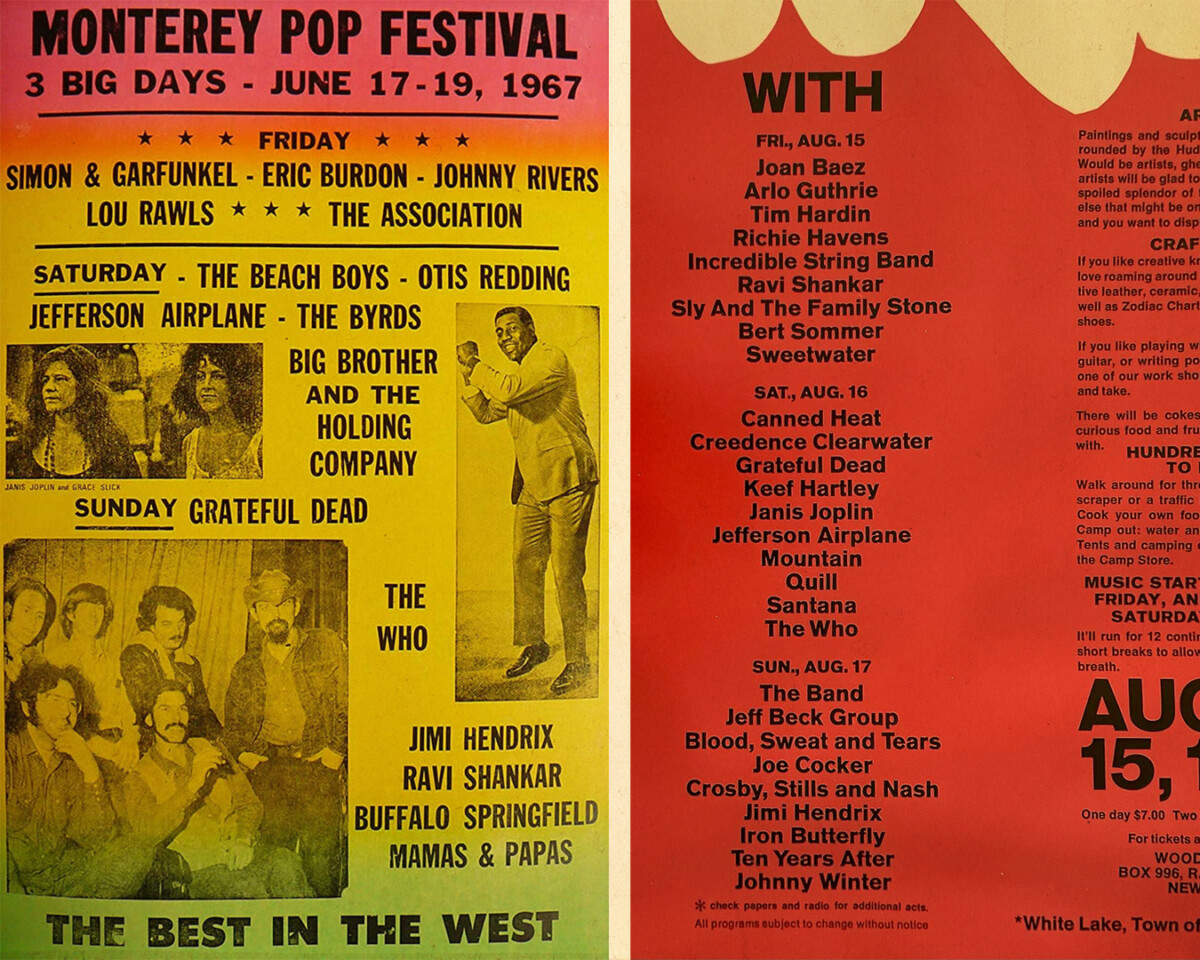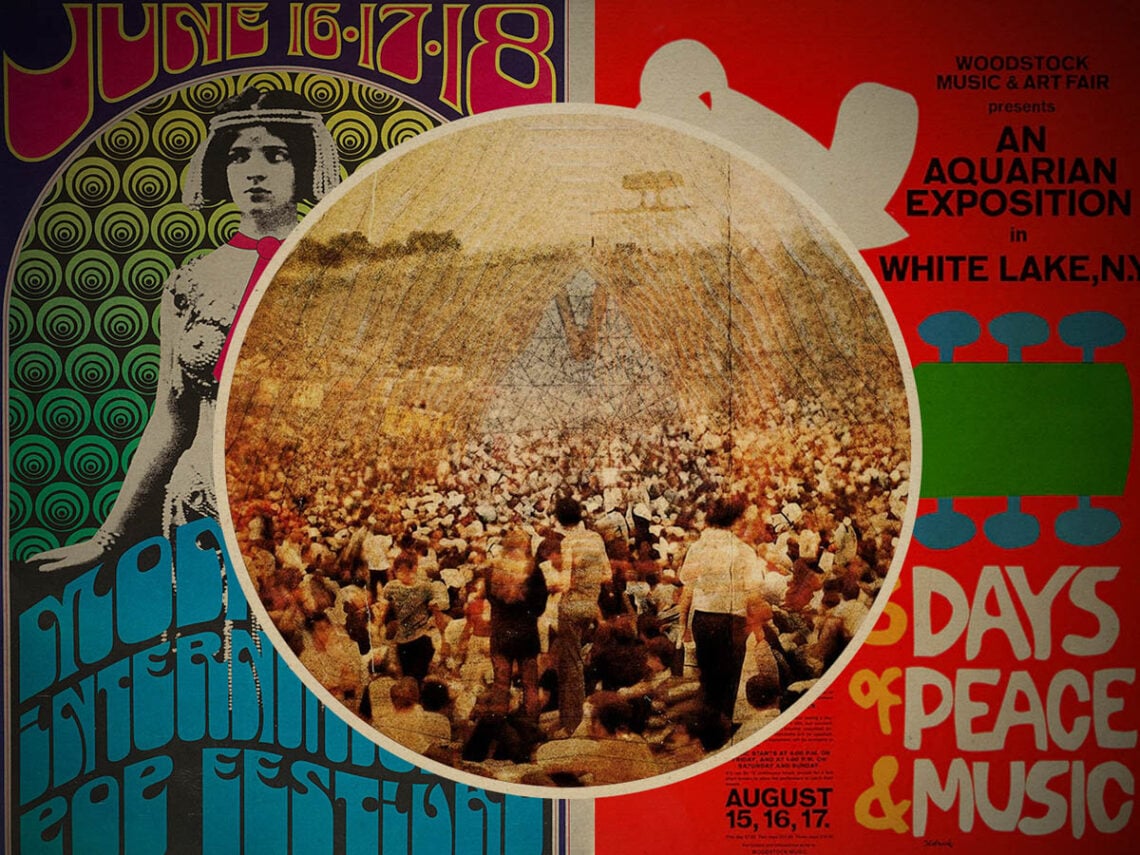
Which festival had the better line-up: Monterey Pop ’67 or Woodstock ’69?

In yet another bid to inject unnecessary partisanship into music, more specifically, through a battle of America’s East and West coasts, it’s time to finally decide which music festival of the swinging 1960s had a better line-up.
Of course, this fuelling of competition is entirely contradictory to the sentiment that drove this group of misfits to both festivals. In ‘67 and ‘69 respectively, counterculture was in full swing, and a generation of liberal youngsters were rebelling against capitalism and all of the competitive side-effects it caused. And so they weren’t compelled to turn their respective experiences into rivalling entities.
But isn’t it fun to subvert that, with retrospect on our side? The repercussions of sparking a war are long past their expiry date now, and so we can analyse the two festivals with equal criticism and, once and for all, crown a victor.
Let’s start with the elder of the two, ‘67’s Monterey International Pop Festival. A three-day music festival held in the summer of love at the Monterey County Fairgrounds, it had all the makings of a liberal utopia: the landscape, the people and of course the artists.
The Jimi Hendrix Experience led the way, creating a slipstream for performances from Janis Joplin, The Mamas and the Papas, Otis Redding, Grateful Dead, Buffalo Springfield, Jefferson Airplane, The Byrds, The Who, Simon and Garfunkel and Booker T & the MGs.

Hindsight may have desensitised us to the greatness of that line-up. Over half a century on, as we look back at the ‘60s through rose-tinted glasses, it’s almost a given that some of the greatest acts in the world would congregate in California to play outdoor gigs during the Summer of Love. But things weren’t as simple as we’d like to imagine in the ‘60s, and Monterey was groundbreaking in its execution of the weekend.
As Grateful Dead’s Bob Weir explained, “It was the first rock and roll festival, and it was wonderful fun, especially insofar as the San Francisco rock and roll culture and the London rock and roll culture got a chance to get together and mix it up a bit.”

But its legacy as the originator doesn’t automatically make it the best. While Monterey carved out the niche for liberal hangouts, Woodstock arguably perfected it two years later. With the swell of the hippie movement rising stronger by ‘69, Woodstock became a tidal wave of culture, backed by a lineup that serves as one of the very best of all time.
Much of the line-up remained the same at Woodstock, but with the addition of Joan Baez, Sly and the Family Stone, Creedence Clearwater Revival, The Band and of course Crosby, Stills, Nash and Young, who made it ever so slightly more impactful than Monterey Pop Festival. But only a hair separates the two, for the former had the likes of Otis Redding, The Mamas and the Papas and Simon and Garfunkel to boast.
However, travelling back through time to hypothetically compare these two festivals has seemingly reversed my staunchly competitive position from the start of the article. Viewing the two events in hindsight, I thought it was harmless to pit them against each other, but now, having self-curated either line-up in a bid to crown a winner, I’ve come to adopt the attitude that made the festivals so special in the first place.
How could I fairly choose between Otis Redding and Sly and the Family Stone as a way of determining superiority? It simply isn’t possible, nor does it even understand the wider point at play here. Sure, Woodstock may pip it, based on my personal preference for Sly and Crosby, Stills, Nash and Young, but there’s a day when both of these serve as a winner, because they were both a vital celebration of music that sparked a festival trend that still runs deeply in today’s culture.