


“The death of ‘Def'”: When Rick Rubin held a funeral for a word

On a summer day in Los Angeles in 1993, Rick Rubin presided over an audience of music’s greatest minds, across the spectrum from Depeche Mode’s Dave Gahan to Tom Petty, to host a funeral.
No human had lost their life, thankfully, but rather, a word did: “def”, a descriptor that had gone from being popularised by Rubin and his co-founded label, Def Jam Recordings, to being co-opted by popular culture.
Rubin had planted the seeds of Def Jam Recordings while enrolled as a film student at New York University in the early 1980s, releasing a single for his garage punk band Hose in 1982, produced as a 45 rpm seven-inch single sealed in a brown paper bag, with no label. The band toured with the likes of Meat Puppets, Butthole Surfers and Minor Threat, before disbanding in 1984, as Rubin shifted his focus towards New York’s hip hop scene. He’d become friends with DJ Jazzy Jay, who taught him about hip hop production and together, they produced Bronx rapper T La Rock’s ‘It’s Yours,’ which became a local hit.
In 1984, Jay introduced Rubin to Russell Simmons, a 27-year-old concert promoter and manager, most known for managing his brother’s band, Run-DMC. Soon, Def Jam formed in earnest, between Simmons and the 21-year-old Rubin. From a number of tapes that he received after the success of ‘It’s Yours’, LL Cool J’s ‘I Need a Beat’, a self-recorded demo tape, would be Def Jam’s first official release, chosen from a mailbag by Adam Horovitz of the Beastie Boys and played for Rubin.

This song sparked the beginning of Def Jam’s imprint on rap music, as did the follow-up from the Beastie Boys, 1984’s ‘Rock Hard’, with Rubin helping the trio shift from their punk roots into rap music. Soon, Rubin was scouting hip-hop acts across New York’s five boroughs and Long Island, which led him to sign Public Enemy to Def Jam.
“I think one of the things that separated our records from the ones that came prior was that they had more to do with what the actual hip hop culture was like, and that was only because we came as fans from this culture,” Rubin explained on NPR in 2011, of the shift in rap music, from classic R&B records to the sounds of Def Jam’s approach. “In making the records and producing the records, the goal was to capture the energy that you felt at a hip hop club… So if you went out and you saw DJs and MCs and the energy that would happen on that one night, that was really what we tried to get into the records,” he added.
Alongside rap music, Rubin’s inclusion of the likes of Aerosmith (whom he paired with Run-DMC for their cover of ‘Walk This Way’ in 1986), The Cult (producing their third album, 1987’s Electric) and Slayer (beginning with his production of 1986’s Reign in Blood and starting a longstanding working relationship with the thrash metal band), showed the expansiveness of his range, as a producer. It also signalled that the future of Def Jam Recordings was put into question.

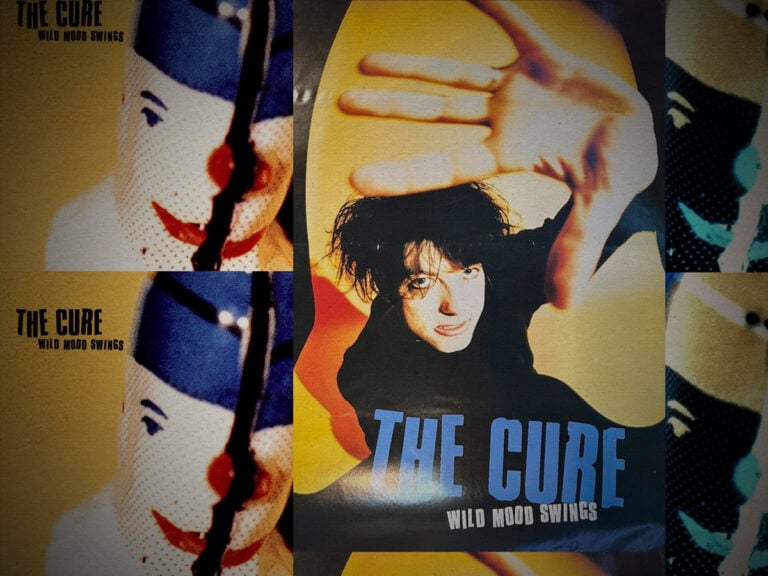
A major shift came in 1988 when Rubin and Simmons decided to go their separate ways, after the former had a falling out with Lyor Cohen, the then-president of Def Jam Recordings. Rubin, in turn, decided to move from New York to Los Angeles, founding Def American Recordings, while Simmons stayed in New York and continued with Def Jam. On his new label, Rubin kept a focus on rap music, continuing to work with Public Enemy, LL Cool J and Run-DMC, while he also continued expanding his roster to rock and heavy metal, boasting Danzig, Jesus and Mary Chain, Masters of Reality and more.
But, after five years of operating under the title Def American Recordings, he became disillusioned by the name, particularly “def”. By then, Merriam-Webster had included “def” in its dictionaries, defining the term as slang for “cool”. When Rubin saw this, he chose to change the name of his company, dropping “Def” to become American Recordings. His inspiration? A documentary he’d watched on the 1960s hippie movement, when the so-called Death of the Hippie was marked with a staged funeral that was paraded around the city.
“When advertisers and the fashion world co-opted the image of hippies, a group of the original hippies in San Francisco literally buried the image of the hippie,” Rubin explained to The New York Times in 2007.
“When ‘def’ went from street lingo to mainstream, it defeated its purpose.”
Rick Rubin
On August 27th, 1993, he held a proper funeral for “The Death of ‘Def’”. The funeral, described as a “ceremony of honoured entombment”, was opulent in Rubin’s purchasing of an official cemetery plot and an engraved black granite headstone that read “DEF” at the Hollywood Memorial Park Cemetery (now Hollywood Forever Cemetery). The producer arrived wearing a black cassock robe, Ray-Ban sunglasses, a white Sikh turban and red Hindu rudraksha beads. He was joined by about 500 mourners who, alongside Gahan and Petty, included Flea, Sir Mix-A-Lot and Geto Boys’ Bushwick Bill, while the Reverend Al Sharpton officiated the funeral in the Chapel of the Psalms.
“Now the bang is out of def,” Sharpton said, quoted by the Los Angeles Times, “It lost its exclusivity to the in, defiant crowd. It died of terminal acceptance”. When the casket was lowered, Sharpton reportedly declared, “When we bury ‘def,’ we bury the urge to conform”.
For the burial, an open casket decorated with floral arrangements was filled with items brought by the mourners: press releases, albums, record plaques, harmonicas, hats and more, as well as memorabilia with the word “def” on it, from T-shirts to coffee mugs. After the service, the casket was brought into a 19th-century-style, horse-drawn hearse, led by a six-piece brass band performing ‘Amazing Grace’ and ‘When The Saints Go Marching In’ to the grave. Then, an afterparty was held at a bowling alley, with over 2,000 attendees.
The funeral was, of course, a theatrical display of performance from Rubin, serving as a declaration of his disassociation with Def Jam in dropping “def” in American Recordings’ name. Even more, the staged funeral symbolised a shift in popular culture: faced with the realisation that the term had begun to lose its meaning, “mourning” such a fact was, in a way, Rubin’s chance to have one final embrace of what the term once meant, to him and to the artists he’d championed, when first founding Def Jam nearly a decade before.
Like the hippies in San Francisco who lamented the loss of their initial belief systems that had fallen victim to a number of issues, Rubin’s lament of “def” was a direct acknowledgement of the effects of conformity, and the acknowledgement of his evolution as an artist himself, growing into his new identity as a producer when deciding to work with Johnny Cash on the reborn American Recordings.
