


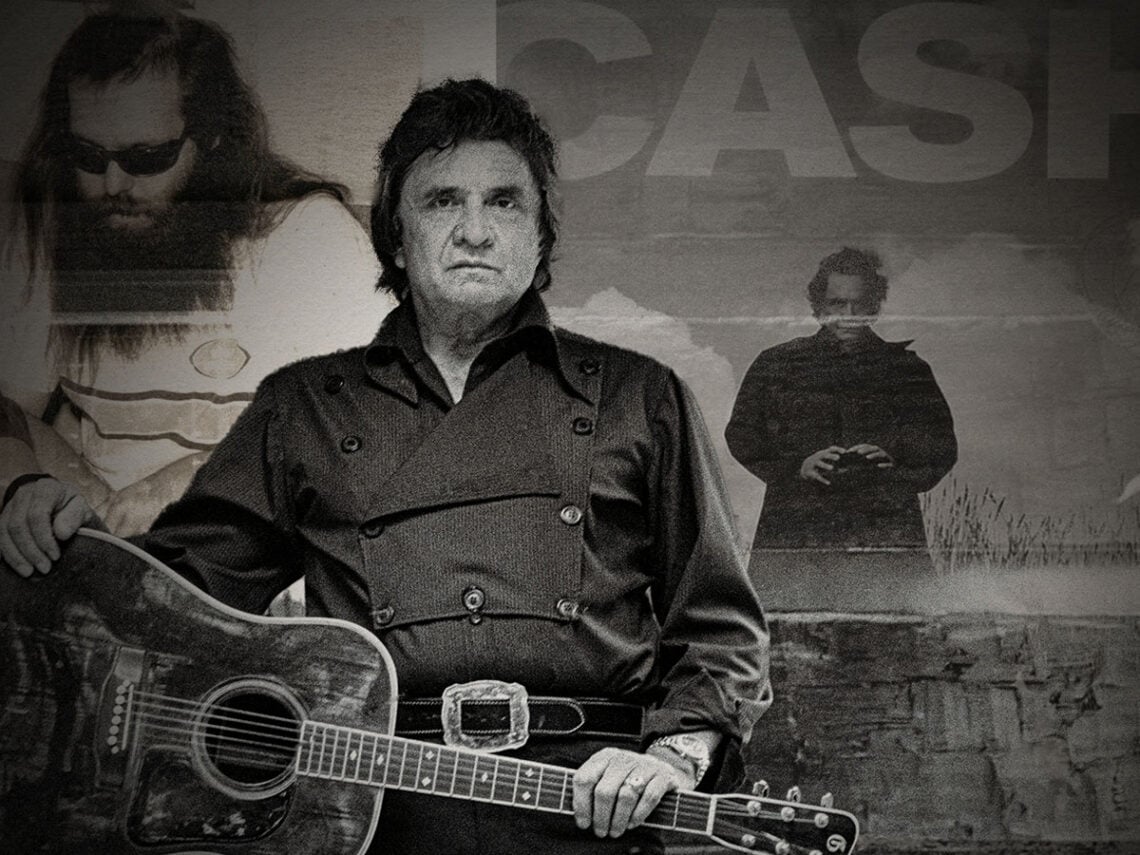
Johnny Cash’s career was over, then he met Rick Rubin: The story of country’s greatest album

It is difficult to imagine there was ever a time when Johnny Cash was not synonymous with cool, but, for a time in the latter 20th century, there was a sense that the musician’s legendary status as such was beginning to falter.
In 1986, Cash had been dropped by his label of 30 years, Columbia, and for the next decade, he did not land a hit single or album. This was not for a lack of trying: Cash recorded new renditions of his Sun and Columbia hits, alongside a duets album, Water from the Wells of Home, which heard him sing with his children, Rosanne and John Carter Cash, at his new home at Mercury Records, then releasing a Christmas album with Delta Records. His legacy as a legend was indisputable, but as the 1980s saw a waning interest in country music, his work slowly fell out of favour, that is, until he got word of a tribute album.
Marc Riley (formerly a member of the post-punk band The Fall) and Jon Langford (founding member of the punk band The Mekons) assembled ‘Til Things Are Brighter, a 1988 tribute album to Cash, featuring themselves alongside the likes of American singer-songwriter Michelle Shocked, Sally Timms (co-lead singer of The Mekons) and the Buzzcocks’ Pete Shelley. Cash called the tribute a “morale booster,” according to Langford, and his daughter, Rosanne, agreed: “He felt a real connection with those musicians and very validated,” she expressed, quoted in The Guardian, “It was very good for him: he was in his element. He absolutely understood what they were tapping into and loved it. That album was definitely re-energising for him.”
‘Til Things Are Brighter shifted his perception in the eyes of both critics and younger generations: coverage of the album across magazines and newspapers meant that his artistry was, once again, being recognised in a new light and introduced to young people who, prior to this, only saw him through a nostalgic lens. The second reckoning of Cash as a cultural icon, as Riley worded it to The Guardian, was beginning. “It was a good story: the Mekons, Marc Almond, elements of The Fall all choosing a country star with not very much credibility,” he expressed, and as biographer Graeme Thomson tells the story, it was this story angle that Rick Rubin sought to fulfil when he began working with Cash.
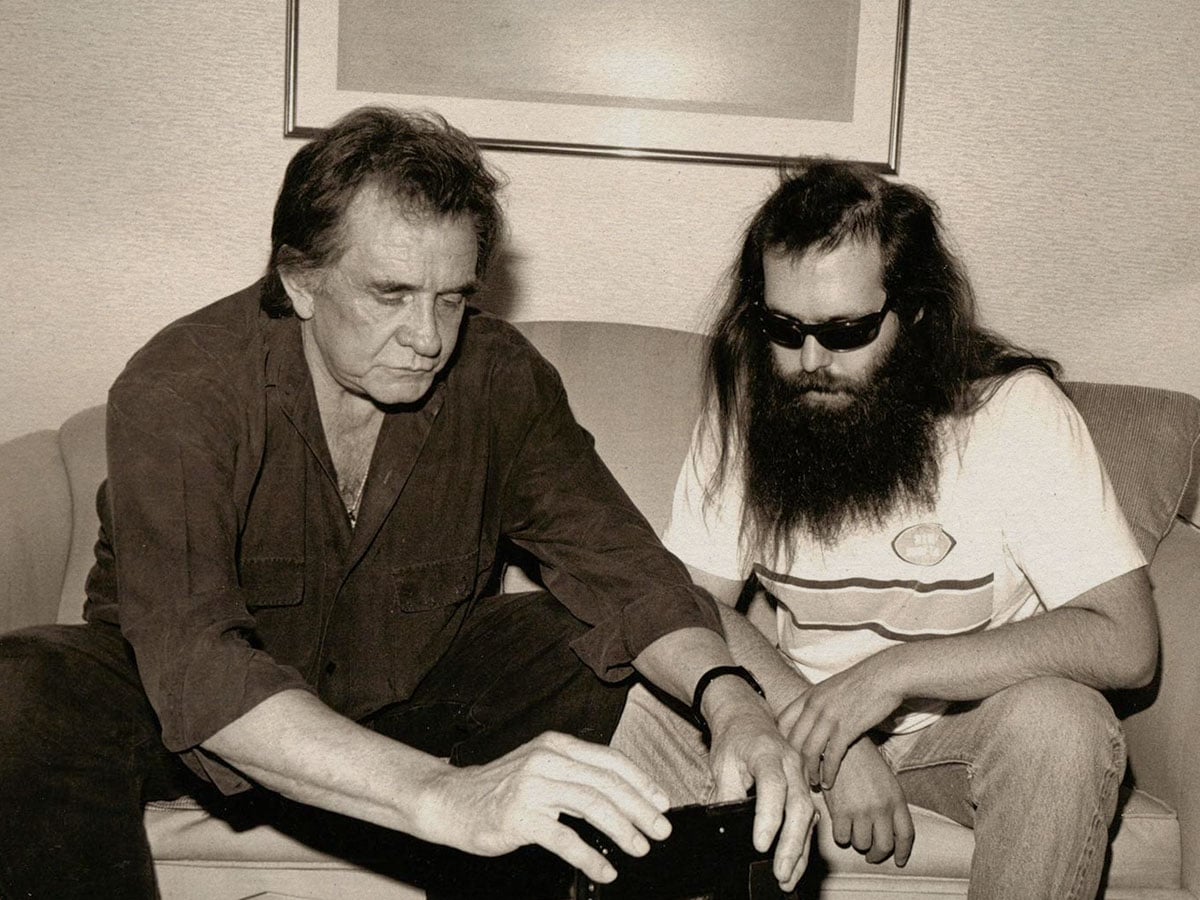
Rubin had made a formidable name for himself as a producer within the spheres of rap and metal, establishing his Def Jam Recordings as a film student at New York University and combining his previous experience performing with his former hardcore band Hose, alongside his growing knowledge of hip hop production. Soon, he revived Aerosmith’s career when he joined them with Run-DMC for their cover of ‘Walk This Way’, expanded Slayer’s sound on their third album, 1986’s Reign in Blood and, when he left Def Jam and established Def American (later American Recordings), worked with artists ranging from Danzig to The Jesus and Mary Chain. The first major project on the label, however, would come from Cash.
Clearly, the two artists could not be on further opposite ends of the music spectrum, but Rubin believed that Cash’s legacy was due for a revisit. In 1993, then 29 years old, he sought out Cash, then 61, after seeing him perform at Bob Dylan’s 30th anniversary show the year before. He was offered a contract with American Recordings, one he was immediately sceptical of. Rubin, in turn, ensured that Cash would maintain his creative control, telling the musician, “I would like for you to do whatever feels right to you”, as quoted in Thomson’s 2011 book The Resurrection of Johnny Cash: Hurt, Redemption and American Recordings. Cash agreed, and soon, the two embarked on creating the singer’s 81st album, American Recordings.
Much of American Recordings was created between Cash’s cabin, at home in Hendersonville, Tennessee, and Rubin’s living room in Los Angeles, mostly accompanied solely by Cash’s Martin Dreadnought acoustic guitar. Two songs, ‘Tennessee Stud’ and ‘The Man Who Couldn’t Cry’, were recorded live at the Viper Room in Los Angeles, then owned by Johnny Depp, with the likes of Juliette Lewis and members of the Red Hot Chili Peppers among the 150-person crowd. Supervised by Rubin, Cash sang new material written for him, at the producer’s request, alongside six covers. He sang words written by Nick Lowe, Kris Kristofferson, Glenn Danzig, Leonard Cohen, Jimmy Driftwood and Loudon Wainwright III.

“All the songs we ended up with resonated with who he was,” Rubin surmised. Cash seemed to agree, likening the experience of working with Rubin to working with Sam Phillips during their days at Sun Records.
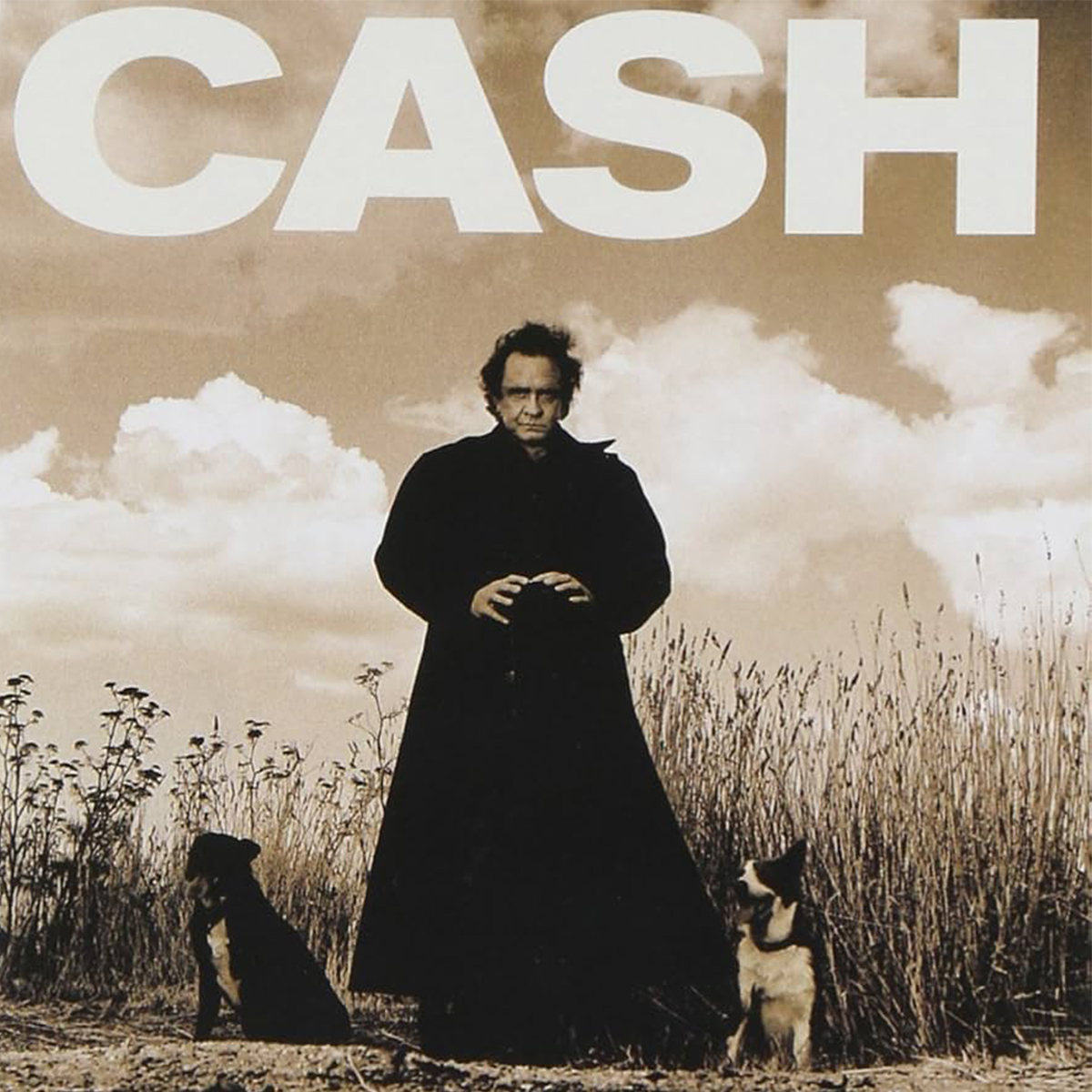
“As producers, they both just let me do what I was feeling,” Cash claimed, “This album should have been called Painfully Honest, because that’s what it is, just me and my guitar […] The feeling was there that was the important thing. That’s the way it was with Sam, and that’s the way it was with Rick Rubin. If it feels right, if you can stand to hear it, go for it.”
Under Rubin’s guidance, he returned to where he felt most comfortable and confident, back in his earliest days as a musician: a simply refined, humble approach that allowed his voice to hold most weight. Between this establishment of familiarity during his and Rubin’s sessions and the songs chosen for him to sing on American Recordings, Cash was able to return to form, and as a result, the album became a declaration of truth. Certainly, the artist was clever, and he knew the pressures that came with recording the album, as well as the expectations that came with this attempt to revive his career after the difficult period of stagnancy. Still, American Recordings was not an album of reinvention, by any means, especially not with any consideration for restoring his popularity. Instead, Rubin curated the space for Cash to return to his best self and remind audiences of what made him and his renditions so brilliant.
Released in 1994, American Recordings was a massive success, regarded as a revelation by critics and met with commercial adulation. The album later won a Grammy for ‘Best Contemporary Folk Album’, and when Cash performed at that year’s Glastonbury Festival, he recalled the set as a highlight of his career. With Rubin by his side, he embarked on a newly-revived era, as the two would go on to produce five more albums together (often numbered American 2-6): Unchained in 1996, Solitary Man in 2000, The Man Comes Around in 2002, and two posthumous works, 2006’s A Hundred Highways and 2010’s Ain’t No Grave. Rubin was also the person to first play Nine Inch Nails’ ‘Hurt’ for Cash, a later rendition of his that would come to define his persona for the new generations, in particular.
By conceptualising American Recordings as a body of work that showed Cash reflecting on his persona, both in private and the public eye, and representing himself as the force in music that he had always been, the musician reclaimed what he had nearly lost, largely with credit to Rubin’s belief in him.
“Sitting and talking and playing music…that was when we got to build up a friendship,” Rubin remembered of Cash, to Q magazine in 2009, “My fondest memories are just of hanging out and hearing his stories. He didn’t speak much, but if you drew him out, he seemed to know everything. He was shy and quiet but a wise, wise man.”
