


Low point of the ‘90s? When Jimmy Page and P Diddy sold out Led Zeppelin

Titanic was the biggest movie of the late 1990s, but not many people were paying attention to the moral lessons from the original 1912 disaster that inspired it.
Brash overconfidence, hubris, and lavish spending on supposedly unsinkable projects were all par for the course in both pop music and Hollywood at the time, as bloated spectacle entered its last golden age before the internet-led splintering of popular culture.
In 1997, the same year that Titanic and its gargantuan Celine Dion-led soundtrack came out, one of the other dominant chart-topping releases of the year was the solo debut album of the heretofore rap producer and kingmaker Sean ‘Puffy’ Combs, AKA Puff Daddy, AKA P Diddy, AKA convicted sex trafficker Diddy. That album, titled No Way Out, went to number one in the US and number eight in the UK, led by the single ‘I’ll Be Missing You’, Puffy’s tribute to his friend and collaborator, the then recently slain Notorious BIG.
Famously, or infamously, ‘I’ll Be Missing You’ heavily sampled The Police’s 1983 hit ‘Every Breath You Take’. More accurately, it lifted the entire melody of the song, in well-established Puff Daddy fashion, and pasted over new words, ironically converting the vibe from Sting’s original creepy stalker anthem into a spiritual ode to a fallen comrade. Sting planned to sue Diddy at first, as the sample hadn’t been cleared in advance, but after agreeing to collect all the royalties from subsequent sales, the former Police frontman was happy enough to embrace the cash windfall, eventually going as far as to share the stage with Diddy at the MTV VMAs later that year. The rumour, for many years after, was that Sting was still getting about $2,000 per day out of the deal, for doing nothing literally aside from shrugging his shoulders.
Puff Daddy, despite needlessly fumbling away the royalties to his most successful single, was still seen as a shrewd businessman at the time, if not a particularly great rapper by anyone’s measure. Part of the strategy behind No Way Out was to harness the fame he’d earned during the East Coast vs West Coast rap wars and repackage himself as an artist with broader appeal beyond the hip hop world. Along with the Police sample, No Way Out includes ample samplage of Lisa Stansfield’s ‘All Around the World’, David Bowie’s ‘Let’s Dance’, and dozens of other very familiar pop and R&B tunes.
One of the album’s other big singles, ‘It’s All About the Benjamins’, got a second release in a rap-rock remix, as well, with contributions from the band Fuzzbubble, as well as Rob Zombie, Tommy Stinson, and Dave Grohl. MTV aired the rock remix even more than the original version, and heading into 1998, Puff Daddy was suddenly a bankable collaboration commodity for any rock-and-roller looking for some career mojo.
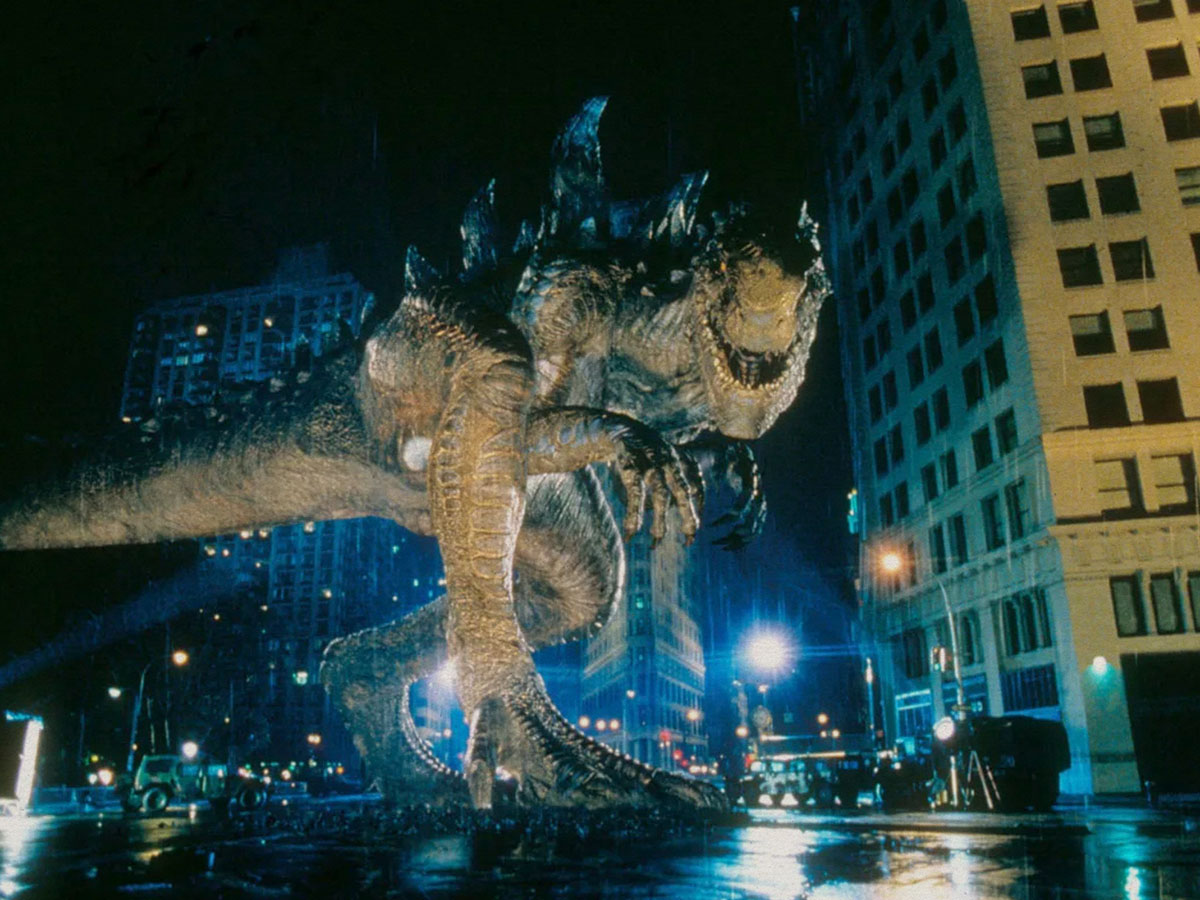
This is what led us to the regrettable circumstances of the following year, when Puff Daddy was recruited to contribute a song to the soundtrack of the big-budget Hollywood reboot of the Godzilla film franchise. The new Godzilla was viewed as the first in a series, piggybacking off the success of the recent Jurassic Park sequel, The Lost World, to satiate the public’s need for giant, destructive reptiles.
These were the final years of massively profitable movie soundtrack albums, as well, and every effort was made to ensure that the Godzilla CD would be a big seller, despite the fact that none of the songs wound up included in the actual onscreen action of the movie. Green Day and the Foo Fighters contributed to the album, as did Rage Against the Machine, who took the opportunity to ridicule the evil capitalist motives behind the very movie they were helping to promote. “Godzilla, pure motherfucking filler,” Zack de la Rocha sings on ‘No Shelter’, “Get your eyes off the real killer”.
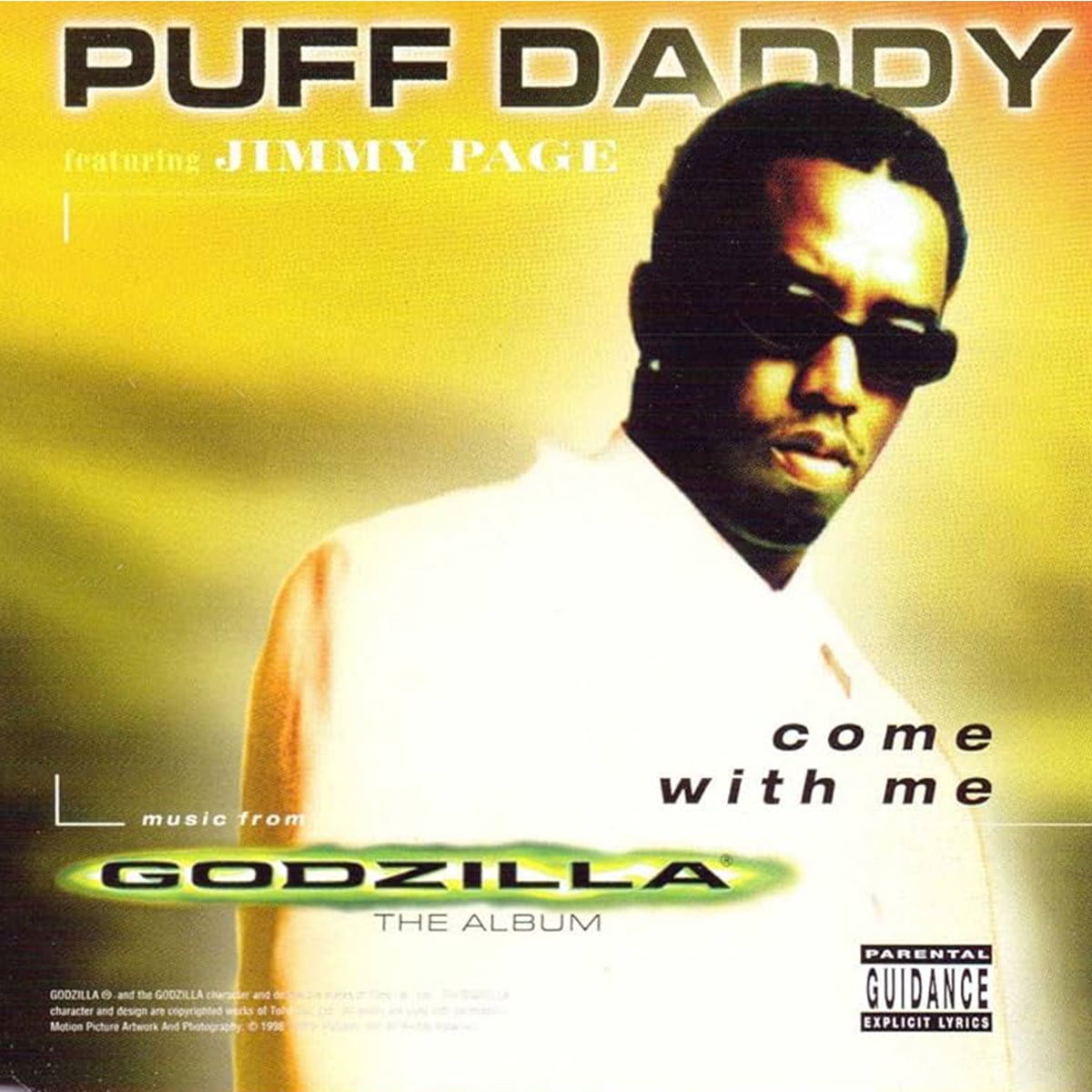
The biggest tracks on the Godzilla CD, however, were the two most emblematic of that aforementioned late ‘90s hubris. First, there was the Wallflowers’ somewhat lifeless and arguably sacrilegious cover of David Bowie’s untouchable anthem ‘Heroes’, and then there was Puff Daddy’s contribution, a song titled ‘Come With Me’, which seemed to bear a striking resemblance to the classic 1975 Led Zeppelin track ‘Kashmir’.
‘Hey, wait a minute’, thousands of Led Zep fans collectively said when they first encountered ‘Come With Me’ in the spring of 1998, ‘this is ‘Kashmir’!’ That was devastating enough, but the real blow came with the news that Jimmy Page had not only given his blessing to this apparent bastardisation of the song, but had, in fact, agreed to play on the track himself, saving Diddy the costs of another sample licensing nightmare.
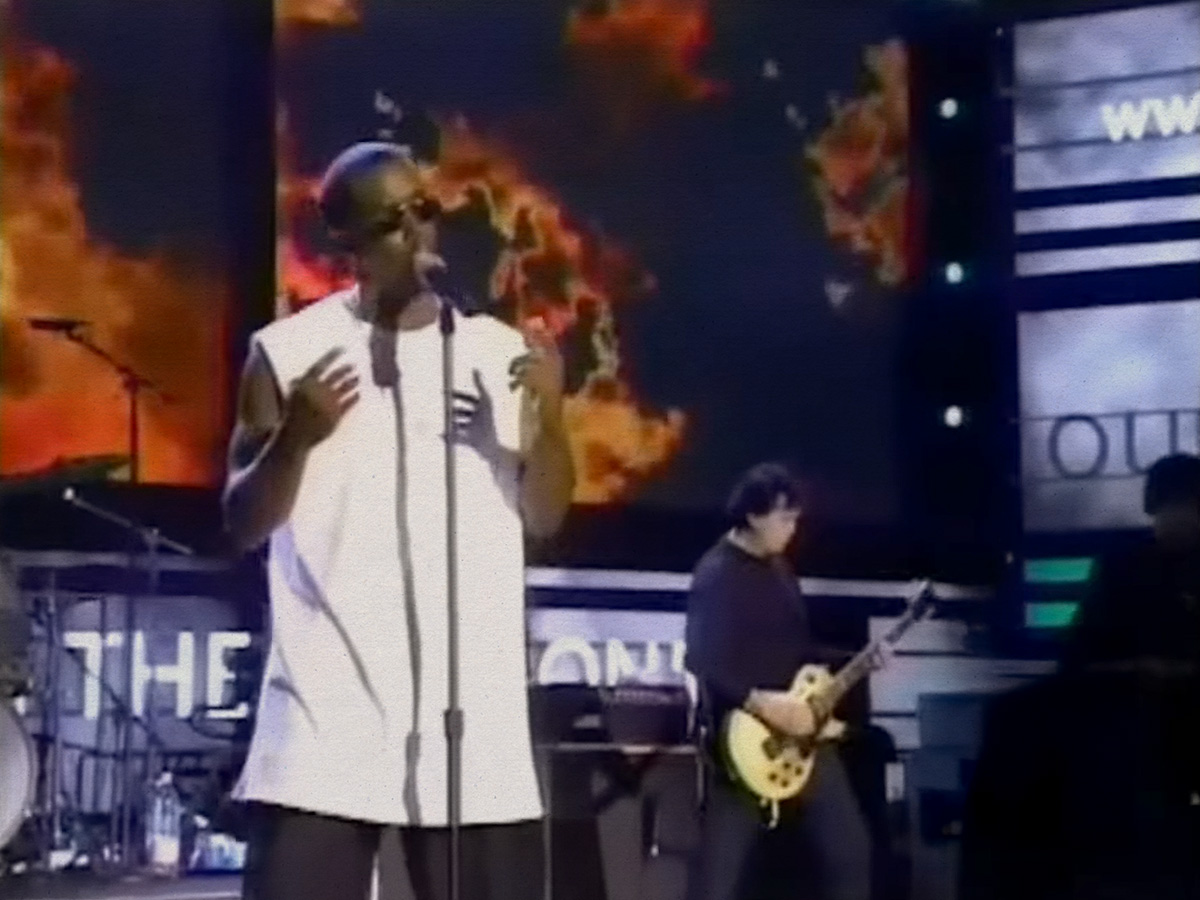
The timing seemed inexplicable at first. Zeppelin followers were well aware that Page was about to release his first album of new material alongside Robert Plant in nearly 20 years, with the intimate, Steve Albini-produced record Walking Into Clarksdale already in the can. Putting out a bombastic new version of a prime-era Zeppelin track at the same moment, with a low-tier MC taking over for Plant on the vocals, looked like a batshit juxtaposition. In truth, though, there was probably no element of coincidence involved. In the same way Puff Daddy was seeking a higher profile with rock listeners, Page likely saw a chance to get his own name in more magazines ahead of the Page and Plant album release.
“What Puff Daddy did, as he is wont to do, was be ‘inspired’ by ‘Kashmir’,” Page told the Washington Post in July 1998, when the accompanying ‘Come With Me’ music video was blowing up on MTV, featuring Page and Diddy rocking out on a rooftop while Godzilla breathes fire on the city streets down below, “The whole thing relies heavily on the riff, because that’s the thing that inspired him to write new words for it.”
“My son lives over here in New Orleans,” Page added, offering a bit more of a non-financial explanation for why he’d agreed to the collaboration, “I thought it would give him something to latch onto at school, because when parents say to their children, ‘You go to school with Jimmy Page’s son’, that doesn’t mean anything to most kids. But they understand if something’s in a Godzilla film!”
That quote is a little unintentionally hilarious, because everything suggests Page is about to explain why kids would be much more impressed by knowing a student’s dad had played a song with Puff Daddy, but he goes for the Godzilla angle instead.
In any case, the ‘Come With Me’ oddity is made all the more strange by the fact that Tom Morello, anti-capitalist guitarist of Rage Against the Machine, also contributes some guitar to the maximalist track, which apparently wasn’t heavy enough with Page’s riff and two different orchestras behind it. Morello, apparently, was motivated by the chance to play with Page, but in the end, nobody really played with anybody in the studio, as the rush to push this cash grab down Godzilla’s gullet didn’t allow for all the artists involved to convene together in one portion of the globe.
“It was a media first,” Page told the Toronto Star. “I was recording in London, and Puff Daddy was in the studio in LA. Tapes were recording and playing back simultaneously in both locations, and we had a satellite link-up.”
This was a pretty advanced cross-Atlantic, online recording operation for the ‘90s, and to his own surprise perhaps, Page claimed to be quite happy with the finished product Diddy came up with, even if the new, vaguely Godzilla inspired lyrics were worse than Tolkien references: “Fuck my enemies, fuck my foes / Damn these hoes, you’re stepping on my toes”.
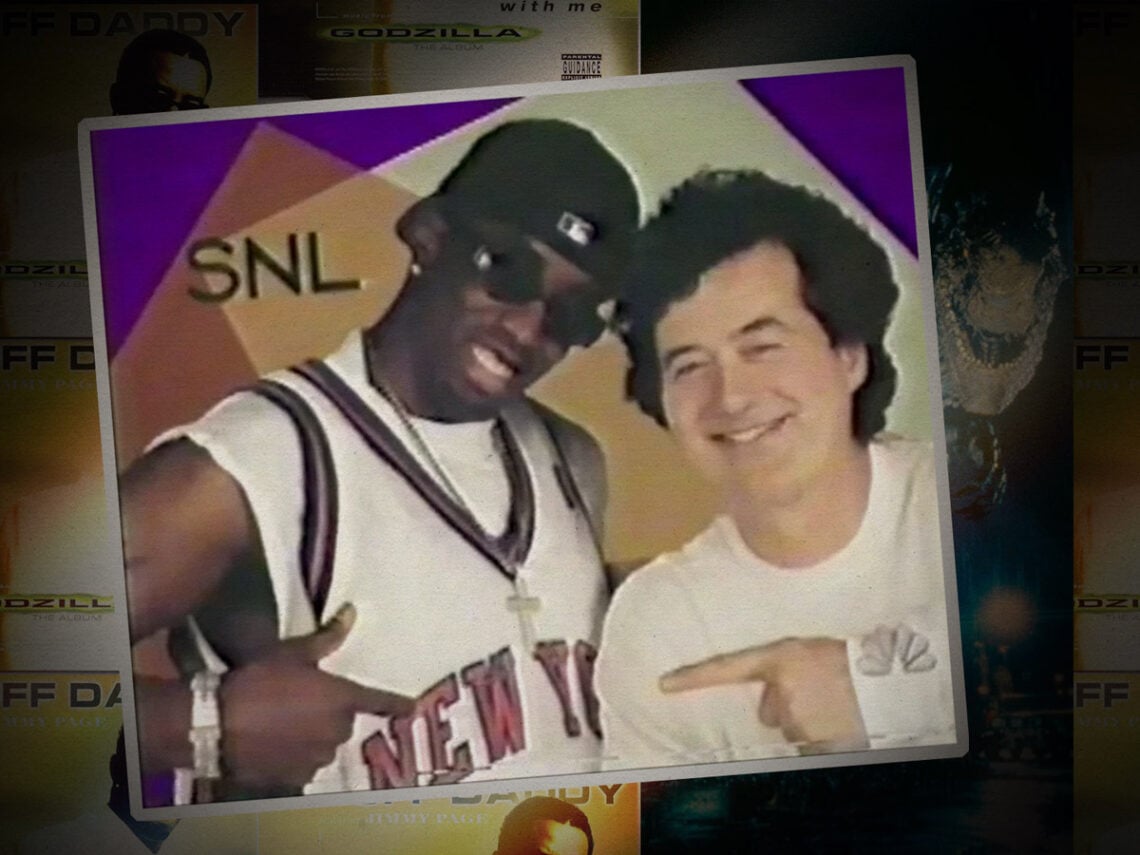
Page performed ‘Come With Me’ alongside Diddy on Saturday Night Live, and again gave the rapper all the kudos. “He was fantastic,” Page said, “[he was] doing the vocal in various different ways for each rehearsal, but they were always spot on”.
The Godzilla movie ultimately arrived to terrible reviews and a disappointing box office, but despite some growing P Diddy fatigue on the radio and the vocal disapproval of many middle-aged Led Zeppelin fans, ‘Come With Me’ was a bona fide hit anyway, reaching the top five in both the US and UK. For all its ridiculously over-the-top production and tasteless, pandering, monster-movie epic-ness, the song fit right into the zeitgeist of 1998, when Armageddon and Aerosmith’s ‘Don’t Wanna Miss a Thing’ were also gigantic successes.
Page likely feels a tad less enthusiastic about this chapter in his career, given Diddy’s slow and agonising fall from grace, but he never bought into the arguments of Zeppelin purists who felt he’d desecrated one of the band’s great works.
“People said, ‘Oh, you shouldn’t have done that’, but then you might as well say, ‘you shouldn’t have dabbled in world music’,” Page told Record Collector magazine some years later, “Of course I should have. I was doing that as a teenager, so why in heaven’s name not? It’s all part of the big picture.”

Never Miss A Beat
The Far Out Led Zeppelin Newsletter
All the latest stories about Led Zeppelin from the independent voice of culture.
Straight to your inbox.