


The five worst Western remakes of Japanese movies

From the era-defining epics of Akira Kurosawa and the golden age of Studio Ghibli to modern triumphs like Perfect Days and Drive My Car, Japanese cinema has always been at the forefront of greatness. Unfortunately, as with all great foreign innovation, it’s only a matter of time before the West sweeps in and ruins it for everyone.
For as long as films have been made in the East, studios on the other side of the world have seen them as easy money spinners for a new audience. Some of these remakes turn out alright—The Magnificent Seven is adapted from Kurosawa’s Seven Samurai—but these are few and far between.
Horror is most often the genre ruined by Western hands, so there’s plenty of that in the following list. However, it’s not just scary movies that suffer; we’ve tried to represent those instances, too, for a balanced list.
You know what they say; if it ain’t broke, don’t fix it. Unfortunately, that’s exactly what they tried to do with every single entry that’s listed below.
The five worst Western remakes of Japanese films:
‘Godzilla’ – Roland Emmerich (1998)

Of all the movies to come out of Japan, you could argue that few have had as big an impact on global culture as the original Godzilla. Released as ゴジラ (which translates to Gojira), the movie is not only a pillar of the ‘kaiju’ genre but offers a fascinating insight into the nation’s relationship with nuclear power in the wake of World War II. Sadly, an idea this strong was too good to stay confined to one movie.
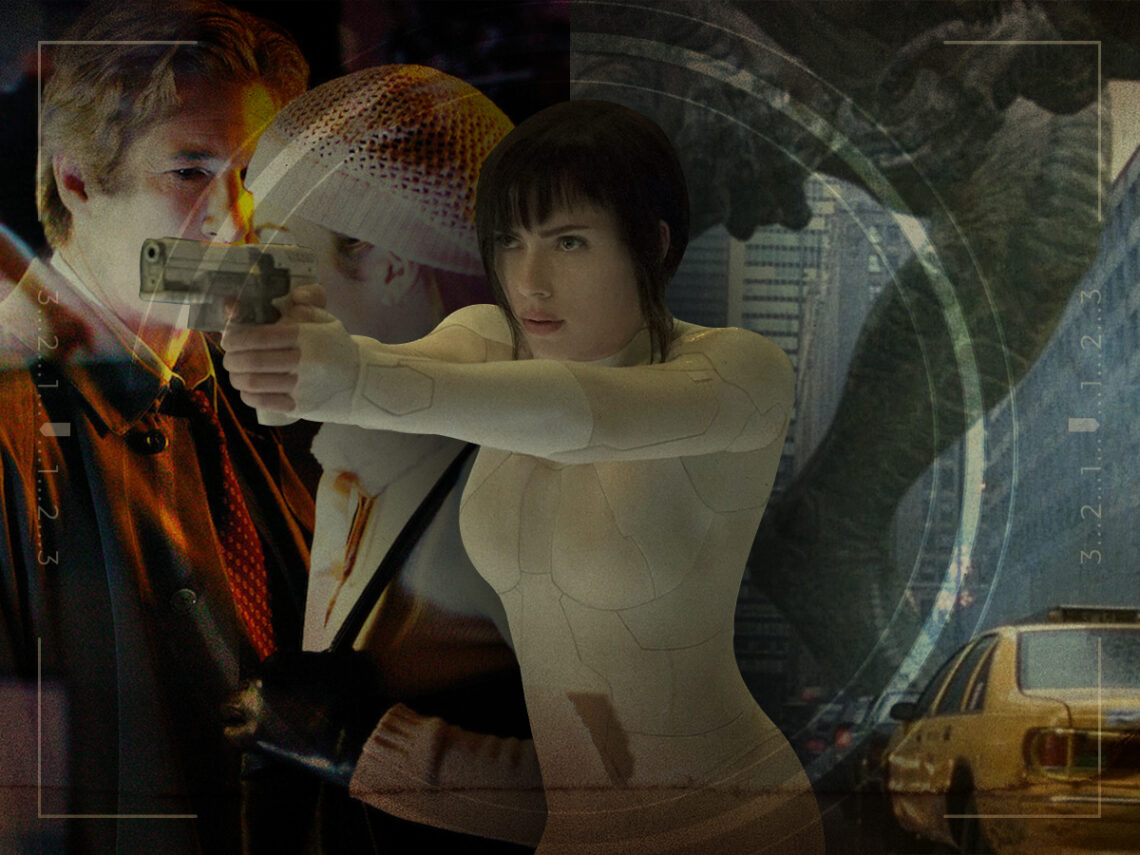
There have been a total of 38 Godzilla movies since the original, with some of them being handled by American studios. In 1998, Independence Day director Roland Emmerich made the first-ever Hollywood version of the story. While not an exact remake of the first film, Emmerich’s Godzilla could have been a brave new start for the classic monster. Unfortunately, it wasn’t. The film lacks any of the subtlety or compelling character arcs that made the Japanese ones worth watching. This was just a big lizard stepping on buildings for two hours. While there’s a time and a place for that, the ‘King of the Monsters’ deserved way better.
‘Shall We Dance?’ – Peter Chelsom (2004)

In 1996, Japanese director Masayuki Suo released Sharu wī dansu?, which translates to Shall We Dance? Shohei Sugiyama (Koji Yakusho) is a successful but lonely accountant. One day, he spots Mai Kishikawa (Tamiyo Kusakari), a beautiful dancer, and his heart flutters. The flat-footed businessman decides to take up dancing in secret to win her heart, kickstarting this delightfully endearing romantic comedy. It swept the board at the Japanese Academy Awards, winning 14 prizes, and, crucially for this story, inspired an English-language remake in 2004.
With Peter Chelsom at the helm, the man who brought the world Hannah Montana: The Movie, this version of Shall We Dance? did one thing right by casting Richard Gere in the main role. Jennifer Lopez plays the dancer, which is another fine piece of casting if you can look past the age gap. Unfortunately, none of the charm of the original is present in this one. There are also a number of cultural factors that simply don’t translate from Japan to the United States. While not a complete waste of time, this is a far cry from the high highs of its progenitor. Talk about a misstep!
‘Ghost in the Shell’ – Rupert Sanders (2017)

Once again, this isn’t strictly speaking a remake, as it’s more of an American original borrowing heavily from a Japanese product. However, this is the infamous version of Ghost in the Shell and simply had to be included. Directed by Rupert Sanders, who was also responsible for the hideous 2024 remake of The Crow, this film is an English-language take on a massively popular manga. Set in a world where humanity is becoming more and more robotically augmented, the story follows a woman who is saved from a car crash but ends up being a cyborg super-soldier bent on stopping crime.
Complaints were levelled at the movie’s overtly serious tone, which is in stark contrast to the lighter, funnier atmosphere of the manga. It was also criticised for relying far too heavily on visual effects. However, these were not the primary things most people were mad about. The decision to cast Scarlett Johansson as protagonist Motoko Kusanagi was met with widespread condemnation, with the studio accused of whitewashing the film by a white American the part of a Japanese character. All of this controversy killed any chance Ghost in the Shell had of succeeding. Well, at least there’s the 1995 animated version to fall back on.
‘Apartment 1303 3D’ – Michael Taverna (2012)

The first of a two-part horror special to conclude this list, Apartment 1303 3D doesn’t just have a confusing name; it’s also terrible! Janet Slate (Julianne Michelle) moves into a strange new apartment following an argument with her mother and sister. While she’s there, a number of weird goings-on make her suspicious that all is not what it seems. When she is possessed by a ghost, it’s up to her sister Lara (Mischa Barton) to get her back. Not only is the movie not scary, but it’s also badly made, badly acted, and badly optimised for 3D. Although this was the era where everything was being made in 3D for no good reason, it might be unfair to lay the blame solely on this movie’s doorstep.
Perhaps this shouldn’t have been a surprise, as the Japanese movie this one is based on isn’t much better. Just called Apartment 1303, this 2007 release was likely optioned because it was based on a novel by Kei Ōishi, who wrote novelisations of some of the Ju-On movies. Sadly, his story brings nothing new to the fold. It’s a very basic haunted house/possession story, one that’s been done a million times before. Still, that’s no excuse for the American version being almost impossible to sit through.
‘One Missed Call’ – Eric Valette (2008)

The original One Missed Call (Chakushin Ari in Japanese) was directed by Takashi Miike, a director known for having made over 100 feature films. This was a case of quantity over quality, however, as this horror flick was by no means a classic. The plot revolves around a young woman named Yumi (Ko Shibasaki), who receives a phone call claiming to know the date and time of her death. Not a bad idea, but one that didn’t result in too much glory for Miike. However, compared to the English-language remake that came out five years later, the original was Citizen Kane.
Despite being a remake of one movie, the Eric Valette-directed One Missed Call was accused of ripping off other horrors, including Scream and Final Destination. The plot is painfully paper thin, with acting so unconvincing you’d be persuaded that these people had never seen a movie before, let alone been in one. It was recognised as the absolute nadir of the J-Horror remake craze, proving that this already-shaky concept was now completely bankrupt. We’d love to say that Hollywood learnt its lesson from this failure and stopped soullessly churning out Japanese remakes, but as this list proves, that moment of clarity never reached its shores.
