


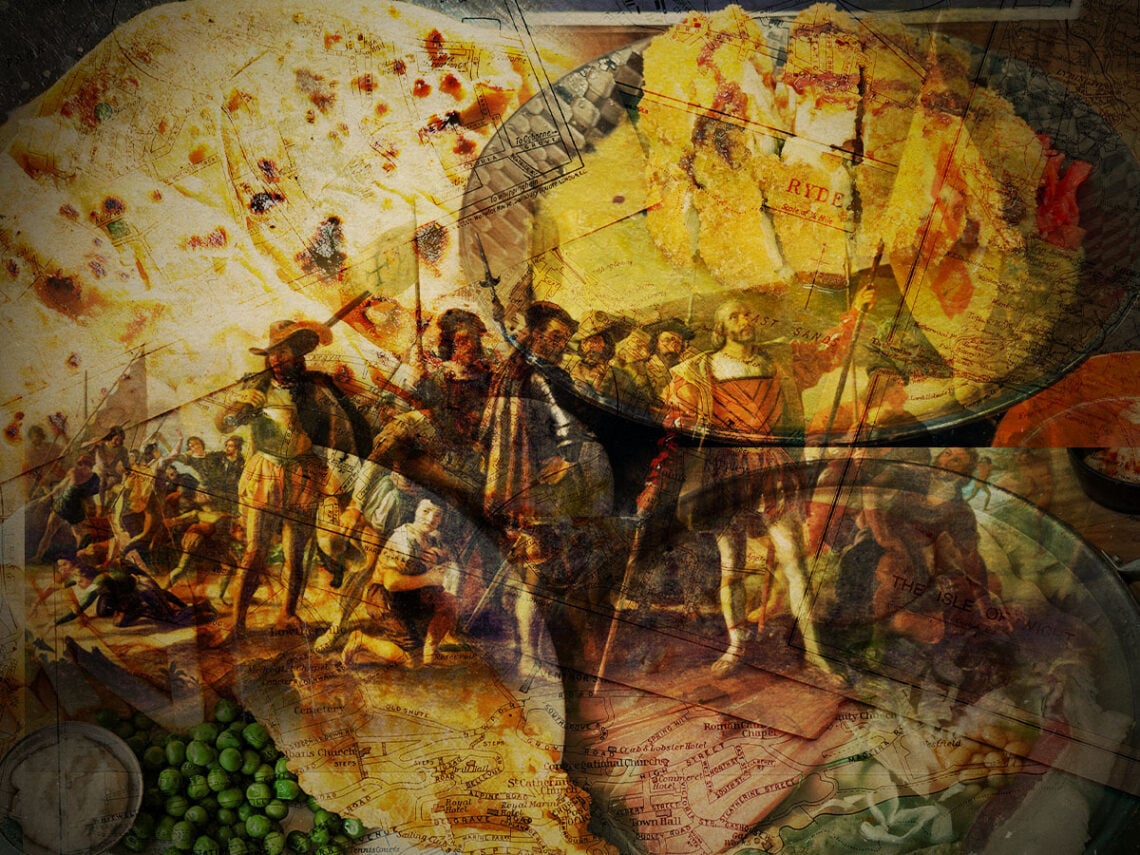
Travelling exposes how migration and colonialism changed what the world eats

There are many reasons to travel, like seeing new cultures, visiting landmarks you grew up watching on TV, having a beer in front of one of the wonders of the world, and, of course, the food.
Ask anybody how their holiday was and it’s a banker that they’ll mention grub within a sentence or two. Whether that’s telling you about the nine-course Michelin-starred tasting menu that they had, or how they got the most value from the all-inclusive. I still regularly think about some xiaolongbao that I had in Taipei, with their spicy, juicy broth. Then there’s the hotpot in Chongqing or bunny chow in South Africa. Food defines how we think of place.
Like it or not, food is often seen as a marker of national identity, but in a world full of migration and with a history of colonialism, there has been a huge amount of cross-pollination that has informed the diets of various countries. We can think of food in stereotypes: the Italians and their pasta, Indians and their curries, and of course, us Britons with our fish and chips, but food is increasingly not the history of a country, but the history of crossing borders between countries.
For instance, fish and chips were brought to the UK by Jewish immigrants from Spain and Portugal in the 17th century, with the potato itself, so crucial to British cuisine, originally coming from the Andes and arriving in the country thanks to explorers such as Sir Walter Raleigh and Sir Francis Drake.
Britain’s post-World War II rebuild kick-started a wave of immigration, with South Asians from India, Pakistan and Bangladesh, introducing our spice-starved nation to garam masala and the spices that make curries so unique. Now, decades later, we’re a country of curry-lovers, with curry houses packed to the rafters every weekend and chicken tikka masala, which actually originated in the UK, often being referred to as our national dish.
British colonial rule in Hong Kong led to an influx of new dishes, as cooks adapted European recipes using a mixture of local ingredients and cooking styles, as well as European cupboard staples. Now, a city that has such excellent Cantonese cuisine also includes a macaroni and ham soup amongst their many iconic dishes.
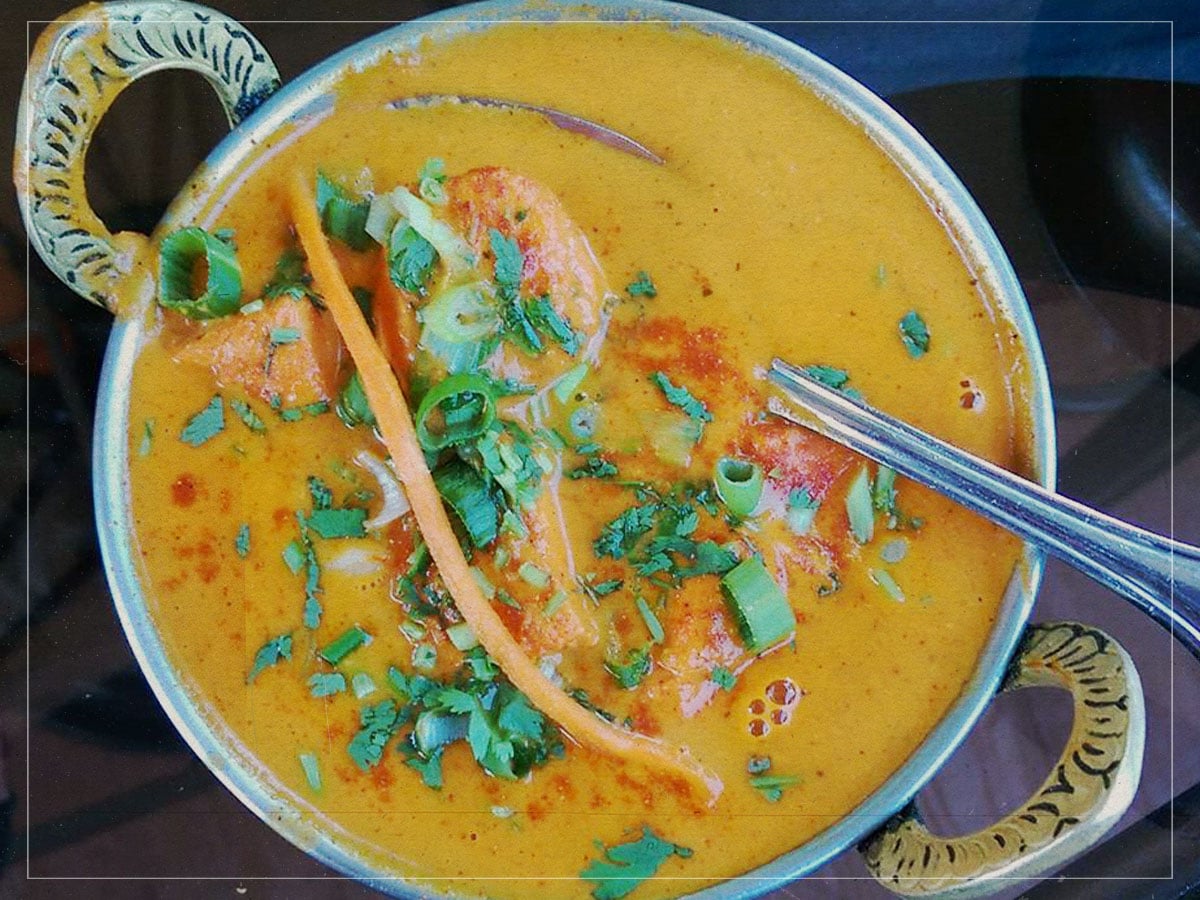
Just across the Pearl River Delta in Macau, there is a similar story. Having been under Portuguese rule for over 400 years and being one of the earliest meeting points between Europe and East Asia, it’s no surprise that it’s become a real melting pot for food. The egg custard tart, known as a pastel de nata, is synonymous with Macau, just like it is with their former colonial masters. In fact, Macanese cuisine is often said to be the world’s first fusion food, with Chinese, Indian, African, Portuguese and South East Asian influences all meeting there due to both trade and wider colonial influence.



There isn’t always a direct influence; tuck into a katsu curry in Tokyo, and you’re tasting the final word in hundreds of years of colonial rule and migration. In the late 19th century, Japan’s Imperial Navy modelled itself on the all-conquering Royal Navy, because they were struggling with health on board and looked at the British diet to see how they avoided deficiencies in a number of vitamins.
The British had developed a love of curry powder from their time in South Asia, and onboard Royal Navy ships, they frequently ate stews that were loose descendants of Indian curry, something that was then adapted by the Japanese, so next time you’re tucking into curry rice, just remember that this was taken from the Indian sub-continent, via the British Royal Navy.
Elsewhere in Asia, there are more recent examples of military power impacting food. Scan a menu in Seoul today, and you’ll spot budae jjigae, otherwise known as ‘army base stew’. This concoction includes spam, hot dogs and processed burger cheese, and was invented by starving locals during a period of famine following the Korean War. What started as a necessity to survive has now become a beloved comfort food and part of South Korea’s national identity.
American influence has also had a huge impact on the Philippines. Spam has a cult-like status there, and you would be genuinely staggered to see the amount of cans, in wide different varieties, that you’d see in a supermarket there. The country also has a deep love affair with spaghetti, something that comes from America’s military presence there, and then before that, the Italian migrants who settled in the USA.
The Caribbean, home of enslaved Africans, European colonisers, and then with an influx of Indian and Chinese labourers, is another place heavily influenced by migration, where the roti carries a heavy South Asian influence, as does curried goat, while a patty has ties back to the UK and the Cornish pasty.
Food history shows us that cultures are rarely isolated and that the dishes we think of as being central to a national identity are often the result of decades, or even centuries of exchange, adaptation and reinvention. Migration, both forced and voluntary, has taken ingredients, recipes and cooking styles across continents, and with globalisation speeding up the process of making the world smaller, our palates are being diversified, wherein some of the best pizza in the world can be found in Tokyo, and exceptional tacos in LA, resulting in the next chapter of food’s travelling history being written in real-time.
