


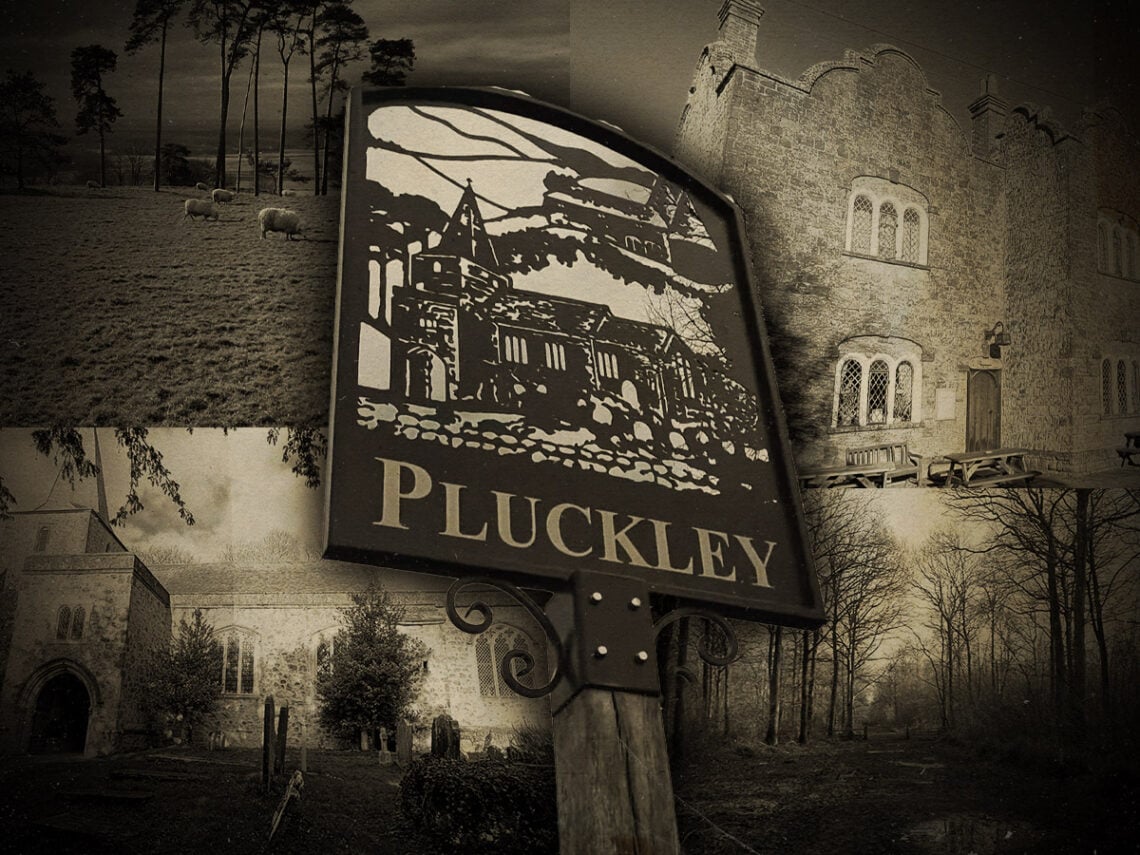
Pluckley: The ghostly past of Britain’s most haunted village

When it comes to picture-perfect countryside, there aren’t many nations such as the United Kingdom, with its endless lush, green fields, interspersed with ornate villages full of tiny cottages and stone churches tucked away at the end of long, winding lanes.
However, in the quietest, most picturesque places, there can often be secrets, and in the rolling countryside of Kent is a dark underbelly that has fascinated people for generations, which is the idyllic, rural Pluckley, Britain’s most haunted village, as coined by the Guinness Book of Records.
With a long history that sees the village referenced in the Domesday Book of 1086, there are plenty of reasons why ghosts might linger and haunt this quaint town that sits five miles west of Ashford and connects with the plains of the Kent Downs.
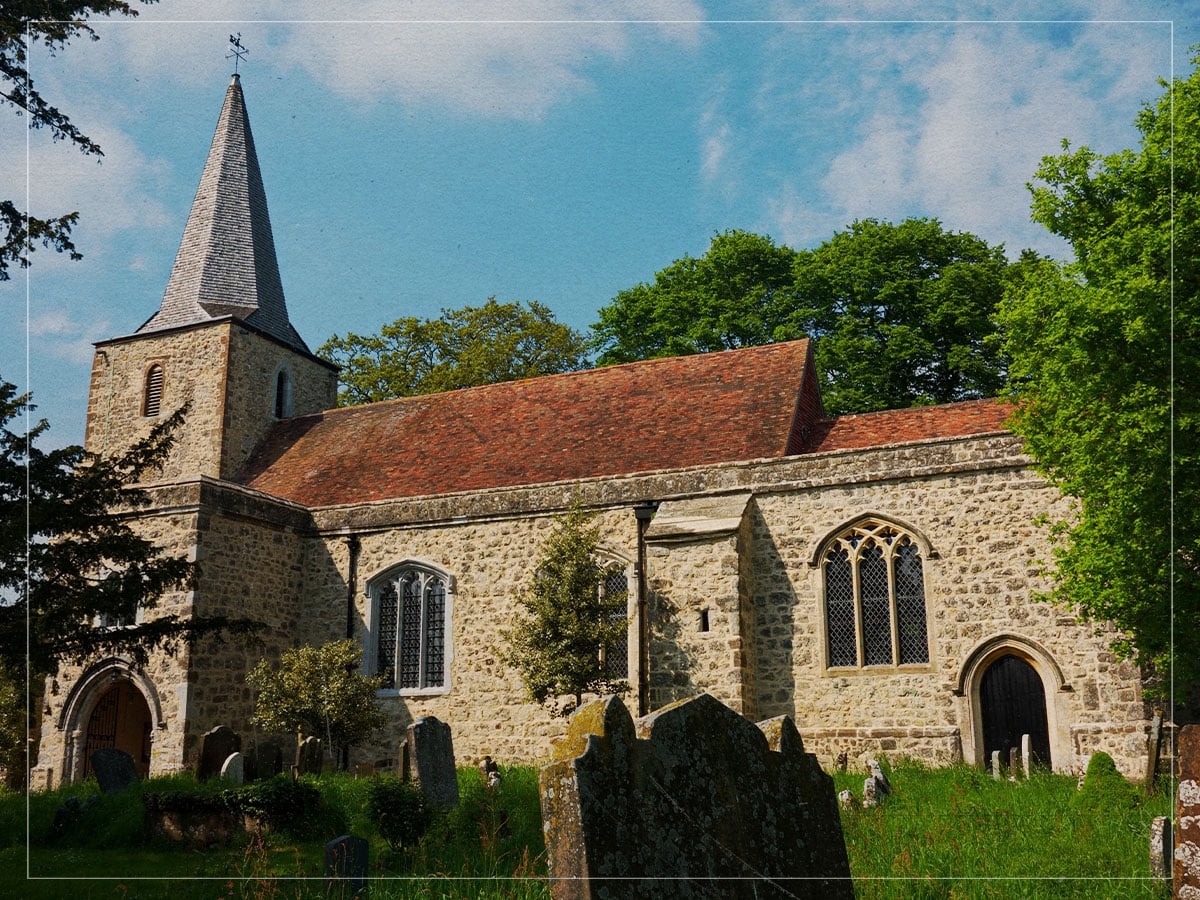
The centrepiece of the village, the Church of St Nicholas, dates back to the 13th and 14th centuries, having seen many lives, marriages and christenings across its time, and the village itself has led an alternate life, doubling as Sidcup in the popular 1990s television show, The Darling Buds of May, as well as featuring in tons of TV shows thanks to the links with the undead.
Pluckley’s haunted reputation comes from a wider collection of ghost stories set in the village, the majority of which have tragic backgrounds. Visit any pub in a small British village, and you’ll hear of ghosts from an old man, sat nursing a pint of ale on his stool at the bar, but in Pluckley, there are at least 12 different ghosts that are said to haunt various buildings.
Among the village’s most famous apparitions is the Red Lady, who is said to stalk the churchyard of St Nicholas looking for her lost child. Haunting the same churchyard, a little further along the colour wheel, is the White Lady who was buried across multiple oak-lined coffins.
A labourer crushed under a collapsing clay wall still screams in pain, with rumours that the Screaming Man can be heard across quiet fields in the height of summer, then there the Dicky Buss Lane, which hides the ghost of a schoolmaster who hung himself, while a former colonel who also committed suicide wanders the nearby woodland.
Whatever you do, don’t visit ‘fright corner’ at night, with the crossroad home to a number of spirits, a highwayman, a monk and a gypsy who drowned nearby, but also, don’t go cancelling your Airbnb bookings in Pluckley just yet. Despite the village’s fearsome reputation, there’s a very strong chance that the village and its ghosts are based more on storytelling than anything truly supernatural, if ‘truly supernatural’ isn’t too much of a paradox to begin with, that is. While a lot of the village’s phantoms have links to real historical deaths, many have just become folklore.
Dr Simon Moreton, Associate Professor of Creative Economies at UWE Bristol, was fascinated by these spectral hauntings and set out to discover the origins of these tales and find out exactly why there was such a large concentration of ghosts in one small village that has a tiny population of around 1,000 residents.
Through his research, Moreton discovered one man, Frederick Sanders, was behind ten of the village’s ghost stories. These were revealed at various stages in the last century, whether that was in his own self-published ghost hunting books, stories in the local paper, letters or ghost hunts, and it’s claimed that he himself didn’t invent these stories, just relayed them from elsewhere, often embellishing details and even contradicting himself at times.
The Screaming Man is based on a real person, Richard Bridgland, who died in an accident at the quarry in 1899, and the Schoolmaster is based on Henry Edgar Martin, who hung himself in August 1919. Furthermore, three stories, most likely made up, were published by an actor, Desmond Carrington, in a copy of the TV Times that was published over Christmas in 1962.
So that’s it, it turns out that these aren’t ghosts, but stories passed on, changed and developed over lifetimes, going from abstract thoughts into genuine folklore. Perhaps in years to come they’ll be talking about another Pluckley ghost, the Cornish Journalist, who haunts the Black Horse pub but comes from far out of the village, travelling from Cornwall before meeting an untimely demise after choking on a peanut over a pint; maybe he’d like that.
What we can learn from Pluckley isn’t about actual ghosts, but more so human nature, or perhaps more specifically, how stories can snowball from something small and tangible into a massive story that lasts generations.
