


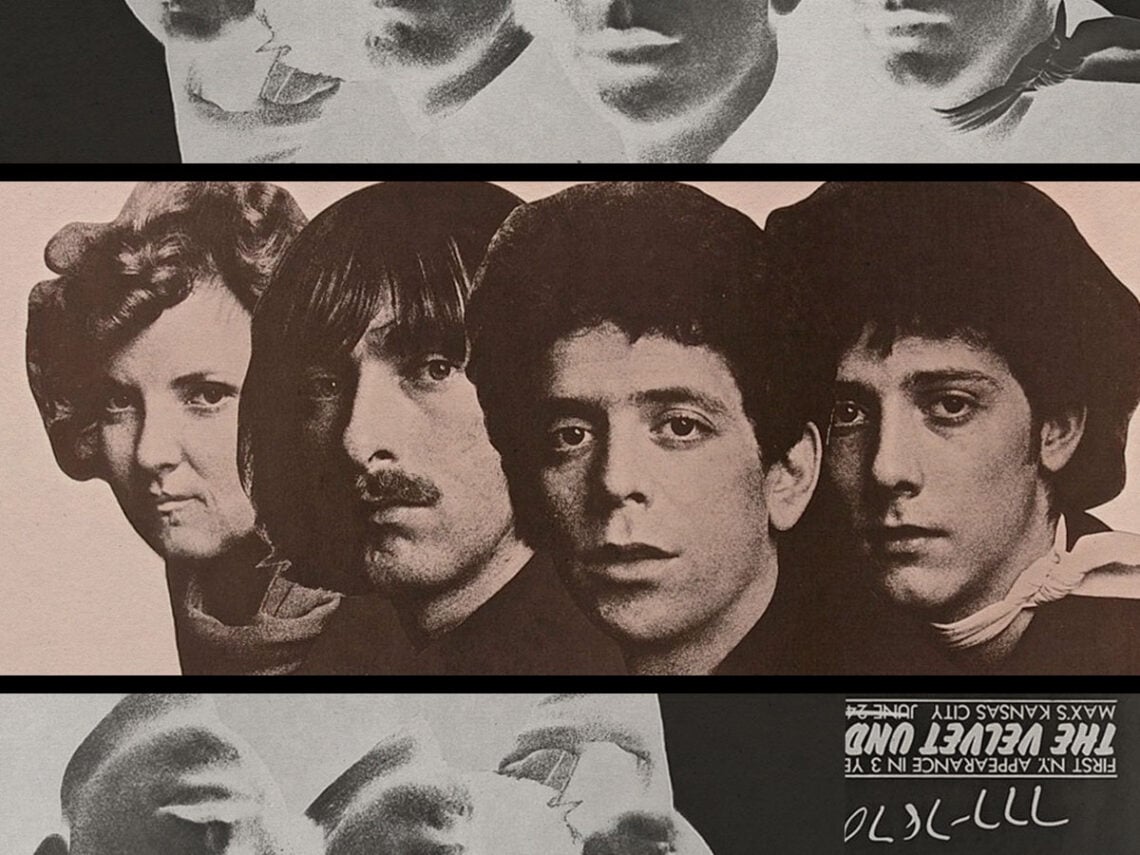
The Velvet Underground predicted the doomed future of music marketing in 1969

There are a number of reasons why artists and music lovers alike heap praise onto The Velvet Underground.
Whether you’re speaking to someone who only stumbled across the band a couple of days ago or you’re chatting to a veteran gig goer who was there for the band’s inception, one of the common themes that links opinions surrounding them is their consistent inconsistency, where there really was no predicting what a group like The Velvet Underground would put out next, as they were happy to constantly change genre, style and theme with each passing song.
David Byrne once spoke about how much the band inspired him in that regard, as this willingness to not be defined by a genre, during a period when genre was incredibly important to both labels and fans, gave him (and the rest of the Talking Heads) an idea as to how they should progress creatively. They won’t have been the only band who drew such inspiration from The Velvet Underground, but they may well be one of the biggest.
“The Velvet Underground were a big revelation. I realised, ‘Oh, look at the subject of their songs: There’s a tune and a melody, but the sound is either completely abrasive or really pretty’,” he said. “They swing from one extreme to the other. ‘White Light/White Heat’ is just this noise, and then ‘Candy Says’ is incredibly pretty but really kind of dark. As a young person, you go, ‘What is this about?’”
He certainly has a point; it seems that the band never put any kind of restriction on themselves, both in terms of theme and genre. Take a track like ‘Venus in Furs’, which highlighted how experimental the band could be and saw them talk about S&M. This was a bold move at the time, and it was one that highlighted their avant-garde nature. In contrast, a song like ‘Heroin’ sees them take a much more stripped-back approach, one which allows the lyrics to shine through more than anything else as Lou Reed sings about how much drug addiction impacted him. This is a harrowing masterpiece, one that really highlights how well an artist can convey a message so long as they allow themselves to speak unfiltered.
“I meant those songs to sort of exorcise the darkness, or the self-destructive element in me, and hoped other people would take them the same way,” said Reed, “But when I saw how people were responding to them, it was disturbing. Because, like, people would come up and say, ‘I shot up to ‘Heroin’, things like that. For a while, I was even thinking that some of my songs might have contributed formatively to the consciousness of all these addictions and things going down with the kids today. But I don’t think that anymore; it’s really too awful a thing to consider.”

With all that being said, one of the things that The Velvet Underground weren’t particularly trying to do, though, was predict the future, and yet, on one of their songs, that’s exactly what they did. ‘The Murder Mystery’ wasn’t meant to be a practice in the art of soothsaying, and yet, the band’s 1969 release acted as a glimpse into the future of music marketing. If you haven’t heard it, ‘The Murder Mystery’ is one of the band’s most experimental offerings. To put it plainly, it’s a nine-minute-long mess.



I mean, this track was put together in some sort of fever dream, as the band decided to all read separate pieces of poetry over one another alongside a thin section of instrumentation. It’s incredibly stressful to listen to, as it becomes borderline impossible to pick out lyrics, given they’re all happening at the same time, and the few lyrics you can pick out convey themes of violence, decay, and horror.
The song wasn’t written to try to predict the future of music marketing, but the messy and hopeless nature of it certainly feels reminiscent of it. The truth is, more people are making music now than ever before, as it’s a lot easier and cheaper to do so. You don’t need to go to a studio anymore, you just plug your guitar into your laptop, and suddenly, you have your own Rockfield Studios right there in your kitchen. The result is more music getting made than ever before, which is hard for artists to get in front of the right people, and even harder for listeners to begin to distinguish between.
When you look through social media or on whatever streaming platform you use, you’re met with a barrage of different bands and artists trying to get you to listen to their music. They upload strange videos, viral dances, and various other marketing attempts in a bid to gain your undivided attention for more than a few seconds. It’s sad that these are the measures people need to go to just to get a few moments of listening time, and it’s also hard being a fan trying to work out what is worth a proper listen and what’s dribble.
The issue with this kind of marketing isn’t just that it’s overwhelming, but it gets in the way of the artistic process. When an artist is writing a song, they should be thinking about one thing and one thing only, and that’s the song, but that’s not the case anymore. The process used to be linear: write, market, release, but now those linear steps overlap with one another, and musicians, who do everything themselves, are left thinking about marketing and release before they’ve even hit record. They look for a viral moment, a crucial 20-second section that can be clipped up and shared to potentially stand out in the barrage of overlapping poetry that is the modern musical sphere.
Amyl and the Sniffers spoke about our overreliance on the internet and how we come across it on their most recent record, Cartoon Darkness. “I think we’re just passive to the puppeteering of it all. I think even if we had amazing willpower against it, it’s designed to be interlocked with us as a being. So many creatives and so many businesses, even to just exist as a small business, you need to be a part of it in a lot of ways,” said the band’s singer, Amy Taylor.

Adding, “It’s designed to be all-consuming and an extension of ourselves. It’s really out of our control how much we can break away from it. I think it’s possible, but again, to step away from phones now is to step away from society.”
Bands know that if they’re going to succeed as a musical outfit, they need to have some kind of social media presence, and it completely overlaps with the creative process. It’s voices on top of voices, clips on top of clips, poetry on top of poetry, dances, trends, jokes, repetition, repetition, repetition, repetition, repetition. Rick Rubin once said that for an artist to truly tap into their creativity, they need to stop worrying about the result and instead focus on the process.
“Living life as an artist is a practice,” he said, “You are either engaging in the practice, or you’re not. It makes no sense to say you’re not good at it. It’s like saying, ‘I’m not good at being a monk.’ You are either living as a monk, or you’re not […] We tend to think of the artist’s work as the output. The real work of the artist is a way of being in the world.”
Similarly, David Gilmour once commented that the death of art comes when artists begin thinking of the consumer while they’re still in the creative process. “I don’t consider an audience member’s views because that’s the death of art,” he said, “If you ask me”.
The audience plays a huge part in artistic creation in the modern age because artists need to consider how they will get their music in front of people, amongst the mass of competition out there. The result is a bizarre mesh of different styles and sounds, where it’s impossible to separate the various songs that we come across, and the occasional piece of music that we do recognise as individual is laced with a sense of despair.
They didn’t mean to, but with their poetic pile-up and experimental instrumentation, The Velvet Underground managed to make a song which reflects the modern state of musical marketing. Ideas overlap and are hard to tell apart; there is no cohesion amongst the whole thing, and yet, it’s hard to escape the dread of it all.
