


A band’s marketing is none of our business: Geese, ‘psyops’ and fans’ misguided focus

As soon as The Beatles were signed, Freda Kelly, an employee of Brian Epstein, assumed the job of running the band’s official fan club. Today, most major fan accounts, especially the ones with ‘HQ’ at the end of their username, are run the same way – in-house, paid for.
Record labels used to send models to radio stations to drop off new releases. The Rolling Stones had practically invented the concept of merch. Paul McCartney announced his debut by sliding a self-written questionnaire to the press. Go back even to the days of classical composers who would purposefully connect with particularly high-status or glamorous aristocrats and ladies, coaxing them into hiring them for their balls or even just playing their concertos; that’s marketing. All of this is to say – marketing is not new.
For as long as music has been an industry, that industry has involved marketing – and we need to get over it.
The issue in today’s landscape is the fact that music fans at once feel both knowledgeable and still betrayed by an artist’s engagement with the sales side of things. The obsessive throwing around of terms like ‘industry plant’, or the new buzz phrase ‘psyop’, is the activity of fans who like to think they’re experts. There a smug, knowing “ha! I knew it” that suggests the average listener now believes they understand what goes on behind the scenes. It’s the posture of a consumer who likes to think they’ve outsmarted the salesman, grown wise to their techniques – but then something happens, like the recent news about Geese’s marketing campaign landing, and everyone’s shock makes them look a fool.
With the headline, ‘The Fanfare Around the Band Geese Actually Was a Psyop’, Wired basically dealt that ultimate ‘got you’ card that people desperately look for whenever a band has a meteoric rise. People read such a headline, and the naysayers feel justified, and fans feel scorned. If one were to read the full story behind the article, it is difficult not to continuously ask oneself, “Yes, and?”
In that piece and throughout Eliza McLamb’s Substack post that started it off, there are voices from actual industry experts making it clear that this is really nothing new, nothing rare and nothing surprising.
As McLamb puts it, Geese hiring a marketing team to essentially plant their music on social media, playing with algorithms so it’s served to the right people who will then actually go listen to the song, is “no more or less nefarious than anything else that’s been going on in the music business since the dawn of time.” She even concludes her piece, which people are now treating as a kind of exposé, by admitting that if she had the budget, she’d hire the same kind of team, writing, “To be honest, it sounds appealing to me.”
However, the problem is that the world of marketing has been forced to change now that fans feel like they understand it. As the internet spirals into mania, claiming that Geese bought their success and have always been fakes, all it does is make it clear that everyone is sticking their nose into something they don’t get, reminding us that the average listener is not an industry expert, and they’re not supposed to be. In fact, none of this is any of their business.
As someone who used to work in social media, specifically running social media accounts for artists you know and love, nothing in the Wired piece surprised me.
It has always been standard practice for labels or marketing teams to have a hand in running fan clubs, and now that takes the form of online accounts. There is a high chance that an ‘HQ’ account you see for an act signed to a label is either being run by the band’s own team, or that their team are even paying some young teenager who would have started the account organically to run it, feeding them posts to make or working alongside them to post news on the main account and then immediately generate buzz from the ‘fan’ one.
In my average day’s work, then, I’d be doing exactly that, sometimes even setting up paid ads to promote new songs, but often through those fake fan accounts, all to protect the guise of organic growth.
This is a problem that fans have caused for themselves. In perfect correlation to the use of the term ‘industry plant’, the obsession with catching out inauthenticity has led to a new world of marketing that has to fake it. When Wet Leg emerged with a shiny music video for their debut single, they were ripped to shred. If Geese had just come out with paid ads from their own account back in 2021, they instantly would have been decried. So instead, it has to be cleverer.
While building their fan base in real life, as is so well documented, Geese used the extra cash they had as Brooklyn rich kids to get Chaotic Good to help them out – not by buying streams or faking numbers like plenty of other artists do, not even by pushing ads, but simply by using an algorithm-savy PR team to get clips of those performances in front of the right people. That way, listeners can stumble upon it and think ‘wow’, believing they’ve found the band all on their own, protecting their preciousness about organic rises and organic discovery.
But has literally any band’s rise ever been actually organic? The kicker is that you and I are not supposed to even think about that.
In the same way that fans listening to great new songs on the radio back in the ‘60s weren’t supposed to know pay-offs and the bribes that used to go into making those plays happen, marketing is supposed to be a secret. We’re supposed to simply find ‘Love Takes Miles’ however we do and think only about how we feel about the song, not getting caught up in how the song landed in front of us.
Obviously, there’s a counterpoint here. The class divide in music is immense, and the matter of money leads to an unfair advantage on the side of wealthy people getting into the business. Part of the reason why this news about Geese feels so gross is that it reminds us that the band have always had good cash flow to promote them and give them an advantage over the average rock act starting up as teenagers. It simply adds a fresh sting to the industry’s worsening inequality from a band who are being held up as its new heroes.
However, all of this seems to stray so close to the classic in-fighting we see all the time. In politics, the left’s biggest issue is that everyone is too busy squabbling over minor details that the whole side is distracted and weak.
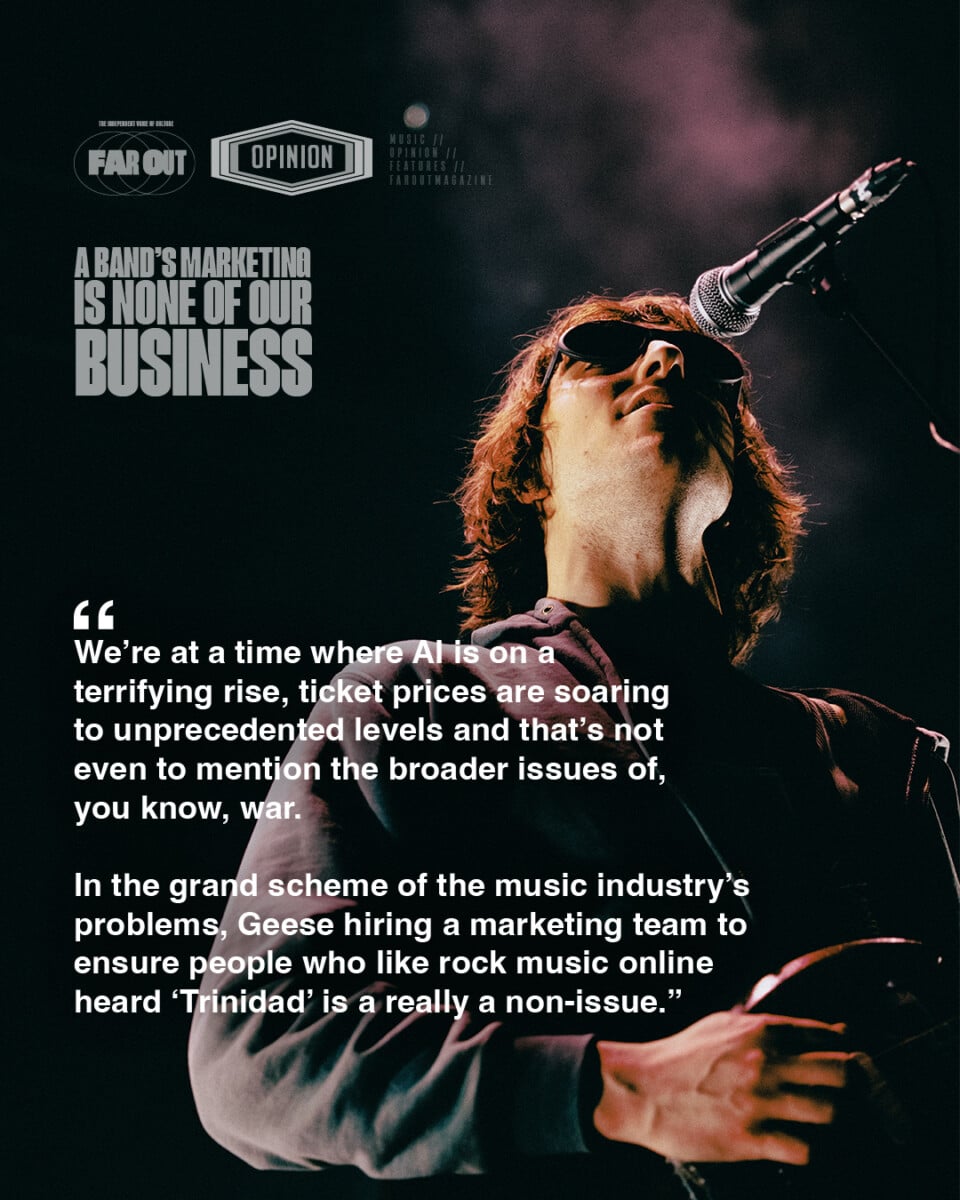
We’re at a time where AI is on a terrifying rise, ticket prices are soaring to unprecedented levels and that’s not even to mention the broader issues of, you know, war. In the grand scheme of the music industry’s problems, Geese hiring a marketing team to ensure people who like rock music online heard ‘Trinidad’ is a really non-issue.
Sure, it’s a smack in the face that they can afford to pay someone to do that boring work and focus on their art in a way other acts can’t, but as McLamb said, any other artist would do the same if they could and aren’t we benefitting more from having Geese around as a new beacon of excitement in music than we are from tearing them down for engaging in what is so common place now? Discourse constantly gets caught up in these minor revelations while industry analysist reminds us that it’s not always as sinister as people try to make out, stating – “The system needs hits. Furthermore, the labels rarely develop the acts, rather the acts develop themselves and the labels poach them.”
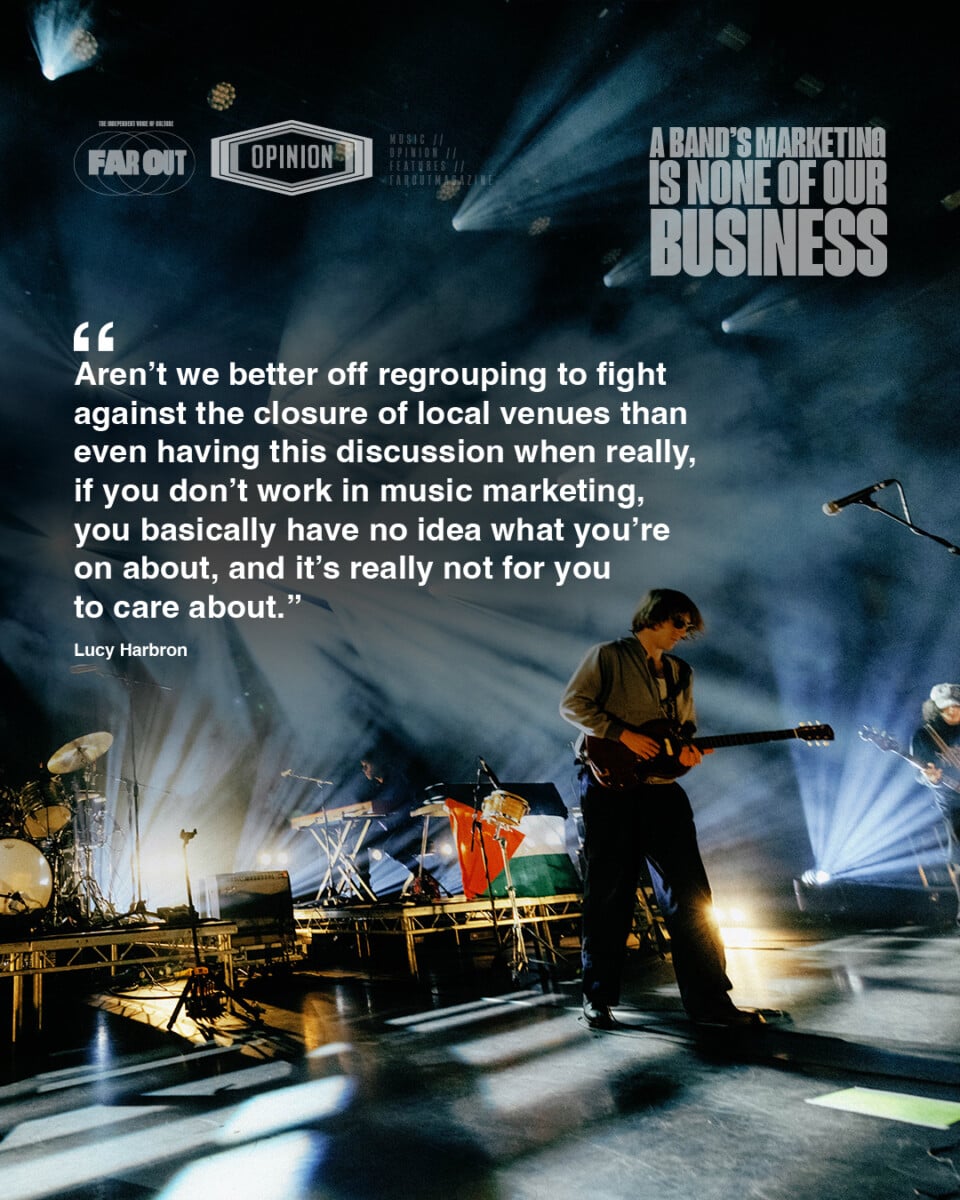
Aren’t we better off regrouping to fight against the closure of local venues than even having this discussion when really, if you don’t work in music marketing, you basically have no idea what you’re on about, and it’s really not for you to care about.
