


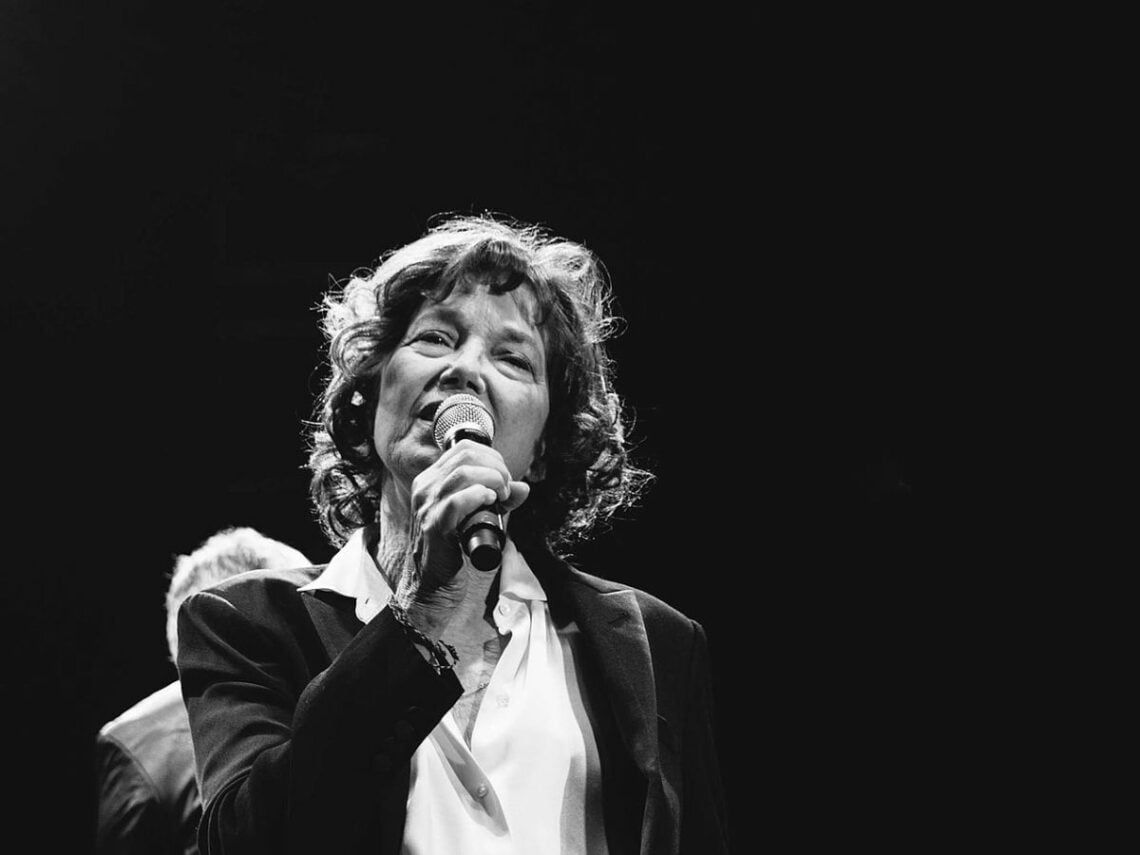
‘Cigarettes’: the story of Jane Birkin’s most tragic song

Much has been written about how unfathomably cool Jane Birkin was.
Since her passing in 2023, Birkin’s memory persists in glimpses of iconography that only she had the sort of effortless flair to pull off: using a straw basket as a handbag, for instance, or wearing an outfit as casual as a white T-shirt and blue denim with an air of intangible beauty. The London-born, France-based artist elevated modes of simplicity into something otherworldly, and this went beyond her style into her multifaceted artistry.
Writing from my own American perspective, Birkin is remembered in very particular ways. She’s pictured as lounging woefully by a pool in 1969’s La Piscine or, of course, being the namesake for one of the world’s most expensive luxury items. She is celebrated for her acting on both film and stage, from appearing in the detective stories of Agatha Christie to captivating audiences across various theatre productions, ranging from musicals to tragedies.
Of her singing, however, Birkin is perhaps least recognised, and unfortunately so. She is most often referenced for her work with her then-partner Serge Gainsbourg on the seductive, provocative song ‘Jet t’aime… Moi Non Plus’, but outside of France, her music career never quite translated into the familiar icon status that she achieved otherwise.
This is a shame, given that for a star as elusive as Birkin, much of her discography reveals personal fragments of the artist that spoke to the depths of her character, beyond the image of ‘cool’ that was projected onto her. Particularly, as she began to write her own poetry that later turned into song, Birkin showcased her complexity with a strong vulnerability, proving herself to be more than an aspirational image.

Throughout her life, Birkin seemed to regard her talents as a singer with humility. “How much talent did I really have?” she considered, to The Independent in 2013, “Perhaps not that much.”
But, Birkin did certainly have her talents in a unique, perfectly imperfect way, only adding to her overall charm. Her voice was never flawless, but she performed with such emphatic passion that listeners – and, in her acting roles, viewers – were compelled to meet her with the same unbridled emotion she gave so freely herself.



Birkin’s final studio album before her passing, 2020’s Oh! Pardon tu dormais (translating to Oh! Sorry You Were Sleeping), harnesses a similar energy that she had always sourced in her music. The album heard the then-74-year-old look back on her life with a sage understanding of the love and loss that she had endured over the decades.
The album’s beginnings are traced back to two poems which see Birkin share, for the first time, her thoughts on the death of her eldest daughter, Kate Barry, in 2013: ‘Ces Murs Épais’ (‘These Thick Walls’) and ‘Cigarettes’.
“They were in the back of my diary,” Birkin recounted to Vogue in 2021. “I’d showed (sic) them to [the producer] Étienne [Daho]. It was such fun working with Étienne because he had such enthusiasm, and he wouldn’t let me be sad and nostalgic.”
“I would never have made this record without his enthusiasm to show me as a writer.”
Jane Birkin
Kate Barry was Birkin’s daughter with her first husband, the English composer John Barry. Kate was born in 1967. She became a celebrated photographer beginning in the mid-1990s, known for a particular “natural” style that saw her photograph primarily famous women, from Catherine Deneuve to Monica Bellucci. “Letting someone take your picture involves a degree of trust and confidence that I don’t have,” Kate once said. “For a long time, my camera was a defence against the melancholy I felt.”
Kate went through tumultuous teenage years that saw her battle addictions, attend rehab and birth a son, Roman de Kermadec, later founding the charity APTE (Aide et Prévention des Toxicodépendances par l’Entraide), providing therapy to addicts and opening a free residential facility in France. All the while, she continued with photography, which extended to portraying her mother and half-sisters, Charlotte Gainsbourg and Lou Doillon, through her lens. In December of 2013, she was found deceased after falling from the window of her flat in Paris; she was just 46 years old.
On ‘Cigarettes’, Birkin places a melody that is akin to a theatre production, a rather upbeat tone of piano keys, in contrast to the sadness woven in her lyrics and the evident pain trapped in her voice. The song begins: “Ma fille s’est foutue en l’air, / Et par terre on l’a retrouvée,” (“My daughter cast herself into the air / And on the ground she was found).” She ponders the possibility of Kate’s death as an accident, perhaps a result of her opening the windows to let out the cigarette smoke from her flat. “Qui sait?”, she concludes; “Who knows?”
“Ma fillette” (“My little girl”), Birkin calls out, her vocals ringing with disbelief, as we are allowed into her inner thoughts as a mother battling grief and unanswered questions. Of the poems, Birkin shared with The Talks, “I wrote them on the back of my agenda book at a moment of feeling particularly sad about Kate; I had been to the pharmacy, and I saw a little pedicure set, and it broke me down because she had such beautiful feet! It’s always funny the things that catch you out, and I was very upset.”
She concluded, “It felt as if I couldn’t approach the idea of the album without first writing about Kate. So, there are little snatches of my life, little snatches of my diary.”
