


The director who inspired Catherine Deneuve’s career: “He gave me confidence most of all”

During the 1960s, a radical change occurred in the French film industry when a group of passionate film critics decided to try their hand at filmmaking. The result was a series of movies that stood in opposition to the dominant mode of French cinema, instead taking inspiration from experimental cinema and even American B-movies, hoping to reinvigorate the medium with more excitement and creativity.
The French New Wave contained filmmakers like Jean-Luc Godard, whose debut feature Breathless became an iconic milestone in cinema history, known for its jump-cuts, fourth-wall breaks, and handheld shooting. Then there were the likes of Eric Rohmer, François Truffaut, Jacques Rivette, Agnes Varda, and Jacques Demy, although the latter two were known as part of the Left Bank – less cinephilic as the others and not so interested in the Right Bank’s militant obsession with actively changing cinema.
Still, both the Left Bank and Right Bank filmmakers often shared stars, such as Jean-Pierre Leaud, Delphine Seyrig, Jeanne Moreau, and Catherine Deneuve. The latter is often considered one of the most iconic figures of French cinema, having starred in many popular movies that have endured as classics to this day.
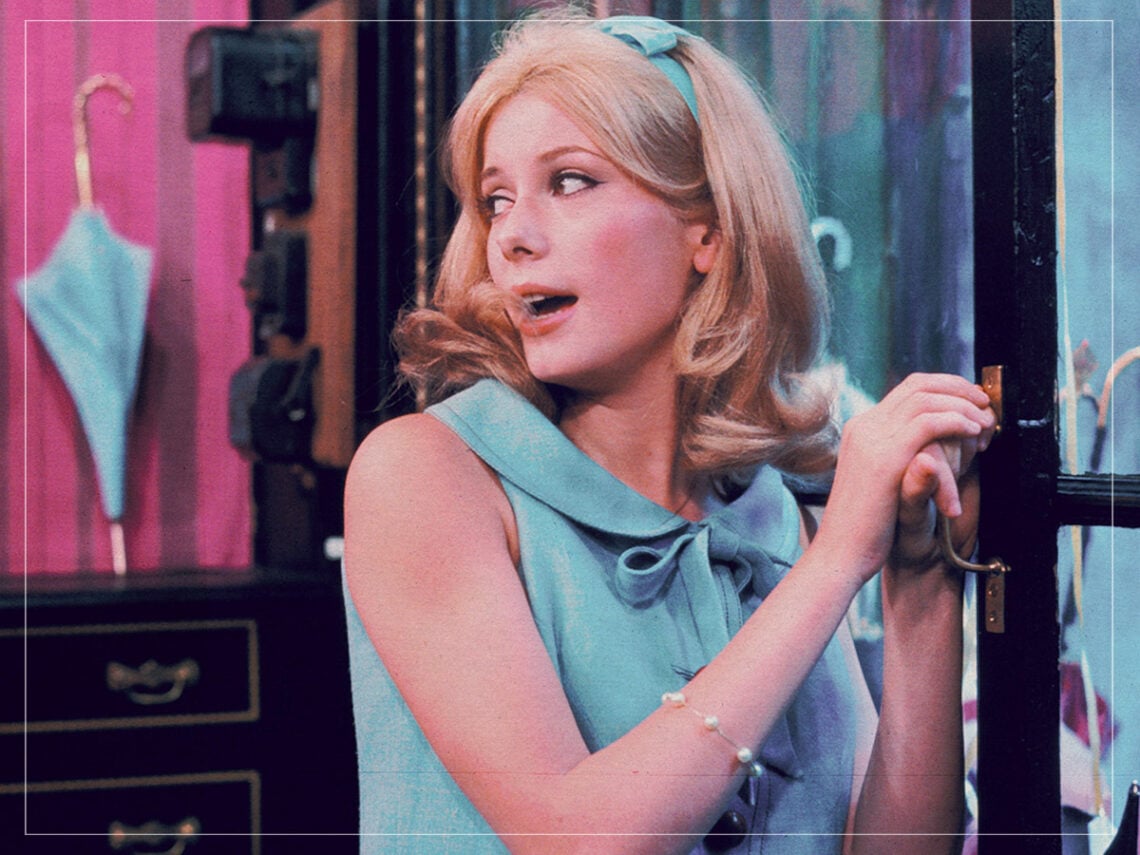
The actor made her first film appearance in a small role as a schoolgirl in Les Collégiennes, released in 1957. She continued to appear in several now-forgotten films, only to be cast in the leading role in Jacques Demy’s The Umbrellas of Cherbourg a few years later. The movie is one of the most successful to emerge from the French New Wave era, although it differs from the distinctively edited and filmed movies from the likes of Godard or Truffaut. Taking inspiration from Hollywood musicals, Demy puts a uniquely French and tragic spin on the stereotypically glorious genre, tracing a doomed love story between Deneuve’s Geneviève and Nino Castelnuovo’s Guy.
The movie is painted in gorgeously bright colours, and while, at least visually, it doesn’t contain the naturalism found in many other nouvelle vague works, it’s exploration of themes like love, loss, and class make it not so dissimilar from its contemporaries. Deneuve’s performance in the film is incredible, and it was her experience of working with Demy that encouraged her to continue her career as an actor, giving her the inspiration to become one of France’s most highly-regarded stars.
She once revealed, “He gave me confidence most of all. The Umbrellas of Cherbourg was a very different film. It was a musical, it was like an opera. It was such a wonderful incredible story. I realised cinema could be that, and it’s because of that film that I decided to go on making films, because of him, the way he directed me, the way he looked at me, and put me in that situation. A major decision, yes. A major thing in my life.”
The pair would reunite for several other films during Demy’s career, which was cut short in 1990 when he passed away. Following The Umbrellas of Cherbourg, Deneuve appeared in The Young Girls of Rochefort, another candy-coloured musical that also starred her sister, Françoise Dorléac. The film was highly praised, helping to further cement Deneuve as a multi-talented star. Three years later, she appeared in Demy’s interesting take on the classic Charles Perrault story Donkeyskin, a fairytale musical with a distinctively dark edge. Donkey Skin is a visual feast, with Deneuve playing a princess who must don the skin of a lucky donkey to escape the advances of her own father.
The actor also appeared in Demy’s lesser known comedy A Slightly Pregnant Man, in which Marcello Mastroianni plays Deneuve’s husband, who gets pregnant after eating hormone-filled chicken. Very offbeat and much better than it sounds on paper, the film marked Demy and Deneuve’s last collaboration – and what a note to end it on.
