


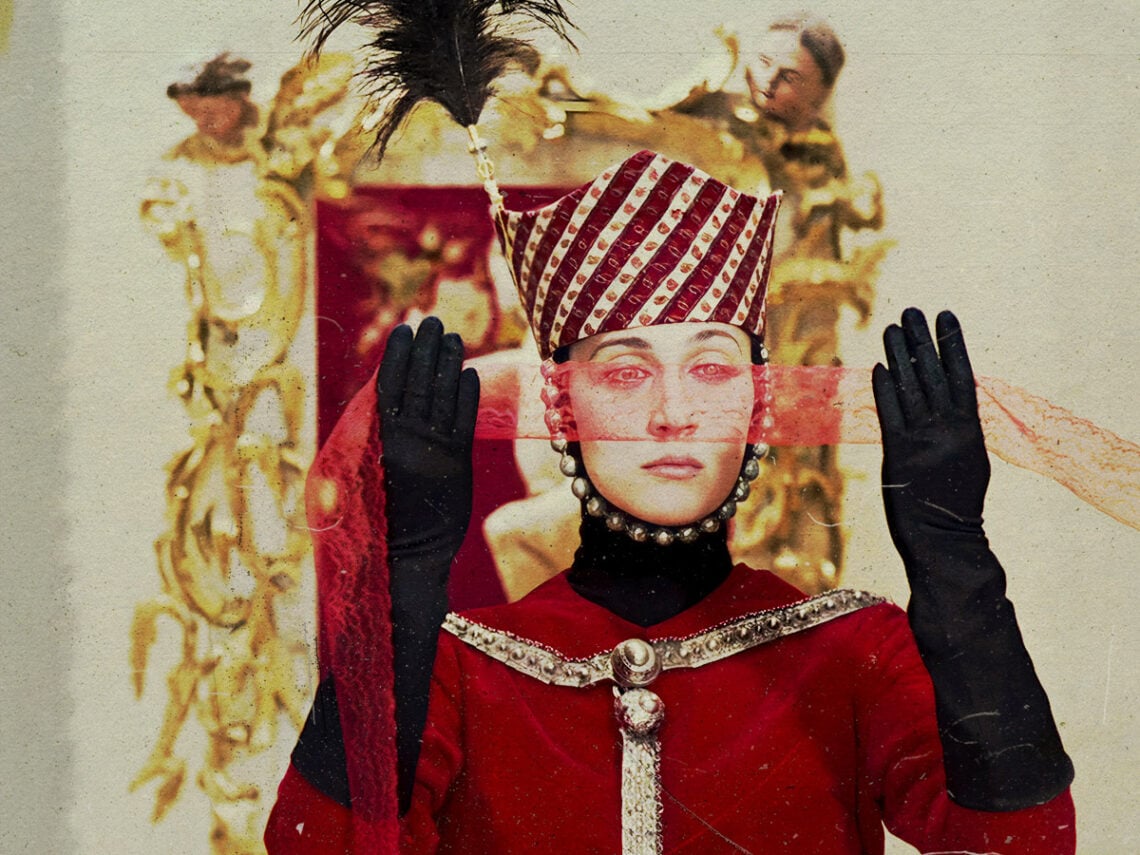
The 10 most visually impressive movies of all time

Watching a movie is a visual experience, first and foremost. Even if we’re not sold on a film’s plot or themes, sometimes a good set of visuals can sustain our attention. Like young children, we become enthralled by bright colours or elaborate costumes and set design, even if they sometimes trick us into thinking a film is better than it actually is.
There has always been an argument that certain movies prioritise style over substance, often resulting in sparse plot lines and poorly developed characters. Sometimes, movies with more style than substance are fantastic, allowing us to immerse ourselves in the abstract atmosphere created by striking visuals.
However, when style and substance combine, audiences can find themselves in for a pure delight. By using meticulously crafted visuals, filmmakers can allow their viewers to become fully engrossed in the world they’ve created and subsequently more attuned to the themes being explored.
So, from Dario Argento’s brightly-coloured giallo Suspiria to Stanley Kubrick’s stunning cosmic epic, 2001: A Space Odyssey, here are ten of the most visually impressive movies.
The 10 most visually impressive movies:
10. Lawrence of Arabia (David Lean, 1962)
Widely heralded as one of the best films ever made, David Lean’s epic historical drama Lawrence of Arabia is impressive for many reasons. Besides the terrific performances from Alec Guinness and Peter O’Toole, fantastic editing by Anne V. Coates, and Lean’s impeccable direction, Lawrence of Arabia possesses extraordinary visuals.
You can practically feel the heat radiating off the screen as the characters traverse the dry desert landscapes, which are depicted with awe-inspiring beauty. Rightly so, the film won Freddie Young the Academy Award for ‘Best Cinematography’.
9. House (Nobuhiko Obayashi, 1977)
Nobuhiko Obayashi’s House is a great comedy that follows a schoolgirl named Gorgeous who visits her aunt with her friends, only to begin experiencing supernatural events once they arrive at the house. For example, one girl discovers the disembodied head of another inside a watermelon, which jumps out of the fruit and bites her on the bottom. It’s as strange as it sounds, yet it’s made even more spectacular by the gorgeous visuals.
Obayashi experiments with bright colour palettes, hazy photography, and unique visual effects, creating a kaleidoscopic collection of images. According to the director, he consulted his pre-teen daughter to come up with crazy visuals and ideas, stating, “Children can come up with things that can’t be explained.”
8. Donkey Skin (Jacques Demy, 1970)
Jacques Demy emerged during the French New Wave period, although his movies were less typical of the movement, with his best-known films, such as The Umbrellas of Cherbourg, taking significant influence from Hollywood musicals. In 1970, he released the fantastical Donkey Skin, a musical featuring his regular collaborator Catherine Deneuve as a princess who disguises herself as a donkey to escape the affections of her lecherous father.
If you watch Donkey Skin while running low on sleep, you might find the visuals slightly headache-inducing and disorientating, but that’s what makes it so striking. The set design is so phantasmic and surreal, loaded with bright colours and extravagant costumes, which make the movie feel like a candy-coloured fairytale.
7. Suspiria (Dario Argento, 1977)
Considered by many to be giallo master Dario Argento’s best film, Suspiria is not only an entertaining supernatural horror with a killer soundtrack (courtesy of prog-rockers Goblin), but it’s also one of the most visually breathtakingly movies ever made. Argento ensures that every scene is eye-catching enough to be framed, using bright neon hues that penetrate deep into the viewer’s consciousness.
There’s plenty of unrealistically vivid blood and artificial-looking buildings, making the film feel like it exists purely in a world of its own, confined from normality. Argento’s dedication to visual greatness has often been criticised, with some viewers suggesting that this overrides the substance of his work. However, the aesthetics that define Suspiria perfectly suit the movie’s distinctive atmosphere.
6. The Colour of Pomegranates (Sergei Parajanov, 1969)
Sergei Parajanov’s 1969 experimental film The Colour of Pomegranates explores the life of Sayat-Nova, the Armenian poet, with the film’s surreal imagery making for an otherworldly viewing experience. Martin Scorsese once claimed that watching The Colour of Pomegranates is like “opening a door and walking into another dimension, where time has stopped and beauty has been unleashed.”
The movie remains one of the most influential arthouse releases of all time, praised for its seamless weaving of poetry and rich imagery. From stunning costumes to beautifully decorated sets framed meticulously by Suren Shakhbazyan, Parajanov’s film is a hallucinogenic delight.
5. The Tree of Life (Terrence Malik, 2011)
After the success of two beautiful movies, Days of Heaven and Badlands, Terrence Malik quit filmmaking for 20 years, returning with The Thin Red Line. Since then, Malik has never failed to helm visually stunning movies, but the crowning champion has to be The Tree of Life. Released in 2011, Malik’s film explores the very meaning of living, intercutting the characters with extraordinary images of the creation of Earth.
Emmanuel Lubezki often films the characters with a dizzying quality, weaving between them as though we are right there with them, capturing the true essence of being human. The Tree of Life is a masterclass in transcendent visuals – a result of Lubezki’s precise cinematography and special effects assisted by Douglas Trumbull, who also worked on 2001: A Space Odyssey.
4. Vertigo (Alfred Hitchcock, 1958)
James Stewart and Kim Novak star in Alfred Hitchcock’s magnificent 1958 psychological thriller Vertigo, an enthralling exploration of obsession. After Stewart’s Scottie develops vertigo and an extreme fear of heights, he retires from his job as a detective. However, he is soon roped into another assignment, following his friend’s wife, Madeleine, who has been acting strangely.
As events unfold, the movie becomes increasingly more disorientating, with gorgeous visuals to match. From the beautiful title sequence, which contains the first computer animation ever featured on the silver screen, to the scenes bathed in green and red lighting, Vertigo is nothing short of impressive.
3. Blade Runner 2049 (Denis Villeneuve, 2017)
Denis Villeneuve’s 2017 sequel to Blade Runner unsurprisingly won two Oscars, ‘Best Cinematography’ and ‘Best Visual Effects’. Critics praised Blade Runner 2049 for many components, but its visuals were undeniably the film’s most talked-about asset. Villeneuve allowed cinematographer Roger Deakins to have complete artistic control, and the director clearly chose the right person for the job.
Dystopia is made to look incredibly beautiful, but not without emphasis on the isolation and dominance of technology that dominates the movie’s world. The film perfectly captures this wasteland through its vast landscapes, orange hues and expansive cityscapes.
2. The Holy Mountain (Alejandro Jodorowsky, 1973)
The Holy Mountain is undoubtedly one of the most visually mind-bending pieces of surrealist cinema ever made. Not only did Alejandro Jodorowsky write and direct the film in which he plays the main character, but he also contributed his skills to the soundtrack, production, editing, costume design and set design. Jodorowsky wanted as much creative control as possible, and the end result leaves no questions about why.
Every frame of The Holy Mountain is eloquently composed, often using perfect symmetry, and painted in bright primary colours. Jodorowsky undoubtedly had an intense, dedicated vision for how he wanted the movie to look, and he certainly achieved it.
1. 2001: A Space Odyssey (Stanley Kubrick, 1968)
This wouldn’t be a reliable list if Stanley Kubrick’s career-defining masterpiece, 2001: A Space Odyssey, wasn’t included. Not only is the movie an incredible exploration of the relationship between technological advancements and humanity, but it’s a pure visual feast. The director employed a dedicated team of set designers to make the outer space setting look as realistic as possible, and it’s easy to see why the theory that Kubrick helped to fake the moon landing became so popular.
Besides the incredible images of space, the retro-futurist interiors of the spaceships and the neoclassical room at the end of the film are also incredibly captivating. Of course, the visual highlight of Space Odyssey is the cosmic hallucinogenic light tunnel sequence, which is simply breathtaking.
