


“A little too much”: The band that turned Genesis into prog-rock legends

Though he’s played more songs from his days with the prog-rock group Genesis across the setlists at his solo shows, Phil Collins has actually played a song first made famous by The Supremes at more separate concerts.
In fact, his cover of ‘You Can’t Hurry Love’ is second only to his own ‘In the Air Tonight’ in total number of concert performances at any of his solo shows.
Whether in the studio or on the stage, Collins has frequently supplemented his songs with covers from a wide range of writers and artists. He’s sung songs by Irving Berlin (‘Always’), Philip Bailey (‘Easy Lover’), Curtis Mayfield and the Impressions (‘People Get Ready’) and Cyndi Lauper (‘True Colours’), among many others. And it’s not just in covering other artists where he has shown the breadth and scope of his tastes, interests and influences.
He’s drawn on influences from all over the cultural map, too. His 1982 album and tours were each named after one of Groucho Marx’s most famous, and funniest, musical moments (‘Hello, I Must Be Going’), and it isn’t hard to guess how he got from a life-long love of Motown and songs like The Temptations’ ‘I Wish It Would Rain’ to his own 1989 composition ‘I Wish It Would Rain Down’ (and it’s also no wonder that his fellow culture vulture Eric Clapton features so heavily on the song and in the video).
Though he was first inspired to get into music in the first place by a deep and abiding love of The Beatles—growing up as a teen in London in the 1960s, Collins was the perfect age to be swept up on a wave of Beatlemania—you don’t hear much of the Liverpool quartets sound turn up in Collins’ songs.

That willingness to absorb influences without simply imitating them became one of Collins’ defining strengths. While his affection for Motown, soul and classic pop is easy to spot throughout his solo catalogue, his years with Genesis demanded an entirely different musical vocabulary.
Progressive rock rewarded technical ambition and intricate arrangements, encouraging musicians to push beyond conventional songwriting. Collins embraced that challenge wholeheartedly, developing into one of the most respected drummers of his generation before eventually becoming one of pop’s biggest songwriters.
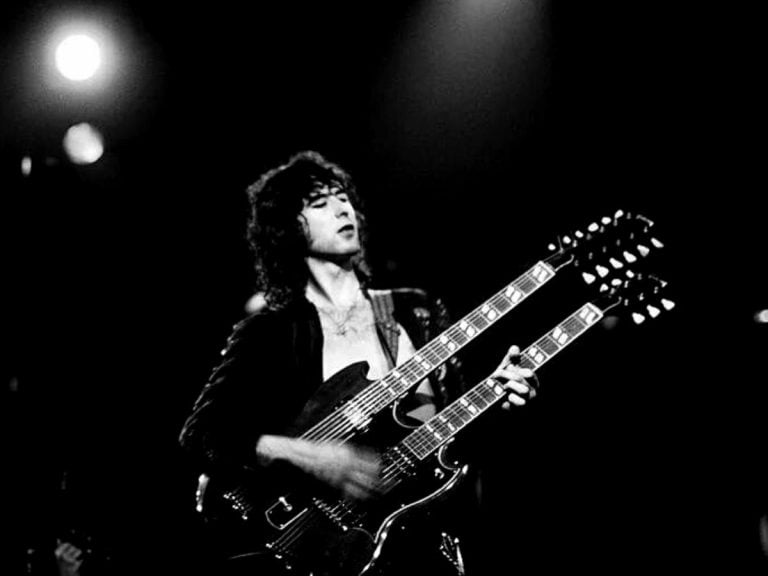


But when it came to the making of some of his earliest albums whilst drumming with Genesis, another groups influence did make its way into Collins’ playing.
“When we recorded Foxtrot, Selling England by the Pound, and Nursery Cryme, the Mahavishnu Orchestra with Billy Cobham were very much in vogue”, Collins has said. “Their style of playing odd time signatures and complex rhythmic figures influenced our music. Personally speaking, I feel I was trying to do a little too much on those early albums. I was trying to prove to people that I could play. In doing so I wasn’t necessarily playing what the music required.”
That kind of self-reflection is characteristic of Collins whenever he discusses his early career. Rather than celebrating technical complexity for its own sake, he has often argued that musicians mature when they learn restraint.
Looking back, he recognised that dazzling fills and difficult time signatures could easily distract from the song itself, a lesson that would shape both his work with Genesis and his later solo success. It also helps explain why Collins could move so comfortably between progressive rock, pop and soul, always placing the emotional impact of a performance ahead of simply demonstrating what he was capable of behind the kit.
Whatever you think of the Mahavishnu Orchestra with Billy Cobham, it is clear that each of the band’s members were virtuosos, able to test the outer limits of their instruments. Cobham, especially, on the drums, keeping the beat smooth and steady and providing an anchor for the rest of the group to wander away from but with which they could always bring themselves back to.
Phil Collins might now think that he was taking too much from Cobham’s playing on those early albums, but if you’re going to borrow from anyone, you might as well borrow from one of the best.
