


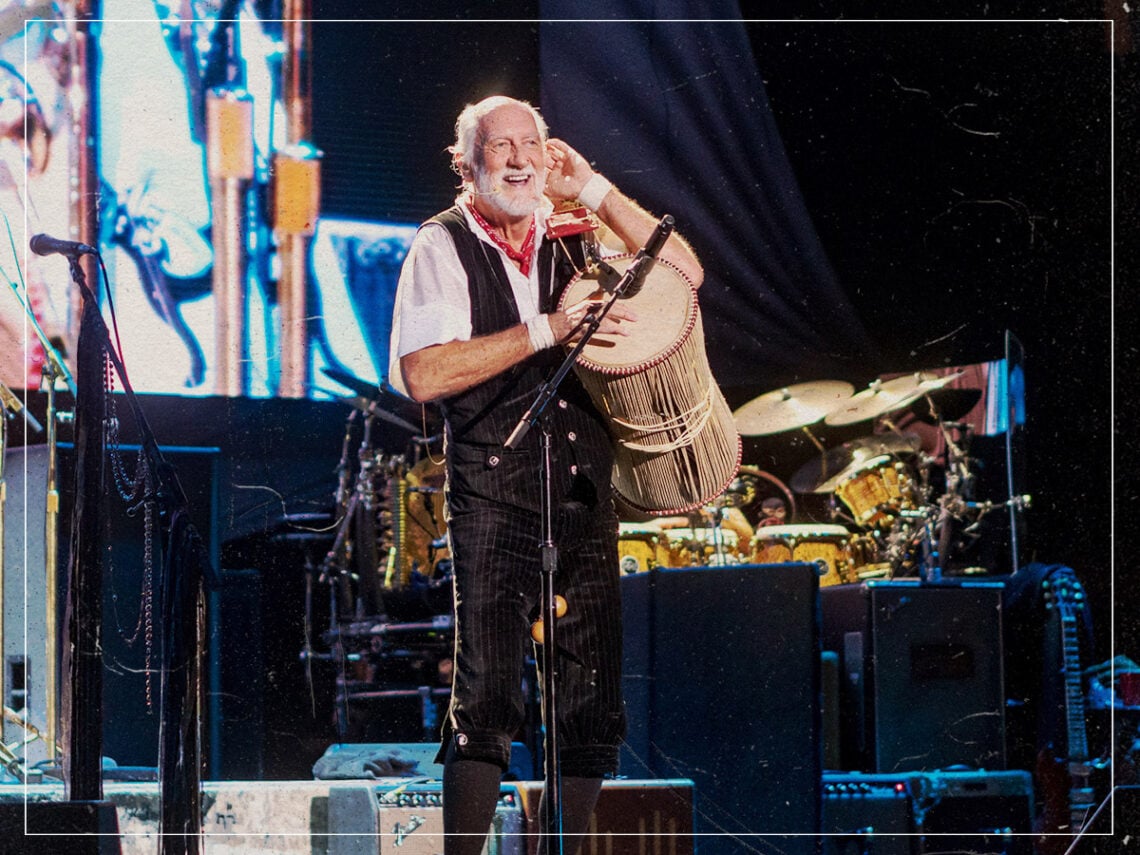
The band Mick Fleetwood thought Fleetwood Mac would become

When Fleetwood Mac began their musical journey, Mick Fleetwood would never have foreseen a scenario in which they would create an album like Rumours. Their initial plans, with Peter Green at the helm, were a stark contrast from their eventual trajectory.
Although the drummer’s achievements with the band brought him more success than he ever imagined, that was never his primary motivation for staying devoted to the group. He and bassist John McVie may have inspired the name Fleetwood Mac, but in the beginning, they were known as Peter Green’s Fleetwood Mac.
Upon forming in 1967, they were firmly placed in the blues scene and announced themselves as immensely talented musical technicians with their debut album a year later. Notably, they refused to release any singles from the record, which signifies Green’s attempts to shun fame at all costs.
It’s impossible to consider Green’s time in Fleetwood Mac without devoting time to reflecting upon what could have been, and Fleetwood has also posed this question to himself over the years. Despite the meteoric success they enjoyed following the additions of Stevie Nicks, Christine McVie, and Lindsey Buckingham, they were essentially a different band.
Tragically, like many other ethereally talented musicians, Green’s most formidable challenge was the one between himself and his demons. In those days, there was a severe lack of understanding surrounding mental health, and Green wasn’t given the sufficient level of care that he needed, which may have prevented him from turning his back on Fleetwood Mac in 1970.

While he released his debut solo album, The End of the Game, shortly after his exit from Fleetwood Mac, the guitarist disappeared into obscurity and escaped the music industry for decades. At the time of his departure from Fleetwood Mac in 1970, Led Zeppelin had established themselves as the biggest band in the world following the break-up of The Beatles. Fleetwood believes Fleetwood Mac would have carved out a similar path to the English quartet if Green had remained their driving creative force.
“I think it would have been really profound. I have no doubt what was missed. I think we would have had a place sort of like Led Zeppelin in America,” Fleetwood told Mojo in 2015.
Fleetwood elaborated on his reasoning for the comparison: “The creativity was on a par with where they took themselves. That’s what I think would have happened. I think we would have had a really, really elastic musical trip, experimenting with sounds and styles and orchestras.”
Notably, Green had a musical background similar to that of Led Zeppelin lead guitarist Jimmy Page. They were hanging around in similar circles during the 1960s, and Page admired Green greatly, using Fleetwood Mac’s ‘Oh Well’ as a blueprint to create the Led Zeppelin classic, ‘Black Dog’.
“The original Fleetwood Mac with Peter Green performed the music of people like Elmore James really well,” Page once said of the late guitarist in the book Light and Shade: Conversations with Jimmy Page. “Peter had such a beautiful touch on things like ‘Stop Messing Around.’ Just fabulous in the vein of B.B. King.”
The guitarist concluded: “I don’t think you’re going to find a better example of British blues than the original Fleetwood Mac, with Jeremy Spencer and Peter Green.”
While they’d likely have sounded considerably different from Led Zeppelin’s hard-hitting brand of rock, it’s more than plausible that Fleetwood Mac would have been equally as successful and respected in musical circles. However, in light of tragedy derailing their plans, somehow, they still climbed to the top.

Never Miss A Beat
The Far Out Led Zeppelin Newsletter
All the latest stories about Led Zeppelin from the independent voice of culture.
Straight to your inbox.