


The 10 greatest fourth wall breaks of all time

One of the few rules of conventional filmmaking is the concept of the fourth wall, the imaginary screen that separates the actor from the audience and withholds the disbelief of the viewer. This is the reason actors don’t look straight down the barrel of the camera when performing, as to do so breaks the constructed barrier between actor and viewer, reality and fantasy, spoiling the ‘magic’ of the movies.
Whilst the large majority of movies abide by this rule of filmmaking, there will always be rulebreakers, with mavericks of the moving image choosing to use the fourth wall as a device for a punchline or a killer dramatic blow. Long-existing in the movie industry, the first example of this metafictional practice happened back in 1918 with the release of the silent film Men Who Have Made Love to Me, directed by Arthur Berthelet.
More recently, meta-stories have very much entered the mainstream, championed by superhero blockbusters such as the Deadpool franchise and the Disney TV show She-Hulk: Attorney at Law. Yet, such moments are so on-the-nose that they leave you with bloody nostrils, with cinema history boasting far greater moments that leave you in deep ponder, loud hysterics or uncomfortable silence.
Take a look at our list of the greatest fourth wall breaks in cinema history below, including movies from the likes of Spike Jonze, François Truffaut, Adam McKay, Alfred Hitchcock and Mel Brooks.
The 10 greatest fourth wall breaks:
The 400 Blows (François Truffaut, 1959)
We start with what may indeed be the most iconic fourth wall break of all time, the moment at the end of François Truffaut’s The 400 Blows when his young character looks towards the camera after a desperate run to the beach. Telling the story of a young boy whose lack of attention forces him into a world of petty crime, Truffaut’s iconic coming-of-age drama leaves the audience with one final moment of drama.
The film’s end is something of a gut punch, with Truffaut suggesting that this chapter in his protagonist’s life is over. Told that he should see the beach, he runs there at the end of the film, but then what? What should he do now? Where should he take his life? It’s a daunting realisation for the character and the audience.
Adaptation (Spike Jonze, 2002)
American screenwriter Charlie Kaufman has always loved a complex script that delves into the complexities of the human psyche, taking this to new levels with his screenplay for Spike Jonze’s 2002 film Adaptation. Starring Nicolas Cage, Meryl Streep and Tilda Swinton, the story follows a screenwriter desperately trying to adapt The Orchid Thief by Susan Orlean for the big screen.
Writing the script whilst also penning Being John Malkovich, Kaufman created the film as one big metafictional expression of his own psyche whilst writing both projects, with Cage’s character even being named after the acclaimed screenwriter.
The Big Short (Adam McKay, 2015)
The films of American filmmaker Adam McKay aren’t always as great as they think they are, but one thing’s for certain is that he knows how to create something entertaining from something fairly mundane. 2015’s Oscar-winner The Big Short is a great example of this, with the screenplay by Charles Randolph and McKay managing to make the 2007-2008 financial crisis both engaging and understandable.
This was helped by essential and humorous explanation scenes, where the likes of Anthony Bourdain, Selena Gomez and Margot Robbie outlined such concepts as Collateralised Debt Obligation, Synthetic CDOs and Lewis Ranieri’s mortgage bonds.
Ferris Bueller’s Day Off (John Hughes, 1986)
There’s no doubt that John Hughes’ greatest coming-of-age movie is 1986’s Ferris Bueller’s Day Off, a charming movie that stands the test of time, unlike 1984’s Sixteen Candles and 1985’s The Breakfast Club. Telling the story of the titular cheeky chappy Ferris Bueller (Matthew Broderick) during a day off with his friends Cameron (Alan Ruck) and Sloane (Mia Sara) as they try and constantly evade the authorities.
Recognised as one of the most beloved movie characters of the 1980s, Bueller became known for his quips to the camera at the start of the movie, particularly when he utters, “Life moves pretty fast. If you don’t stop and look. around once in a while, you could miss it”.
Funny Games (Michael Haneke, 1997)
On the exact other end of the spectrum to Ferris Bueller’s Day Off is Michael Haneke’s sinister thriller Funny Games from 1997. Telling the story of two violent young men dressed in all-white who take a family hostage in a remote holiday cabin, Haneke’s film is an eerie postmodern comment on cinematic truth and on-screen violence, starring the likes of Susanne Lothar, Ulrich Mühe and Frank Giering.
There are several iconic fourth wall breaks, but the most shocking comes when one of the assailants is shot, forcing the other to find the TV remote, rewind the movie itself and stop the murder from happening in the first place.
Hard to Be a God (Aleksei German, 2013)
Aleksei German’s extraordinary sci-fi wonder Hard to Be a God tells the story of a group of astronauts who land on a planet similar to Earth, yet thousands of years behind in terms of technological innovation. Seen as gods on this planet, the group seek to instil order and rescue the local intellectuals, but really German’s film is an immersive cinematic experience like no other, taking audiences into the dirt and grime of an otherworldly version of Earth.
Throughout the movie, as German flows through the crowds of medieval folk, occasionally, you’ll see villagers stare intently toward the camera, producing a terrifying effect that you shouldn’t even be witnessing the pseudo-documentary footage you’re watching.
Monty Python And The Holy Grail (Terry Gilliam, Terry Jones, 1975)
The iconic British comedy troupe Monty Python are certainly known for their silly absurdism, proving their love for such humour during the finale of 1975’s Monty Python And The Holy Grail. A fantasy flick that tells the story of King Arthur and his Knights of the Round Table embarking on a journey to obtain the Holy Grail, the influential comedy movie embraces the comedic potential of the story rather than taking its medieval setting completely seriously.
Several fourth wall breaks occur throughout the film, but the very best comes during the last scene, when a police investigation interrupts the climactic storming of the castle, arresting the king before shutting off the camera and ending the movie on a hilarious note.
Psycho (Alfred Hitchcock, 1960)
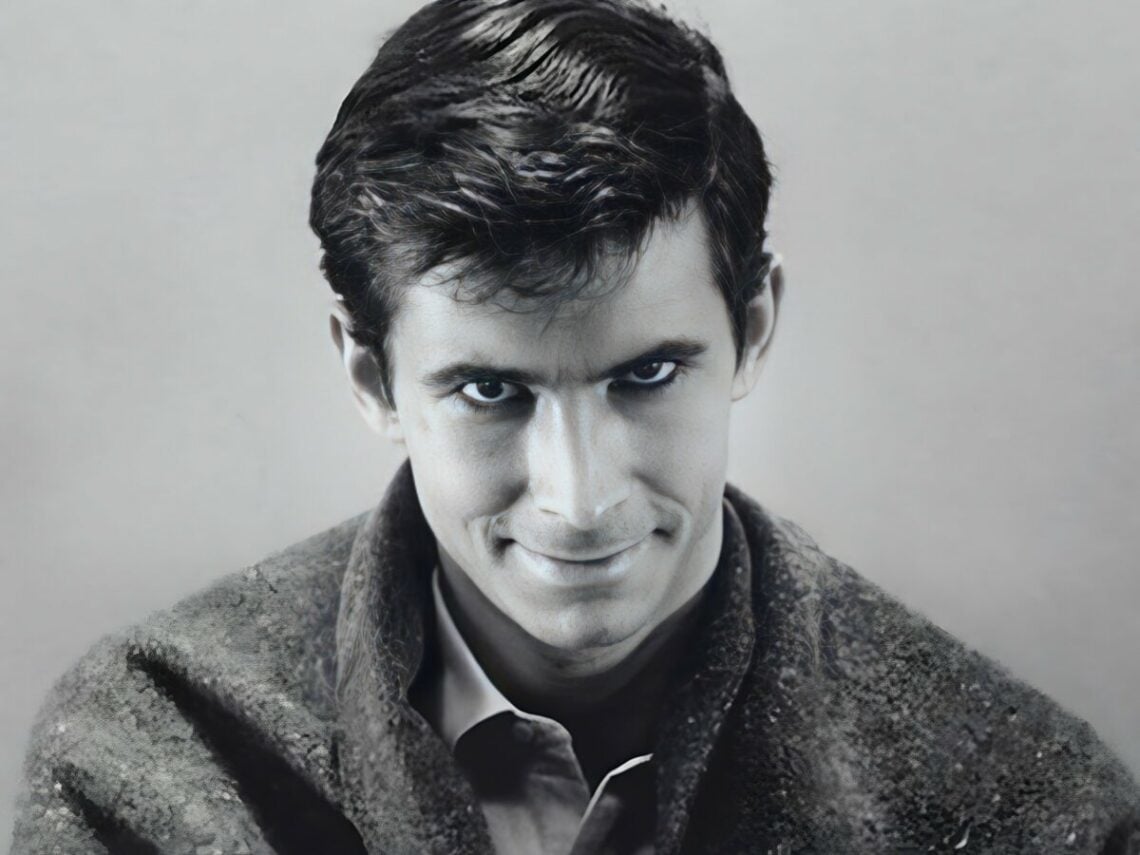
Talk about the best horror movies of all time, and Alfred Hitchcock’s 1960 masterpiece Psycho has to be part of the conversation. Telling the story of a secretary who embezzles $40,000 from a client and goes on the run to a remote motel, the movie is best known for the villain Norman Bates (Anthony Perkins), a sinister individual who fuels the film and provides the majority of its most terrifying moments.
Arguably, the film’s eeriest moment comes during the finale, when Hitchcock leaves us with one last scare as Bates stares down the barrel of the camera and utters, “She wouldn’t even harm a fly”, as his face merges with a skull.
Spaceballs (Mel Brooks, 1987)
The king of the spoof comedy, Mel Brooks, was known for breaking the fourth wall several times throughout his filmography. The greatest of such scenes came in the 1987 movie Spaceballs, a direct spoof of George Lucas’ Star Wars franchise, which tells the story of a space pilot for hire who is forced to come to the rescue of a princess from the hold of Spaceballs and a roster of bizarre characters.
The fourth wall scene comes when Rick Moranis’ Dark Helmet and one of his trusty followers decide to acquire a copy of the movie Spaceballs in order to find out what happens in the end and prevent it from occurring in the first place. Yet, they only get to the exact point in the movie in which they are playing out in real time, leading to a moment of comedy gold.
Wayne’s World (Penelope Spheeris, 1992)
Though Penelope Spheeris’ Wayne’s World is adored among fans, critics are a little too harsh on what we believe to be one of the greatest comedies of the 1990s. Starring Mike Myers and Dana Carvey, the movie tells the story of two peculiar young rockers who are awarded their own TV show, only to discover that life in the public limelight isn’t all it’s cracked up to be, with the identity of their show being sullied by corporate influence.
One of the film’s greatest jokes comes when Wayne satirises product placement in movies by engaging in an extended skit that promotes several different brands in increasingly hilarious ways.
