


The 10 best ghost movies of all time

When it comes to the mythical, fantastical beings of folk tales, ghosts have got to be one of the most alluring, beating out the naughty gnomes, slippery mermaids or incredulous imps of the forest. Indeed, there is something entirely tangible about the idea of a ghost that ties in with humanity’s desperate existential fear of death and search for meaning. Perhaps there is a life beyond the physical boundaries of Earth.
Such has been a source of fascination for countless storytellers across the course of human history, with ghosts being used as villains for horror tales as well as key figures of comfort for those looking for comfort from family beyond the grave. In the modern world, these figures were taken to inspire such classic novels as Shirley Jackson’s The Haunting of Hill House, Henry James’ The Turn of the Screw and The Tell-Tale Heart by Edgar Allan Poe.
Eventually, such tales ended up on the silver screen, with ghosts predominantly appearing in horror movies where they frighten humans so much that the sheet-wearing spirits are eventually banished from their respective abodes. Yet, some of the greatest cinematic ghost tales come from beyond the world of horror, with storytellers weaving spirits from beyond the grave into heartwarming dramas, romances and fantasy epics.
Take a look at our rundown of the very best ghost movies below, which explores everything from Jack Clayton’s The Innocents to Andrew Haigh’s All of Us Strangers.
The 10 best ghost movies:
10. A Ghost Story (David Lowery, 2017)
Perhaps one of the unluckiest filmmakers in all of contemporary Hollywood, despite the constant critical success and clear visionary creativity of David Lowery, he can never seem to get the traction he deserves in the industry. One of his greatest and most ambitious works was 2017’s Ghost Story, a dark drama that explored a marriage that breaks apart following the death of the husband, only for his story to continue from beyond the grave.
An existential exploration of life on Earth, A Ghost Story is a touching take on the humble phantom, with Rooney Mara and Casey Affleck delivering excellent performances as the tortured married couple.
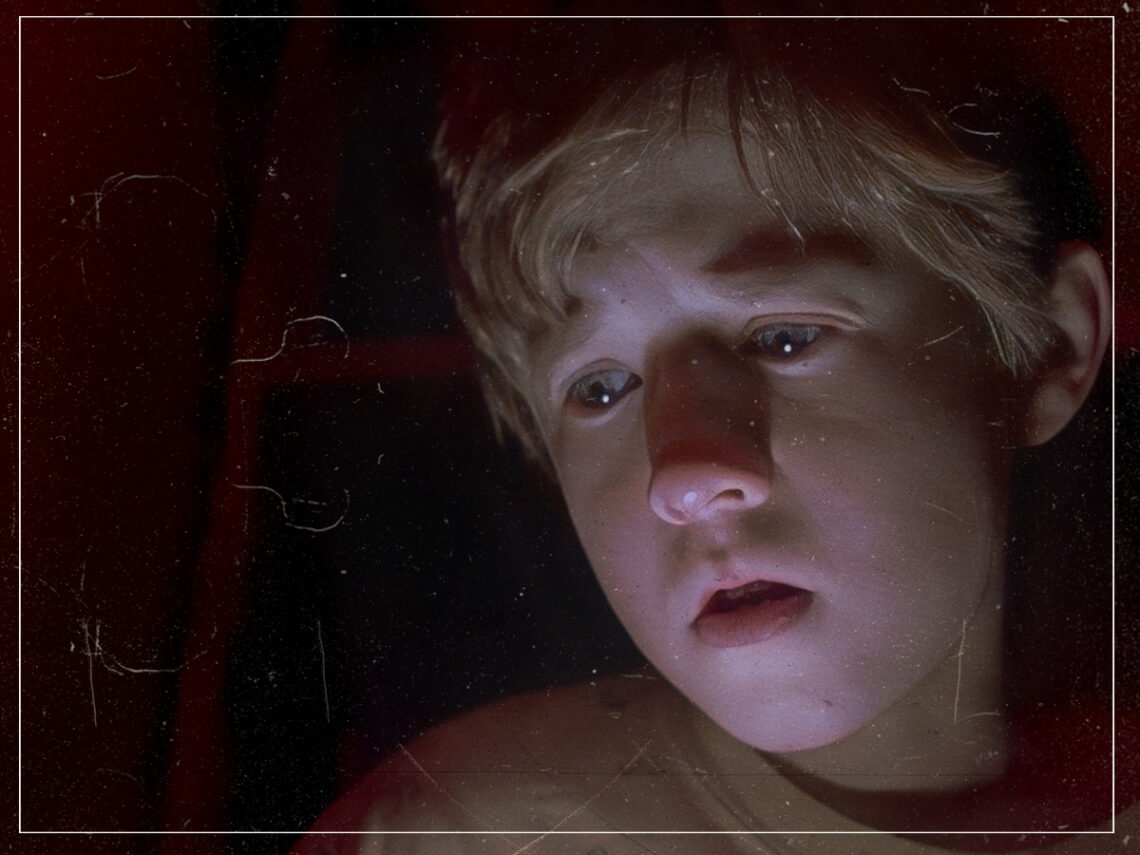
9. The Sixth Sense (M. Night Shyamalan, 1999)
The big twist at the end of The Sixth Sense, directed by M. Night Shyamalan, has been so widely mocked, lampooned, parodied, and imitated over the last quarter of a century that it’s become all too easy to forget how it delivered a gut-punching reveal that recontextualised the entirety of what had come before.
Notching six Academy Award nominations, including ‘Best Picture’, ‘Best Director’, and ‘Best Original Screenplay’, The Sixth Sense was a phenomenon that infiltrated the cultural lexicon. Beyond that, Shyamalan’s classically constructed drama with a rich vein of spine-chilling terror and a rug-pull for the ages breathed new life into the cinematic ghost story.
8. All of Us Strangers (Andrew Haigh, 2023)
Adapted from the novel Strangers by Japanese author Taichi Yamada, All of Us Strangers by director Andrew Haigh is a wonderous drama that feels like a weightless odyssey of love, telling the story of a screenwriter struggling to conjure memories of his past, who comes face to face with the ghosts of his long-deceased parents.
Thanks to spectacular performances from Paul Mescal, Andrew Scott, Jamie Bell and Claire Foy, the film resonates through the screen, speaking to a deeper truth about the innate human need for connection, especially in a contemporary world that so desperately keeps us apart. In years to come, Haigh’s film will surely be considered to be a seminal love story for the disassociated Generation Z.
7. The Others (Alejandro Amenábar, 2001)
In hindsight, the worst thing to happen to the 2001 horror film The Others was probably The Sixth Sense, with the twist at the end of Alejandro Amenábar’s own subversive ghost story being unfairly compared to Shyamalan’s, matters that weren’t helped by the films releasing just two years apart.
Amenábar’s film is arguably the better of the two, with a richer and more layered atmosphere and a sense of pacing that ratchets up the tension scene by scene, while Nicole Kidman’s performance is as formidable as it is vulnerable. A period-set chamber piece that left jaws on the floor when the story laid its cards on the table, The Others managed the rare feat of leaving its characters on exactly the same footing as its audience, completely unaware and entirely stunned that things had never been as they seemed.
6. Ringu (Hideo Nakata, 1998)
Sparking the J-horror craze into life and influencing the more restrained and atmospheric approach that would soon be adopted worldwide – not to mention the volume of English-language remakes to follow – Ringu deftly combined an anxiety-riddled narrative with fantasy and supernatural elements, wrapping it up in modern moral panic, and sprinkling an instantly iconic ghoul on top.
Sadako Yamamura was a truly haunting addition to horror’s cabal of nightmarish figures, and as much as VHS was on the way out when Ringu first arrived, anyone who claims they didn’t feel even the tiniest bit of trepidation that she would appear when they popped a tape into its player is lying.
5. Beetlejuice (Tim Burton, 1988)
Ghosts don’t have to be terrifying entities, nor existential realisations of one’s place in the universe. Rather, in the case of Tim Burton’s Beetlejuice, they can be a hilarious source of slapstick comedy. A classic movie of the late 1980s, Burton’s DIY cult hit tells the story of the spirits of a deceased couple who become infuriated that a new family has moved into their home. So they call upon help from the underworld.
Made with such a love for the craft of cinema, the magic of Beetlejuice is in its visual style, with the ghosts existing in a liminal space that pops with vibrant purples and blacks. Adored for good reason, Beetlejuice is, quite simply, a joy.
4. The Innocents (Jack Clayton, 1961)
Tales of spooky sightings and things that go bump in the night don’t come as classic as Jack Clayton’s The Innocents, an iconic ghost story that many consider to be one of the most timeless horror flicks ever made. Starring the Hollywood icons Deborah Kerr and Michael Redgrave, the story follows a young governess who becomes convinced that the large house she is in charge of is haunted.
Don’t be fooled; even though Clayton’s film is in black and white and might lack the snappy visuals of modern cinema, it still has the ability to terrify you. What’s more, even if it doesn’t scare you, it also offers some of the most beautiful cinematography in horror cinema.
3. Ghostbusters (Ivan Reitman, 1984)
Ghost stories don’t have to be terrifying to be regarded as among the best ever, and there’s no movie that better exemplifies that sentiment than Ghostbusters, a timeless supernatural comedy that more than holds up as a deliriously entertaining time 40 years on from its initial release. The cast? Iconic. The characters? Iconic. The countless memorable lines of dialogue, quotes, and one-liners? Iconic. A critical, commercial, and cultural juggernaut, Ghostbusters also left behind a huge legacy well beyond its status as a classic.
Combining action, horror, fantasy, and comedy with visual effects made it one of the first high-concept blockbusters, while it drew inspiration from Star Wars in being merchandised to within an inch of its life, ensuring it would keep making money at the same rate as it enthralled audiences, which in this case was in perpetuity.
2. The Shining (Stanley Kubrick, 1980)
Stanley Kubrick didn’t even make Stephen King’s favourite version of The Shining, although that puts the author firmly in the minority when the 1980 chiller is comfortably one of the horror genre’s leading lights, true titans, and all-encompassing inspirations.
As tended to be the case any time Kubrick picked up the megaphone, the production was a lengthy and torturous one, but beyond an inexplicable pair of Golden Raspberry nominations for ‘Worst Director’ and ‘Worst Actress’, Jack Torrance’s descent into madness in the cavernous surroundings of the Overlook Hotel deservedly became a touchstone for all of supernatural cinema.
Meticulously constructed, drenched in sinister undertones, and staggeringly executed from a performative, thematic, visual, and technical perspective, The Shining is lauded as one of the best films of the 1980s in the history of horror and all of cinema for any number of wholly accurate reasons.
1. Spirited Away (Hayao Miyazaki, 2001)
Spirits, ghosts and ghouls have never been as terrifying, beautiful and philosophical as those in Hayao Miyazaki’s Oscar-winning masterpiece Spirited Away. Still seen as one of the very best animated movies ever made, Miyazaki’s existential exploration is about a young girl who moves to a new neighbourhood and wanders into a wild fantasy world where she is tasked with saving her parents from an eternity living as pigs.
Despite being marketed towards children, Spirited Away has some shocking imagery and sobering thoughts to share regarding death and the difficult journey of life, with the iconic spectre, The Kaonashi, supplying much of this terror. Yet, what pierces through the fear is the elegant journey of a young girl transitioning into adulthood as she learns to adapt to change and embrace the trepidation of the unknown.
It’s easy to be lured into Spirited Away for its imagery alone, and this is no bad thing. If you leave this to brew for long enough, you’ll find a seminal coming-of-age tale and a film with a remarkably mature approach to the daunting march of life’s countdown clock.
