


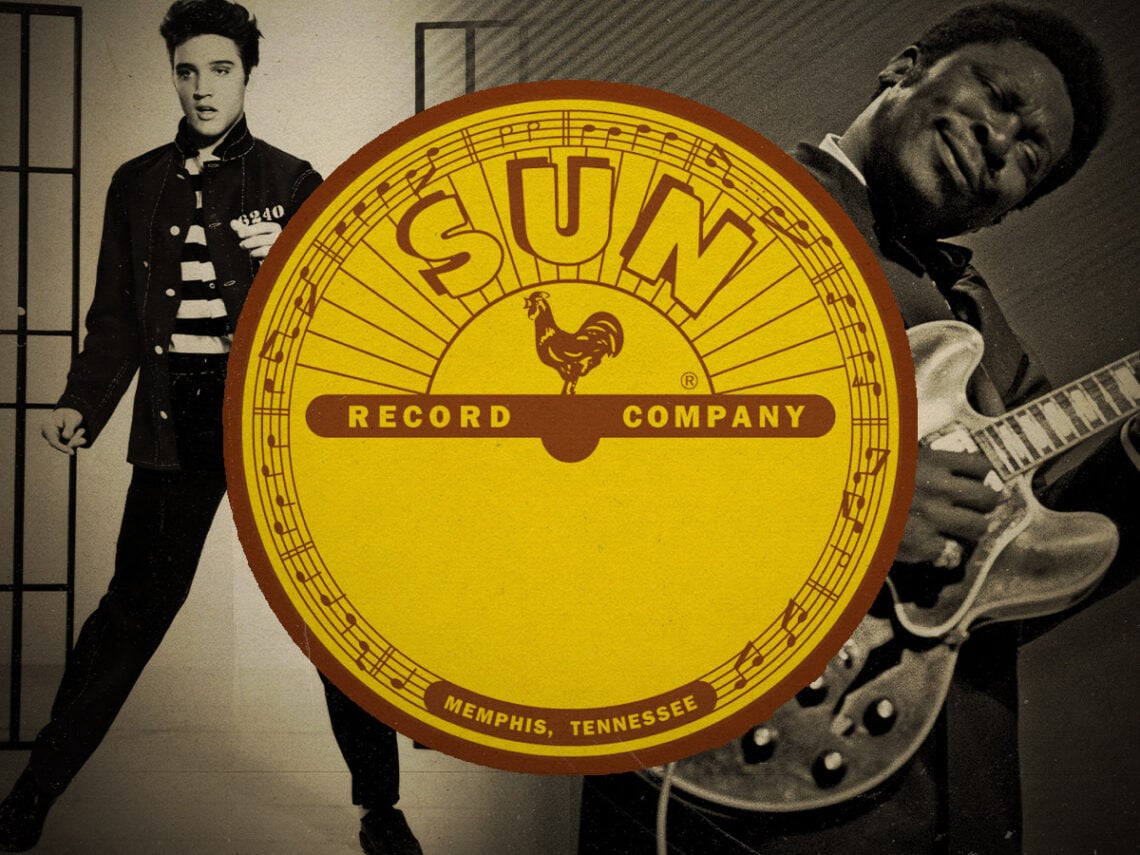
Sun Records: the birthplace of the American invasion

Rock‘s foundations in rhythm and blues, gospel and country remain heard, even in the smallest tinges across rock’s never-ending scope: even the heaviest of metal bands are, in some way, indebted to these pillars that preceded the birth of rock music.
As gospel and R&B informed what would become both country and rock music, an early instance of reaching a broader American audience (and later, a global one) came out of Memphis, from the mind of a radio disc jockey named Sam Phillips.
Phillips was born in 1923, the youngest of eight children to parents who mortgaged a farm in Alabama. When he was about 16 years old, in 1939, he travelled through Memphis, Tennessee, with his family to watch a preacher in Dallas, Texas, when he snuck away to Memphis’ famed downtown street, Beale Street, then the centre of the city’s music scene. “I just totally fell in love,” he later recalled, and this became a foundational memory that guided him into the music industry.
In the midst of the Great Depression, Phillips’ father became bankrupt, before passing away in 1941, compelling Phillips to leave high school to support his family. He worked at a grocery store, in a funeral parlour and, finally, as a DJ and radio engineer for the AM station WLAY in Alabama. By Phillips’ account, WLAY had an “open format” for their broadcasting: music by both Black and white musicians, across country and blues, would be played.
From the four years Phillips worked at the station, beginning in 1945, the genesis of rock ‘n’ roll thus began to take shape, and the concept of diversifying radio’s programming is something that he carried with him, once he opened the doors to the Memphis Recording Service in 1950.
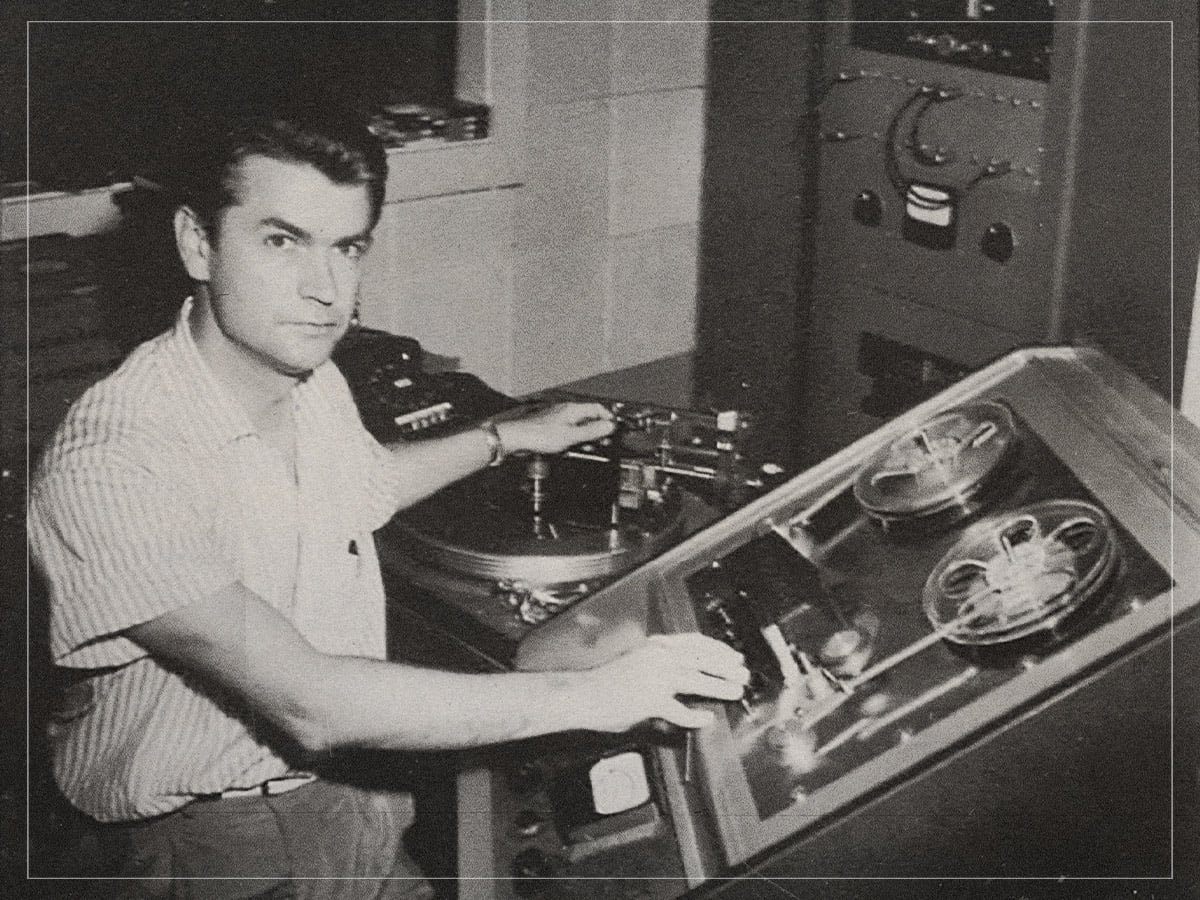
“My conviction was that the world was missing out on not having heard what I had heard as a child,” Phillips once explained. “I said, ‘I’ve just got to open me a little recording studio, where I can at least experiment with [some of] this overlooked humanity.”
In his Memphis studio, at 706 Union Avenue, Phillips saw the likes of BB King, Howlin’ Wolf and Junior Parker walk through its doors to make their first recordings; he, in turn, took up the business of selling these recordings to larger labels for their distribution. The studio’s slogan rang true: “We Record Anything – Anywhere – Anytime.”


In these walls, the record that is widely considered – and contested – to be the first rock ‘n’ roll record, as asserted by music critics, was created: ‘Rocket 88,’ credited to Jackie Brenston and His Delta Cats (Brenston is the vocals, though the band was led by a then-19-year-old Ike Turner and his group, the Kings of Rhythm), to be released in March of 1951.
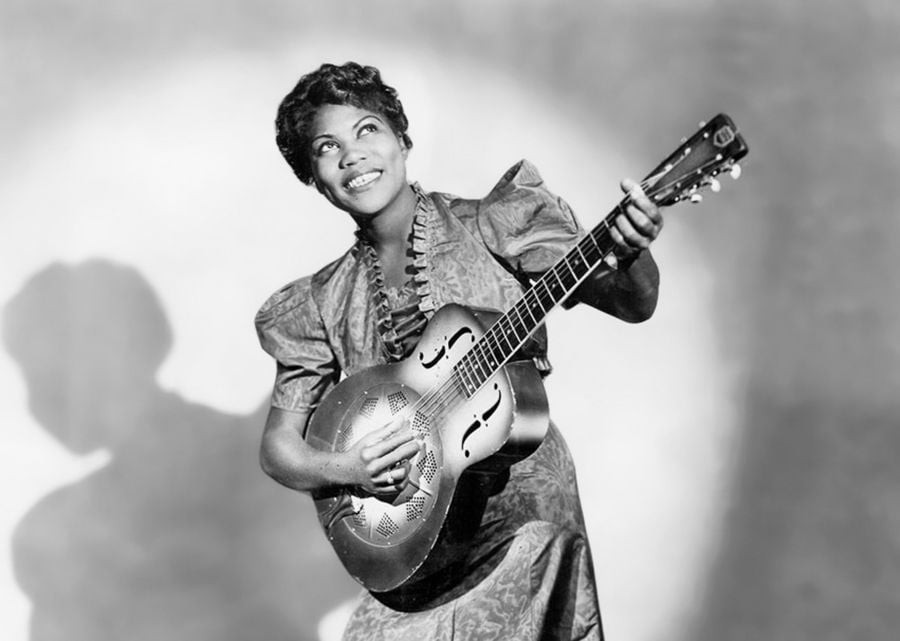
Indeed, Sister Rosetta Tharpe is revered as the ‘Godmother of Rock ‘n’ Roll’: her Gospel recordings soundtracked by her electric guitar, beginning with ‘Rock Me,’ recorded in the late 1930s, effectively bridged a gap between gospel, rhythm and blues, and rock ‘n’ roll fans, and would serve as inspiration for the men that came after her, including Elvis Presley and Little Richard.
But ‘Rocket 88’s release saw a shift in the beginnings of rock ‘n’ roll, recognised in its multifaceted sound across R&B and the electric guitar, not dissimilar to Tharpe’s artistry that preceded it. “The more unconventional it sounded,” Phillips later said of ‘Rocket 88’ to Rolling Stone in 1986, “the more interested I would become in it.”
As an influx of other burgeoning musicians arrived to record at the Memphis Recording Service – from blues artist James Cotton to the doo-wop group The Prisonaires – Phillips also established his own label, the Sun Record Company, in February of 1952. The triumph of ‘Rocket 88’ helped, in part, to fund Sun Records’ inception, a label named for, in the label’s terms, “a sign of [Phillips’] perpetual optimism: a new day and a new beginning”.
Still, from Phillips’ perspective, the creation of Sun Records came from a place of necessity, more than anything: his relationships with previous licenses, including Chicago’s Chess Records and Los Angeles’ Modern Records, had frayed, and thus, parlaying his desire to expand his musical repertoire and champion local musicians into Sun Records was an unexpected, but essential change.
“I was forced into it by those labels either, coming to Memphis to record or taking my artists elsewhere,” he later admitted (quoted in James M Salem’s 2001 book The Late Great Johnny Ace and the Transition from R&B to Rock ‘n’ Roll), but nonetheless, establishing Sun Records set Phillips and the local music scene in Memphis on the right path.
Sun Records and Sun Studio (formerly known as the Memphis Recording Service) were housed in the same building, where its first string of hits were created, from Rufus Thomas’ ‘Bear Cat,’ to The Prisonaires’ ‘Just Walkin’ In The Rain’ (recorded during a day’s parole while the quintet were incarcerated at Nashville State Penitentiary). For the next few years, Phillips focused on recording the works of Black rhythm and blues artists, continuing his work with the likes of BB King and Howlin’ Wolf, while hosting countless local musicians, regardless of experience, to try their hand at recording.

Then, in August of 1953, a recent high school graduate named Elvis Presley arrived, prepared to pay the $3.98 cost for studio time (about $49.22 today) to record a double-sided single as a birthday gift for his mother. Presley chose two pop songs: ‘My Happiness’ and ‘That’s When Your Heartaches Begin,’ and that August marked the first of many visits from the young singer. After a number of informal auditions, his impromptu rendition of Arthur Crudup’s ‘That’s All Right’ was the turning point.
Phillips, thankfully, had the sense to hit ‘record’ as Presley improvised with guitarist Winfield ‘Scotty’ Moore and bassist Bill Black, and gave the recording to Memphis DJ Dewey Phillips to play on his Red, Hot, and Blue radio show, and this began Presley’s soon-to-be sensation that was, with no exaggeration, unlike anything the music industry had seen before. With Presley’s ascent into fame, Sun Records became the epicentre of rock history, born from a humble beginning at Phillips’ compulsion to record the music that surrounded him.
Sun Records proceeded to release Presley’s first five singles before selling his recording contract to RCA Victor for $40,000 in 1955 to ease some of Sun’s financial strain, but the label continued to boost its roster: Jerry Lee Lewis was discovered by record producer and engineer Jack Clement, who first recorded the musician at Sun Records in 1956. Inspired by Presley, the ‘King of Rockabilly’, Carl Perkins drove with his brother to Memphis to audition for Phillips. Johnny Cash followed with an audition of gospel songs; when Phillips told him that he no longer recorded gospel music, Cash returned with new songs that fit his own early rockabilly sound. Roy Orbison took Cash’s advice and signed himself and The Teen Kings to Sun Records in 1956.
There was a pattern to be seen in the musicians that flocked to Sun Records, in Presley’s shadow: in Memphis, there was a space for rock ‘n’ roll to be honed, as an art form. It is also imperative to remember that this pattern came from the lineage of Black music that preceded it; certainly, Presley’s career would not have existed without the work of Black musicians, nor would Phillips have found his success as a producer had he not been introduced to the music of Black artists.
All of the music to come out of Sun Records still played a large factor in the nucleus of rock ‘n’ roll, which overtook not just American radio airwaves but international ones, too. The British invasion, as it overtook the American charts from the emergence of The Beatles and beyond, would not have begun had it not been for the influence of Sun Records. As John Lennon succinctly put it: “Nothing really affected me until I heard Elvis. If there hadn’t been an Elvis, there wouldn’t have been The Beatles.”
