


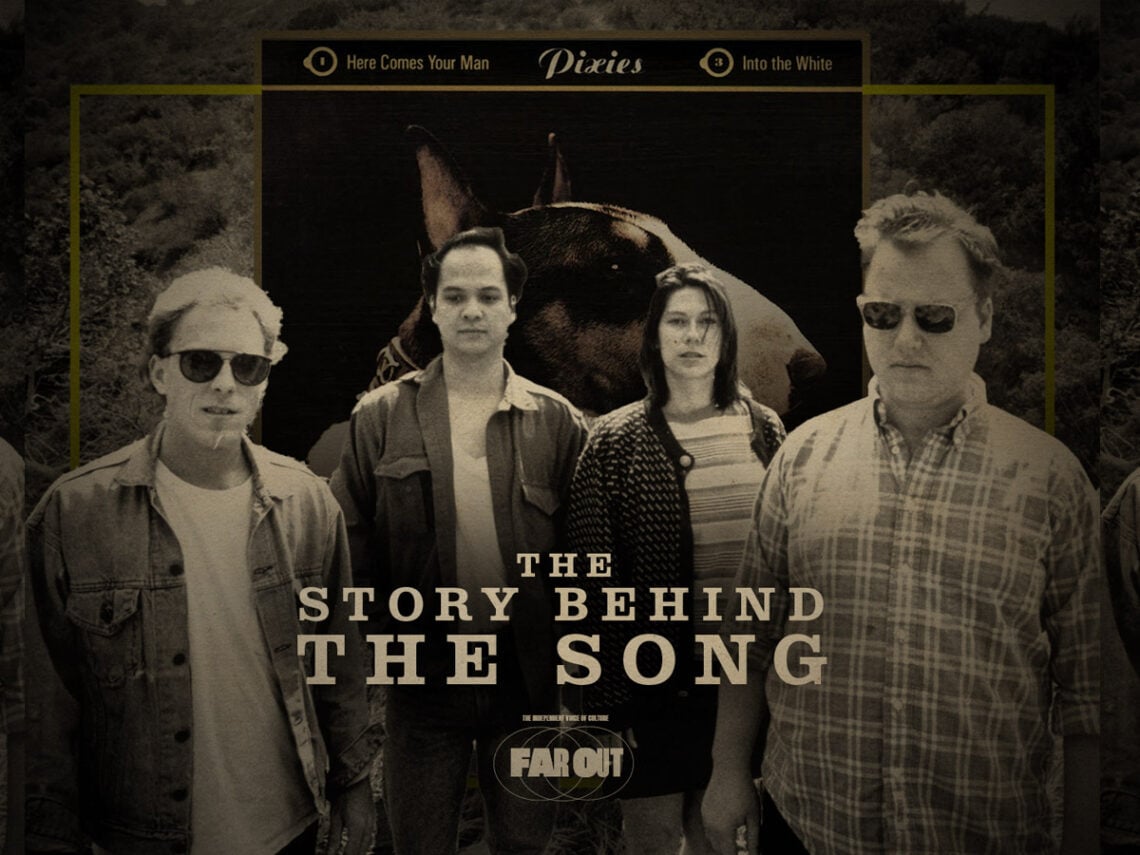
The Story Behind The Song: How the Pixies went “pop” with ‘Here Comes Your Man’

Considering how the sensibilities of The Velvet Underground had come to serve as the gold standard for what later became ‘indie rock’ in the 1980s, it’s a bit surprising how often the Velvets’ supposed acolytes cowered in fear of releasing a palatable pop song.
Sure, part of the enduring appeal of Lou Reed as a songwriter was, in theory, his refusal to compromise, which supposedly explained why each massively influential Velvet Underground record flopped commercially. Reed wasn’t hell-bent on being a cult hero with zero hits, however. By contrast, he was a sincere appreciator of a simple, well-constructed pop song in the Brill Building tradition, and he wrote a lot of them during the Velvets era. By 1970, his central concern had become proving to his doubters that he could, in fact, put a song on the charts.
“Lou was, and all of us were, intent on one thing, and that was to be successful,” guitarist Doug Yule told Perfect Sound Forever in 1995, “And what you had to do to be successful in music was you had to have a hit, and a hit had to be uptempo, short, and with no digressions, straight ahead basically. You wanted a hook and something to feed the hook, and that was it. ‘Sweet Jane’ was arranged just exactly the way it is on the original Loaded release, exactly for that reason, to be a hit! ‘Who Loves The Sun’ was done exactly that way for that reason, to be a hit.”
In the end, none of the intended hits from the Velvets’ final album, Loaded, actually achieved the band’s commercial goals. Perhaps that’s the reason that the next generation of American art punks decided it wouldn’t be worth their trouble to try and play the industry game at all. In fact, the bands of the ‘80s built up a considerably more cynical approach than even the surly Lou Reed had ever had. To shoot for a mainstream hit was now equivalent to ‘selling out’ or being ‘inauthentic’, the ultimate crimes against true art.
Which brings us, finally, to the Pixies.

Formed in Boston, Mass, in 1986, these future sacred cows of alt-rock were always a tad more radio-friendly than they wanted to be, in a bizarre way. When their first demo recordings were sent to 4AD label boss Ivo Watts-Russell in 1987, he wasn’t all that impressed, finding the band a bit ‘too rock ‘n’ roll’, which had also become a minor offence in indie circles at this point. Watts-Russell did ultimately agree to offer the Pixies a deal, after some convincing from his girlfriend, but he wasn’t shy about offering his opinion on the tracks from the band’s 17-track Purple Tape demo.
Eight, or roughly half, of the Pixies’ tunes were deemed strong enough to re-record for their debut LP, Come On Pilgrim. Among those quickly left on the cutting room floor was an annoying pop ditty that reminded Watts-Russell of Mink DeVille’s 1977 single ‘Spanish Stroll’, which had been a top 20 hit in the UK. Potential crossover pop hits, again, were apparently something to be avoided.
“It was too commercial,” Watts-Russell declared, “It was not indicative of where [Pixies] were”.
The song in question, of course, was ‘Here Comes Your Man’, one of the catchiest jams of the entire 1980s, and one of the earliest songs Pixies frontman Black Francis ever wrote. After getting repeatedly kicked to the curb during the first few years of the band, and diminishing in Black Francis’ own perception as his embarrassing “Tom Petty song”, the bouncy, sing-along surf-pop tune finally found the right pair of ears in the form of producer Gil Norton during the recording sessions for 1989’s Doolittle album.
Whereas engineer Steve Albini had unsurprisingly torpedoed the song’s inclusion on the Pixies’ previous album, Surfer Rosa, Norton took the opposite position, encouraging the band to fly its pop flag without shame. The Violent Femmes hadn’t lost their credentials when ‘Blister in the Sun’ crossed the threshold a few years earlier, and ‘Here Comes Your Man’ had similar, undeniable potential. It just needed a little more refinement.
“We added a bridge and made it into a pop song,” guitarist Joey Santiago recalled in 2002 to the Chicago Tribune, “But we thought it was corny, compared to the original, which was so laid back. It was so pop, the final version of it, that we were like, geez, this doesn’t even sound like us.”
“I think Charles [Black Francis] feels stupid singing it,” bassist Kim Deal said back in 1989, “We don’t usually play that live”.
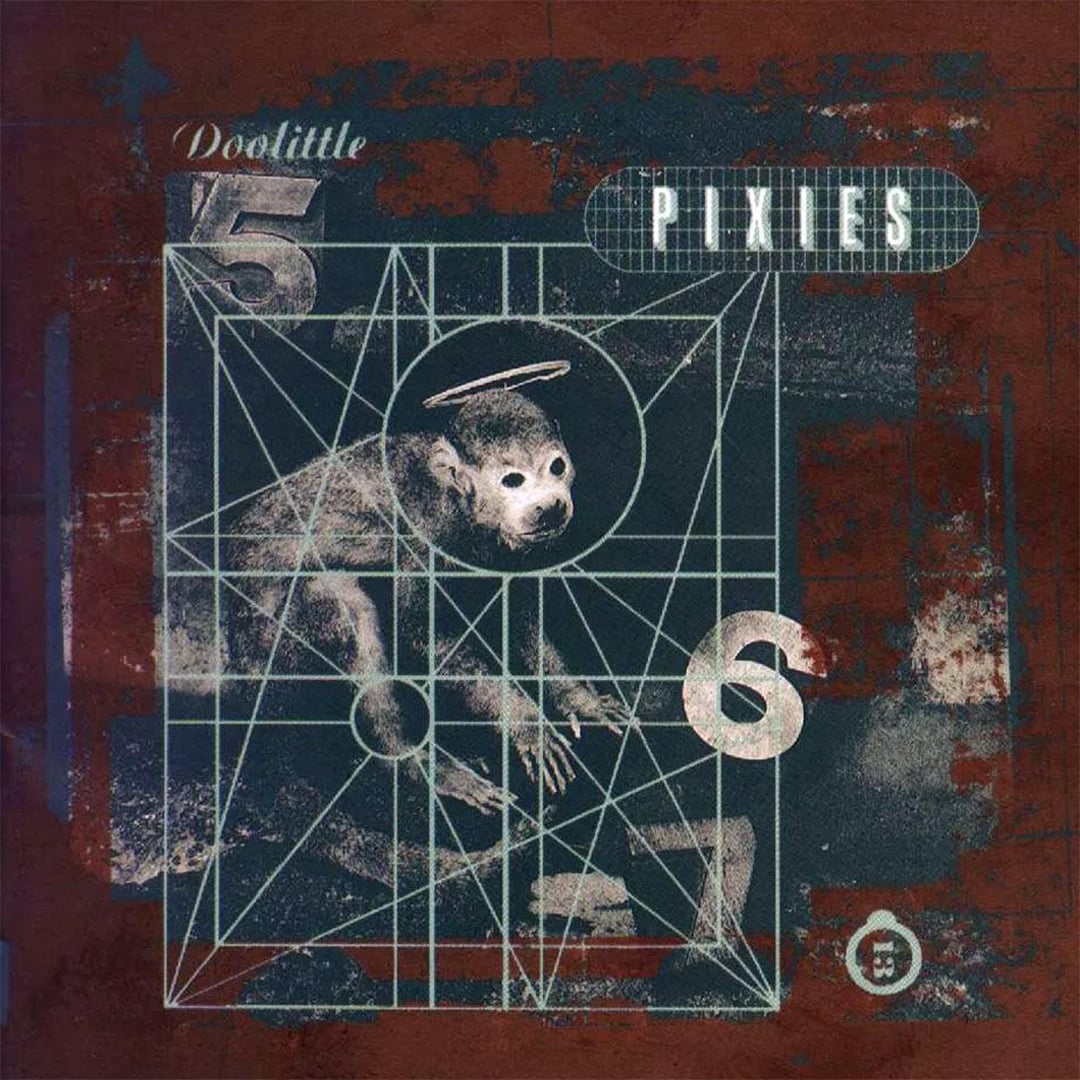
In classic self-defeating indie band fashion, Pixies immediately began running away from ‘Here Comes Your Man’ the moment Gil Norton’s intuition had proven true. Aided by a playful music video, the song broke out on MTV and college radio alike, and while it didn’t perform any better on the Billboard Hot 100 than The Velvet Underground had, the single did reach number three on the Alternative Airplay chart. It also made some inroads in the UK, reaching number 54 on the singles chart there.
It was enough of a breakthrough that the Pixies were suddenly getting invites from places they never would have heard from before. “[Talk show host] Arsenio Hall asked if we wanted to play on the show,” Santiago recalled in Ben Sisario’s 33-1/3 book on Doolittle, “We said, ‘Well, what do they want to hear?’ He said, ‘Here Comes Your Man’. No way. We told them we would love to go on, but only if we did the song ‘Tame’. And they said, ‘No, thank you’… We were like little runts, little wise-asses.”
This determination to present themselves to the world solely on their own terms was certainly commendable in some respects and explains why Kurt Cobain admired them so much. Still, in retrospect, it’s not as if ‘Here Comes Your Man’ was a piece of bubblegum fluff that any of them should have considered damaging to their brand. The song’s lyrics, in particular, always betrayed the simplicity of the melody. Adapted from the teen scribblings of Black Francis, back when he was known as Charles Michael Thompson, the imagery of the track evolved with the help of two major influences: REM and David Lynch.
Thompson was 18 when REM’s seminal debut LP Murmur was released in 1983, and as the Pixies were working on their first recordings a few years later, he found himself revisiting Michael Stipe’s famously abstract and sometimes indecipherable lyrics, later acknowledging that Murmur “was hugely influential on me as a songwriter”.
Thompson specifically honed in on the folky Southern gothic imagery from songs like ‘Carnival of Sorts (Boxcars)’, deciding to inject some of that subtle spookiness into this oddly hooky song he’d been kicking around: “Big shake on the boxcar movin’ / Big shake to the land that’s fallin’ down / Is a wind makes a palm stop blowin’ / A big, big stone fall and break my crown”.
Speaking to NME shortly after the single’s release, Black Francis explained that the track was “about winos and hobos travelling on the trains, who die in the California earthquake, peeing their pants. Before earthquakes, everything gets very calm; animals stop talking, and birds stop chirping, and there’s no wind. It’s very ominous.”

Even that explanation might have been a bit of an oversimplification, though. Rather than thinking in terms of an actual narrative, Black Francis would later say that the whole thing was more like “some kind of surreal cowboy movie in my head”, and described his creative mind as being split between a “director” and a “scriptwriter”, each with their own ideas about how to make the picture.
“If anything is a big influence on me, it’s David Lynch,” he told Rolling Stone in 1989, “He’s really into presenting something but not explaining it. It’s just, ‘This is an image, this is an idea, isn’t it cool?’ The way I understand it, that’s the only way to be surreal. To be not so connected with it, except that it came from your brain, somewhere way back there.”
After the original demise of the Pixies in 1993, the subsequent growth of their legend among indie kids of the ‘90s and 2000s, combined with a reduction in the enforcement of ‘sell-out’ laws, helped remove some of the unnecessary stigma from their biggest hit.
“We never played it on tour,” drummer David Lovering said in 2011, chuckling about their militant stance on ‘Here Comes Your Man’ in the past, “And the only reason why is because it really is a pop song, so we thought it was cooler not to do it than to do it. It wasn’t until our reunion in 2004 that we started playing it again.”
At long last, the coolest band of the ‘80s were willing to accept that their supposedly ‘uncool’ moment had actually provided an entryway into the Pixies experience for a lot of their fanbase. “You know, it used to be that if you wanted to get into rock ‘n’ roll, you listen to The Velvet Underground,” Santiago said during the band’s early 2000s reunion, “But now some kids look to the Pixies for their education. That’s not a bad thing.”
