


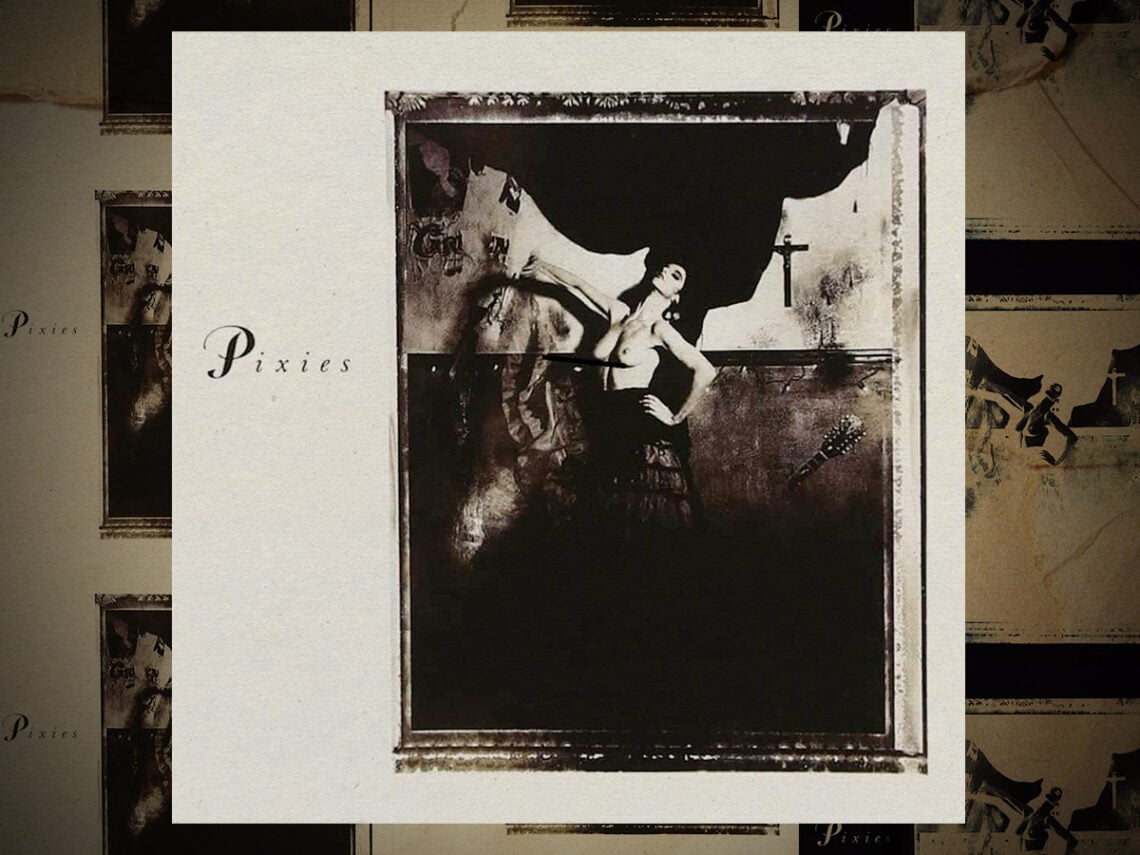
Incest, inmates, and mutilation: The many strange themes of the Pixies’ 1988 masterpiece ‘Surfer Rosa’

As a band, you have a few necessary choices to make when devising your debut album: Are you going in, guns blazing, doing something new entirely, or are you approaching an existing genre with a new tool, like etching a tattoo on raw skin with red ink, not black? Will the lyrics be the focus, or the sound, or the image?
Start slowly, labels would advise, and pick your battles, one revolution at a time, but in the strange case of the Pixies’ debut album, 1988’s Surfer Rosa, every weapon was in their artillery, and the soldiers were poised at their stations, ready to fire at all targets.
In 1987, they whetted fans’ appetite with a mini-album, Come On Pilgrim, which contained eight tracks from a 17-song recording session with producer Gary Smith. Though only a short snippet into their sonic universe, it was evidence of the bizarre locutions that would define their later work. In the most obvious instance, there were two explicit mentions of incest on ‘Nimrod’s Son’ and ‘The Holiday Song’.
Jam-packing everything into their official debut alongside late legend Steve Albini, frontman and principal songwriter Black Francis used every kind of life experience as fertile grounds for lyrical excavations. Take the famous ‘Where Is My Mind?’, which Francis was inspired to write after scuba diving in the Caribbean, where he was chased by a little fish.
Other themes on the album are certainly less technicolour than the sand and sea; in ‘Break My Body’, Francis sings, “I’m a horny loser, you’ll find me crashing through my mother’s door”, before pleaing with the listener to “break my body, hold my bones”, through a desire for self-extermination via mutilation, a suggestion that something on the inside has gone awry; something is rotting in the “ugly lover”.
Things get even weirder on ‘Broken Face’, where Francis sings, “There was this boy who had two children with his sisters, They were his daughters, they were his favourite lovers”, before launching into a chorus about physical deformities and absences: “I got no lips, I got no tongue”. How Beckettian.
As culture increasingly exists on the internet, we might come across all kinds of extremist media online: beheading videos, naked goth-rock bands, hyper-sexualised creepy-pastas. But it’s naive to think this proclivity for culture to easily venture into the shocking, strange and salacious is only a recent development. On this topic, in an interview with the Financial Times, the singer-songwriter linked the Pixies’ bizarro bastardisation of rock’s usual scrappy, not-worth-mentioning fixations to the daily assault of terrible news: “You open up a newspaper, and, ‘Oh, my God, really?’ And then you have these other examples from Christendom, where there are very casual references to things like incest or rape”.

Reading the masterpiece from this point of view, things start to click into place, for instance, in ‘Cactus’, which is narrated from the perspective of an inmate who yearns for his girlfriend insatiably; he urges her to send her dress, smothered with her messes, to him. It might be a fable for our cult of obsession, or the primal instincts of desire. It also might be a strange request, but I guarantee stranger things happen on dating sites all over the world on the daily.
For all the disgraceful, disgruntled, dire dialogues on the album, it spent 60 weeks in the UK Indie Chart. If that tells us anything, it’s that we’re all a bunch of weirdos at heart. Only the Pixies had the gumption to say it.
